1 free read left. Create a free account for unlimited reading + AI research.
Create free accountWhitepaper International Journal of Serious Games
1 free read left. Create a free account for unlimited reading + AI research.
Create free accountWhitepaperInternational Journal of Serious Games
Reliance on high-cost, one-of-a-kind product models leads to limited reusability and extended development cycles.
Key challenge. Serious games developers must transition from one-off, product-centric models to service-centric, extended product models.
Serious games developers, primarily small and medium-sized enterprises, face significant sustainability challenges stemming from a reliance on high-cost, one-of-a-kind product models. These traditional approaches often suffer from limited reusability and extended development cycles, which hinder long-term profitability. To remain competitive, the industry must transition toward service-centric, extended product models that bundle games with adaptable, data-driven services. This shift requires a strategic move away from reactive pivots—often triggered by poor return on investment—toward proactive innovation that leverages interoperable components and digital delivery channels to create more sustainable value.
The scope of this analysis encompasses the health and corporate management sectors, where development is frequently characterized by collaborative, non-profit, or public funding models. While these sectors provide a foundation for serious games, they often lack the commercial maturity of broader software markets. By adopting frameworks such as the Business Model Canvas and Blue Ocean strategies, developers can better align their value creation with evolving technological demands. Integrating analytics into these service offerings is particularly critical, as it allows developers to provide empirical evidence of efficacy and return on investment, which is essential for securing continued funding and market adoption.
Ultimately, the transition toward servitization represents a necessary evolution for the serious games industry. By moving beyond the limitations of isolated product development, firms can achieve greater scalability and market reach. Success in this transition depends on the ability to treat games as dynamic platforms rather than static assets. By prioritizing interoperability and proactive business modeling, developers can overcome the current constraints of niche markets and establish a more robust, service-oriented presence within the global education, healthcare, and corporate training landscapes.
International Journal of Serious Games · 2023
International Journal of Serious Games · 2022
International Journal of Serious Games · 2020

International Journal of Serious Games · 2020


International Journal of Serious Games · 2020


International Journal of Serious Games · 2020


International Journal of Serious Games · 2020

International Journal of Serious Games · 2020

International Journal of Serious Games · 2020



International Journal of Serious Games · 2020

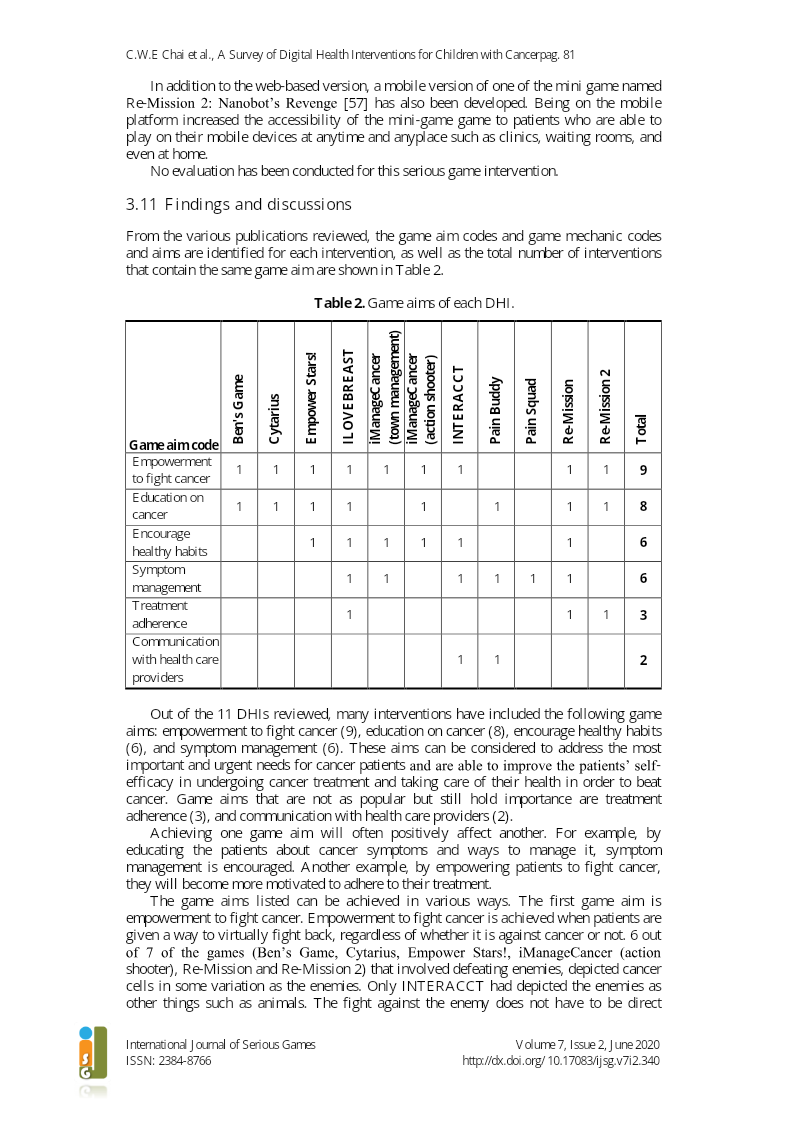

International Journal of Serious Games · 2020
Air Force Institute of Technology · 2020
Jason Schreier · 2026