
Game Developers Conference
Game Developers Conference (GDC, now the GDC Festival of Gaming) is the professional event for the games industry. It publishes recorded talks and interviews, annual industry survey reports such as the State of the Game Industry, and news articles.
Documents

Massive Crowd on Assassin's Creed Unity: AI Recycling
Achieving unprecedented crowd density in Assassin's Creed Unity required the development of a sophisticated AI Level of Detail framework known as the Bulk system.
- The 'Bulk' system manages up to 10,000 NPCs by categorizing them into three proximity-based states: high-fidelity autonomous NPCs, mid-range Puppet NPCs, and long-range Low-Res meshes.
- Engine performance is optimized by reducing polygon counts for distant entities from 20,000 to 2,000, allowing the crowd system to consume only 5% of the total RAM budget.
- The architecture utilizes a deterministic 'Shepherd' container that employs pre-calculated paths and pooled assets to maintain consistent CPU and memory efficiency.

Beyond Emitters: Shader and Surface Driven GPU Particle FX Techniques
Modern visual effects pipelines are shifting toward surface-driven GPU particle emission, moving away from traditional point-based emitters to allow any rendered object to function as a dynamic particle source.
- Modern GPU particle pipelines are shifting from point-based emitters to surface-driven emission, allowing any rendered object to function as a dynamic particle source.
- By binding particle behavior to geometry via shaders and compute buffers, developers can inherit surface properties like color and material attributes for more cohesive environmental effects.
- Advanced workflows use geometry shaders to unfold mesh triangles into render targets, enabling real-time sampling of surface data without requiring pre-baked textures.
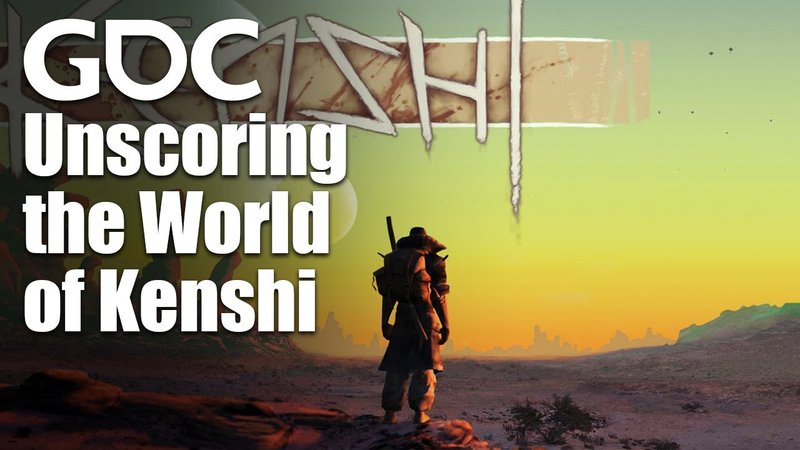
Unscoring the World of Kenshi
The development of the sandbox RPG Kenshi prioritized an audio landscape that reflects the game’s nihilistic, indifferent world rather than the player’s status as a hero.
- The Kenshi audio design philosophy prioritizes an indifferent world over the player, utilizing a self-generating music system that reacts only to environmental variables like biome and time of day rather than player actions.
- Players are given agency only through a music frequency slider, allowing them to define how often the engine triggers musical sequences, ranging from every minute to every hour.
- The soundtrack is composed of three distinct layers—drone, frame, and canopy—which are randomized and mixed to create an ambient soundscape that avoids the heroic, bombastic tropes of traditional RPGs.
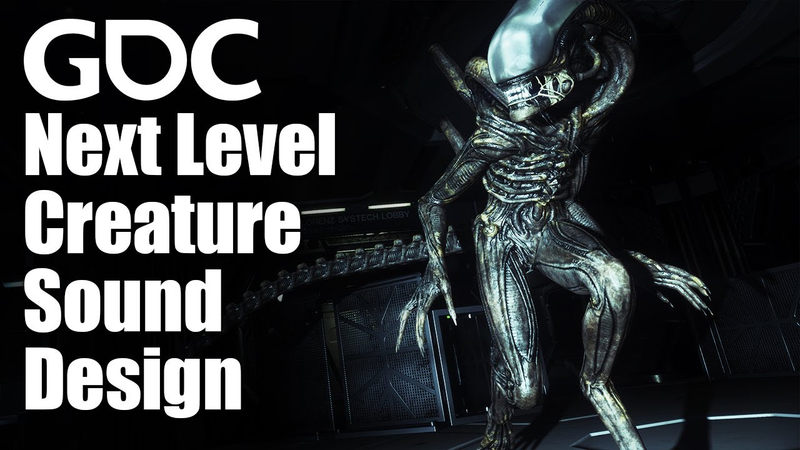
Next Level Creature Sound Design
Believable creature sound design hinges on the integration of character, variation, and perspective, requiring a rigorous pre-production phase that establishes a creature’s physical scale, origin, and vocal mechanics.
- Establish a consistent sonic identity by defining a creature’s physical scale, origin, and vocal mechanics during a rigorous pre-production phase.
- Create cohesive creature characters by layering diverse source materials, including human vocals, organic animal recordings, and non-literal textures like mechanical friction.
- Utilize high-frequency microphones to capture source audio that maintains clarity and fidelity after undergoing extreme pitch-shifting.

Legacy Games: From Risk to Pandemic to SeaFall & Beyond
The legacy board game genre represents a fundamental shift in tabletop design by challenging the industry’s traditional covenant that games must offer infinite, reset-based replayability.
- Legacy board games challenge the traditional industry assumption that infinite replayability is the primary value driver for consumers, proving that players are willing to engage with consumable, one-time experiences.
- The 'legacy' mechanic functions by breaking the covenant of board game permanence, allowing players to physically alter components—such as placing stickers or destroying cards—which creates a sense of freedom and narrative weight similar to coloring books or legacy-style digital games.
- Designing for 'legacy' play involves creating a sense of mystery and progression through sealed components, which incentivizes cooperative play as groups work together to unlock content rather than competing solely for victory.

Will Wright's 2006 Keynote: What's Next in Game Design?
Game design functions as an iterative process of discovery that prioritizes generative systems over static, pre-scripted content.
- Will Wright emphasizes that game design innovation is best achieved by assembling a small, highly specialized team of experts to solve specific technical risks rather than relying on a large, generalist workforce.
- To improve user-generated content quality, developers should focus on creating intuitive, accessible in-game editors that guide players toward higher-quality output, as most raw user content tends to be low-quality.
- Research for game concepts should be driven by deep dives into books and expert interviews, using these sources to spark iterative ideas rather than treating them as rigid blueprints.
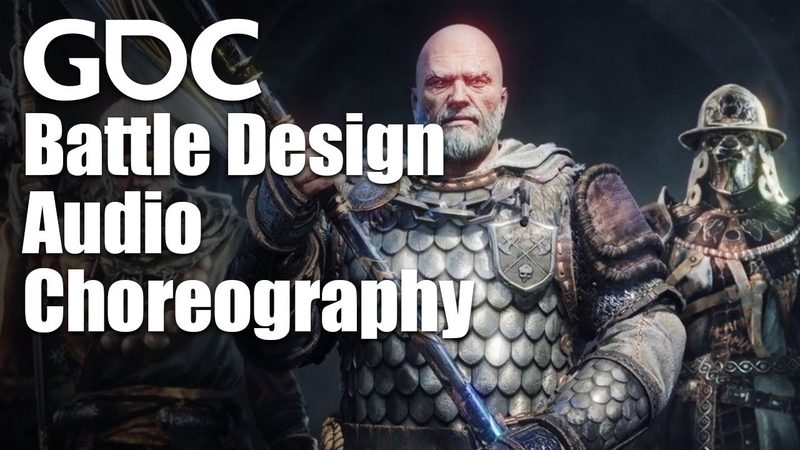
Fighting Legos: Audio Choreography for Battle Design
The primary objective of modern combat audio design is to move beyond simple, binary sound effects toward a system of bespoke, highly specific audio choreography.
- Modern AAA combat design, such as in For Honor, utilizes voiceover sound effects as a core game mechanic to provide players with immediate, consistent feedback that confirms their inputs and helps them learn the game's rules.
- Moving away from traditional 'variety packs'—where random sounds are pulled from a large bank—improves gameplay by creating a highly specific, repeatable audio-to-animation bond that reinforces player actions.
- To achieve this consistency, audio directors must coach voice actors to perform specific, repeatable sounds rather than relying on the long-standing industry practice of recording large batches of varied takes.
Don't You Dare Say Showstopper: Bootstrapping Your Own QA Team
This presentation outlines a strategy for bootstrapping a quality assurance (QA) team within an educational or small-scale development environment, specifically focusing on the experience of USC Games as they prepared the title Chambara for console submission.
- USC Games successfully navigated PlayStation 4 console submission on the first attempt with zero reported issues by bootstrapping a dedicated, disciplined QA team.
- QA should be treated as a critical, integrated development pillar rather than a menial afterthought to ensure software stability and meet rigorous platform requirements.
- The 'CSI' model of bug reporting improves developer-tester communication by training testers to act as objective evidence gatherers rather than subjective detectives.
Dynamics: The State of the Art
The game industry currently lacks a unified framework for understanding how games generate meaning, a deficiency that hinders the medium’s maturation.
- Meaning in games is not inherent in static rules but emerges from the juxtaposition of player actions and systemic responses, similar to the Kuleshov Effect in cinema.
- The industry must shift focus from borrowing narrative techniques from other media to prioritizing foundational dynamics—the runtime behaviors generated by mechanics.
- Designers must balance authorial control with open systems, as seen in titles like Splinter Cell and Far Cry 2, to foster player-driven dynamics.

More "I", Less "A" in AI Interviews
Effective technical hiring in the game industry requires a shift away from abstract trivia and toward practical, iterative assessment.
- Replace abstract trivia and whiteboard tests with a structured, three-phase evaluation process consisting of a take-home programming task, a foundational phone screen, and an in-person architectural discussion.
- Prioritize assessments that evaluate code maintainability, data structure selection, and the ability to adapt to design changes rather than testing for memorized API details or obscure language quirks.
- Use hands-on programming tests as a primary filter to distinguish developers with genuine technical proficiency from those who rely on rehearsed buzzwords.
Cinematic Environment Production for Uncharted 4
The production of cinematic environments for Uncharted 4 centers on the integration of visual composition and narrative storytelling to deepen character development.
- Transitioning from pre-rendered cinematics to a real-time pipeline eliminated technical bottlenecks, enabling seamless transitions between gameplay and cutscenes.
- Cinematic spaces are scaled up by 25% compared to standard gameplay environments to accommodate specific camera angles and collision requirements.
- The production workflow utilizes an iterative process starting with rough block meshes to establish scale and composition before committing to detailed asset creation.



State of the Game Industry 2021
The global game industry entered 2021 characterized by a shift toward next-generation hardware and a complex transition to remote work environments.
- The PlayStation 5 is the primary console of interest for 44% of developers, while interest in VR and AR has cooled to 38% as the market consolidates around the Oculus Quest.
- Remote work has proven effective, with 66% of professionals reporting stable or increased productivity, despite project delays rising from 33% to 44% year-over-year.
- Labor tensions remain high, as 30% of the workforce reports 'crunch' weeks exceeding 60 hours, leading to 51% of developers supporting unionization.