
Game Developers Conference
Game Developers Conference (GDC, now the GDC Festival of Gaming) is the professional event for the games industry. It publishes recorded talks and interviews, annual industry survey reports such as the State of the Game Industry, and news articles.
Documents
Middle-earth: Shadow of War: Creating Multi-Character Combat Animations
The development of Middle-earth: Shadow of War centered on the implementation of complex, multi-character combat animations to establish a visceral and brutal aesthetic.
- Monolith Productions managed a high-volume animation pipeline for Middle-earth: Shadow of War by producing 1,200 unique sync-action animations between the player and orcs within a three-year development window.
- To maintain production efficiency, the team utilized a motion capture-first workflow where in-house animators performed the stunts, allowing for rapid iteration and immediate feedback from designers on-site.
- The studio employed a 'destructive' animation workflow that prioritized baking keys and layering poses over traditional non-destructive rigging, enabling animators to quickly adjust timing and weight without getting precious about curve handles.
World Building with Architecture
Architecture functions as a foundational narrative and navigational instrument in game design, operating beneath the level of conscious player awareness to establish tone, strategy, and emotional context.
- Architecture serves as a primary narrative and navigational tool, using materiality, scale, and spatial hierarchy to guide player behavior subconsciously without relying on HUDs or dialogue.
- Games like The Legend of Zelda: Breath of the Wild, Fallout 3, and Inside demonstrate that silhouette-based wayfinding and cultural material expression are essential for creating immersive, legible worlds.
- Developers can leverage the absence of real-world financial and socio-political constraints to employ non-Euclidean geometry and forced perspective, creating structures impossible in traditional construction.
Virtual Insanity: Meta AI on Assassin's Creed: Origins
The development of Assassin’s Creed: Origins introduced a sophisticated Meta AI architecture designed to sustain a persistent, living ecosystem within a massive open-world environment.
- Ubisoft implemented a 'Meta AI' system for Assassin's Creed: Origins that manages NPCs and objects globally, allowing them to function autonomously, navigate, and maintain persistent states even when they are far from the player or outside the loaded nav mesh.
- The game utilizes an AI network graph to handle long-range navigation for entities, enabling NPCs to travel across the map and perform scheduled tasks like eating or socializing without requiring the player's presence.
- To optimize performance, the engine uses a component-level Level of Detail (LOD) system with six states based on distance and visibility, allowing the game to disable or reduce the update frequency of specific components like head-tracking or AI logic.
What Successful Product Managers Do Differently in Free-to-Play Games
Successful product managers in the free-to-play mobile gaming industry distinguish themselves by mastering five core competencies that bridge the gap between creative design and business performance.
- Successful product managers own the business side of a game by prioritizing metrics like LTV, retention, and monetization to balance the internal tension between CPI and LTV.
- Product managers can drive significant revenue growth through minor data tweaks; for example, allowing players to repeat events in Angry Birds Match increased baseline revenue by 20% without requiring engineering-heavy updates.
- When data is insufficient to justify a major feature, successful product managers use storytelling to sell the vision to leadership, such as when Clash of Clans successfully entered the Japanese market through culturalization and local partnerships despite a lack of initial localized data.

Behind the Audio of the Heroes of Star Wars Battlefront II
The audio design for Star Wars Battlefront II centers on the objective of creating an immersive, authentic soundscape that bridges multiple eras of the franchise.
- The audio team managed a roster more than twice the size of the previous game by implementing a modular sound patch configuration system.
- To prevent listener fatigue and maintain variety, designers created between five and twenty-five unique variations for individual sound effects.
- The development team utilized a data-driven approach that shared environmental assets, such as debris and reflections, to streamline production and optimize performance.

The Diary of a Modern PR Campaign: How to Plan Your Game's Promotion
Successful game promotion requires a transition from passive awareness to a structured sales funnel that guides potential players from initial interest to long-term advocacy.
- Successful promotion requires transitioning from passive awareness to a structured sales funnel that guides players from initial interest to long-term advocacy.
- Developers must build direct communication channels, such as newsletters and Discord servers, to maintain audience engagement throughout the pre-launch phase rather than relying on unpredictable store features.
- The promotional lifecycle follows a rigorous five-phase process, starting with peer-tested pitches and high-quality asset creation, and concluding with strategic post-launch support.
Don't Call Them Whales: F2P Spenders and Virtual Value
The free-to-play gaming industry is defined by a consistent revenue model where approximately 2% of the user base generates between 75% and 85% of total income.
- Approximately 2% of a free-to-play game's user base generates between 75% and 85% of total revenue.
- High-spending players are typically older, affluent professionals who view their in-game purchases as rational investments in a hobby rather than impulsive or compulsive behavior.
- Spending patterns among top users are consistent and long-term, mirroring the financial habits of enthusiasts in traditional hobbies like golf or music collecting.
Dialogue 101
Effective dialogue production in the gaming industry relies on rigorous pre-production data analysis and disciplined financial forecasting.
- Establish accurate dialogue budgets by conducting rigorous pre-production analysis that tracks character metrics, line counts, and the specific distinction between systemic and narrative dialogue.
- Ensure fiscal alignment by factoring union rates, studio fees, and session minimums into financial forecasts during the early development lifecycle.
- Prioritize specialized talent agencies over crowdsourced platforms to secure actors capable of delivering both emotional nuance and the physical intensity required for combat and death sequences.
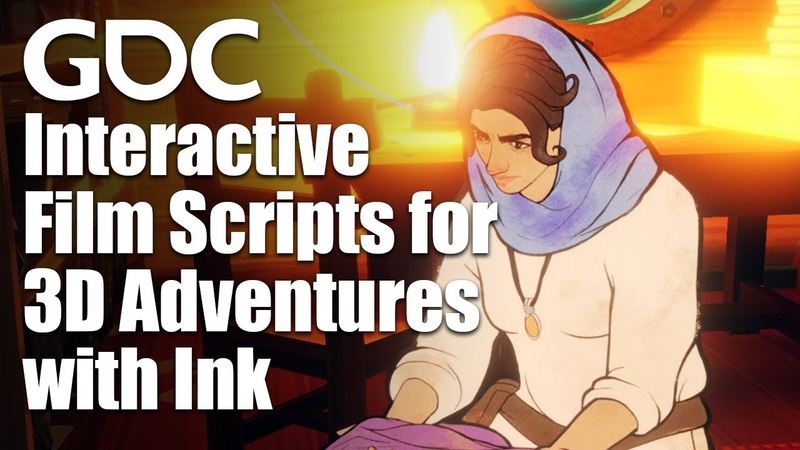
Creating Interactive Film Scripts for 3D Adventures with Ink
The development of interactive narrative experiences requires a bridge between complex branching scripts and graphical game engines.
- Ink is an open-source narrative scripting language designed to allow writers to focus on prose while using lightweight markup to manage complex interactive logic and branching dialogue.
- The 'Inky' editor is a custom, open-source tool that enables writers to play through their scripts in real-time as they write, allowing for narrative development independent of the main game engine.
- Developers can integrate 3D game environments with Ink by using 'choices' as a mechanism to trigger specific game actions, such as character movement, object interaction, or camera transitions.
Working at the Heart of the Team Part TWO!
Successful game production depends less on rigid adherence to formal methodologies like agile or scrum and more on the cultivation of robust team dynamics and interpersonal soft skills.
- Project success relies more on robust team dynamics and interpersonal soft skills than on rigid adherence to formal methodologies like agile or scrum.
- High-performance cultures are driven by intrinsic motivation and the alignment of individual purpose with collective goals rather than superficial incentives.
- Thriving teams prioritize specific cultural norms, including the ability to disagree and commit, a talent for simplifying complex problems, and a culture of vulnerability that enables rapid conflict resolution.
Beyond Bots: Making Machine Learning Accessible and Useful
Machine learning is rapidly transitioning from a theoretical research discipline into a practical, scalable toolkit for modern game development.
- Machine learning is shifting from theoretical research to a practical toolkit for automating complex engineering tasks like character locomotion and physics-based behavioral modeling.
- Reinforcement learning, when implemented via iterative experimentation and defined reward functions, serves as a primary method for increasing development productivity and software reliability.
- Generative models—including grid search for neural network optimization, style transfer, and latent space interpolation—act as creative force multipliers for artists and designers.
The Sounds of Year Walk and DEVICE 6
The audio design for the games Year Walk and Device 6, developed by Simogo, demonstrates how cohesive soundscapes can elevate interactive narrative experiences.
- To ensure music serves the game's atmosphere, avoid rigid metronomic timing; recording without a click track can create a more natural, organic flow that mimics environmental sounds like wind or breathing.
- Blur the lines between music and sound effects by sharing source audio assets with sound designers, who can then manipulate, pitch-shift, and layer them into transitions to create a cohesive sonic environment.
- Increase player emotional attachment to the soundtrack by creating moments where the game world acknowledges the music, similar to how characters in Nintendo's Zelda series interact with musical themes.