
Game Developers Conference
Game Developers Conference (GDC, now the GDC Festival of Gaming) is the professional event for the games industry. It publishes recorded talks and interviews, annual industry survey reports such as the State of the Game Industry, and news articles.
Documents
Using Print-on-Demand for Prototyping and Fast-to-Market Paths in Game Design Research
Print-on-demand services offer a viable, sustainable alternative to traditional manufacturing for tabletop game designers, particularly those focused on niche educational or historical subjects.
- Print-on-demand (POD) services like The Game Crafter offer a viable path for game designers to bypass traditional manufacturing hurdles, such as international shipping logistics, managing return merchandise authorizations, and securing retail shelf space.
- Designers must conduct rigorous quality assurance (QA) rounds; in the case of the 'Lost and Found' series, the team performed 19 rounds of QA on the final print-ready files before moving to production.
- Regulatory compliance regarding child safety is critical, as POD providers may have different age-rating standards (e.g., 12+ vs. 14+) than legal requirements for ink safety and small-part hazards, necessitating independent product liability insurance.
Whose Game Is It, Anyway? How Community Relationships Shape Games: Lessons from Warframe
The long-term success of the free-to-play title Warframe is rooted in a development philosophy that prioritizes radical transparency and a collaborative partnership with its player base.
- Digital Extremes maintains community trust by consistently communicating the status of updates, even when delays occur, ensuring players always have a reliable source of information regarding the game's development routine.
- The studio avoids 'pay-to-win' pitfalls by strictly separating monetization from gameplay mechanics, such as their 2013 decision to remove stats from cosmetic items to ensure fair play.
- When community feedback indicates a feature is failing—such as the 2016 console-friendly navigation system that negatively impacted retention—the team prioritizes player preference by reverting to more effective, nostalgic designs like the original star chart.
Workflow Driven Tools Design
Remedy Entertainment’s transition from a monolithic, MFC-based toolset to a modern, workflow-driven architecture represents a strategic shift in game development tooling.
- Remedy Entertainment transitioned from a monolithic, MFC-based toolset to a .NET and WPF-based framework to resolve technical debt and slow iteration speeds.
- The refactoring project required approximately one year of labor from two full-time programmers to complete.
- The architecture separates UI and data management by using documents for layout configuration and contexts for data abstraction, reading, writing, and change tracking.

Inside The New Xbox Series X|S With Microsoft's Jason Ronald - GDC Podcast
The development of the Xbox Series X and Series S consoles was driven by a developer-centric philosophy aimed at removing technical barriers to creative expression.
- Microsoft prioritized developer feedback starting in 2016 to remove technical barriers, focusing on CPU performance, IO throughput, and graphical fidelity.
- The Xbox Velocity Architecture and hardware-accelerated features like DirectX ray tracing and variable rate shading were implemented to enhance overall console performance.
- The Series X and Series S share symmetrical CPU and IO performance to allow developers to scale titles across hardware tiers without significant engine rework.
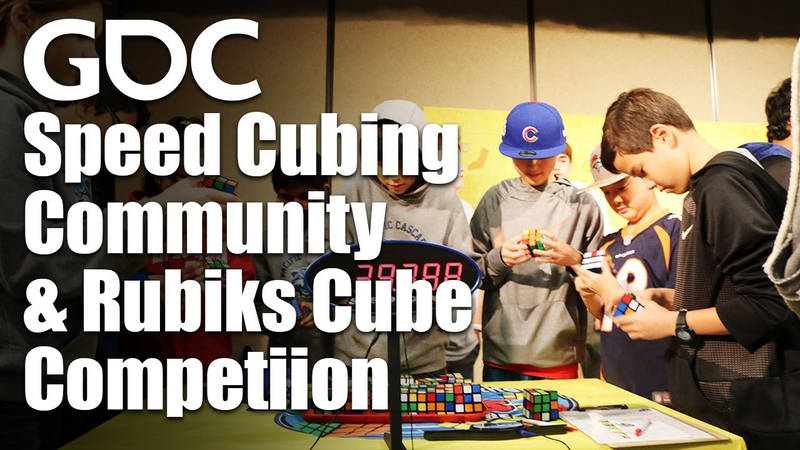
How the Speed Cubing Community Turned Rubik's Cube into a Competitive Genre
Speed cubing has successfully transitioned from a niche hobby into a structured global competitive sport by prioritizing community-driven governance and standardized performance metrics.
- The speed cubing community transformed the Rubik's Cube from a stagnant 1980s toy into a competitive sport by establishing the World Cube Association (WCA) to standardize regulations and event formats.
- Competitive speed cubing utilizes an 'average of five' scoring system, which discards the fastest and slowest times to mitigate the impact of luck-based scrambles and ensure fair performance comparisons.
- The sport is categorized as a 'low-trust' game with parallel play, meaning participants solve puzzles independently without direct interference, fostering a collegiate and friendly environment.
Discoverability from Day Zero
Discoverability serves as a foundational pillar of game development that must be integrated into the creative process from the earliest stages of production.
- Integrate discoverability into the creative process from the earliest stages of production rather than treating it as a post-launch marketing task.
- Treat discoverability as a core design challenge by prioritizing clear communication of the game’s vision and accessibility from day zero.
- Test design concepts early with non-developers to identify flaws and refine the core experience before committing significant resources.

Triage on the Front Line: Improving Mafia III AI in a Live Product
The post-launch improvement of artificial intelligence in the open-world crime drama Mafia III serves as a case study for managing live product updates under strict resource and time constraints.
- Hangar 13 utilized a cross-functional 'strike team' consisting of engineers, animators, designers, and QA to execute a three-month post-launch AI improvement patch for Mafia III.
- Prioritization of AI fixes was determined by a three-factor framework: impact (player experience), complexity (potential for unintended knock-on effects), and cost (time and resource allocation).
- The team addressed AI responsiveness by refining event-based reaction systems, such as increasing the detection range for gunshots beyond the original 40-meter limit to ensure enemies properly escalated to combat.

Being Pro at Being a Noob
Career advancement in the game development industry is fundamentally driven by a commitment to continuous learning, the cultivation of authentic professional relationships, and the strategic presentation of one’s work.
- Prioritize small, polished projects over ambitious, unfinished concepts in your portfolio to demonstrate core competency and execution skills to recruiters.
- Develop the discipline to ship functional prototypes within one-week timeframes to effectively showcase your ability to deliver finished work.
- Seek direct, critical feedback from established industry professionals as the primary method for refining technical skills and professional judgment.
The Power of an Embedded Community Platform to Inform, Engage, Educate and Retain
Integrating community platforms directly into the game environment serves as a critical strategy for enhancing player engagement, retention, and monetization.
- Integrating community platforms directly into the game environment eliminates friction from external forums, which helped Zombie Gunship Survival achieve conversion rates between 45% and 50% among new players.
- Owning community infrastructure allows studios to bypass third-party social media algorithms, ensuring direct control over brand messaging and audience access.
- Embedded platforms facilitate the collection of high-quality, actionable player feedback, which informs live-ops strategies and the development of community-requested features.

Winding Road Ahead: Designing Utility AI with Curvature
The presentation introduces Curvature, a standalone, open-source utility AI design tool developed to address the common industry challenge of making complex AI behaviors intuitive and accessible for designers.
- Curvature is an open-source, engine-agnostic utility AI tool designed to decouple AI logic from game engine pipelines, enabling real-time editing and faster iteration.
- The tool utilizes a natural language-based preset generator that maps plain-language behavioral descriptions to complex mathematical response curves, lowering the barrier to entry for designers.
- Designers can achieve 'intuition through play' by visualizing how specific input variables, such as distance or team affiliation, directly influence agent scores and final behavioral outcomes.

The Elementary Particles
Visual effects design functions as a highly contextual discipline where technical execution must align strictly with the unique gameplay mechanics and narrative requirements of a project.
- Visual effects design must be context-dependent, requiring artists to adapt textures, motion cues, and spatial distribution to the specific gameplay mechanics and narrative needs of each project.
- The development process follows an iterative cycle that begins with low-fidelity representations for timing and debugging before layering in high-detail and volumetric elements.
- Designers must employ manual adjustments and visual cheats to preserve gameplay readability when camera angles or weapon positioning threaten to obscure critical information.

The Science of Desirability
Desirability functions as the critical intersection between sensory anticipation and emotional appraisal, serving as the primary metric for whether a digital experience meets or exceeds user expectations.
- Desirability is defined as the anticipation and expectation that an experience will meet or exceed a user's hopes, a metric that varies significantly between novices and experts.
- Experts possess a specialized vocabulary—such as tempo or time signatures in music—that allows them to articulate why they like or dislike an experience, whereas novices often struggle to move beyond vague, unhelpful feedback.
- Developers can bridge the communication gap with users by providing them with specific terminology or worksheets during playtesting to help them translate general feelings into actionable design feedback.