
Game Developers Conference
Game Developers Conference (GDC, now the GDC Festival of Gaming) is the professional event for the games industry. It publishes recorded talks and interviews, annual industry survey reports such as the State of the Game Industry, and news articles.
Documents
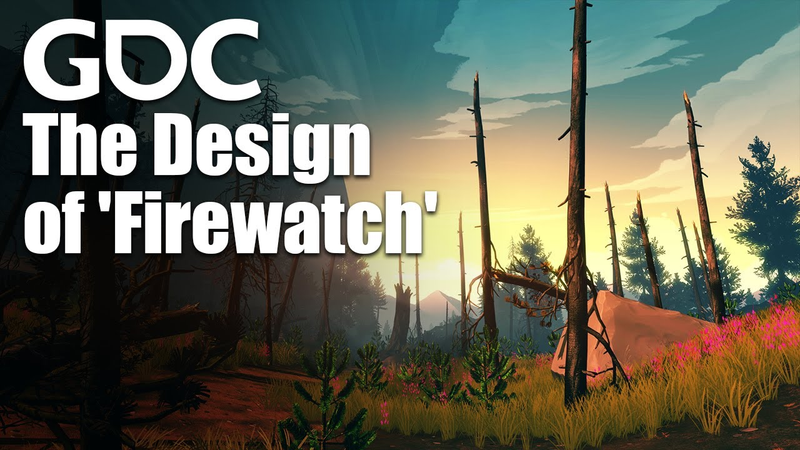
Interactive Story Without Challenge Mechanics: The Design of Firewatch
The design of Firewatch centers on the prioritization of narrative integrity over traditional challenge-based mechanics.
- Design narrative-driven games as a series of 'interesting outcomes' rather than 'interesting choices,' shifting the focus from risk-reward analysis to the organic, often invisible, results of player behavior.
- Implement a centralized 'fact-checking' system to track game state variables, preventing logic conflicts where redundant or contradictory story facts cause bugs in complex, branching narratives.
- Use 'reactivity' to support a wide spectrum of player possibilities, ensuring that even if a player ignores specific quest instructions or sequence-breaks, the game world acknowledges their actions through altered dialogue and narrative consequences.
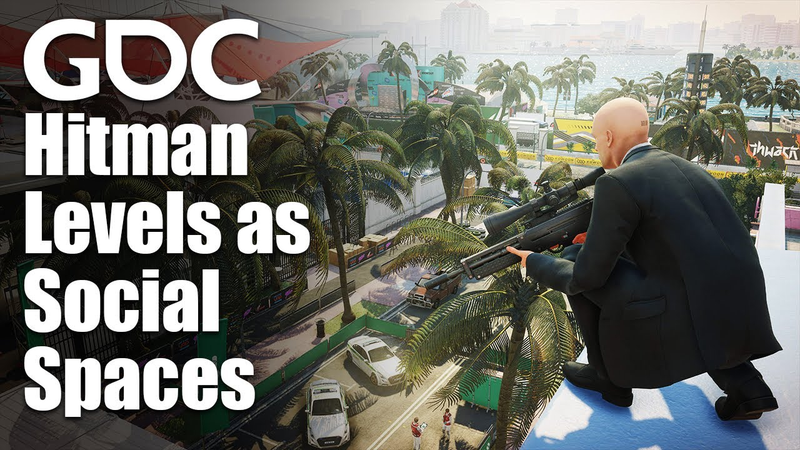
Hitman Levels as Social Spaces: The Social Anthropology of Level Design
The Hitman series utilizes a design philosophy centered on the concept of deadly sandboxes, where the architecture functions as a complex social ecosystem rather than a traditional linear path.
- Hitman levels function as complex social ecosystems by applying sociological frameworks that distinguish between 'front-stage' public areas and 'backstage' private zones.
- Player behavior and navigation strategies are governed by disguise-based mechanics and social expectations rather than traditional linear pathing.
- Level performance is optimized by providing a full spectrum of social interaction, whereas maps with overly hostile or linear designs consistently underperform.
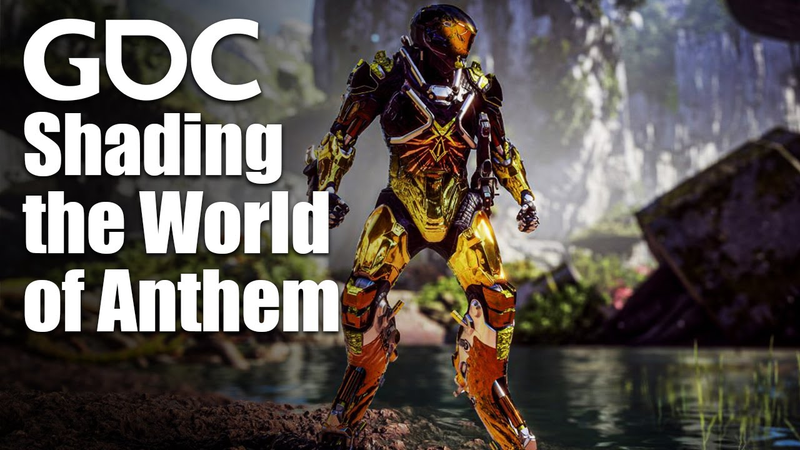
Shading the World of Anthem
The development of Anthem required a sophisticated approach to environmental rendering, necessitating a balance between high-fidelity visual complexity and the rigid performance constraints of the Frostbite engine.
- The development of Anthem utilized procedural shaders to simulate dynamic environmental phenomena like lava flows and precipitation while maintaining performance within the Frostbite engine.
- Lava rendering combined photogrammetry-derived textures, height maps, and flow maps to accurately replicate fluid movement and temperature-based color gradients.
- Weather systems achieved environmental reactivity by using world-space normals and layered ripple nodes to dynamically adjust surface properties like reflectance and porosity for rain and puddle accumulation.
An Introduction to Situational Game Design
Situational game design offers a player-centric framework for analyzing and creating games, shifting the focus from the mechanics of the interface to the internal experience of the player.
- Situational game design shifts the focus from mechanical feedback loops to the player's internal experience, defining play as the intersection of external system constraints and the player's personal strategies and expectations.
- A 'situation' is defined as a stable set of constraints limiting player action, while a 'move' is any physical or cognitive action that alters those constraints and transitions the player into a new state.
- To maintain engagement, designers should provide a meaningful range of choices, ideally between three and seven options per situation.
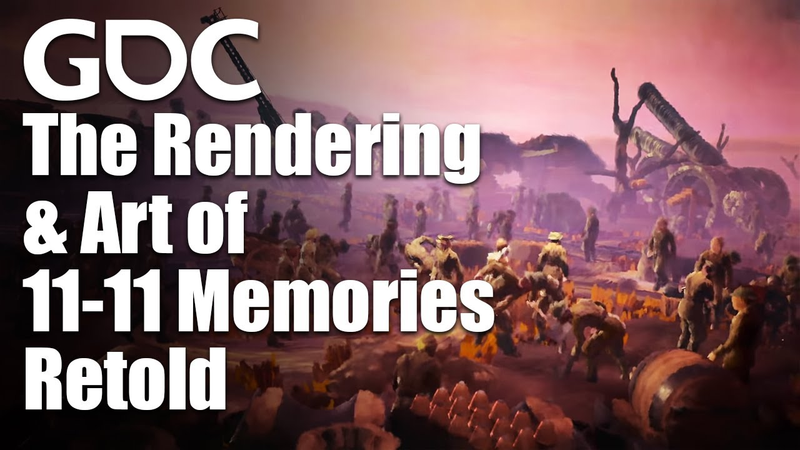
A Living Painting: The Rendering and Art of 11-11 Memories Retold
The development of 11-11: Memories Retold demonstrates a successful integration of technical engineering and artistic vision to create a distinct, oil-painted aesthetic within a 16-month production cycle.
- To achieve a painterly aesthetic in '11-11 Memories Retold,' Aardman Animations developed a custom rendering pipeline that uses motion vectors to ensure brush strokes move coherently with the scene, preventing screen-door flickering.
- The rendering pipeline utilizes a coarse culling system with 16x8 tiles to manage particle-based brush strokes, while a Kawase blur filter is applied to backgrounds to soften edges and maintain a painterly look.
- To optimize performance, the team repurposed an unused channel in the G-buffer to store specularity data, freeing up an entire buffer for the painterly effect at the cost of more expensive lighting calculations.
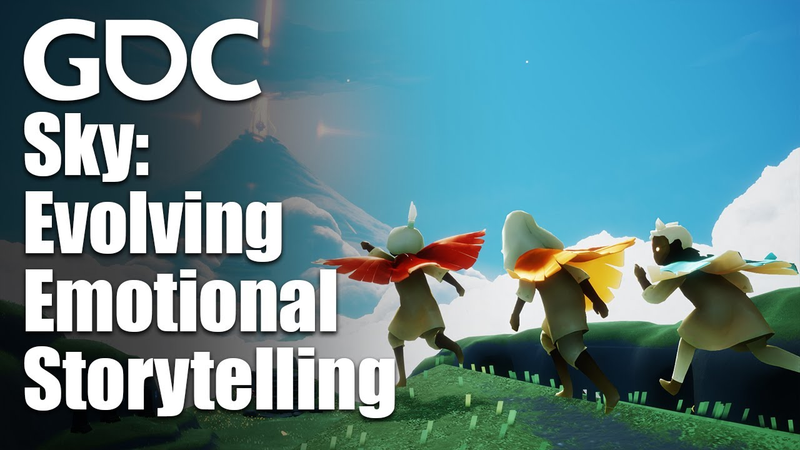
Evolving Emotional Storytelling in thatgamecompany's Sky
Sky: Children of the Light represents a fundamental shift in game design, moving away from traditional conflict-driven narratives toward an emotion-first framework that prioritizes social connection and altruism.
- thatgamecompany shifted the traditional hero’s journey to an emotion-first framework in Sky: Children of the Light, replacing conflict-driven mechanics with altruism and social connection.
- The game utilizes a candle mechanic to facilitate gifting and cooperation, intentionally replacing transactional progression with systems that reward collaborative behavior.
- Designers successfully iterated on social mechanics by pivoting away from forced progression after early beta feedback identified friendship systems as unclear or overly greedy.
How Killer Queen Built an Esports Scene on an Indie Budget
The development of a national esports scene for the indie arcade game Killer Queen demonstrates how small studios can foster competitive communities through grassroots engagement rather than high-budget marketing.
- Killer Queen Arcade built a national esports scene by leveraging a five-on-five team design that mandates physical proximity, forcing players to interact and form local communities at arcade venues.
- Developers can foster community ownership by releasing source assets like logos and sprites, allowing fans to create their own merchandise, event posters, and marketing materials.
- Consistency in event scheduling, such as the '5v5 Fridays' at NYU, is more effective for community retention than sporadic, high-effort events because it lowers the barrier to entry for regular participation.
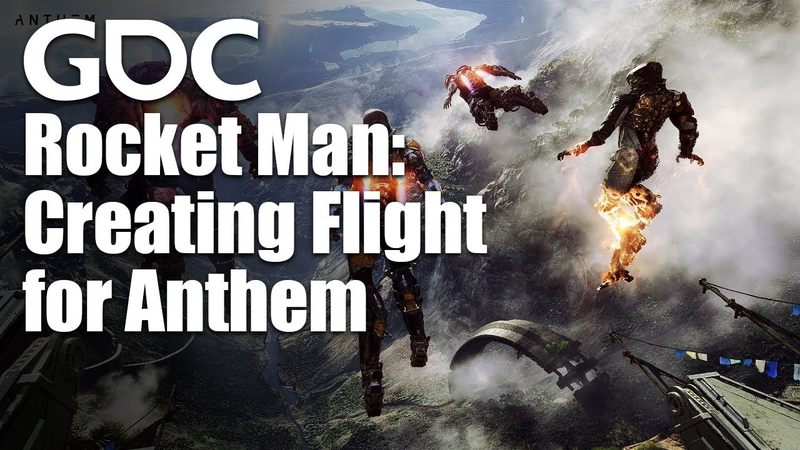
Rocket Man: Creating Flight for Anthem
The development of flight mechanics in Anthem centers on the pursuit of a high-fidelity superhero fantasy, prioritizing intuitive, fluid movement over strict adherence to realistic physics.
- To solve the problem of players bypassing level design by flying over the map, BioWare implemented a heat-management system that forces players to navigate through cooling environments like waterfalls or water surfaces, turning traversal into a skill-based mechanic.
- The team abandoned realistic physics in favor of 'game feel,' utilizing a binary boost state that triggers immediate visual feedback—such as camera shake, field of view adjustments, and post-processing effects—to simulate speed while the character's actual velocity ramps up over time.
- To maintain consistent physics, the game capsule never rotates on the X or Z axes; instead, all banking, pitching, and rolling visuals are handled entirely through animation, requiring 27 unique base poses per suit to cover slow, medium, and fast flight speeds.
Live Ops in Star Wars: Galaxy of Heroes
The live operations strategy for Star Wars: Galaxy of Heroes centers on maintaining a durable, character-based economy within a mid-to-hardcore mobile RPG framework.
- The game maintains a durable economy by treating individual characters as the primary units of value, ensuring long-term player investments remain protected against power creep.
- To manage a roster of over 170 characters, the development team employs a 'nesting utility' strategy that creates specific faction-based synergies rather than relying on static power hierarchies.
- The ecosystem approach forces players to utilize their entire collection by revitalizing legacy characters, preventing new releases from rendering older units obsolete.
Roguelikes And Narrative Design With Hades Creative Director Greg Kasavin - GDC Podcast
The transition from game journalism to development offers a unique perspective on the industry, emphasizing the importance of analytical rigor in creative production.
- Supergiant Games maintains a small, stable team structure to preserve the long-standing personal relationships and collaborative synergy that define their development process.
- The studio prioritizes the element of surprise in game design, intentionally avoiding sequels to ensure each project offers a distinct and novel experience.
- Supergiant Games utilizes Early Access to shorten the feedback loop, allowing them to test core ideas and validate narrative resonance with players long before a full release.
Balancing Community and Business: Walking the Tightrope of Needs
Effective community management in the mobile free-to-play sector requires balancing the often-conflicting needs of players and business stakeholders.
- Community managers should transition from reactive buffers to proactive product partners by aligning player feedback with business KPIs like revenue, engagement, and retention.
- Vocal community members often represent less than one percent of the total active, spending player base, meaning they are not always representative of the broader audience.
- Threats to quit are poor predictors of actual churn, as 65 percent of users who threatened to leave remained active in the game.
Animating the Main Villain in Marvel's Spider-Man (or "What, I'm Rigging HOW Many Legs?!")
The development of the primary antagonist, Doctor Octopus, for the 2018 title Marvel’s Spider-Man presented significant technical challenges, primarily centered on the character’s four mechanical tentacles.
- The Doctor Octopus rig for Marvel’s Spider-Man (2018) utilized a massive 790-joint structure, with 552 joints dedicated exclusively to the four mechanical tentacles.
- To prioritize animator accessibility and debugging speed over file size, the team utilized an all-in-one asset approach rather than a modular system for the character's 800,000+ vertices.
- The team implemented proxy tiers to allow animators to work with simplified geometry during the blocking phase, effectively managing the high computational cost of the complex rig.