
Game Developers Conference
Game Developers Conference (GDC, now the GDC Festival of Gaming) is the professional event for the games industry. It publishes recorded talks and interviews, annual industry survey reports such as the State of the Game Industry, and news articles.
Documents
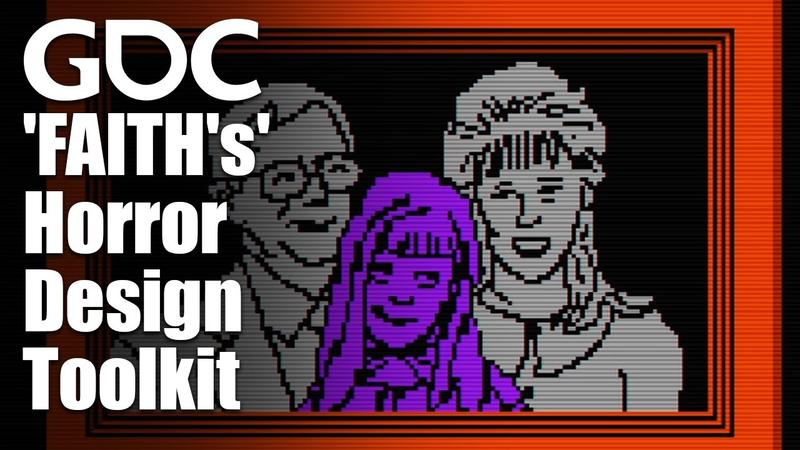
MORTIS 101: 'FAITH's' Horror Design Toolkit
Effective horror design relies on a cohesive framework built upon three foundational pillars: narrative, mechanics, and affect.
- Effective horror design relies on a cohesive framework of narrative, mechanics, and affect to cultivate persistent dread rather than relying on superficial jump scares.
- Developers should prioritize minimalism and the fear of the unknown to subvert player expectations, turning routine interactions into sources of apprehension.
- High-stakes mechanics, such as one-hit-kill scenarios, must be balanced with generous save points and respawn systems to maintain tension without causing player frustration.
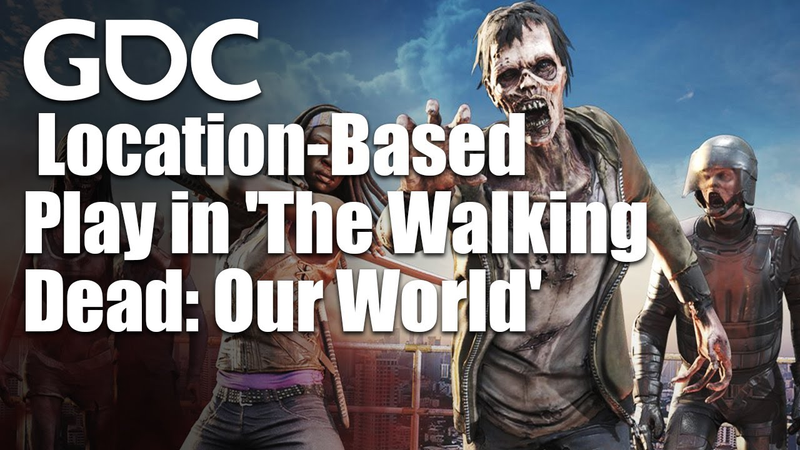
Social Depth of Location-Based Play in 'The Walking Dead: Our World'
The Walking Dead: Our World demonstrates how mobile developers can successfully integrate location-based play with social mechanics by prioritizing accessibility and collaborative engagement.
- Collaborative guild-based challenges drive engagement for 90% of daily active users, serving as the primary engine for both player retention and monetization.
- The game utilizes a 'play-everywhere' design model that ensures consistent gameplay regardless of the user's physical environment, prioritizing accessibility over complex spatial competition.
- The core gameplay loop consists of 15-second, bite-sized combat and scavenging encounters, which prototyping proved more effective than analysis-heavy mechanics for mobile contexts.
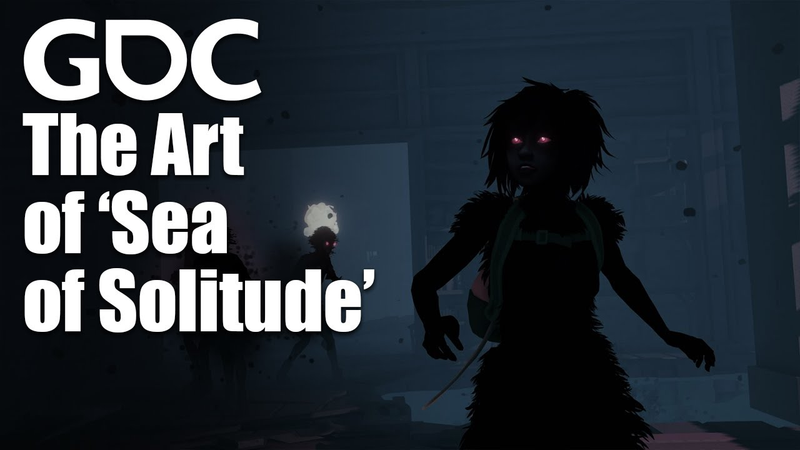
Paint It Black: The Art of 'Sea of Solitude'
Sea of Solitude functions as a deeply personal exploration of human loneliness and mental health, utilizing a surreal, metaphorical landscape to externalize the protagonist’s internal struggles.
- The game's core design philosophy centers on 'turning the inside out,' where the protagonist's internal emotional state directly dictates environmental factors like water levels and weather patterns.
- To achieve a unique visual style, the team implemented custom Unity tools that allowed for precise control over shadow and ambient occlusion coloring, preventing the environment from appearing blunt or flat.
- The developers manipulated the specular component of materials by applying subtle color gradients, creating a dynamic, living world that reacts to player movement without being overtly noticeable.
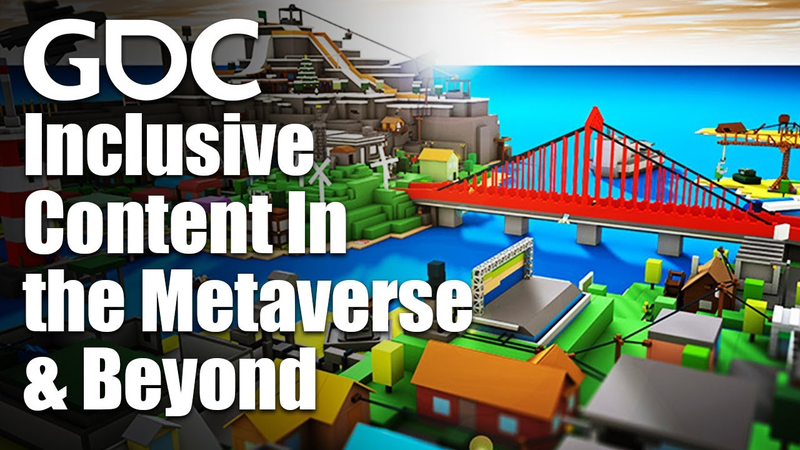
Creating Inclusive Content In the Metaverse and Beyond
The development of inclusive metaverse experiences necessitates a fundamental shift from traditional, hierarchical game design toward models that prioritize equity, empathy, and authentic representation.
- Inclusive metaverse development requires moving away from traditional, military-centric, and hierarchical design models toward structures that prioritize equity and authentic representation.
- Development teams should implement inclusive recruitment practices, such as anonymized resumes and flexible work environments, to integrate diverse cultural and neurodivergent perspectives.
- Creative abrasion—the practice of challenging conventional tropes through vulnerable, play-based communication—should be used as a tool to embed inclusivity into the organizational culture.

Real-Time Cloth Solutions on 'Marvel's Spider-Man'
Real-time cloth simulation in Marvel’s Spider-Man serves as a critical component for achieving dynamic, responsive character movement within an open-world environment.
- Insomniac Games used a hybrid cloth solution for 'Marvel's Spider-Man' that combined real-time Havok physics simulation with corrective blend shapes to achieve high-fidelity movement while maintaining performance.
- The team addressed the lack of cloth-to-cloth collision in the engine by using strategically placed collision capsules and limiting cloth complexity to prevent clipping issues.
- To achieve specific visual targets, the team used a three-tier approach: simulated blend shapes for initial poses, real-time cloth for dynamic follow-through, and additional corrective blend shapes for final polish.

Level Up Your Jenkins Reporting
Managing large-scale CI/CD infrastructure requires a shift from manual maintenance to automated, data-driven operational intelligence.
- Electronic Arts manages a large-scale CI/CD infrastructure consisting of over 200 Jenkins masters and 2,000 build nodes.
- Centralizing log data via an operational stack—typically Elasticsearch, Logstash, and Splunk—is critical for identifying failure patterns and performance bottlenecks.
- Implementing multi-layered monitoring across application, operating system, and hypervisor levels reduces manual debugging effort and ensures system reliability.

Fireside Chat: Amir Rao and Kelly Wallick on 'Hades'
Supergiant Games achieved significant success with Hades by shifting from a philosophy of constant reinvention to one of synthesis, combining successful mechanics from their previous titles, Bastion, Transistor, and Pyre.
- Supergiant Games utilized Early Access as a core development strategy for Hades, allowing the team to iterate based on player feedback and manage complex, overlapping game systems that would have been difficult to test in isolation.
- Before the 2018 Early Access launch, the studio conducted three one-month 'rehearsal' updates to test their internal production pipeline and determine the optimal cadence for content delivery.
- The team transitioned from a four-week update cycle to an eight-to-ten-week cycle during Early Access to better accommodate the needs of development and content integration.

Design by the Numbers: Using Data for Good
This analysis explores the integration of data analytics into mobile game design, using the development of the RPG battler Looney Tunes: World of Mayhem as a primary case study.
- Designers should treat data as a core creative tool to identify friction points and optimize engagement loops, rather than delegating analytics exclusively to product managers.
- Comprehensive data logging of every player interaction—including taps, navigation, and resource spending—is essential to move beyond intuition and inform game balance decisions.
- Tracking store impressions allowed the developers of Looney Tunes: World of Mayhem to implement a three-hour free prize, which directly resulted in increased conversion rates.
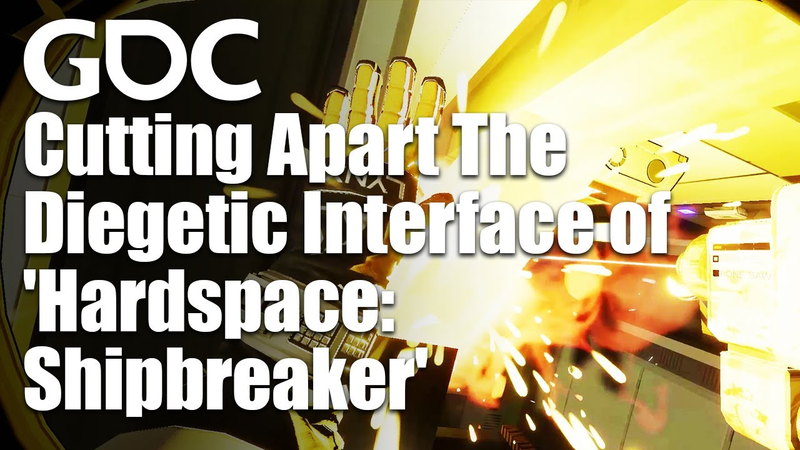
Cutting Apart The Diegetic Interface of 'Hardspace: Shipbreaker'
The design of Hardspace: Shipbreaker demonstrates how diegetic interfaces can serve as a primary vehicle for both narrative depth and functional user experience.
- Blackbird Interactive utilized a diegetic UI design approach in 'Hardspace: Shipbreaker' to embed narrative and game presence directly into the player's interface, effectively turning UI elements into world-building tools.
- The redesign process was driven by four pillars of information architecture, focusing on clear hierarchy, reduced screen clutter, and contextual responsiveness to gameplay events.
- To overcome limited development resources and short release cycles of one to three months, the team integrated UX, game design, and narrative disciplines from the start to create inexpensive, immersive solutions.
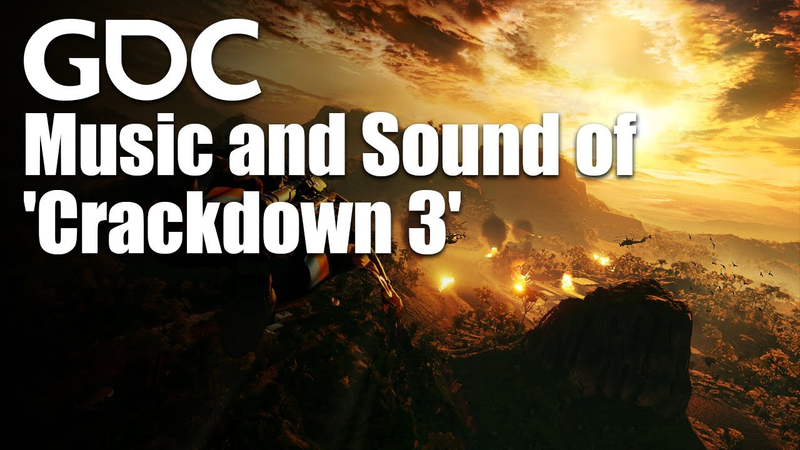
The Gangs Bite Back: Music and Sound of 'Crackdown 3'
The audio design for Crackdown 3 centers on a cinematic cyber trap aesthetic, blending modern hip-hop, electronic bass, and orchestral scoring to mirror the game’s high-energy, futuristic open world.
- The audio engine utilizes a custom, listener-relative raycasting system in Wwise to generate real-time acoustic simulations for over 700 destructible props without manual markup.
- To manage cloud-based physics, the team built a bridge between server-side destruction data and client-side audio that categorizes impacts based on material, mass, and impulse.
- The team maintained audio clarity in a chaotic environment by using Wwise HDR and frequency-domain processing to carve out competing frequencies, rather than relying on traditional volume ducking.

A Historian's Guide to Researching Your Historical Game
Effective historical game development relies on treating history as a dynamic, subjective dialogue rather than a static collection of facts.
- Historical research should prioritize peer-reviewed sources from university presses, museums, or government agencies to ensure reliability and avoid pseudo-history.
- Developers can access primary source materials like letters, maps, and photographs through digital repositories such as the Digital Public Library of America, archive.org, and Google Books.
- When collaborating with academic experts, developers should conduct thorough background research on the scholar's work beforehand and consider engaging up-and-coming researchers who may be more accessible and current on recent findings.
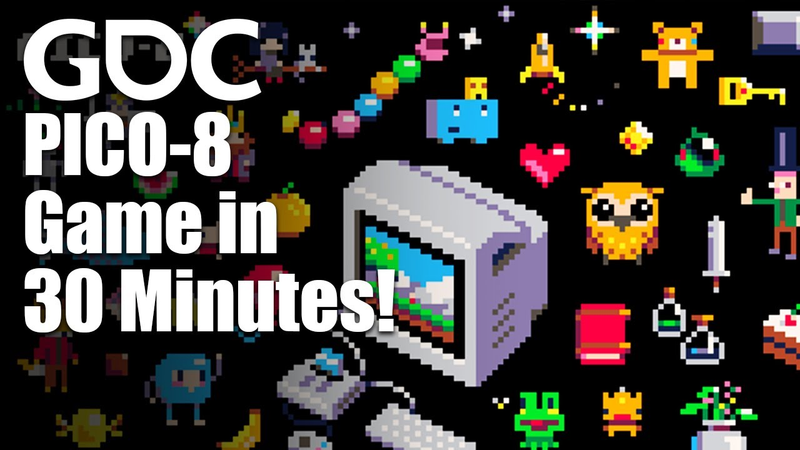
Let's make a PICO-8 Game in 30 Minutes!
PICO-8 functions as a specialized fantasy console engineered to facilitate rapid game prototyping through a highly constrained, integrated development environment.
- PICO-8 functions as a specialized fantasy console that accelerates prototyping by integrating sprite, tile, and audio editors into a single environment, bypassing the overhead of traditional game engines.
- Developers can achieve rapid, pixel-perfect prototypes by leveraging modular, state-based Lua scripting and existing open-source codebases, such as the movement logic from Celeste.
- The platform enforces strict token limits, requiring developers to prioritize efficient code and modular design to maintain functionality within the console's constraints.