
Game Developers Conference
Game Developers Conference (GDC, now the GDC Festival of Gaming) is the professional event for the games industry. It publishes recorded talks and interviews, annual industry survey reports such as the State of the Game Industry, and news articles.
Documents

How Do You Make VR for Everyone?
Virtual reality currently stands at a critical juncture where the transition from a niche technology to a mass-market medium depends on overcoming systemic fragmentation and exclusionary design practices.
- Developers should prioritize accessibility by design, such as implementing hover mechanics for ground-level objects to assist users with mobility issues, rather than treating it as an afterthought.
- The VR industry must move away from 'walled gardens' and proprietary systems toward open-source protocols and shared documentation to prevent fragmentation and lower the barrier to entry for new developers.
- Diverse teams are essential for creating inclusive VR, and funding should be directed toward diverse creators and unique content rather than relying on traditional, non-scalable game design paradigms.
Creating the Soundscape of 'It Takes Two'
The development of It Takes Two required a specialized audio strategy to address the inherent challenges of a split-screen cooperative experience.
- Hazelight Studios developed a custom spatial panning system for 'It Takes Two' that decouples attenuation from panning, allowing the game to prioritize the closest listener for volume and the listener with the best forward angle for directional positioning.
- To manage split-screen audio, the team implemented a system where non-spatialized 2D sounds are panned toward the specific player's viewport—May’s world slightly to the left and Cody’s to the right—to maintain mix clarity.
- The audio team utilized 'bigness' and exaggeration, inspired by Pixar, to emphasize important gameplay elements and maintain a clean mix during chaotic sequences by ensuring the most critical sounds are prioritized in the soundscape.
Building a Mixing Sandbox for 'Just Cause 4'
The development of the audio mix for Just Cause 4 at Avalanche Studios centered on transitioning from a traditional, compression-heavy approach to a modular, system-driven "sandbox" framework.
- Avalanche Studios transitioned from a dynamics-driven mix in 'Just Cause 3' to a state-based, siloed architecture in 'Just Cause 4' to eliminate audio pumping and CPU-heavy side-chain compression.
- By implementing granular microstate snapshots for vehicle audio, the team reduced the authoring time for a single vehicle mix from several hours to just a few minutes.
- The team abandoned traditional side-chaining and compressor-based mixing in favor of a priority-based system that uses game-design parameters to modulate EQ, balance, and spatial imaging in real-time.
Honoring the Blade: Lethality and Combat Balance in 'Ghost of Tsushima'
The primary objective in the development of Ghost of Tsushima was to reconcile the mechanical requirements of a 30-hour open-world action game with the core samurai fantasy of lethal, high-speed sword combat.
- To maintain the 'samurai fantasy' of lethal blade combat, Sucker Punch limited the number of hits required to kill enemies, keeping the engagement window short even as players progressed through 30 hours of open-world gameplay.
- The team avoided traditional RPG-style level scaling—which often relies on artificial health bars and 'skull' indicators—because it undermined the grounded, realistic nature of the game's combat.
- Developers implemented a stagger meter system to force offensive play, allowing players to break enemy defenses using specific stances rather than relying solely on parrying, which had become a repetitive, dominant strategy.

Tough Questions to Improve Your Leadership
This presentation from the 2019 GDC Producer Bootcamp focuses on actionable strategies for game industry professionals to improve their leadership effectiveness.
- High-performing teams are built on psychological safety and cognitive diversity, which research from Google and the Harvard Business Review confirms consistently outperform homogeneous groups.
- Effective leadership requires moving away from the 'rock' archetype of an emotionless manager toward a model of vulnerability that includes admitting when you do not have the answer.
- Leaders should mitigate the sunk cost fallacy and avoid making decisions based solely on role authority rather than the actual expertise of team members.

Vehicle Recordings for Modern Games
High-fidelity vehicle audio production has evolved from rudimentary loop-based systems to sophisticated, organic field recording techniques that prioritize realism and immersion.
- Modern high-fidelity vehicle audio requires 96kHz/24-bit recording standards to capture the full frequency range and spatial characteristics necessary for professional-grade soundscapes.
- Engineers must utilize specialized microphone arrays, such as DPA 4062s for high-pressure exhaust and stereo pairs for intake, to isolate engine sounds from wind and mechanical interference.
- Field recording success depends on executing standardized maneuvers at varying speeds to capture comprehensive RPM ramps, which are essential for seamless audio stitching.
Classic Game Postmortem: 'Star Wars Galaxies'
Star Wars Galaxies represents a landmark experiment in early 2000s massively multiplayer online game design, prioritizing player agency and sandbox freedom over traditional quest-driven progression.
- Star Wars Galaxies suffered from a rushed development cycle, with the team forced to launch the game after only two years and nine months of production, resulting in a poor initial user experience and high player churn.
- The game pioneered advanced technical features for 2003, including a procedural terrain generation system that allowed for runtime building placement and a character customization system utilizing morph targets.
- The game's economy was entirely player-driven, requiring users to bootstrap resources from nothing, which created deep engagement but caused significant database stability issues.
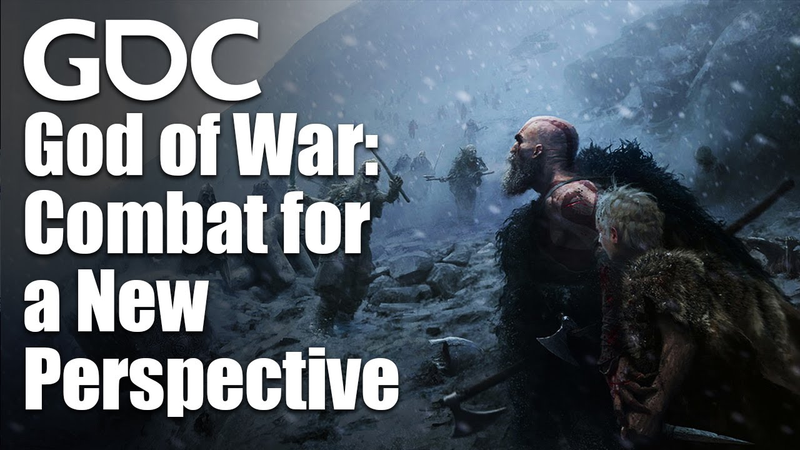
Evolving Combat in 'God of War' for a New Perspective
The transition of the God of War franchise to an intimate, over-the-shoulder camera perspective necessitated a complete overhaul of combat mechanics to preserve the series' signature offensive power fantasy.
- To maintain an offensive power fantasy with a restricted over-the-shoulder camera, developers implemented a data-driven zone constraint model that forces enemies into a predictable crescent-shaped area in front of the player.
- An aggression token system limits the number of active threats simultaneously engaging the player, preventing them from being overwhelmed by off-screen enemies.
- Combat fluidity is maintained through a hybrid targeting approach that combines analog stick input with motion warping, removing the necessity for traditional lock-on mechanics.

Getting the Most Out of an Entry-Level Games Job
Success in entry-level game industry roles depends on a combination of proactive communication, strategic relationship building, and a deep commitment to understanding studio operations.
- Build a professional safety net by cultivating peer relationships and mentorships, which are essential for navigating industry volatility and potential layoffs.
- Accelerate career growth and gain visibility by volunteering for administrative tasks like documentation and meeting notes, which provide exposure to high-level project discussions.
- Demonstrate competence and reliability by mastering the studio's project documentation, intellectual property, and internal vocabulary.

Stop Living on 1HP: Health and Wellness in Esports
Esports functions as a high-stakes static endurance activity, necessitating a shift from reactive injury treatment to proactive, performance-based conditioning.
- Esports is classified as a static endurance activity that challenges executive function, involving prolonged seated positions with repetitive micro-movements of the hands, wrists, and shoulders that increase injury risk.
- Health and wellness initiatives should be integrated into gaming communities by linking in-game character growth with out-of-game physical development to foster player retention and community engagement.
- Developers can implement non-disruptive health interventions through 'toast' text pop-ups or time-gated codex entries that provide specific stretching and strengthening exercises based on playtime milestones.
"King Me": A Defense of King-Making in Board Game Design
Modern board game design is currently constrained by an obsession with fairness and the elimination of king-making, a trend rooted in 19th-century Victorian moralism that equates victory with merit.
- Board games are fundamentally storytelling mediums, and designers should prioritize narrative cohesion over the modern industry obsession with artificial fairness or catch-up mechanisms.
- Designers can mitigate player frustration in high-conflict games by providing players with diplomatic flexibility and meaningful agency, even when they are no longer in contention to win.
- The modern design ethos of 'fairness' is a relatively recent development rooted in 19th-century Victorian morality and the rise of mass-market manufacturing, rather than an inherent requirement for engaging gameplay.
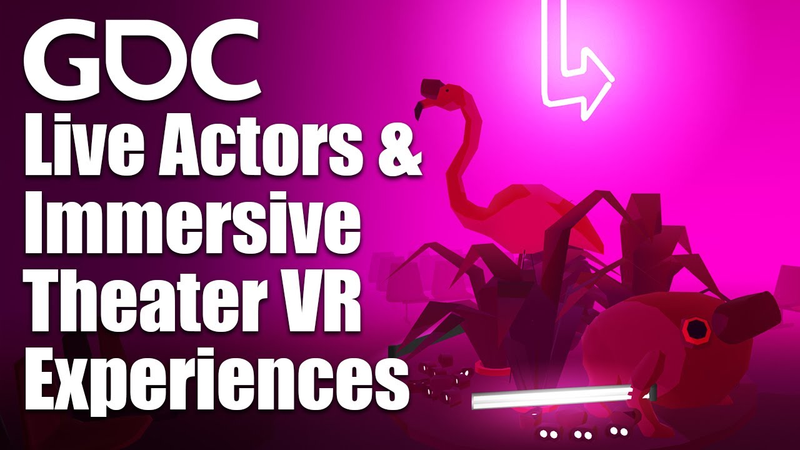
Integrating Live Actors into At-Home VR Experiences
The integration of live actors into at-home virtual reality experiences represents a significant evolution in digital storytelling, shifting the medium from static, pre-recorded content toward dynamic, emergent performance.
- Tender Claws integrated live actors into the VR experience 'The Under Presents' by allowing performers to inhabit avatars and NPCs, creating 'uncanny' moments that blend human improvisation with pre-recorded narrative content.
- To manage live performance at scale, the studio utilizes a distributed network of actors working from home via Oculus Quest headsets, rather than centralized location-based motion capture.
- The system uses a persistence layer to track player history, allowing the backend to prioritize and match players who have not yet encountered a live performer into shared spaces.