
Game Developers Conference
Game Developers Conference (GDC, now the GDC Festival of Gaming) is the professional event for the games industry. It publishes recorded talks and interviews, annual industry survey reports such as the State of the Game Industry, and news articles.
Documents

Where The $@*&% Are Your Tests?!
Automated testing serves as a vital mechanism for modern game development, transforming the traditional, high-friction debugging process into a streamlined, iterative workflow.
- Automated testing acts as a critical safety net that enables developers to refactor complex systems, such as AI pathfinding and level-of-detail management, with higher confidence.
- Testing suites serve as living documentation that clarifies system behaviors for the entire team, which accelerates long-term production velocity.
- Teams should prioritize testing through public interfaces and embed validation directly into the codebase using asserts and warnings to minimize maintenance burdens.

Physiological Effects of Crunch: A Look at the Science
Consistent overtime exceeding 40 hours per week, commonly referred to as crunch, functions as a counterproductive practice that degrades cognitive performance, physical health, and mental well-being.
- Chronic crunch exceeding 40 hours per week leads to a measurable decline in output, eventually resulting in negative productivity due to the high cost of rework caused by fatigue-induced errors.
- Sustained sleep deprivation impairs cognitive judgment and reaction times to a level physiologically comparable to alcohol intoxication.
- Long-term crunch does not correlate with superior game quality or enhanced financial success for development studios.

Tips From the Trenches: How To Help Recruiters and Hiring Managers Get You In The Door
Securing a position within the competitive gaming industry requires a strategic alignment between candidate preparation and the internal workflows of recruiters and hiring managers.
- A curated, high-quality portfolio with functional, accessible links is the most critical asset for demonstrating technical versatility to hiring managers.
- Candidates must optimize resumes and LinkedIn profiles with specific keywords to successfully bypass automated applicant tracking systems.
- Active networking through industry events, game jams, and direct professional connections is essential for securing interviews beyond standard digital submissions.
Ask Me Anything: Q&A with Global Game Jam's Kate Edwards
Culturalization serves as a critical strategic pillar in the modern gaming industry, functioning as a bridge between creative intent and global market viability.
- Culturalization is a strategic risk-mitigation tool that prevents international public relations crises and costly product recalls by aligning creative intent with global market sensitivities.
- Effective cultural representation requires moving beyond basic localization to incorporate deep analysis of regional, religious, and political nuances throughout the development lifecycle.
- Studios should avoid creative laziness and harmful stereotypes by conducting due diligence and actively collaborating with subject matter experts and representatives from the cultures being depicted.
Building Narrative Games with Yarn Spinner
Yarn Spinner serves as a specialized, open-source scripting language engineered to streamline the development of branching narrative games.
- Yarn Spinner is an open-source, domain-specific scripting language designed to bridge the gap between simple tools like Twine and more complex, logic-heavy systems like Ink.
- The tool allows developers to write dialogue as a screenplay, integrating text, branching choices, and game-state commands within the same script files.
- Yarn projects link multiple individual yarn scripts together, which is a recommended best practice for managing narrative complexity in larger game projects.
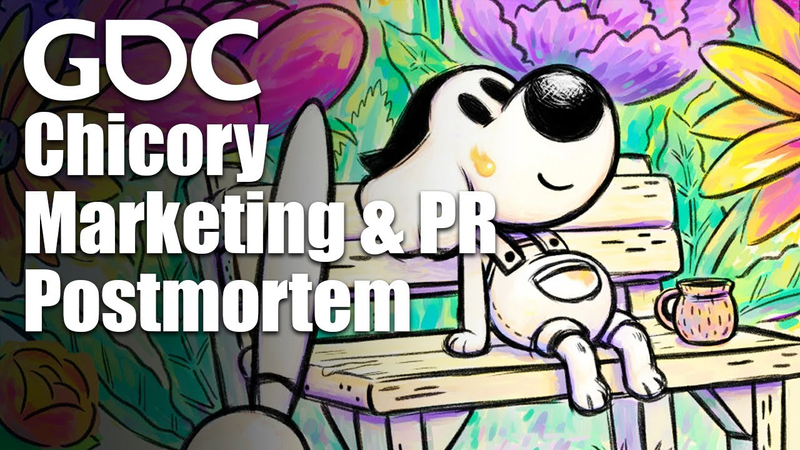
'Chicory' Marketing and PR Postmortem
The marketing strategy for Chicory: A Colorful Tale demonstrates that indie developers can achieve significant reach through proactive planning and community-centric engagement, even with a lean budget of approximately $20,000.
- Marketing strategy should be treated as a 'stair-step' process where every asset, event, and community interaction builds upon previous efforts rather than acting as isolated, disposable tasks.
- Leverage 'mavens'—early adopters and evangelists—to build long-term momentum, as these individuals are instrumental in driving organic interest and community growth.
- Online event participation, such as Steam Demo Fests or LudoNarraCon, should be treated as a 'minimum viable product' where content is scheduled strategically to target specific time zones and demographics rather than running 24/7.
A Brave New (Virtual) World: Ethics and Governance of XR and the Metaverse
The metaverse represents a critical juncture in digital evolution, forcing a choice between centralized corporate control and a decentralized, interoperable future.
- The metaverse currently faces a significant adoption hurdle, with approximately one-third of respondents in the GDC State of the Game Industry report expressing doubt that the technology will deliver on its promised potential.
- Governance models within decentralized autonomous organizations (DAOs) are prone to plutocracy when voting power is tied to token ownership, which risks centralizing wealth and influence rather than fostering democratic participation.
- The future of the metaverse will likely mirror the evolution of the early internet, where walled gardens eventually lose relevance as users demand greater interoperability and the freedom to move their digital assets between platforms.
How to Run (and Survive) a Writers' Room
The writers' room model, adapted from television production, provides a structured yet agile framework for modern game development.
- The writers' room model shifts game narrative development from isolated writing to a collaborative, team-based framework to improve creative depth and consistency.
- The head writer acts as a strategic bridge between the writing staff and production stakeholders, serving as the final arbiter of style to maintain a unified narrative vision.
- Leadership must insulate the writing team from external corporate politics and provide clear, well-defined parameters for assignments to reduce staff turnover and improve output quality.

Games Subscriptions: Is the "Netflix of Games" Inevitable and What Does It Mean for Developers?
The gaming industry is currently navigating a transition where subscription services function as a hybrid component of the market rather than a wholesale replacement for traditional sales models.
- The 'Netflix of games' analogy is misleading because 79% of total industry consumer spending in 2021 was driven by in-game monetization, making a wholesale shift to subscription-based revenue unlikely.
- Xbox Game Pass leads the subscription market, with its growth strongly correlated to the volume of day-one releases, including both first-party and third-party titles.
- Subscription services are not scaling their total library sizes aggressively; for example, the Xbox Game Pass Ultimate catalog remained relatively stable at approximately 500–515 titles throughout 2021.
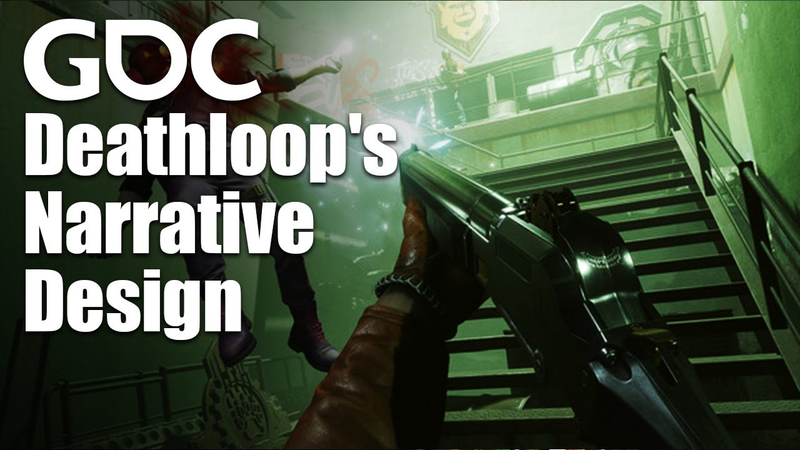
How a Time Loop Influenced 'Deathloop's' Narrative Design
Deathloop centers on the integration of a non-linear time loop structure with player-driven narrative progression.
- To reinforce the theme of being trapped in a cycle, narrative designers categorized content into two types: reactive systems (radio calls, floating messages) that provide a sense of progression through persistent memory, and static content (notes, tapes, overheard conversations) that emphasizes the repetitive, unchanging nature of the loop.
- The game forces players to kill eight visionaries within a single day to break the loop, creating an 'impossible' task that serves as the core narrative driver and justifies the necessity of the time-loop mechanic.
- To ensure players feel the weight of the loop, the team designed the antagonist, Julianna, as a persistent-memory guide and sounding board, allowing for snarky, non-repeating banter that evolves as the player progresses.
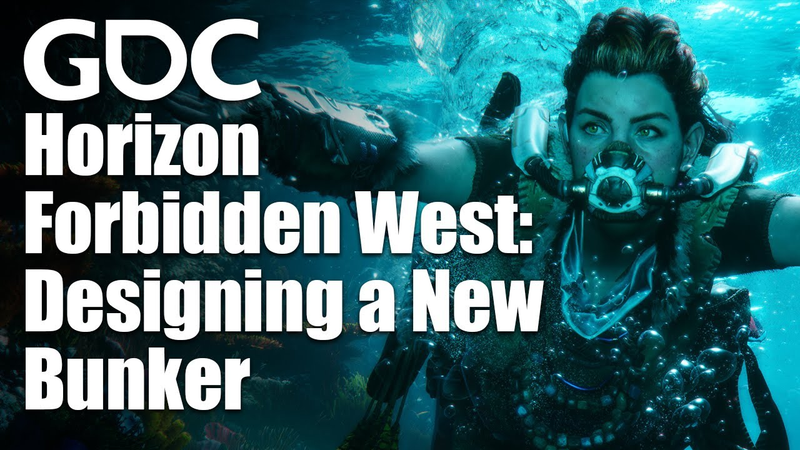
Knocking on Death's Door: Designing a New Bunker for 'Horizon Forbidden West'
The development of the Death’s Door quest for Horizon Forbidden West serves as a case study in iterative level design, emphasizing the necessity of balancing narrative goals with evolving mechanical systems.
- The development team utilized a structured six-phase process over a four-year production cycle to transition from paper prototyping to a final, high-rated level design.
- Designers prioritized environmental puzzles and vertical traversal over humanoid combat to improve upon the bunker environments established in the series' predecessor.
- The ACE (Astonishing, Challenging, and Engaging) framework served as the primary diagnostic tool for identifying and correcting design shortcomings throughout the development process.

A Hotline for the Games Industry: Lessons Since 2020
The Games and Online Harassment Hotline, established in 2020 by Feminist Frequency, serves as a specialized, text-based emotional support resource for individuals within the gaming industry and player communities.
- The Games and Online Harassment Hotline, established in 2020, provides specialized, text-based emotional support for both industry professionals and players experiencing workplace hostility, burnout, and harassment.
- Data from the hotline's first year shows an even split between industry professionals and players, with gender-based harassment identified as the most frequent form of identity-based abuse.
- Developers frequently report compounded trauma stemming from a combination of systemic marginalization, toxic management, and unsustainable labor practices that undermine their professional passion.