
Game Developers Conference
Game Developers Conference (GDC, now the GDC Festival of Gaming) is the professional event for the games industry. It publishes recorded talks and interviews, annual industry survey reports such as the State of the Game Industry, and news articles.
Documents

Research on Visual Fatigue When Playing Games
Visual fatigue in mobile gaming stems from a combination of prolonged screen exposure and specific genre-based demands, particularly in fast-paced titles like first-person shooters and racing games.
- NetEase Games utilizes Critical Flicker Frequency (CFF) and contrast sensitivity as objective, psychophysiological indicators to measure visual fatigue, as these metrics reliably decrease or shift when players experience eye strain.
- Optometric measurements, including tear break-up time and anterior chamber depth, demonstrate that prolonged screen exposure—particularly in high-demand genres like FPS games—leads to measurable physiological impacts such as eye dryness and ciliary muscle fatigue.
- A/B testing using these visual fatigue indicators allows developers to identify environmental risk factors, such as playing in dim lighting or navigating low-light game areas, which can then be mitigated by adjusting in-game brightness or room design.

Approaching a Pedagogy of Game Writing
A robust pedagogical framework for game writing must prioritize adaptable, student-centered learning over the pursuit of fleeting industry trends.
- Effective game writing pedagogy should prioritize core higher-order thinking skills over specific software mastery, as technology evolves too rapidly to rely on tool-based instruction alone.
- Game writing curricula should be built upon established academic frameworks from fields like rhetorical genre studies and activity theory rather than relying solely on game-specific literature.
- Instructional design for game writing must emphasize the writing process—including multiple drafts and feedback workshops—to move students beyond the misconception that writing is merely about having ideas.

Help Game Designers Analyze Data: How to Develop an Online Pivot Table Tool
Game studios often struggle to balance the need for data-driven decision-making with the high resource costs of traditional data analysis workflows.
- NetEase and Thunderfire UX developed a self-service online pivot table tool that reduces the number of personnel required for a data request from three to one.
- The tool utilizes a '5W' model (Who, Whom, What, When, Where) to translate designer requirements into automated SQL queries, cutting data turnaround time to approximately 30 minutes.
- Custom development using Python Django and MySQL was chosen over off-the-shelf solutions to implement specific features like nested headers and frozen rows, ensuring the tool mirrors familiar spreadsheet functionality.
Great Level Design is a Studio-Wide Effort
Exceptional level design functions as a studio-wide endeavor rather than the isolated output of a single department.
- High-quality level design requires integrating narrative, art, systems design, and technical teams from the earliest stages of development rather than treating it as an isolated departmental task.
- Studios should replace siloed operations with cross-functional strike teams and modular assets to ensure gameplay, visual storytelling, and technical performance remain deeply intertwined.
- Operational efficiency is maximized by developing ergonomic tools and procedural systems in parallel with feature creation to reduce manual, repetitive tasks and designer burnout.

'Visitations': VR for Ketamine Infusion Therapy
Visitations represents a specialized application of virtual reality designed to optimize the clinical environment for patients undergoing ketamine infusion therapy.
- Over two-thirds of clinical participants reported a preference for VR-assisted ketamine infusion sessions compared to traditional medical environments.
- The 'Visitations' project utilizes passive, 'lean-back' VR experiences featuring radial symmetry and binaural audio to reduce patient anxiety and cognitive load during treatment.
- Technical design focuses on three-degree-of-freedom headsets to ensure comfort for patients in reclined positions while avoiding the physical strain associated with interactive gaming.

Accessibility on a Shoestring
Accessibility in game development is defined as the removal of unnecessary barriers that prevent players from experiencing a game as intended.
- Accessibility is not about medical conditions but about removing design-based barriers, such as small text or inflexible controls, that prevent players from experiencing a game as intended.
- Considering accessibility early in development is the most effective strategy for small studios, as demonstrated by Naughty Dog's shift from Uncharted 4 to The Last of Us Part II.
- Developers should prioritize the five most common accessibility complaints: text size (avoiding anything smaller than 28 pixels at 1080p), remapping controls, background transparency for text, motion sickness triggers (camera shake/blur), and photosensitive epilepsy risks.

Genesis Noir: Bringing Jazz Improvisation To Gaming
The integration of jazz improvisation into interactive media requires a delicate balance between player agency and musical coherence.
- To simulate jazz improvisation in Genesis Noir, the developers implemented a call-and-response mechanic where the game mirrors the player's input, gradually increasing in complexity across three distinct stages.
- The team avoided complex real-time quantization by pre-composing improvised responses that adapt to the player's input, ensuring the game's musical output remained high-quality and coherent.
- Player inputs are captured as geometric paths in space using splines, which store both pitch (height) and temporal data, allowing the game to replicate the rhythm and duration of the player's performance.
Stop Getting Lost: Make Cognitive Maps, Not Levels
Effective game design relies on the creation of robust cognitive maps, which are the mental representations players form to navigate and understand virtual environments.
- Design levels based on the five elements of cognitive mapping defined by urbanist Kevin Lynch: paths, landmarks, districts, edges, and nodes.
- Use paths to catch lost players by providing linear channels that limit navigation choices, effectively reducing the player's potential movement vectors.
- Implement stationary landmarks to help players orient themselves from a distance and anchor new, unexplored areas to previously established locations.

How to (Not) Create Textures for VFX
Efficient visual effects production requires a shift in mindset from manual perfectionism to a pragmatic, iterative workflow centered on the concept of good enough.
- Prioritize a pragmatic 'good enough' workflow over manual perfectionism to overcome creative stagnation and meet modern game development production demands.
- Accelerate asset creation by leveraging third-party resources, photo-bashing, and procedural tools like EmberGen, Kumo Works, and Substance instead of relying on manual painting.
- Maintain high visual fidelity and performance efficiency through technical practices such as channel packing, UV distortion, lookup textures, and erosion.

The Power of Introspection: The Fuel That Keeps Teams Resilient
The game industry faces persistent challenges regarding high turnover, burnout, and mental health, issues that have been exacerbated by the global pandemic.
- Shift organizational focus from short-term, milestone-driven project management to a long-term model centered on business continuity and team resilience to combat high turnover and burnout.
- Build organizational resilience by diversifying revenue streams and brand identities while maintaining a flat hierarchy that empowers employees to influence business strategy.
- Cultivate individual resilience by prioritizing candidates with high emotional intelligence and self-awareness over rigid industry experience during the hiring process.
'FIFA 22's' Hypermotion: Full-Match Mocap Driving Machine Learning Technology
Electronic Arts has fundamentally transformed the animation pipeline for the FIFA franchise by shifting from traditional studio-based motion capture to full-match data acquisition.
- EA captured 11-vs-11 professional football matches using Xsens motion capture suits to generate over 4,000 new gameplay animations for FIFA 22.
- To resolve player drift and provide spatial context, the team integrated Local Positioning System (LPS) data using Wemo Pro sensors, achieving tracking accuracy within five centimeters.
- The team reconstructed 3D ball data by triangulating coordinates from eight static 8K cameras (50 fps) and calibrating them using known field landmarks instead of traditional checkerboard patterns.
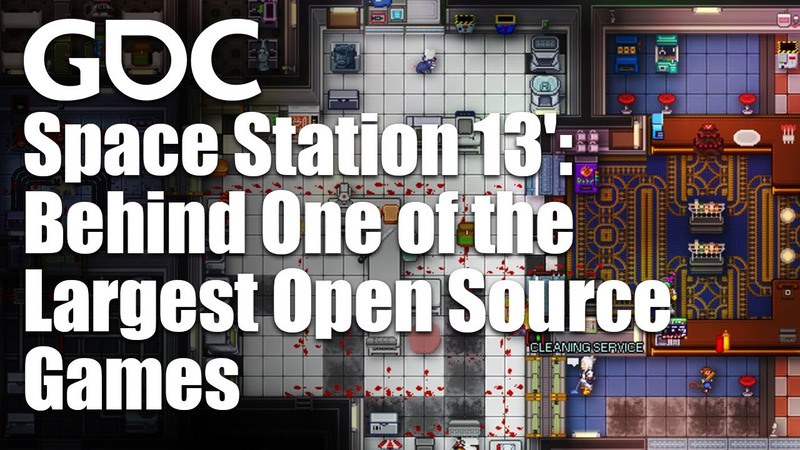
'Space Station 13': Behind One of the Largest Open Source Games
Space Station 13 (SS13) serves as a primary case study for large-scale, open-source game development.
- Space Station 13 operates as a decentralized, open-source project with over 100 unique contributors per month, managed by a core team of approximately 70 members, including 25 maintainers and 40 issue managers.
- The project utilizes a player-driven development model where nearly all pull requests originate from the community, requiring maintainers to act as curators who balance player-submitted features against the game's overall design vision.
- Open-source development allows for rapid bug resolution, with critical issues often identified and patched within seconds or minutes due to the high volume of eyes on the codebase.