
Game Developers Conference
Game Developers Conference (GDC, now the GDC Festival of Gaming) is the professional event for the games industry. It publishes recorded talks and interviews, annual industry survey reports such as the State of the Game Industry, and news articles.
Documents

Solo Development: Myths, Reality and Survival Strategies
Solo game development offers unparalleled creative autonomy, yet it demands a disciplined, long-term approach to ensure both project viability and personal well-being.
- Prioritize early visual development and polished prototypes to secure platform partnerships while strictly limiting project scope to prevent feature creep.
- Limit initial releases to one or two platforms to minimize the technical and logistical burdens associated with storefront requirements and bug tracking.
- Shift the professional focus from chasing a single 'hit' game toward building a sustainable, long-term catalog of titles.
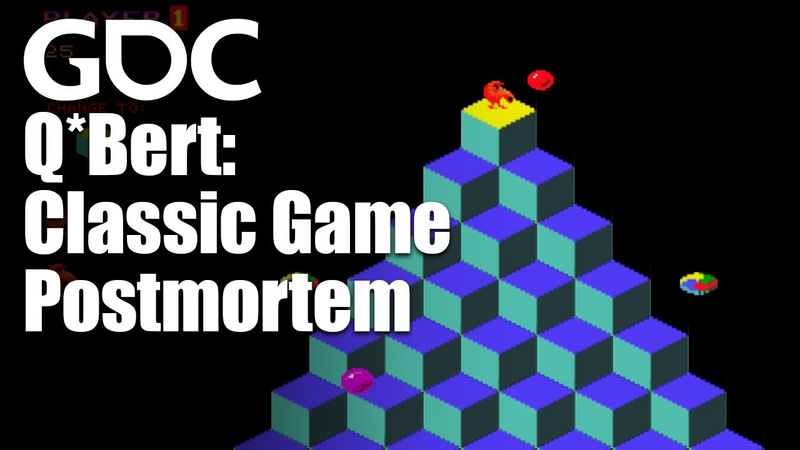
Classic Game Postmortem: 'Q*bert'
The development of the arcade classic Qbert in 1982 serves as a quintessential case study in the ingenuity required to overcome the severe technical constraints of early 1980s gaming.
- The development of Qbert began at Gottlieb in the early 1980s using an MDS-80 development system, with the game's core mechanic—changing cube colors upon landing—emerging from a suggestion by a colleague during the prototyping phase.
- The game's unique control scheme, which required players to navigate the pyramid at a 45-degree diagonal angle, caused significant user friction, leading to frequent player requests to change the joystick orientation to standard up-down-left-right inputs.
- Technical constraints necessitated creative workarounds, such as using a pinball machine's 'knocker' solenoid inside the cabinet to provide physical tactile feedback when the character fell off the pyramid.
One Frame in 'Halo Infinite'
The transition from the rigid, fixed-interval architecture of the Halo 5 engine to the flexible, job-based system in Halo Infinite represents a fundamental shift toward multi-platform scalability.
- 343 Industries transitioned from Halo 5's specialized thread architecture to a generic 'real-time worker thread' pool in Halo Infinite, allowing for more flexible execution across available CPU cores.
- To handle variable frame rates while maintaining physical simulation accuracy, the engine uses a 'twinning' interpolation system that projects character poses between the two most recent fixed-update game ticks.
- The engine employs a job-based graph system that dynamically constructs and submits fixed-update job graphs based on the current frame rate, allowing the game to perform multiple ticks per frame when necessary.
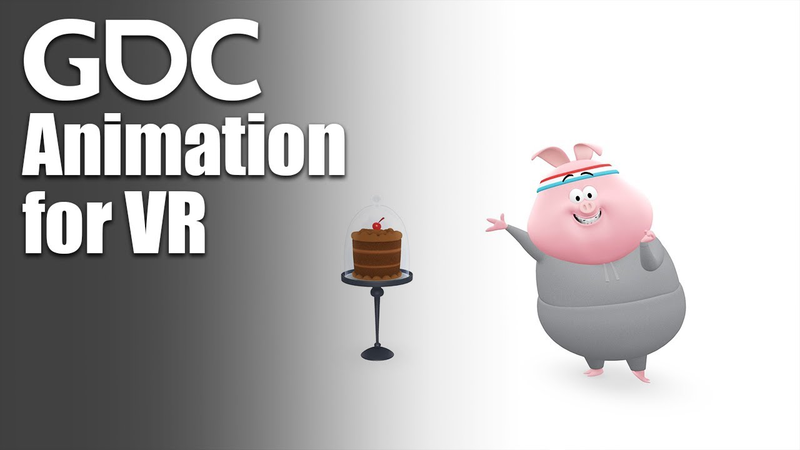
Animation for VR
Effective animation for virtual reality requires a fundamental shift in perspective, moving away from traditional camera-based storytelling toward an immersive, theater-inspired approach.
- VR animation requires a shift from traditional camera-based storytelling to an immersive, theater-inspired model where character movement and environment choreography guide the viewer's gaze.
- Pre-production must move beyond static storyboards by using top-down blueprints to map spatial flow and live-action 'board-o-matics' to identify potential issues in a non-fixed camera environment.
- Animators must respect user personal space to avoid triggering instinctive withdrawal responses, utilizing subtle gestures for close-up interactions and grander movements for distant characters.

'Rocket League': Scaling for Free to Play
The transition of Rocket League to a free-to-play model necessitated a comprehensive architectural overhaul to accommodate a projected fivefold increase in player traffic.
- Psyonix successfully managed a 5x increase in concurrent player traffic for Rocket League's transition to free-to-play by utilizing accurate load projections and extensive iterative load testing.
- The team utilized Locust, a Python-based load testing framework running on Kubernetes, to simulate client traffic, though they noted that the framework required significant custom orchestration to ensure test accuracy.
- To address database bottlenecks, the team migrated from Google App Engine to Google Kubernetes Engine (GKE) and implemented ProxySQL to manage MySQL read-traffic scaling and dynamic query routing.
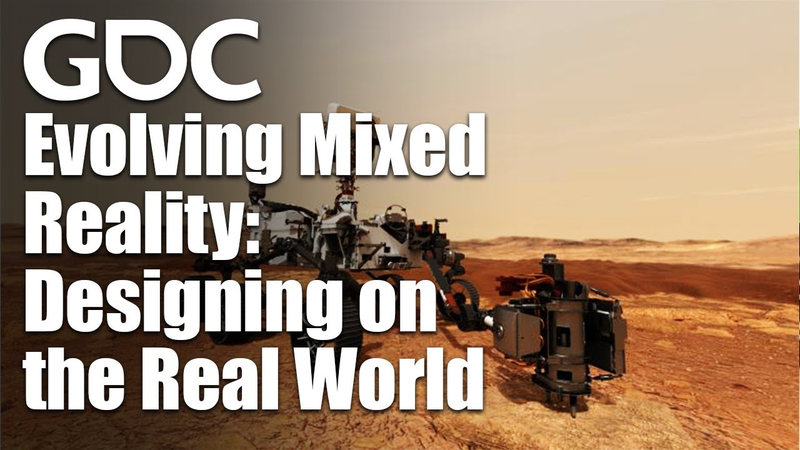
Evolving Mixed Reality: Designing on the Real World
The evolution of mixed reality is shifting from static, tabletop-based applications toward complex, room-scale spatial computing that demands deep integration with unpredictable physical environments.
- Mixed reality development is shifting from simple, single-plane, user-directed experiences toward complex, world-aware applications that utilize semantic understanding of physical environments.
- Developers should implement 'fallback' systems that allow applications to degrade gracefully—from full spatial tracking down to 3DOF or 2D experiences—when environmental data is insufficient.
- In-situ debugging tools that allow developers to record, pause, and scrub through sensor data in real-time are critical for resolving bugs tied to specific room geometries, lighting conditions, or transient events.

Turn Your Writers Into Programmers: Greyboxing Narrative with Story Languages
Narrative greyboxing serves as a methodology for game development that bridges the gap between traditional screenplay writing and technical programming.
- Narrative greyboxing allows writers to use a text-based programming language to build, test, and iterate on game logic and dialogue flow independently, mirroring the way level designers use rough geometry to prototype environments before committing to final assets.
- Yarn Spinner, a tool used in titles like Night in the Woods, combines screenplay formatting with a programming language, enabling writers to implement branching narratives, flow control, and game commands without requiring constant support from dedicated programmers.
- By treating narrative as code, teams can achieve highly iterative development where writers build the game's scaffolding and logic, allowing developers to focus on building the underlying engine systems rather than manually implementing every dialogue node.

Everything You Need to Know About VR Audio Can Be Learned from Your Car
Virtual reality audio design relies on the principle that users possess an intuitive, real-world understanding of how environments should sound, necessitating a shift from simple filtering to complex, multi-layered soundscapes.
- In VR, audio resolution must scale with proximity; as a player moves closer to an object, the sound should transition from generic white noise to high-detail, localized textures to maintain immersion.
- Avoid head-locked stereo sound in VR, as it fails to account for the spatial reality of an environment where sound sources exist at different points around the user.
- Use common, real-world objects like a car as a reference point for audio design, as they provide accessible, complex, and multi-layered soundscapes that can be easily researched and prototyped.
Lessons From Theatre That Can Transform XR Experiences
Extended Reality development gains significant depth by adopting fundamental theatrical principles, shifting the medium from a passive viewing experience to an active, spatial reality.
- XR developers should treat physical space as a core design element by authoring experiences that adapt to the user's environment, such as virtual characters using real-world furniture for cover.
- To increase immersion, developers should move away from traditional cinematic framing and instead stage narrative action around the player, forcing them to look and interact to follow the story.
- Enhance interpersonal presence in XR by layering responsive gestures and 'look-at' mechanics into character AI, allowing virtual entities to acknowledge and interact with the player's physical movement.

GDC 2022 Main Stage: The Developer's Renaissance
The modern game industry is undergoing a fundamental transformation, moving away from rigid, industrial-era management toward models defined by collective intelligence, radical inclusivity, and creator advocacy.
- Studios like Eidos-Montréal are successfully replacing traditional hierarchical oversight with decentralized power and employee autonomy to maintain productivity during labor volatility.
- Structural operational shifts, such as the implementation of a four-day work week, are being used to improve employee well-being and long-term performance.
- Sony Interactive Entertainment has transitioned DEI from performative gestures to a data-driven business function by integrating employee networks into executive decision-making and tying outcomes to core KPIs.
'Real World Level Design' & 'Playgrounds and Level Design'
The playground philosophy redefines level design by shifting focus from linear, prescriptive obstacle courses toward persistent, modular environments.
- The playground philosophy replaces linear obstacle courses with node-based, modular environments where platforms act as objectives and routes serve as skill-based rewards.
- This modular architecture allows developers to prototype and refine core movement mechanics and gameplay systems within a flexible environment before finalizing geometry.
- Designers can enhance player immersion by treating the 'experience bleed'—the period before entering the game—as a deliberate design phase influenced by physical surroundings and social engagement.

Tile-Based Map Generation using Wave Function Collapse in 'Caves of Qud'
The procedural generation of game environments in the title Caves of Qud utilizes Wave Function Collapse (WFC), a texture synthesis algorithm that generates complex, tile-based maps from simple, user-defined training inputs.
- Wave Function Collapse (WFC) in 'Caves of Qud' uses a 'texture mode' approach, where small training inputs (typically 8x8 or 16x16 pixels) are used to generate arbitrarily large, structurally coherent game maps.
- The algorithm operates by decomposing input images into N x N tiles (usually 3x3), which serve as the basic atoms for calculating valid adjacencies and propagating patterns across the output.
- Adding extra colors to the training input can create essential spatial coherence, such as distinguishing between the 'inside' and 'outside' of structures, which allows for the placement of furniture and plants within generated rooms.