
DiGRA
The Digital Games Research Association: the international association of academics and professionals who study digital games. Its Digital Library holds the proceedings of the DiGRA conferences since 2002.
Documents
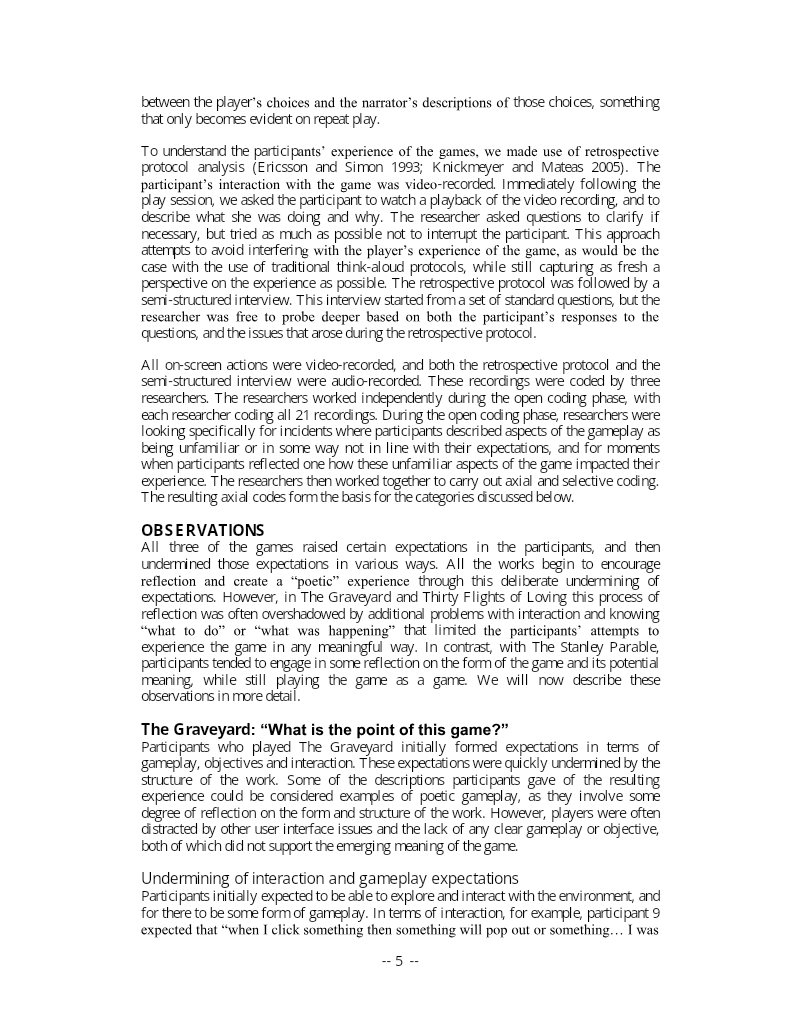
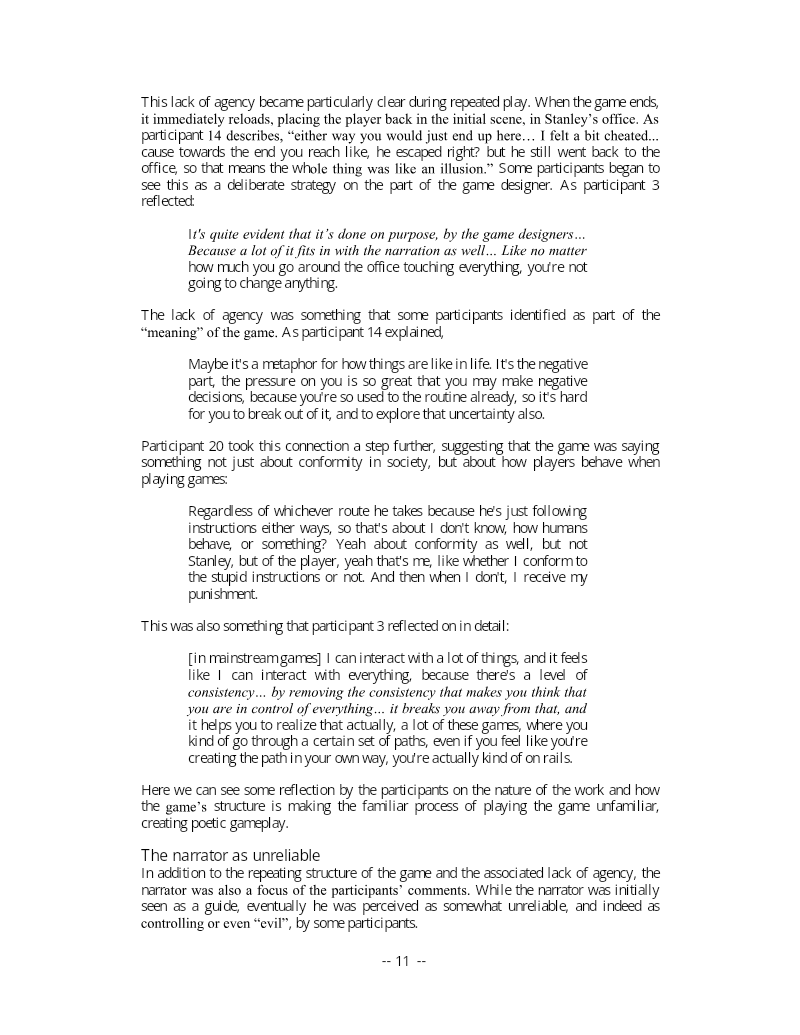
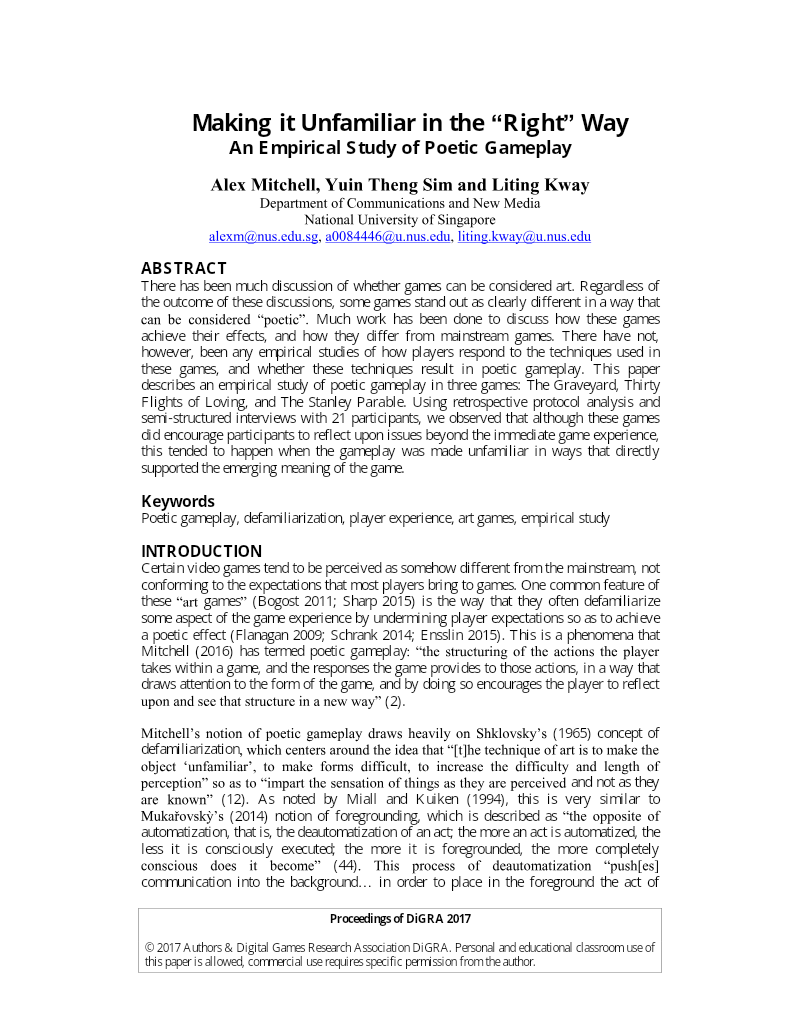
Making It Unfamiliar in the "Right" Way: An Empirical Study of Poetic Gameplay
This empirical study investigates the concept of "poetic gameplay" within "art games," specifically examining how players respond to defamiliarization techniques.
- Defamiliarization does not reliably produce reflection in players: in The Graveyard and Thirty Flights of Loving, contemplative engagement was often overshadowed by confusion over controls, objectives, and what was happening.
- The decisive factor is integration: difficulties must be meaningfully tied to a work's themes and free of extraneous obstacles that consume cognitive effort.
- The Stanley Parable was the exception, letting players reflect on its form and themes (limited agency, an unreliable narrator) while still experiencing it as a functioning game with clear goals.
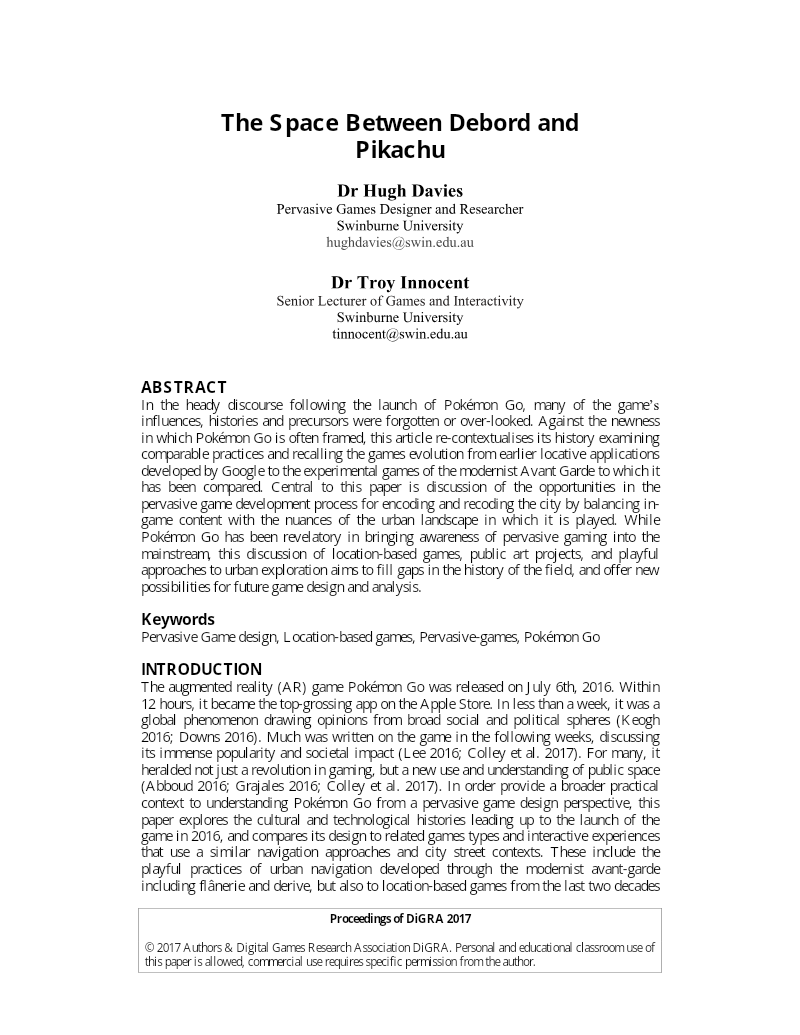
The Space Between Debord and Pikachu
Davies and Innocent's 2017 DiGRA paper contends that Pokémon Go, released July 6, 2016 and the top-grossing App Store app within twelve hours, has been wrongly framed as unprecedented, and that it fails to realize the potential of pervasive game design.
- The report argues Pokémon Go's cultural significance has been overstated as wholly new, positioning it as building on location-based games (Mogi, Ingress, Shadow Cities) and older urban play traditions such as the Surrealist flâneur, the Situationist dérive, orienteering, letterboxing, and geocaching.
- The analysis is primarily conceptual and historical, drawing on theorists De Certeau and Debord and the authors' design experience rather than quantitative data on player populations or geographic usage.
- It proposes three analytical lenses for such games: play as response to environment, play as exploration of alternate reality, and play as decoding infrastructure.
A Typology of Players in the Game Physics Playground
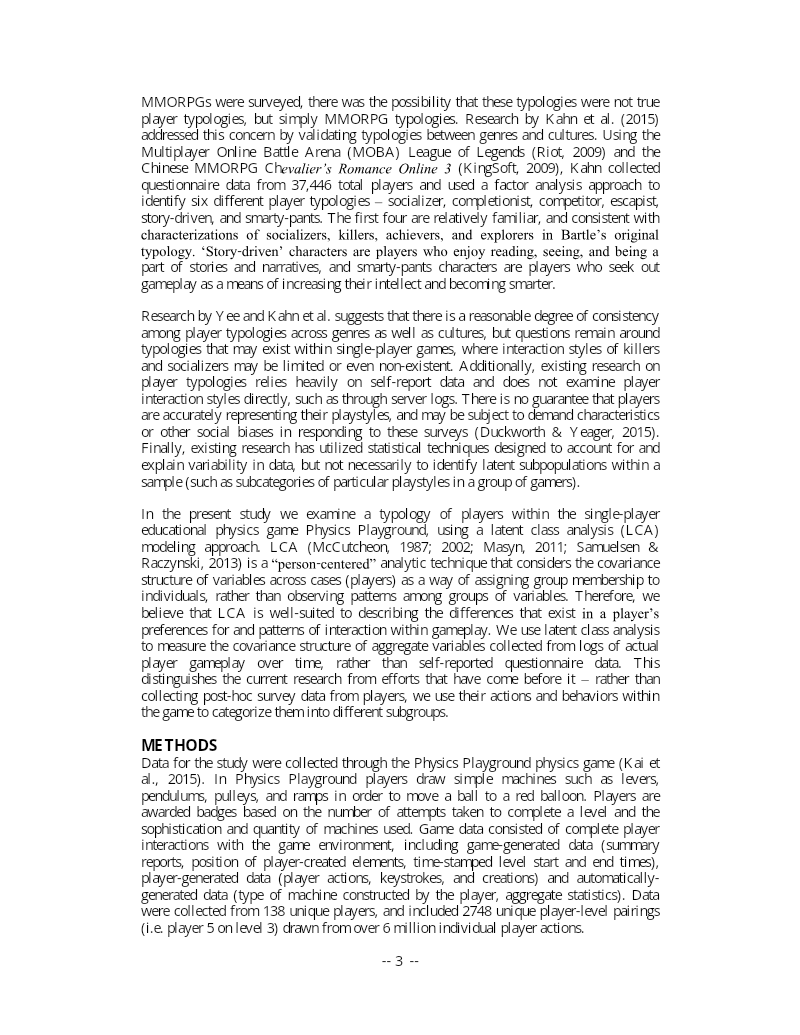
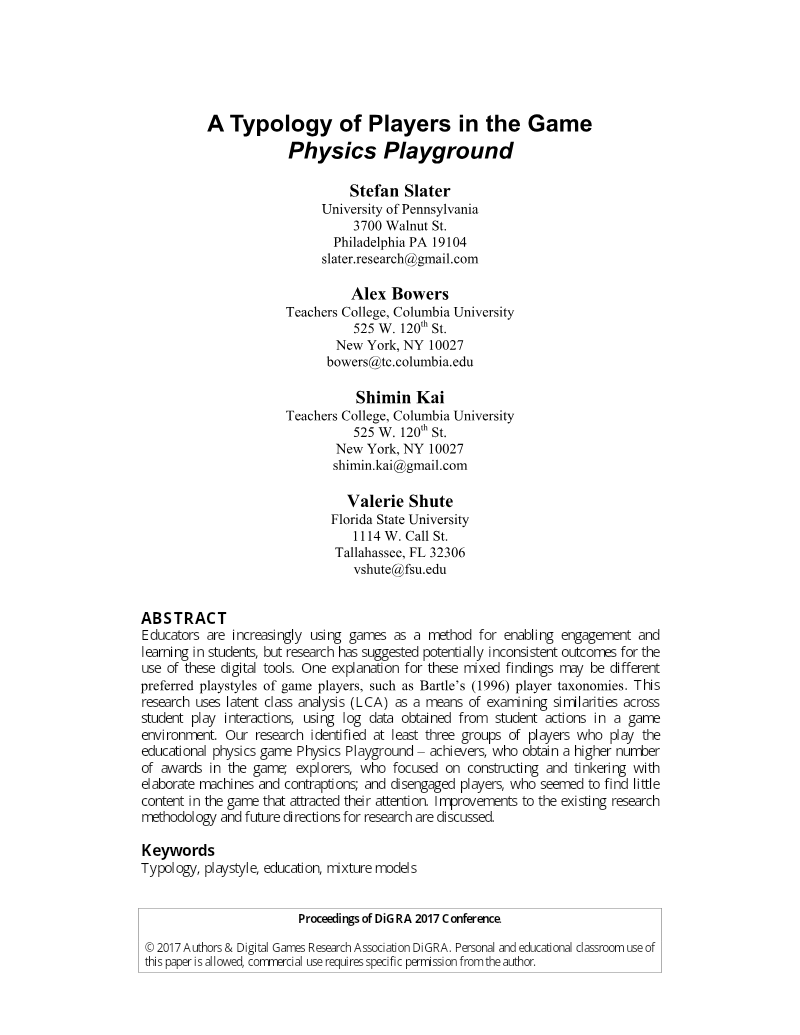
This research investigates player typologies within educational games, specifically using log data from the single-player physics game, Physics Playground.
- The study applied latent class analysis to in-game log data from 138 players, covering more than six million individual actions, instead of relying on self-reported questionnaires.
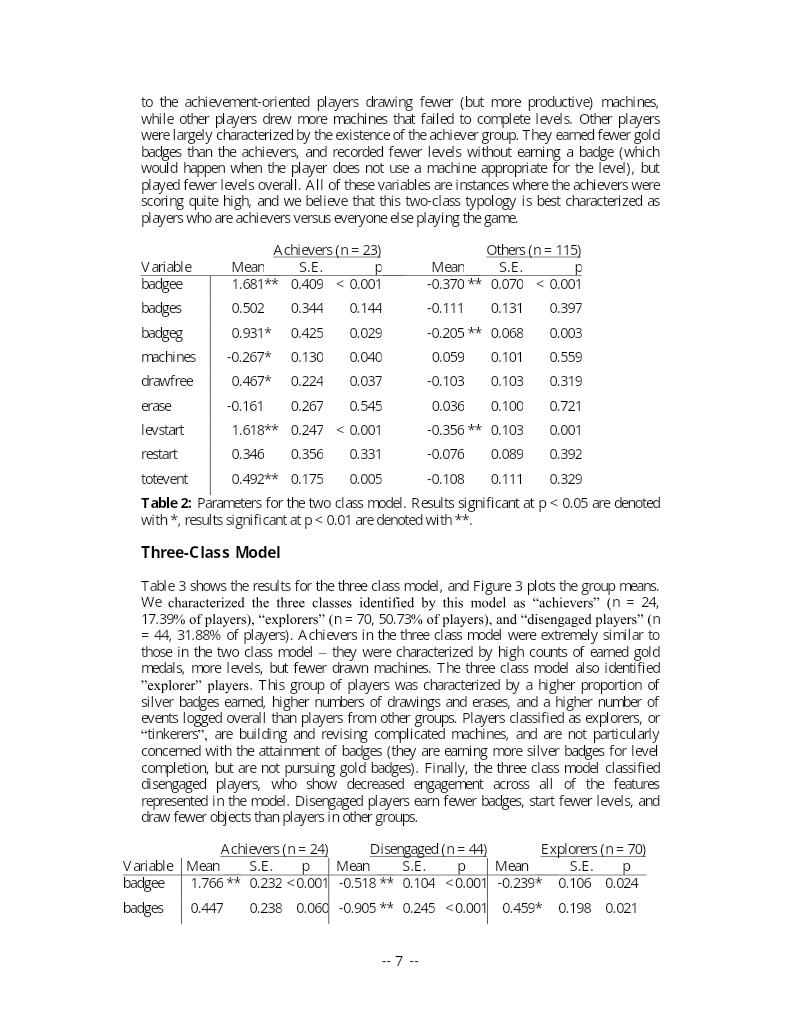
- The three-class solution, which the authors argue best maps onto Bartle's player taxonomy, identified achievers (about 17% of players), explorers or 'tinkerers' (about 51%), and disengaged players (about 32%).
- Tinkerers built and revised complex machines while largely ignoring optimal badge-earning solutions, whereas achievers earned significantly more gold and silver badges and played more levels.
Towards Genre as a Game Design Research Approach
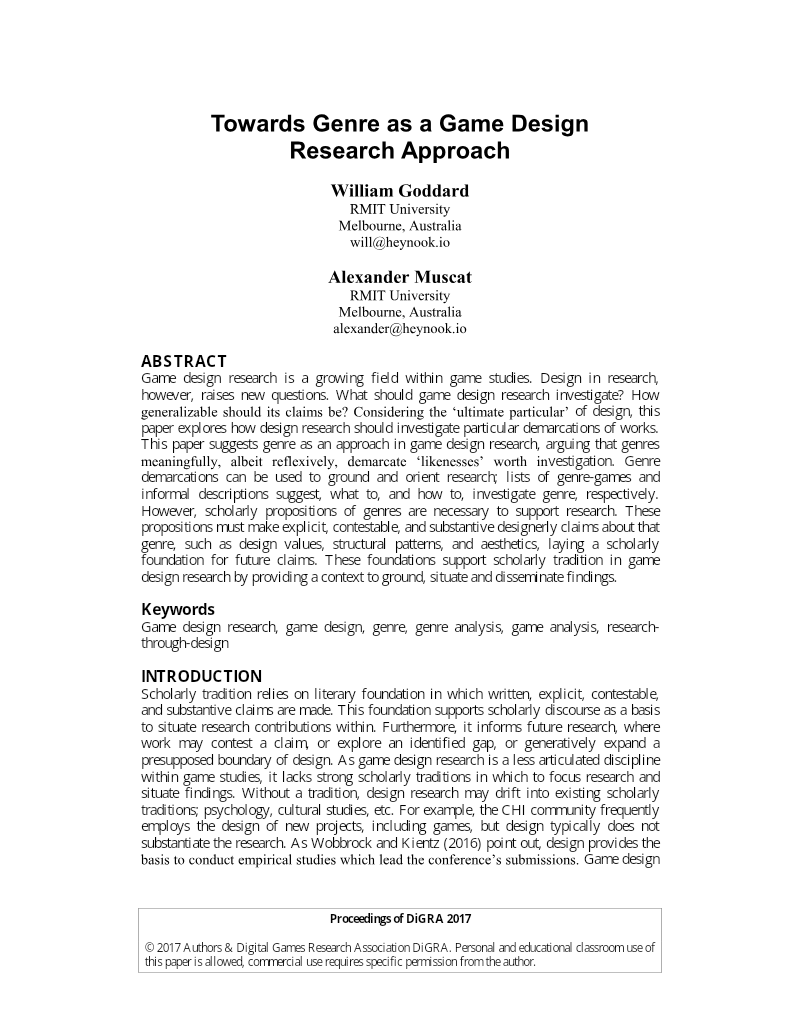
Goddard and Muscat address a persistent weakness in game design research: the lack of a robust scholarly tradition for situating findings.
- Genre should be treated as a tractable design language for describing kinds of games rather than as a rigid taxonomy, grouping games that share meaningful likeness in design values, structural patterns, and aesthetics.
- The authors argue that taxonomies suit information science, while game design benefits more from genre plurality and an aesthetic-centered understanding of genre.
- Genre is framed as socially constructed and mutable over time, since scholars disagree on whether gameplay, narrative, or visual style should define a genre.
Modeling and Designing for Key Elements of Curiosity: Risking Failure, Valuing Questions
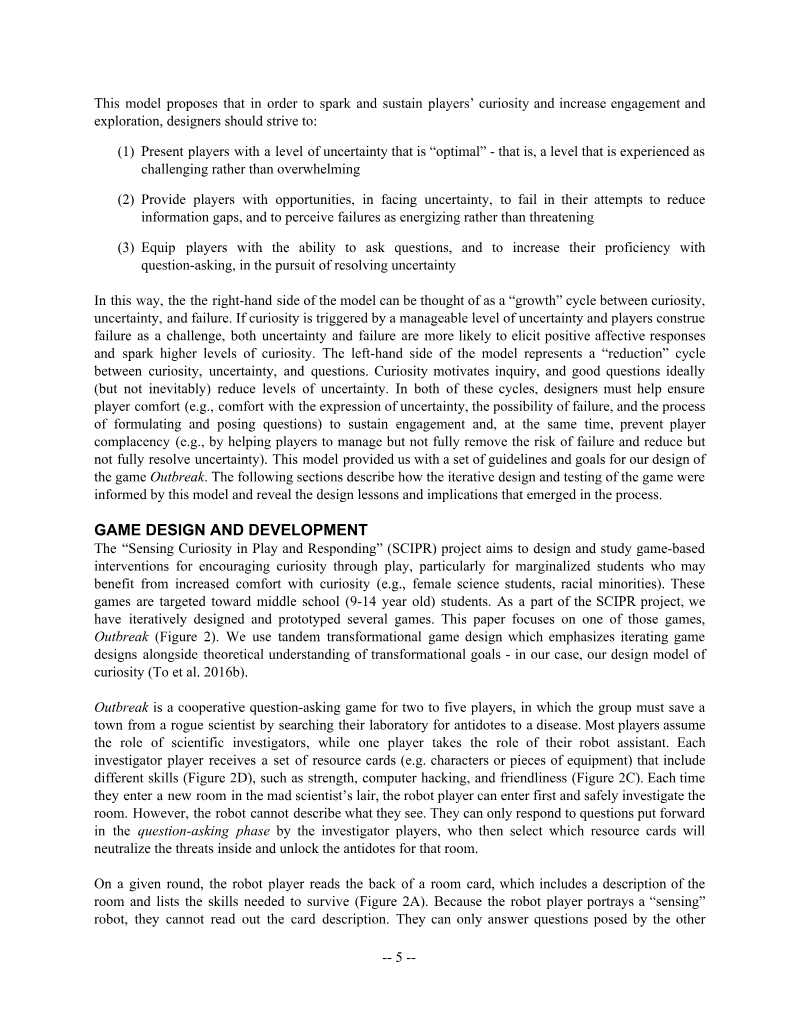
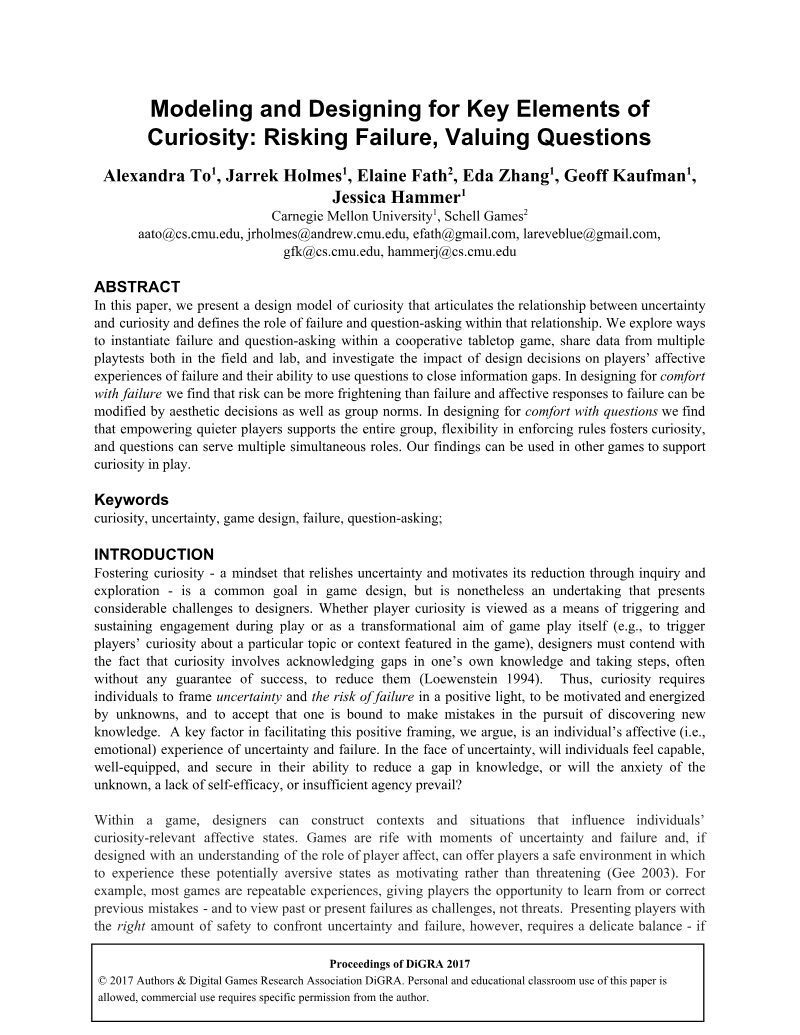
The document presents a design model for fostering curiosity in games, centered on the strategic management of uncertainty, failure, and question-asking.
- Curiosity-oriented game design hinges on managing players' perceived risk of failure rather than failure itself, since players often feared the risk more than the failure. The authors present this as an argument that could inform other games, though their data were qualitative.
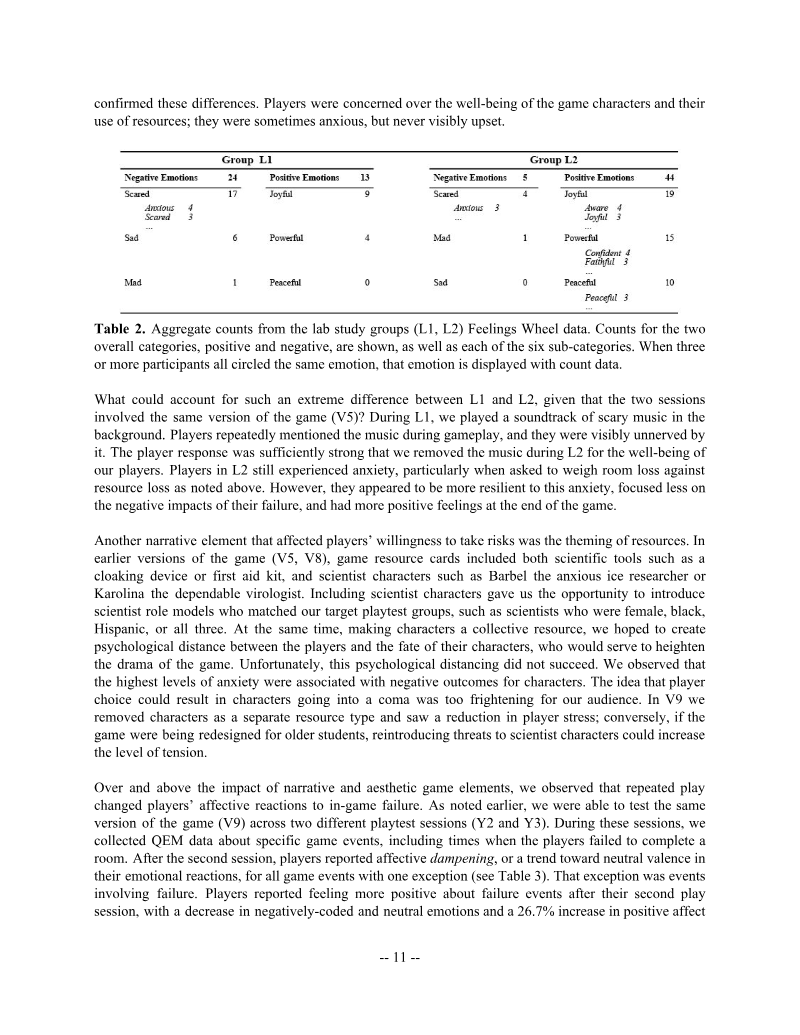
- Aesthetic choices strongly shape anxiety: scary music and named at-risk characters heightened fear, while calmer presentations produced predominantly positive affect.
- Repeated play raised positive emotional responses to failure by roughly 27 percent, suggesting familiarity can ease the fear of failing.
From Video Games to Virtual Reality (and Back): Introducing HACS (Historical-Analytical Comparative System) for the Documentation of Experiential Configurations in Gaming History
The document introduces the Historical-Analytical Comparative System (HACS), a framework designed to systematically document and analyze the evolution of experiential configurations in gaming history, particularly addressing the recurring interest in virtual reality technologies within video games.
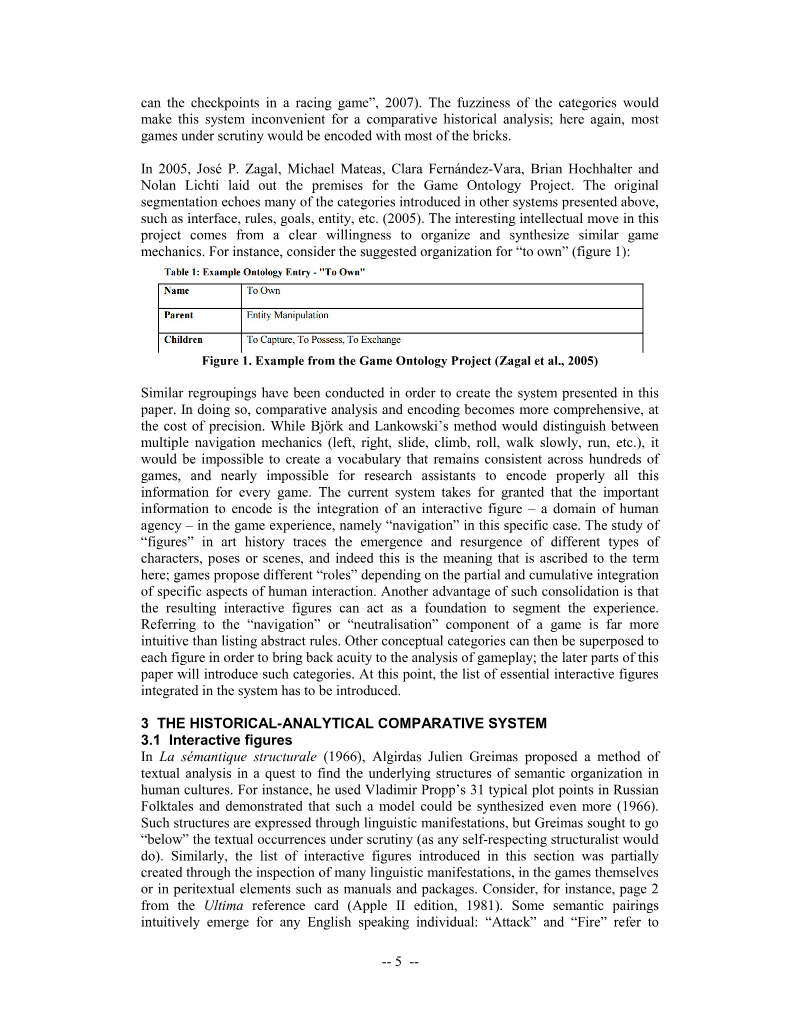
- HACS (Historical-Analytical Comparative System) is proposed as a middle path between broad conceptual frameworks, which lack comparative resolution, and granular genre ontologies or mechanic taxonomies, which become unwieldy across hundreds of titles.
- The framework is organized around ten "interactive figures" describing recurring forms of player action, such as navigation, neutralisation, and resource management.
- A manipulation interface typology distinguishes corporeal, techno-mimetic, generic, and screen-augmented control schemes, critiquing the "transparency fallacy" that assumes interfaces disappear into the experience.
Considering Play: From Method to Analysis
Van Vught and Glas offer a practical methodological guide for students and newcomers to game studies, addressing a gap in the existing literature.
- The paper offers a taxonomy of research play methods, ranging from exhaustive play (impractical for large or continually patched titles) to heuristic strategies such as instrumental play guided by Leino's gameplay condition, a rational player model illustrated through ethical dilemmas, and a cooperative player model covering narrative, realistic, transtextual, and artistic functions.
- Free play, in which transgressive and transformative engagement reveals how players negotiate designed expectations in practice, is contrasted with object-focused methods as a complementary analytical approach.
- Deliberate rule-breaking, exploitation, and "going native" are endorsed as productive research strategies, citing Dibbell's virtual-economy trading in Ultima Online and Myers' work on rule-following in City of Heroes/Villains, provided they are guided by specific research questions.
Adapting Epic Theatre Principles for the Design of Games for Learning
This document introduces a novel framework for designing educational games, specifically those aimed at fostering critical reflection on complex societal systems beyond traditional academic settings.
- The paper argues that educational games fail to transfer learning because they prioritize fun balancing and immersion, so learning itself should be the primary design goal, with critical reflection as the intended outcome.
- Its framework rests on three components: a controlled play context, explicit educational framing, and tightly scaffolded content free of extraneous elements.
- Play context strongly shapes whether reflection occurs: unsupervised students ignored the learning goal in The Oregon Trail, while teacher-structured play increased participation in a Morrowind classroom study, suggesting an educator or cooperative setting is often necessary.

Exhibition Strategies for Videogames in Art Institutions: Blank Arcade 2017
This paper examines exhibition strategies for videogames in art institutions, using the author's co-curation of the Blank Arcade exhibitions at Abertay University as a practical case study.
- The report uses the 2016 and 2017 Blank Arcade exhibitions at Abertay University, co-curated by the author, as a practical case study for presenting videogames in art institutions, tracing a lineage from the 1983 Corcoran ARTcade through Game On (2002), Game Masters and The Art of Video Games (2012), and MoMA's Applied Design (2013).
- The author argues the field has shifted from separating commercial and artistic games toward recognizing independent and author-driven production, which helped integrate videogames into the art world's focus on authorship and stylistic influence.
- The 2016 Blank Arcade narrowed 57 submissions to eight works chosen for accessibility, experimental character, and durability over a run of nearly three months, deliberately excluding technically demanding pieces and placing intuitive works early to build visitor confidence.
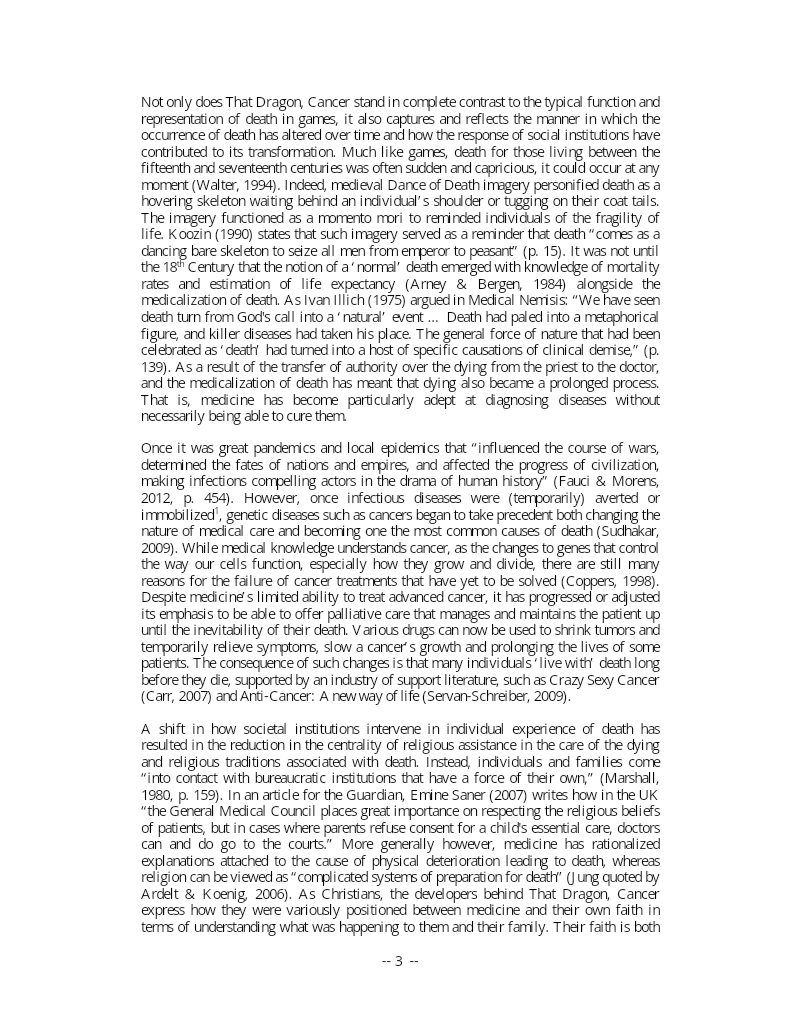
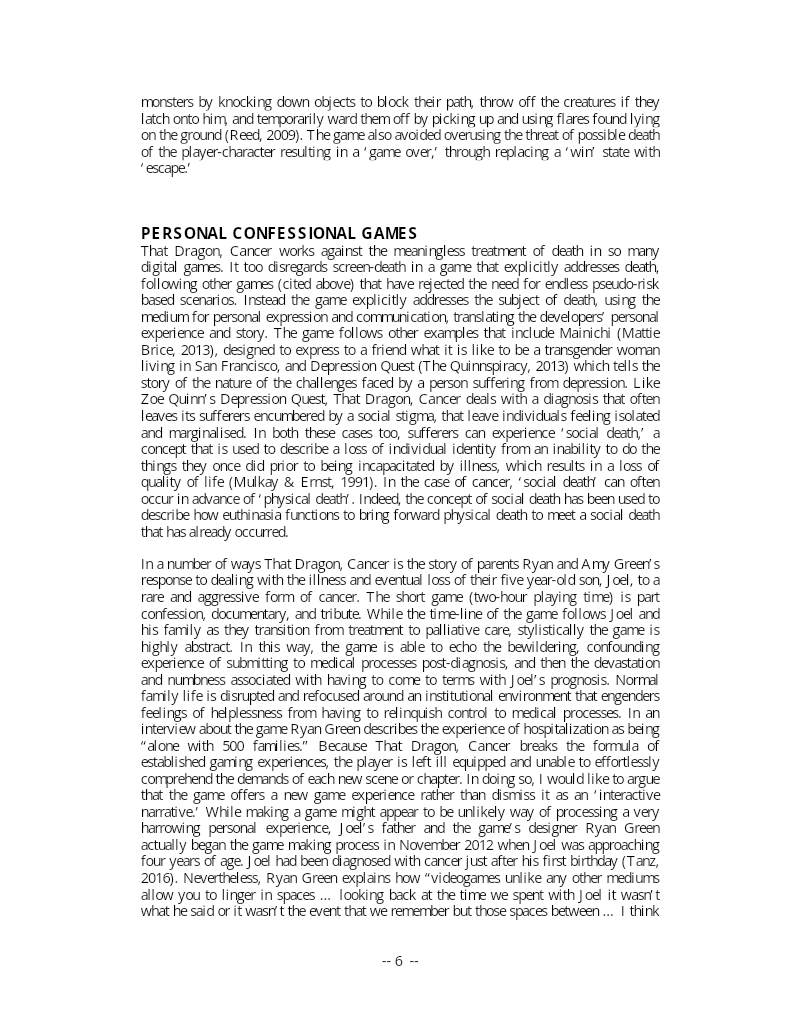
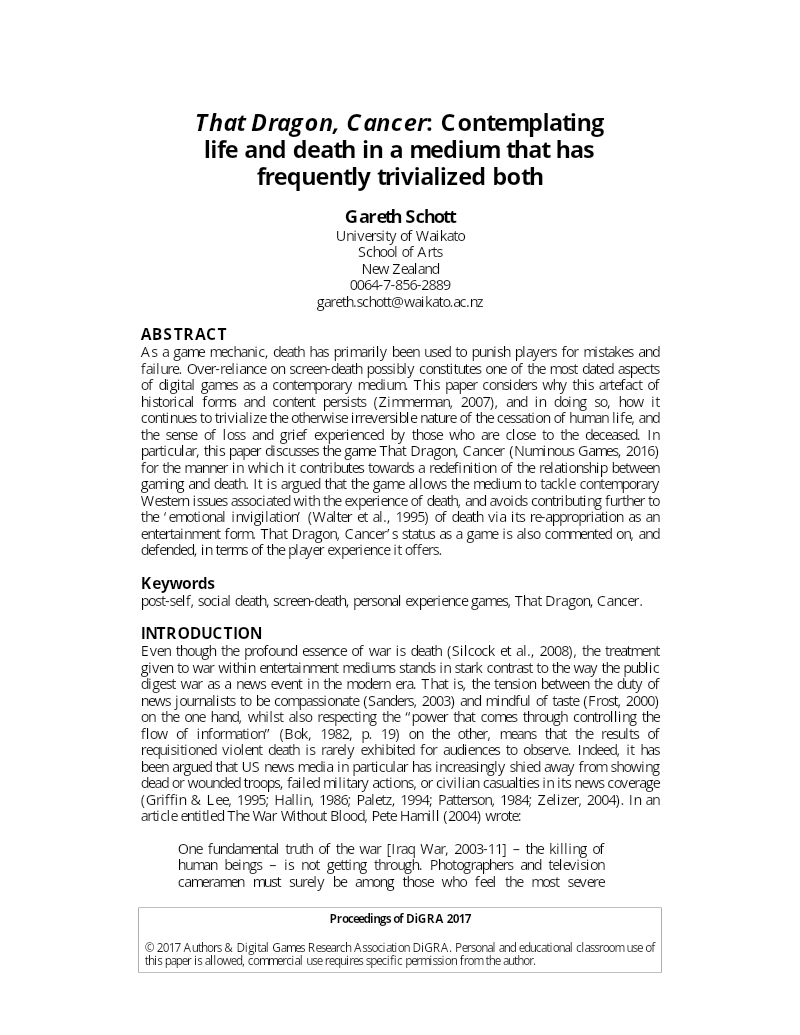
That Dragon, Cancer: Contemplating Life and Death in a Medium That Has Frequently Trivialized Both
The document examines how video games typically portray death as a trivial, punitive mechanic, contrasting this with the profound exploration of mortality in That Dragon, Cancer.
- Games have typically treated death as a punitive mechanic, such as the screen-death 'game over,' which arguably trivializes the irreversibility of mortality and bereavement.
- Schott argues that games can engage death seriously by grounding it in lived experience rather than presenting it as a consequence of player failure.
- That Dragon, Cancer (2016), an autobiographical game of roughly two hours about the Green family's loss of their five-year-old son Joel to cancer, conveys grief and medical helplessness through abstraction, shifting player perspectives, and the absence of a win state.
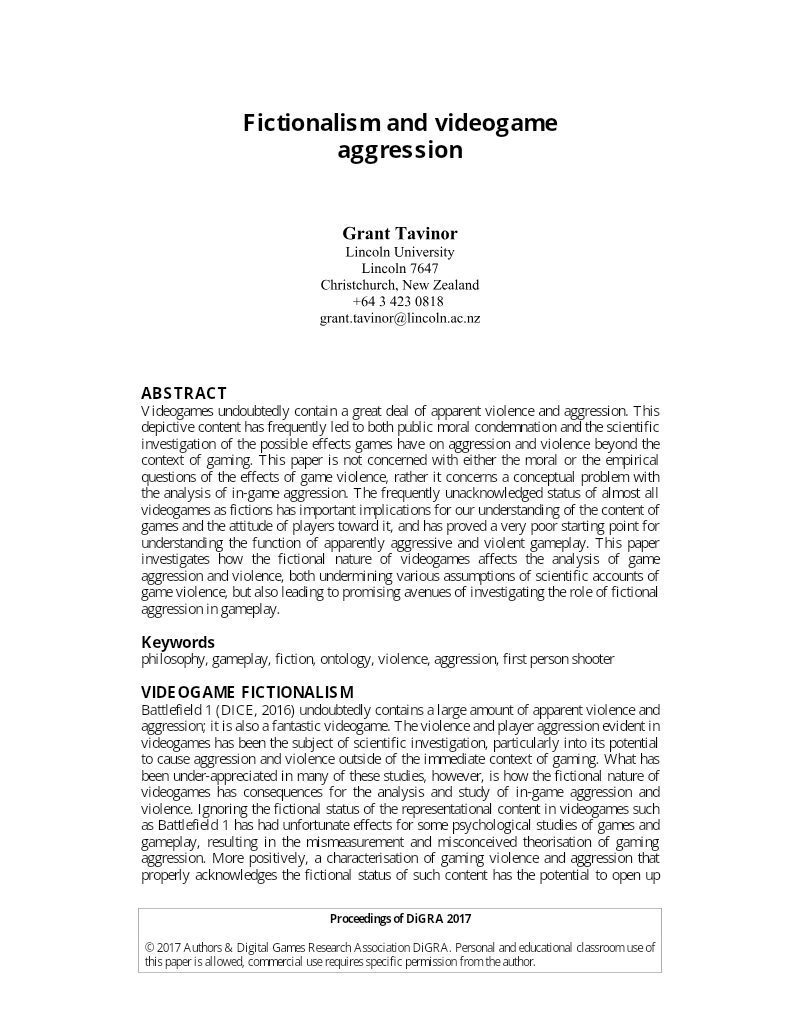
Fictionalism and Videogame Aggression
Grant Tavinor argues that psychological research on videogame violence has overlooked videogame fictionalism, the view that most videogames are interactive fictions.
- Tavinor argues that videogames are fictions, so standard definitions of aggression (intentional harm to a real individual who wishes to avoid it) cannot literally apply to in-game violence, since players harm no real people and fictional characters cannot be genuinely harmed.
- The paper uses the 2007 Anderson, Gentile, and Buckley study, which reported that players of violent games delivered more high-intensity noise blasts, to illustrate how conflating fictional violence with real aggression can undermine the conclusions of such experiments.
- The paper's most sustained critique targets the General Aggression Model of Anderson and Bushman, which it claims treats fictional violence in titles like Battlefield 1 as genuine aggression while overlooking that players are mainly engaged in ludic activities such as competition and cooperation.
War Ethics: A Framework for Analyzing Videogames
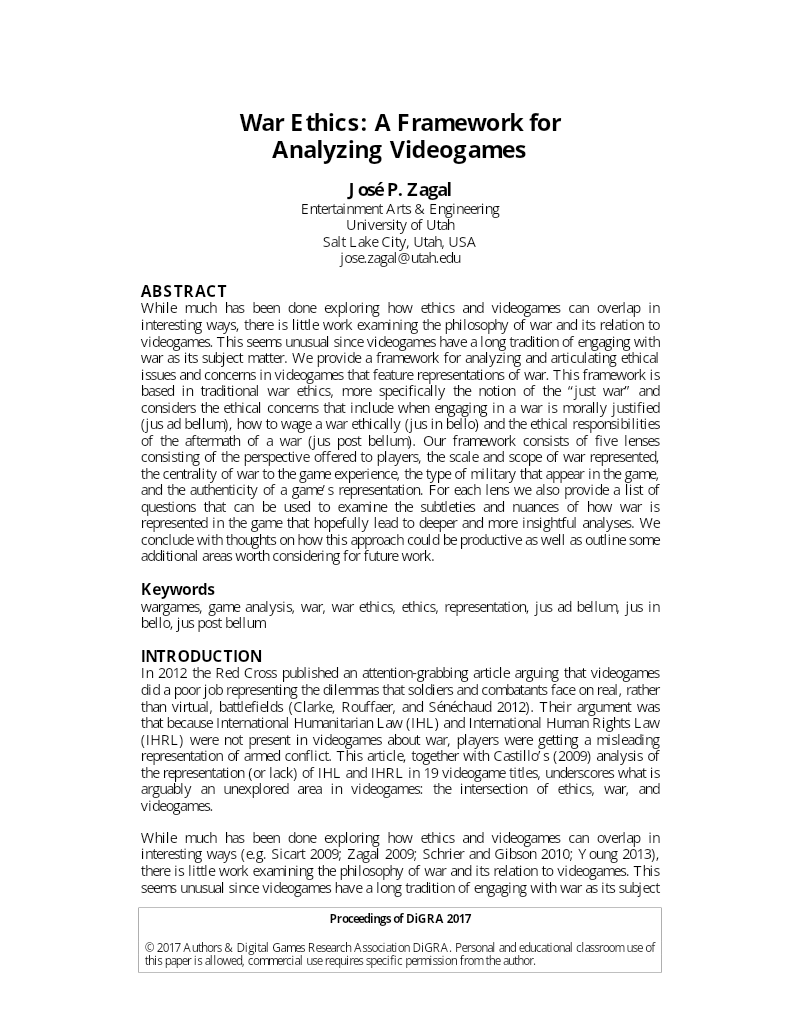
War Ethics: A Framework for Analyzing Videogames proposes a structured method for evaluating the ethical dimensions of war-themed games, grounded in just war theory and its three divisions of jus ad bellum, jus in bello, and jus post bellum.
- The report argues that the ethics of war in games remain underexplored relative to the medium's long engagement with military themes, and proposes a framework grounded in just war theory (jus ad bellum, jus in bello, jus post bellum).
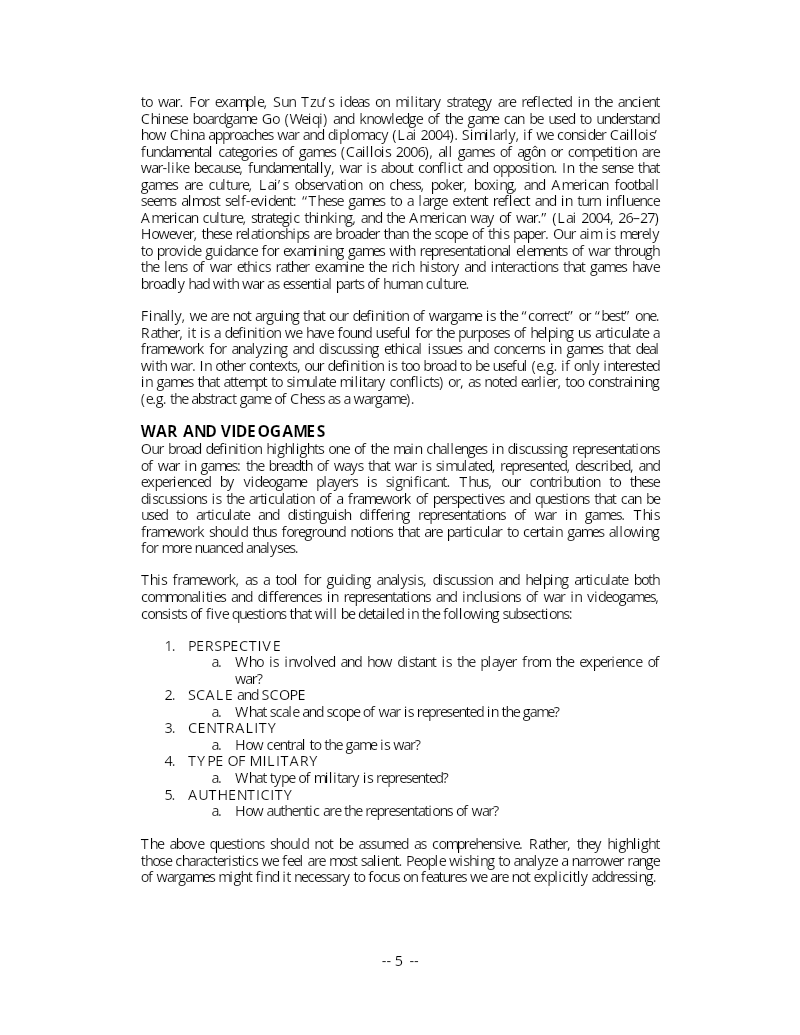
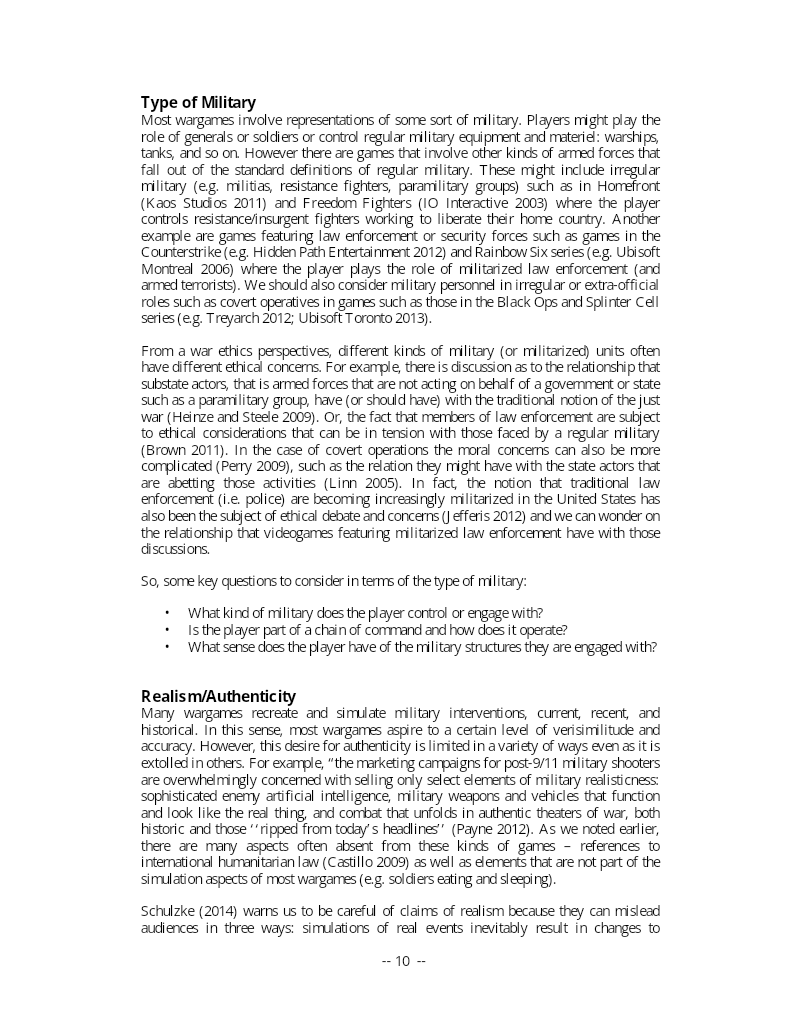
- The framework evaluates war games through five lenses: perspective, scale and scope, centrality, type of military, and authenticity, using a deliberately broad definition of the 'wargame' that includes any game with representational war.
- Most war games address only the conduct of fighting, leaving the reasons for war and its aftermath largely unexamined, with DEFCON and Valiant Hearts as notable exceptions that prompt reflection on escalation and cost.
Do you work at DiGRA? Get a free report of how these documents are read and cited here.