PC reports and market data
Documents

Let's Review Your Games — Ep. 041
Indie game development requires a rigorous focus on user interface design, narrative clarity, and player onboarding to ensure market viability.
- Game developers should prioritize the first 10 minutes of gameplay, as this initial experience is the primary driver for user reviews and overall reception.
- UI design should adhere to strict alignment principles, using clean padding, consistent font usage (limited to 2–3 typefaces), and logical placement to avoid a 'cheap' aesthetic.
- In horror games, removing skyboxes and matching the environment to the fog color can significantly enhance atmosphere and tension by creating a more gloomy, immersive aesthetic.
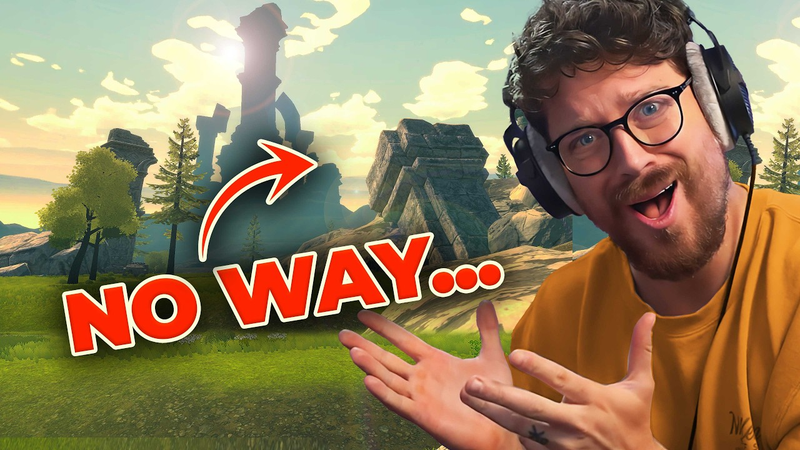
Making Beautiful 3D Games Is Easier Than You Think
Creating a high-quality, stylized 3D adventure game—modeled after the aesthetic of titles like The Legend of Zelda: Breath of the Wild—is achievable for independent developers using free assets and a disciplined approach to visual design.
- Achieving a stylized, Breath of the Wild-inspired aesthetic relies on a limited terrain palette of three to four textures, using hue shifting and saturation adjustments to ensure all environmental elements, such as grass, dirt, and stone, remain color-coordinated.
- To avoid visual repetition in terrain, use noise spreads for grass billboards and maintain a consistent tiling scale across all terrain layers to create a unified look.
- High-fidelity assets should be placed strategically to anchor the scene, as the human brain interprets the presence of a few high-resolution objects as an indicator of overall high-quality visual fidelity.

Let's Review Your Games — Ep. 040
Independent game development requires a delicate balance between creative vision and technical accessibility.
- Indie developers frequently fail to bridge the gap between creative visual identity and fundamental user experience, leading to disoriented players.
- Common technical failures include inconsistent control schemes, such as conflicting button mapping, and unreliable audio or UI cues.
- Poorly paced onboarding sequences and the premature introduction of complex mechanics often prevent players from engaging with the core narrative.
How To Make "Zelda: Breath Of The Wild" Workshop: Day 2 (Part 2)
Creating a high-fidelity, open-world environment reminiscent of The Legend of Zelda: Breath of the Wild requires a disciplined approach to asset integration, terrain sculpting, and atmospheric post-processing.
- Effective terrain sculpting relies on using specialized brushes for large-scale mountain creation rather than manual, single-brush detailing.
- Fog is a critical tool for managing visual depth and environmental cohesion, helping to blend distant terrain and improve the overall aesthetic of the game world.
- Manual painting of environmental details like snow and grass requires balancing artistic intuition with logical placement based on mountain topography to avoid a 'mappy' or unnatural appearance.
How To Make "Zelda: Breath Of The Wild" Workshop: Day 1
Replicating the distinct visual aesthetic of The Legend of Zelda: Breath of the Wild within the Unity engine requires a disciplined approach to asset management and color theory.
- Establish a consistent color scheme for environments and biomes early in the development process to create a cohesive visual foundation, even if deviations occur later.
- Implement Level of Detail (LOD) groups for all exterior assets to manage poly counts and texture sizes, preventing performance issues when rendering large-scale environments.
- Maintain strict folder organization for all imported assets to ensure project scalability and prevent workflow bottlenecks during development.
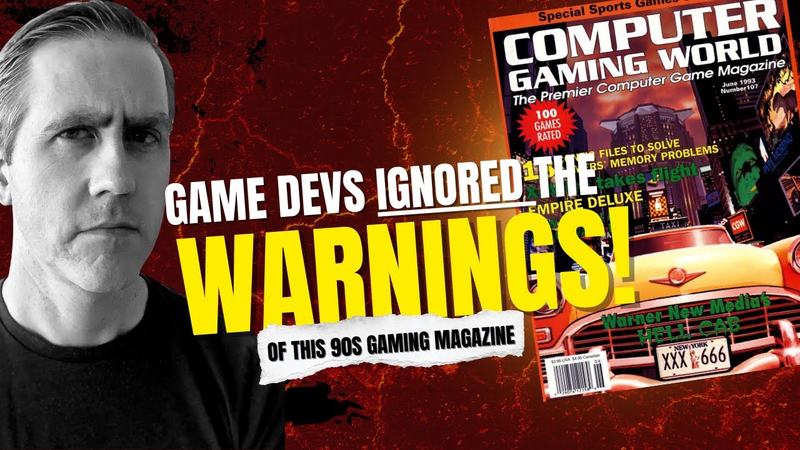
This Old Game Magazine Explains Why Most Games Fail Today
The enduring success of PC gaming is rooted in a distinct cultural preference for complexity, simulation, and sandbox-style gameplay that has remained consistent for over three decades.
- Long-term success on PC platforms like Steam is driven by aligning development with the platform's historical pillars: strategy, management, and simulation.
- PC audiences consistently reject console-native genres like platformers in favor of data-rich interfaces and deep, systems-driven gameplay.
- The core PC demographic possesses a 'tinkerer' mindset that prioritizes granular control, performance optimization, and extensive customization options.
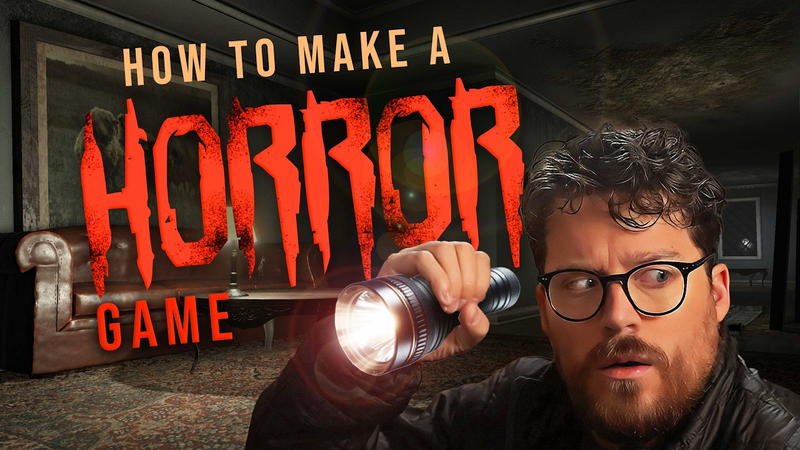
How To Make A Horror Game (Fast, No Modeling)
The process of developing a 3D horror game without traditional 3D modeling skills relies on leveraging modular design, grid-based layout tools, and royalty-free assets.
- Use Unity’s ProBuilder package to construct environments through modular block-outs, ensuring consistent scale by adhering to a strict one-meter grid system.
- Maintain visual consistency across disparate royalty-free assets by applying a unified color palette and standardized lighting throughout the environment.
- Generate professional-grade material maps—including normal, height, and roughness—from flat photographic references using tools like Materialize.

🚨 Under 16 Social Media Ban: What It Means for Gaming
The global trend of implementing social media bans for individuals under the age of 16 is gaining momentum, with several countries, including Australia, Denmark, and Malaysia, adopting or considering such legislation.
- A growing global trend, currently adopted by seven or eight countries including Australia, Denmark, and Malaysia, is moving toward banning social media access for children under 16.
- From a gaming industry perspective, the removal of social media platforms like TikTok and Instagram as primary entertainment competitors is expected to drive a 'halo effect,' increasing daily active users (DAU), session lengths, and engagement for gaming studios.
- The shift in the attention economy suggests that children restricted from social media will reallocate their time—often spent 'doom scrolling'—toward alternative digital entertainment, including video games and streaming services like YouTube, Netflix, and Prime.
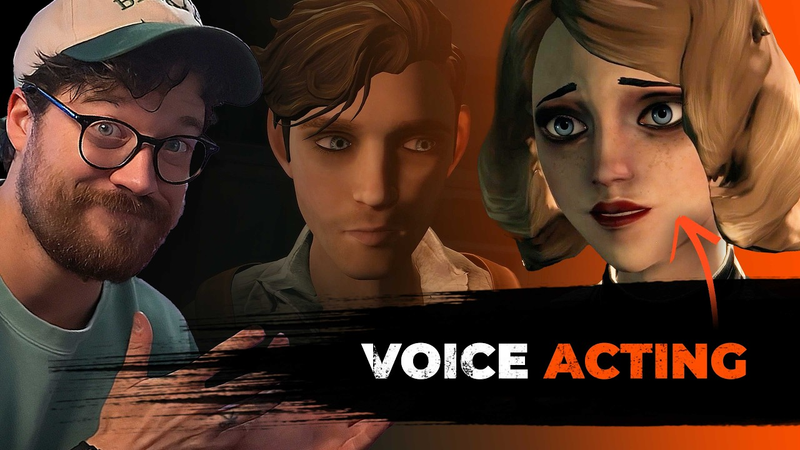
Twisted Tower Devlog (Adding Voice Acting!)
In the context of an increasingly crowded 2026 game development landscape, professional voice acting serves as a critical differentiator against the proliferation of AI-generated content.
- Prioritize human voice acting over AI-generated audio to differentiate your game in the 2026 market, as human performances provide a level of authenticity that AI currently lacks.
- Direct voice actors to focus on acting rather than just reading lines by encouraging them to use physical movement and facial expressions during recording sessions.
- Provide clear emotional context for every line of dialogue by using a shared document to specify the intended feeling or tone for each segment.
AI Makes Gaming More Expensive, Rainbow 6 Hacked, and Our Gaming Resolutions! | Games For Breakfast
The gaming industry entered 2026 facing a severe hardware affordability crisis, characterized by a sharp decline in consumer spending to levels not seen in decades.
- Star Citizen has reached $1 billion in crowdsourced funding without releasing a finished product.
- GOG has been sold and will operate as an independent entity separate from CD Projekt, with future operations pending further clarity on their roadmap and game preservation efforts.
- Steam's 'Best of 2025' data reveals that top-performing games are categorized into platinum, gold, silver, and bronze tiers, providing insight into player behavior across diverse gaming demographics.

Let's Review Your Games — Ep. 039
Effective indie game development relies on the strategic application of "juice"—the essential polish, sound design, and visual feedback that renders gameplay responsive and satisfying.
- Melee combat requires high-impact sensory feedback, specifically layering punch and crunch sound effects with visual cues like screen flashes, particle effects, and gore to make hits feel satisfying.
- Adding personal stakes or relational motivations, such as a vendetta against a specific antagonist, is more effective at driving player engagement than generic objectives like research or exploration.
- Voice acting is a critical component for indie demos to stand out; developers should utilize resources like voices.com to integrate professional audio early in the development process.
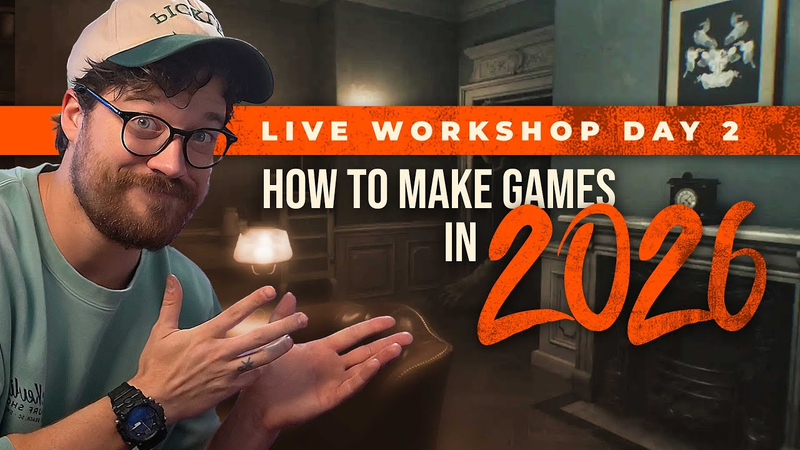
How To Make Games In 2026 (Workshop, Day 2)
Achieving AAA-quality visual fidelity in indie game development is highly feasible through a disciplined, cost-effective workflow centered on custom texture creation and meticulous set dressing.
- Indie developers can achieve AAA-quality visuals by replacing expensive 3D modeling and high-poly baking with original photography and royalty-free assets.
- Custom texture creation using tools like Photoshop and Materialize allows for the generation of normal, height, and smoothness maps to add depth to basic geometry.
- Adhering to Physically Based Rendering (PBR) principles, specifically the precise configuration of alpha channels for roughness and specular highlights, is essential for visual fidelity.