PC reports and market data
Documents
Becoming a Game Developer... (5 Days in 1 Video!)
The pursuit of a career in game development requires a rigorous, multifaceted daily routine that balances academic coursework, independent project iteration, and content creation.
- Professional game development requires a rigorous, multifaceted daily routine that balances academic coursework, independent project iteration, and content creation.
- Success in the industry relies on disciplined time management and the use of organizational tools to maintain productivity across multiple concurrent projects.
- The development lifecycle is defined by a constant cycle of experimentation, where broad ideas are narrowed through iterative testing to identify viable prototypes.
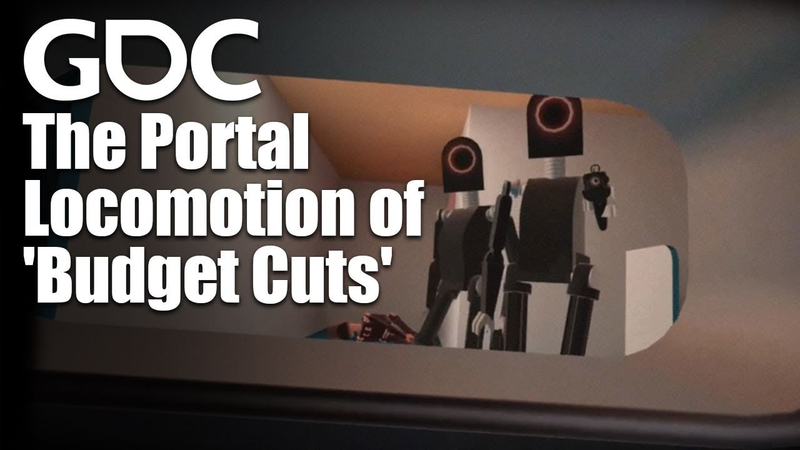
The Portal Locomotion of Budget Cuts
The development of the portal-based locomotion system for the virtual reality stealth game Budget Cuts focused on solving the inherent challenges of VR movement, specifically motion sickness, navigation predictability, and gameplay pacing.
- The Budget Cuts locomotion system uses a physical translocator beacon to naturally constrain movement speed and distance, avoiding the disorientation associated with traditional point-and-click teleportation.
- To mitigate motion sickness, the game employs a portal window that previews the destination and uses spherical linear interpolation (slerp) to provide a smooth, consistent transition regardless of player head orientation.
- The team optimized performance by replacing resource-heavy render-target techniques with Z-buffer manipulation, which renders only the necessary geometry within the portal to reduce GPU load.

It IS Rocket Science! The Physics of Rocket League Detailed
The development of Rocket League centers on achieving a highly deterministic and responsive physics environment, prioritizing competitive integrity over hyper-realistic simulation.
- Rocket League achieves competitive integrity by utilizing the open-source Bullet physics engine running at a fixed 120Hz tick rate to ensure a deterministic simulation environment.
- The game prioritizes responsiveness over hyper-realism by using simplified, designer-controlled acceleration curves and custom lateral friction systems rather than modeling complex real-world mechanics.
- To eliminate lag-related penalties, the architecture uses client-side prediction that simulates the entire physics scene, relying on a reconciliation process that reruns physics frames to maintain server authority.
Marketing on Zero Budget
Marketing a video game effectively does not require a large budget, but it does demand a strategic, proactive approach to community building and platform engagement.
- Build a dedicated Discord community early by implementing a 'gated' entry system, such as forcing users to choose a faction upon joining, to foster tribalism and active participation.
- Engage your community by assigning weekly tasks and allowing them to contribute to game assets, such as designing kits or banners, which converts casual followers into committed day-one buyers.
- Identify the specific, exciting hook of your game by testing different descriptions on various audiences until you find the narrative that consistently generates the strongest positive reaction.
PlayerUnknown's Battlegrounds: From Pre-Alpha to 20 Million and Counting
PlayerUnknown’s Battlegrounds achieved unprecedented global success by eschewing traditional marketing budgets in favor of a grassroots community-building strategy.
- PUBG achieved massive scale by replacing traditional marketing budgets with a grassroots strategy that prioritized direct, transparent communication with players and content creators.
- The studio leveraged a small team of 25 people to foster organic momentum on Twitch, effectively bypassing the need for paid advertising or external PR agencies.
- Early development relied on a community snowballing model, using Discord for distribution and iterative feedback loops to ensure the player base directly influenced the game's evolution during Early Access.
Honey, Where is My Wingsuit? - Building the Just Cause 3 Animation and Rigging Pipeline
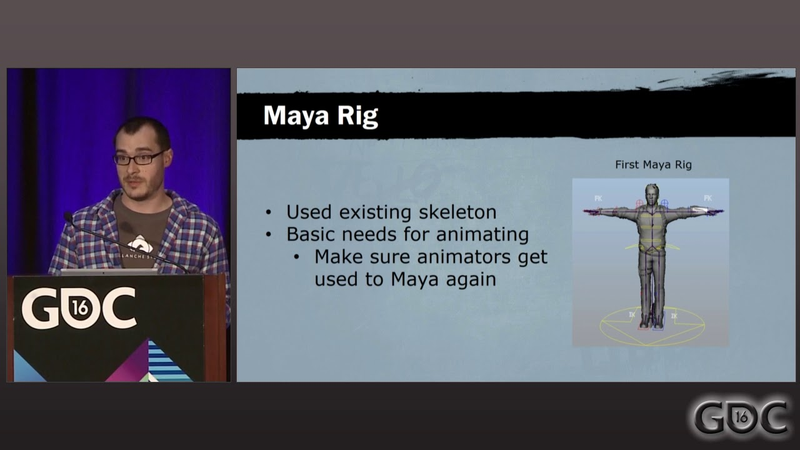
The development of the Just Cause 3 animation and rigging pipeline centered on transitioning from a MotionBuilder-centric workflow to a Maya-based environment to better accommodate the game’s unique hand-keyed mechanics, such as the wingsuit.
- Avalanche Studios implemented a dual-software pipeline for Just Cause 3, transitioning animation workflows between Maya for rigging and MotionBuilder for animation editing using a shared HumanIK (HIK) skeleton system.
- The team utilized a modular rigging architecture where all character types—including humans, animals like cows, and specialized gear like wingsuits—shared a standardized initialization and finalization process to ensure consistency.
- To manage 13,000 lines of English dialogue, the studio used MotionBuilder’s built-in voice device to automate lip-syncing, driving face poses via float data (0 to 1) that the game engine blended at runtime.
Rendering Rainbow Six Siege
Maintaining a consistent 60 frames per second in Rainbow Six Siege across diverse console and PC hardware requires a sophisticated approach to architectural optimization and resource management.
- To maintain 60 FPS during heavy destruction, the team implemented a hierarchical Z-buffer (Hi-Z) system that enabled aggressive GPU-side occlusion culling, reducing total rendered triangles by 73%.
- The engine utilizes a clustered lighting structure with 32x32 pixel cells and Z-distribution, allowing for efficient light volume culling against the Hi-Z buffer while supporting up to eight shadowed lights.
- To support low-end hardware with 1GB of VRAM, the team replaced standard DirectX 11 deferred contexts with a custom, compute-shader-driven rendering architecture that manages unified constant buffers and vertex data manually.
Visual Adventures on Sea of Thieves
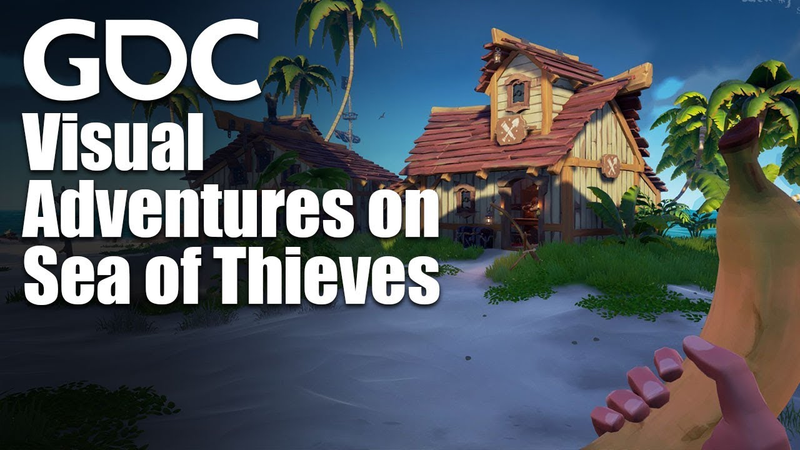
The visual identity of Sea of Thieves centers on an illustrative, painterly aesthetic designed to balance modern technical performance with a timeless, humorous charm.
- Rare established three core visual pillars for Sea of Thieves: an illustrative art style, a world defined by constant motion, and a world built on environmental storytelling.
- The team achieved an 'illustrative' aesthetic by simplifying object forms while adding faceted surface details and expressive, brush-stroke-inspired textures to prevent the world from appearing flat.
- To maintain a sense of history and character, the developers applied 'wear and tear' to assets, such as adding chips, nicks, and rounded corners to geometry to simulate the passage of time and physical interaction.

Starting The Next Chapter - Travel VLOG - (Bye bye!) - (Hi, Berlin!)
The transition to a new creative chapter in Berlin serves as a catalyst for refining the process of game development and content creation.
- Traditional search engine queries for specific game genres are declining, suggesting that integrated distribution platforms like Steam have become the primary discovery channels for players.
- Market validation for new game concepts is being conducted through a combination of social media polling and the analysis of search behavior data via Google Trends.
- Small-budget Google AdWords campaigns are being utilized to acquire technical knowledge of platform algorithms and audience targeting rather than to drive immediate commercial revenue.

Nuke Possum Springs: A Night in the Woods Design Postmortem
Night in the Woods emerged from a 2013 collaboration between Scott Benson and Alec Holowka, intentionally diverging from the industry’s prevailing trend of minimalist, silent-protagonist games.
- Night in the Woods, launched in 2013 by Scott Benson and Alec Holowka, prioritized character-driven narrative and dialogue over the industry-standard minimalist, silent-protagonist model.
- The developers utilized platforming as a secondary tool for world exploration rather than a primary mechanical challenge, allowing the environment to feel authentic and independent of player influence.
- The project favored an improvisational development style, incorporating one-off gameplay moments like knife fighting to emphasize themes of mental health and economic instability.

A Mortician's Tale: A Different View on How Games Treat Death
This analysis examines the integration of death as a narrative and mechanical element in video games, specifically through the lens of the independent title A Mortician’s Tale.
- Games can achieve deeper emotional resonance by replacing traditional punitive death mechanics and superficial narrative tropes with nuanced, empathetic representations of mortality.
- Removing fail states and urgency from gameplay encourages players to slow their pace, fostering a reflective environment that allows for deeper engagement with the stories of the deceased.
- Direct, ritualistic interaction with the deceased and the integration of meaningful character relationships are the most effective methods for eliciting profound player responses.

7 Game Development Mistakes I Made When I Got Started!
Transitioning from hobbyist game development to professional commercial production requires a fundamental shift in strategy and mindset.
- Prioritize iterative prototyping over committing to a single large-scale project to validate market potential and avoid wasted development time.
- Distinguish clearly between designing for personal enjoyment and designing for a commercial audience to ensure the product meets market needs.
- Validate the understandability of core gameplay mechanics early; if the concept is not immediately graspable through visuals or footage, its commercial appeal is significantly compromised.