Monetization
Documents
Mobile Gaming Loyalty Report 2023
The Mobile Gaming Loyalty Report examines the drivers of player engagement, retention, and spending across the mobile landscape. By combining a longitudinal benchmark of 500 games with a survey of 3,000 mobile gamers in the US and Canada during 2023, the analysis establishes a Loyalty Index based on six key monetization and engagement KPIs. The findings emphasize that while user acquisition remains expensive, maximizing the lifetime value of existing players through loyalty-centric design is essential for sustainable growth.
Role-Playing Games (RPGs) emerge as the most loyal genre, scoring 75 out of 100 on the index due to deep gameplay loops and compounding monetization systems that encourage high-value, frequent spending. Strategy games follow closely, excelling in repeat purchases and session frequency. Conversely, Lifestyle games lead in average sessions per user, utilizing bite-sized tasks and emotional storytelling to drive incremental spending. Data indicates a significant gap between average and top-quartile performers in genres like Casino and Sports, suggesting substantial room for optimization in retention and spender conversion.
Consumer behavior insights reveal a disconnect between play and spend habits; while over 77% of spenders rotate between two to seven games weekly, 53% concentrate their spending on a single title. Progression is the primary motivator for both continued play and in-app purchases, whereas "pay-to-win" mechanics and poorly received updates are leading causes of churn. Notably, 39% of players will abandon a game if a bad update is not corrected within a week. High-value spenders, defined as those spending over $100, exhibit more demanding standards for app store ratings and customer service.
Marketing effectiveness is heavily influenced by authenticity and social proof. Over 71% of gamers demand real gameplay footage in advertisements, and 60% consider app store ratings and reviews crucial for downloads. While digital ads remain the primary discovery tool, word-of-mouth ranks as a top-three acquisition source. Additionally, there is a strong interest in play-and-earn mechanics, with 84% of respondents open to trying games that offer tangible rewards.
- Progression is the primary driver for both retention and in-app spending, while 'pay-to-win' mechanics and poorly received updates are the leading causes of player churn.
- 53% of mobile spenders concentrate their financial investment on a single title, even though 77% of spenders rotate between two to seven games weekly.
- RPGs are the most loyal genre with a 75/100 Loyalty Index score, driven by deep gameplay loops and compounding monetization systems.
- 39% of players will abandon a game if a negative update is not corrected within one week, highlighting the critical need for rapid response to player feedback.
- Marketing effectiveness relies on authenticity, as 71% of gamers demand real gameplay footage in advertisements and 60% rely on app store ratings for discovery.
The State of Mobile Gaming 2023: Mobile Gaming Market Trends and Top Titles in the U.S., Europe, and Asia
The global mobile gaming landscape underwent a significant structural transition in 2022, characterized by a 14% decline in total player spending from its 2021 peak alongside a stabilization of download volumes at approximately 13.8 billion per quarter. While major markets such as the United States, Japan, and South Korea experienced revenue contractions, China emerged as the second-largest market globally, and India solidified its position as the leader in download volume, accounting for 17% of total installs. This period marked a definitive shift away from the hypercasual genre, which saw an 18% decline in downloads due to rising user acquisition costs and broader economic pressures.
In response to these market pressures, the industry is pivoting toward a hybridcasual model that blends accessible core mechanics with sophisticated mid-core monetization and meta-progression features. This emerging segment grew by 13% and generated $1.4 billion in revenue, driven by significantly higher player engagement than traditional casual titles. Success in the current environment is increasingly dictated by the effective use of Live Ops, which now accounts for 97% of revenue among top-grossing games. Features such as character collection and social clan systems have become essential for maintaining high engagement levels and driving long-term player retention.
While established genres like RPGs and shooters faced revenue declines, the action genre grew by 9%, and subscription-based models gained momentum, exemplified by the expansion of ad-free gaming catalogs. Conversely, the crypto and NFT gaming sector experienced a sharp downturn, with downloads falling from 46 million to 29 million and revenue dropping by 35%. Despite the overall contraction in spending, the market remains larger than pre-pandemic levels, with legacy titles like Honor of Kings and Subway Surfers maintaining dominance in revenue and download rankings, respectively, across a diversifying global audience.
- Global mobile gaming revenue declined 14% in 2022 from its 2021 peak, though total market size remains above pre-pandemic levels.
- The hypercasual genre saw an 18% decline in downloads, while the hybridcasual model grew by 13% to reach $1.4 billion in revenue.
- Live Ops are now critical to commercial success, accounting for 97% of revenue among top-grossing titles through features like character collection and social clans.
- India leads the global market in volume, accounting for 17% of total mobile game installs, while China has solidified its position as the second-largest market by revenue.
- The crypto and NFT gaming sector faced a significant downturn in 2022, with downloads falling to 29 million and revenue dropping by 35%.
Gaming Report 2023
The global gaming industry in 2023 is defined by a strategic shift toward development efficiency and long-term player retention. Studios are increasingly prioritizing speed to market, with 62% of indie developers now shipping titles in under a year. This acceleration is largely fueled by the widespread adoption of premade assets and a reduction in average developer hours. While large studios are expanding their reach through a 16% increase in multiplatform development, indie studios remain predominantly focused on single-platform desktop releases. Simultaneously, there is a notable pivot toward mobile production, where global daily active users have risen by 8% despite a slight decline in the number of paying players.
Monetization strategies are evolving to address this shift in player behavior, moving toward a balanced model where ad-supported structures and in-app purchases hold nearly equal weight. To ensure financial viability, 70% of studios now integrate monetization and LiveOps within the first 30 days of development. This early focus on the product lifecycle has contributed to a 33% increase in the average game lifespan, supported by frequent core content updates and a 27% rise in battle pass adoption. Emerging markets, particularly in regions like Kazakhstan, are driving a 15.7% year-over-year increase in total game builds, signaling a lower barrier to entry for new creators.
Looking forward, the industry is embracing generative AI and user-generated content to streamline workflows and deepen engagement. The rise of "hybrid-casual" mobile games reflects a broader trend of blending accessible mechanics with sophisticated retention loops. Success in the current economic climate requires rigorous scope control and a transition from simple user acquisition to the maintenance of long-term player relationships. By leveraging achievements, community building, and real-time operational updates, developers are successfully extending the relevance and profitability of their titles in an increasingly competitive global market.
- To ensure financial viability, 70% of studios now integrate monetization and LiveOps within the first 30 days of development, contributing to a 33% increase in average game lifespans.
- Development efficiency has accelerated, with 62% of indie developers now shipping titles in under a year by utilizing premade assets and reducing average developer hours.
- Monetization models are shifting toward a balance between ad-supported structures and in-app purchases, supported by a 27% rise in battle pass adoption.
- Mobile gaming daily active users have grown by 8%, even as the industry sees a slight decline in the number of paying players.
- Large studios have increased multiplatform development by 16%, while emerging markets like Kazakhstan are driving a 15.7% year-over-year increase in total game builds.

Gaming Spotlight 2023: The Year in Review
The 2023 Gaming Spotlight provides a comprehensive analysis of the global gaming landscape, focusing on market shifts across mobile, PC, and console platforms during the first half of 2023. Utilizing data from data.ai and IDC, the analysis highlights that while mobile remains the largest market opportunity, it faces a projected 2% year-over-year decline in consumer spend to $108 billion. This softening is attributed to macroeconomic instability, privacy regulations like Apple’s App Tracking Transparency (ATT), and stricter regulations on adolescent gaming in China. In contrast, home console and PC/Mac spending are expected to rise by 3% and 4% respectively, driven by increased hardware availability and subscription-based revenue.
Geographically, the Asia-Pacific region remains a primary revenue driver, with South Korea showing significant market share gains. The report identifies a shift in handheld gaming; while the Nintendo Switch Lite faces declining interest, newer devices like the Steam Deck are gaining traction, albeit with distinct demographic profiles. Mobile gaming success in H1 2023 was defined by titles like Monopoly GO and Honkai: Star Rail, which leveraged strong intellectual property and sophisticated monetization strategies, such as high-value in-app purchases and social engagement features.
A significant portion of the analysis examines user acquisition and monetization challenges. Findings indicate that US gamer sentiment toward in-game advertising is deteriorating, with negative sentiment toward banner and video ads rising significantly. Rewarded video remains the most tolerated format due to its clear value exchange, though even its popularity has dipped. The report concludes that as acquisition costs rise and tracking becomes more difficult, publishers must optimize creative strategies—particularly through playable ads for action genres—and diversify monetization models beyond traditional ads to include subscriptions and battle passes to maintain growth in an increasingly competitive and privacy-conscious environment.
- Mobile gaming consumer spend is projected to decline 2% year-over-year to $108 billion in 2023, driven by macroeconomic instability, Apple’s App Tracking Transparency, and Chinese regulatory constraints.
- Home console and PC/Mac gaming spending are bucking the mobile trend with projected growth of 3% and 4% respectively, fueled by improved hardware availability and subscription-based revenue models.
- User acquisition is becoming more difficult and costly, forcing publishers to shift toward playable ads for action genres and diversify revenue through battle passes and subscriptions.
- US gamer sentiment toward traditional in-game advertising is deteriorating, with rewarded video remaining the most tolerated format despite a general decline in its popularity.
- The handheld gaming market is shifting as interest in the Nintendo Switch Lite wanes, while devices like the Steam Deck gain traction among distinct demographic segments.
Game Development Report 2023
The global game development landscape is currently undergoing a fundamental transition driven by escalating project complexity and the widespread adoption of live service models. With 95% of studios now pursuing or planning live service strategies, the industry faces a critical mismatch between traditional production pipelines and the need for rapid, iterative release cycles. Rising development costs affect 77% of studios, fueled by consumer demands for AAA quality and the technical debt inherent in maintaining custom middleware. Consequently, 88% of developers are actively seeking new technological solutions to address systemic inefficiencies, particularly regarding long build times and fragmented collaborative 3D art pipelines.
To mitigate these challenges, there is a significant shift toward a "buy vs. build" philosophy, with 65% of studios prioritizing off-the-shelf tools over proprietary systems to accelerate time-to-market. Modern development is increasingly adopting SaaS-inspired DevOps practices, modular architectures, and automated testing to improve developer velocity and ensure the stability required for live operations. These infrastructure investments are viewed as vital business drivers, as technical outages or defects in a live service environment result in immediate player churn and revenue loss.
The industry's future growth depends on the integration of emerging technologies such as cloud infrastructure and artificial intelligence to streamline content creation and enhance player experiences. As market saturation and production risks intensify, the move toward agile, software-centric engineering practices represents a necessary departure from legacy norms. Studios that successfully leverage these innovations to reduce technical debt and improve production sophistication are positioned to become the next generation of category leaders in an increasingly competitive global market.
- 95% of studios are now pursuing or planning live service strategies, creating a critical mismatch with traditional, non-iterative production pipelines.
- 88% of developers are actively seeking new technological solutions to resolve systemic inefficiencies, specifically targeting long build times and fragmented 3D art pipelines.
- Rising development costs, driven by AAA quality demands and technical debt from custom middleware, are currently impacting 77% of studios.
- 65% of studios are shifting to a 'buy vs. build' philosophy, prioritizing off-the-shelf tools over proprietary systems to accelerate time-to-market.
- Studios are increasingly adopting SaaS-inspired DevOps, modular architectures, and automated testing to prevent the immediate revenue loss and player churn associated with live service outages.
The Xsolla Report: The State of Play
The global gaming market is undergoing a structural transformation driven by multiplatform integration and the rapid evolution of financial technologies, with total revenues projected to reach $211.2 billion by 2025. A significant catalyst for this growth is the rise of real-time payments, which are expected to account for 28% of global electronic transactions by 2027. This shift is particularly pronounced in emerging markets across the MEA and LATAM regions, where systems like India’s UPI and Brazil’s PIX are facilitating new revenue streams. To bypass traditional platform commissions and rising acquisition costs, developers are increasingly adopting mobile web shops and hybrid monetization models, including Buy Now, Pay Later services, which are forecasted to reach a $309 billion market value by 2030.
Technological advancements in cloud gaming and artificial intelligence are further reshaping the industry landscape. Cloud gaming is anticipated to reach 2.5 billion users by 2024, though it continues to face technical challenges regarding latency and infrastructure. Simultaneously, generative AI is becoming a fundamental development pillar, with over 50% of top studios expected to utilize the technology by 2024 to improve efficiency by up to 30%. Within the next decade, AI is projected to support more than half of the entire game creation process, significantly reducing production timelines and costs.
The industry is also pivoting toward a more interconnected ecosystem where cross-platform capabilities are a primary consumer demand, supported by 87% of multiplayer gamers. This integration, combined with advancements in virtual reality and blockchain, is fueling the expansion of the metaverse, which is forecasted to reach a $710 billion valuation by 2027. As privacy regulations and shifting ad efficiencies challenge traditional growth strategies, the sector is prioritizing flexible payment solutions and immersive, cross-play environments to maintain global momentum.
- The global gaming market is projected to reach $211.2 billion in revenue by 2025, driven by multiplatform integration and the adoption of real-time payment systems.
- Real-time payment systems like India’s UPI and Brazil’s PIX are expanding rapidly, with real-time payments expected to account for 28% of global electronic transactions by 2027.
- Generative AI is becoming a core development pillar, with over 50% of top studios expected to use the technology by 2024 to improve production efficiency by up to 30%.
- Cross-platform capabilities are a primary consumer demand supported by 87% of multiplayer gamers, fueling an interconnected ecosystem that contributes to a projected $710 billion metaverse valuation by 2027.
- Developers are increasingly utilizing mobile web shops and hybrid monetization models, such as Buy Now, Pay Later services, to bypass platform commissions and mitigate rising acquisition costs.
Hyper-Casual Games Benchmark Report: Q4 2022
The benchmark focuses on hyper‑casual mobile games during the fourth quarter of 2022, comparing performance metrics across iOS and Android and highlighting shifts from the previous quarter. Data are drawn from GameAnalytics, which tracks more than 100 000 titles and reaches roughly one‑third of the global mobile player base, providing a broad, cross‑regional view of the segment.
Cost‑per‑install (CPI) reached an all‑time high of $0.20 median on both platforms, with the overall median CPI rising to $0.42. Android’s median CPI grew by $0.05 while iOS saw a larger increase of $0.17. Among the top ten ad‑spending countries, the United States posted the highest iOS median CPI at $0.80, overtaking France and Germany, while Brazil dropped out of the ranking. South Korea and Canada recorded the steepest CPI hikes on Android, each climbing $0.06 from Q3 2022. The report covers major markets in North America, Europe, Asia‑Pacific and Latin America, reflecting a worldwide scope.
Retention benchmarks reveal a consistent advantage for iOS. In the top‑2 % of games, Day 1 retention was 45 % on iOS versus 38 % on Android, and Day 7 retention stood at 19 % versus 14 %. For the top‑25 % tier, Day 1 rates were 33 % (iOS) and 28 % (Android), with Day 7 at 10 % and 6 % respectively. Across all titles, median Day 1 retention was 24 % on iOS and 23 % on Android, while median Day 7 retention was 7 % versus 4 %. The gap between elite, good and average games is pronounced, underscoring the importance of early‑stage player engagement.
Overall, Q4 2022 saw rising acquisition costs and modest but platform‑dependent retention
- Hyper-casual median CPI reached an all-time high of $0.42 in Q4 2022, with iOS experiencing a significant $0.17 increase compared to the previous quarter.
- iOS consistently outperformed Android in retention, with top-tier (top 2%) games achieving 45% Day 1 retention on iOS compared to 38% on Android.
- The United States recorded the highest iOS median CPI among top ad-spending countries at $0.80, while Brazil fell out of the top ten ranking.
- Android median CPI grew by $0.05 in Q4 2022, with South Korea and Canada seeing the steepest regional increases at $0.06 each.
- Day 7 retention for the top 25% of games reached 10% on iOS versus 6% on Android, highlighting a widening performance gap between platforms.
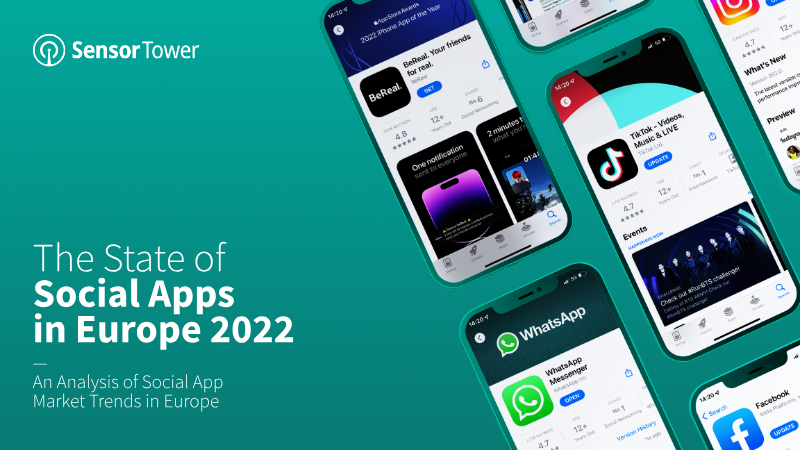
The State of Social Apps in Europe 2022
The European social application market in 2022 was characterized by a significant shift from rapid user acquisition toward aggressive monetization and the rise of niche, authenticity-driven platforms. While overall download volumes stabilized following the 2020 pandemic peak, consumer spending reached a record $830 million in the first ten months of 2022, representing an 86% year-over-year increase. This financial surge was primarily driven by TikTok, which maintained its position as the region's most downloaded app while diversifying its revenue streams through gaming, music, and high-value in-app purchases. Despite this dominance, TikTok’s revenue growth began to decelerate by the third quarter of 2022, signaling a maturing market.
Competitive dynamics within the messaging and social networking subsectors revealed a diversifying landscape. Telegram emerged as a formidable challenger to WhatsApp, nearly closing the download gap and capturing significant market share in Russia. Simultaneously, BeReal disrupted the market by targeting Gen Z with dual-camera, privacy-focused content, forcing established giants like Instagram and TikTok to develop similar features to retain younger demographics. These shifts occurred against a backdrop of lower barriers to entry for new apps, as the download threshold required to reach the top of the App Store rankings declined by 30% compared to 2019.
Despite the emergence of new competitors and shifting consumer preferences, legacy platforms maintained a strong foothold across the continent. Meta-owned applications, particularly Facebook, continued to lead in monthly active users across most European markets, with sustained dominance in Central and Eastern Europe. The industry's evolution reflects a broader transition where established leaders leverage massive existing user bases to pivot toward new monetization strategies, while newcomers focus on hyper-specific engagement models to challenge the status quo in an increasingly fragmented digital ecosystem.
- European social app consumer spending reached $830 million in the first ten months of 2022, marking an 86% year-over-year increase.
- TikTok dominated the European market in 2022 but saw its revenue growth decelerate by the third quarter, indicating a maturing market.
- The barrier to entry for top-tier App Store rankings decreased, with the required download threshold falling 30% compared to 2019.
- Telegram significantly challenged WhatsApp's market share in 2022, nearly closing the download gap between the two platforms.
- BeReal’s focus on authenticity and dual-camera features forced major competitors like Instagram and TikTok to adopt similar functionality to retain Gen Z users.
Hyper-Casual Benchmark Report Q3 2022
The hyper-casual gaming landscape continues to evolve as developers navigate shifting attribution models and monetization strategies. Analysis of the sector reveals that advertising remains the primary revenue driver, with a heavy reliance on high-volume user acquisition and optimized ad mediation. Data from 2021 and 2022 indicates that the top-performing ad networks for hyper-casual titles are those capable of delivering massive scale at low costs per install, while simultaneously providing robust monetization tools to capture value from short-lived player lifecycles.
Geographic trends show a significant concentration of activity in established markets, though emerging regions are increasingly contributing to the global install base. The industry segments covered include both Android and iOS platforms, with a specific focus on how privacy changes have impacted attribution and marketing efficiency. Statistics suggest that while the cost of acquiring users has fluctuated, the most successful publishers are those utilizing sophisticated data analytics to balance spend across a diverse range of ad networks.
Methodological insights derived from industry benchmarks highlight the importance of real-time data processing and cross-platform tracking. By examining the performance of the top ten ad networks, it becomes clear that market leadership is defined by the ability to integrate seamlessly with attribution partners. The findings conclude that the hyper-casual market remains resilient, provided that developers adapt to the technical requirements of modern mobile advertising and maintain a rigorous focus on retention metrics and effective ad placement strategies.
- Hyper-casual revenue remains primarily driven by high-volume user acquisition paired with optimized ad mediation to maximize value during short player lifecycles.
- Market leadership among ad networks is defined by the ability to deliver massive scale at low costs per install while integrating seamlessly with attribution partners.
- Successful publishers are mitigating the impact of privacy-driven attribution changes by utilizing sophisticated data analytics to balance ad spend across diverse networks.
- Real-time data processing and cross-platform tracking are essential technical requirements for maintaining performance in the current mobile advertising landscape.
- While hyper-casual activity remains concentrated in established markets, emerging regions are increasingly contributing to the global install base.
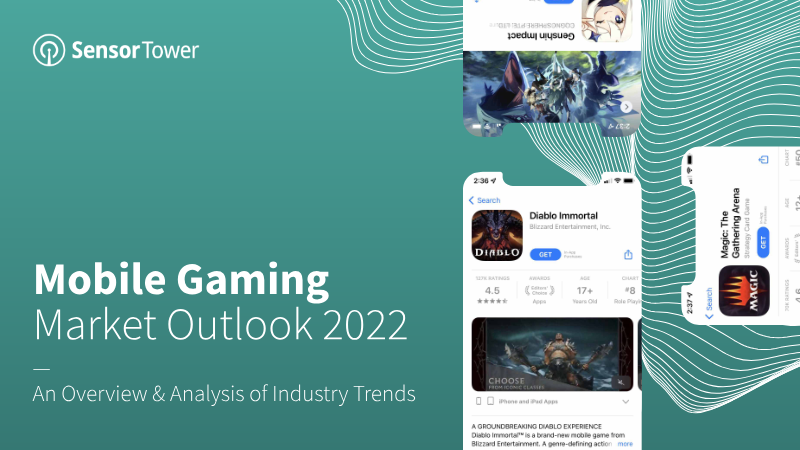
Market Outlook 2022: An Overview & Analysis of Industry Trends
The global mobile gaming market is currently undergoing a period of stabilization following unprecedented pandemic-era growth, characterized by a slight 6% year-over-year revenue decline to $21.2 billion in early 2022. Despite this correction, the industry maintains a high baseline of approximately 14 billion quarterly downloads and is projected to reach $117 billion in annual revenue by 2026. While casual titles account for 78% of total downloads, the financial core of the industry remains the mid-core segment, specifically RPG and strategy genres, which generate 60% of all player spending. Growth is increasingly concentrated in Asia-Pacific markets, though Western regions are showing significant engagement spikes driven by major intellectual property launches.
The RPG and MMORPG sectors remain the primary engines of monetization, particularly in Asian markets which contribute 80% of total genre revenue. However, the successful launch of titles like Diablo Immortal, which earned $28 million in its first six weeks in the United States, signals an expanding Western appetite for these complex mobile experiences. Simultaneously, the card battler sub-genre has emerged as a top-five growth category, benefiting from cross-media synergies and established franchises. This expansion is supported by a strategic shift in advertising, as developers increasingly leverage social platforms like YouTube and Instagram to capture a higher share of voice among target demographics.
Market leadership in the strategy and RTS segments is shifting, with China surpassing the United States in player spending for real-time strategy titles. While established leaders like Clash Royale maintain global dominance, the success of newer entries demonstrates that local market expertise and the integration of popular IPs are essential for sustained growth. As the industry moves toward a projected 73 billion annual downloads by 2026, the reliance on sophisticated advertising networks and the ability to monetize mid-core audiences will define the competitive landscape of the mobile gaming ecosystem.
- The global mobile gaming market is projected to reach $117 billion in annual revenue by 2026, despite a 6% year-over-year revenue decline to $21.2 billion in early 2022.
- Mid-core genres, specifically RPG and strategy, drive 60% of total player spending, while casual titles account for 78% of total downloads.
- Asian markets contribute 80% of total RPG and MMORPG revenue, though Western appetite for these complex titles is growing, evidenced by Diablo Immortal earning $28 million in the U.S. during its first six weeks.
- China has overtaken the United States in player spending for real-time strategy titles, highlighting the importance of local market expertise and intellectual property integration.
- Card battlers have emerged as a top-five growth category, supported by cross-media synergies and established franchises.

Innovative Monetization Features Snapshot Report June 2022
The mobile gaming landscape in mid-2022 is defined by the maturation and diversification of Battle Passes and gacha mechanics, which serve as the primary drivers for revenue in top-grossing titles. Battle Passes have evolved into sophisticated retention tools, appearing in 60% of high-performing games and incorporating social elements like guild-wide rewards and cooperative progression. Gacha mechanics remain even more pervasive, integrated into 93% of top titles in Japan and 75% of the top 20% grossing games in the United States. To maintain player trust and engagement, these systems increasingly feature transparency-focused innovations such as "pity" mechanics, player-selected prize pools, and social "joint-pull" events.
Monetization strategies are shifting away from direct gameplay boosters toward meta-layer engagement, focusing on narrative depth and cosmetic customization. Successful developers utilize psychological triggers like urgency and exclusivity through "Mystery Shops" and randomized discount events. For instance, mechanics that allow players to manipulate bundle contents or discount rates increase perceived agency, while quantity-based limitations create social pressure to purchase. These tactics are particularly effective when combined with hybrid monetization models, such as ad-supported tracks that convert non-paying users into the ecosystem.
Data indicates a clear correlation between sophisticated in-app purchase structures and market success. Progressive reward systems, which grant bonuses based on cumulative spending thresholds, are utilized by 23% of the top 20% grossing US iOS games, a significantly higher adoption rate than the 9% seen in lower-performing titles. By prioritizing player agency and social integration over simple transactional offers, developers are able to drive higher conversion rates and long-term player loyalty across diverse global markets and genres.
- Gacha mechanics are the dominant revenue driver, integrated into 93% of top-grossing Japanese titles and 75% of the top 20% of US-grossing games.
- Battle Passes have matured into primary retention tools, appearing in 60% of high-performing games and increasingly incorporating social and cooperative progression features.
- Progressive reward systems, which grant bonuses based on cumulative spending, are utilized by 23% of top-performing US iOS games compared to only 9% of lower-performing titles.
- Developers are shifting monetization focus toward meta-layer engagement, such as narrative depth and cosmetic customization, rather than direct gameplay boosters.
- To maintain player trust, developers are increasingly implementing transparency-focused gacha features, including 'pity' mechanics, player-selected prize pools, and joint-pull events.

The Highest-Grossing Mobile Games on iOS & Android: Q2 2022
The analysis set out to pinpoint the highest‑grossing mobile games of the second quarter of 2022, evaluating performance across Android and iOS markets. Data were drawn exclusively from Apptica’s Top Apps section, covering 37 countries between 1 April and 30 June 2022, and were segmented into casual, casino and mid‑core categories without supplementation from other analytics services.
Across both platforms, mid‑core titles generated the greatest revenue, with “Rise of Kingdoms” leading the chart at $179.5 million. Other top earners included “Candy Crush Saga” ($122 million), “Coin Master” ($99.2 million) and “Roblox” ($68.1 million). Casual games such as “Homescapes,” “Gardenscapes” and “Royal Match” each surpassed $20 million, while casino titles like “Slotomania” and “Jackpot Party” contributed between $10 million and $30 million. Organic traffic dominated most titles, typically accounting for 70‑95 % of user acquisition, with paid channels playing a smaller role.
Publisher analysis showed King as the highest‑grossing publisher with over $264 million from four leading titles, followed closely by Lilith Games ($254.6 million) and Playrix ($182.8 million). Playrix and Playtica each appeared in 16.2 % of top‑10 slots, while Supercell and King accounted for 10.8 % each, and Lilith Games 8.1 %. Studios headquartered in the United States held the most positions (17), with Finland, Singapore, Hong Kong and Israel also featuring prominently.
The study concludes that mid‑core games dominate revenue in Q2 2022, “Rise of Kingdoms” stands as the single biggest earner, and a relatively small group of publishers and studios capture the bulk of market share, underscoring the concentration of financial success within a few leading developers and regions.
- Mid-core titles dominated Q2 2022 revenue, led by 'Rise of Kingdoms' which generated $179.5 million.
- King was the highest-grossing publisher during the period, earning over $264 million across four leading titles.
- Top-earning games outside the mid-core category included 'Candy Crush Saga' ($122 million), 'Coin Master' ($99.2 million), and 'Roblox' ($68.1 million).
- Organic traffic accounted for 70–95% of user acquisition for the majority of top-performing titles, significantly outpacing paid marketing channels.
- Market success remains highly concentrated, with a small group of publishers like Lilith Games ($254.6 million) and Playrix ($182.8 million) capturing the bulk of revenue.