VideoPocketGamer.biz
Ad tech that optimises for publishers | Jaivir Nagi from Crackle Technologies #pgconnects
3 Mar 202510 min video
Transcript
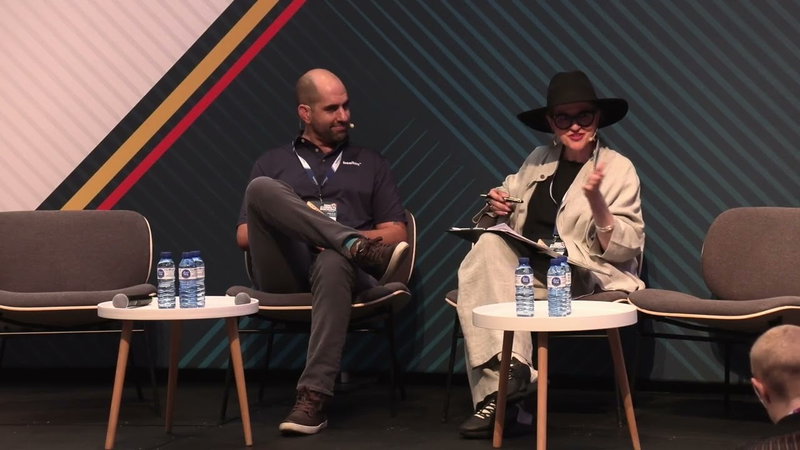
[Music] we are now joined by Javier Nagi from crackle Technologies how are you doing today great uh thank you James for having us here and very excited to be in this conversation I'm glad to have you here now folks may not have encountered crackable Technologies before for people who haven't heard of you what is it that you do yeah so uh crackle is attech built and designed for Publishers uh what we've observed is that most of the attech in the world is built primarily thinking about the advertisers objectives uh and we felt that there's an opportunity to build a tech that is focused on publisher objectives which optimizes for publisher outcomes and that's what tackled this gotcha now I read some quote from you earlier on that said that in investment in user acquisition is often significantly more than investment in monetization do you feel that's a problem is the balance off
yeah well you know I think it's uh it's uh it's the evolution of the ecosystem I think what we've seen in the last 3 or 4 years is uh gaming companies have made a lot of investment in um ramping up user acquisition so those Investments are in uh ramping up their teams uh in ramp building these internal tools where you um uh where you can track and uh do better quality attribution to to get the best users onto your platform but while these Investments have been made in user acquisition we've seen that ad monetization is been has been under resourced you still have you know there one person or like half a person managing your ad operations uh through the ssps and you know on one end you have fewer resources allocated to ad monetization but on the other side I think all the optimizations that you do are are very manual right we not applying a lot of cutting edge machine learning or now you can call it AI uh in improving ad monetization outcomes so I
think that's the opportunity and yeah that's what we're trying to focus on as well so you think people are missing out on opportunities in automation when it comes to that kind of monetization Technology instead of like just having as you say one person doing it they're missing a trick because a lot of the focus is on applying it elsewhere and not there why do you think that is yeah you know I think um I'd say that uh it's more like an unarticulated need I think everyone has this feeling that maybe I can get more out of my ad monetization business but there's a lack of opportunity on the how right and because uh traditionally the allocation of resources in this area has been limited um the awareness on how to optimize has been a little lower right the opportunity now is uh you know with with all the advancements in machine learning uh how can we move uh ad monetization from coher based optimization to person personalized optimization uh we seeing
early signs I think maybe like the top you know 15 20 uh gaming studios around the world are making those Investments and are seeing really good results uh and I feel like over the next 18 months to 24 months more and more companies are going to be aware of the opportunity about the the kind of money that's left on the table uh you know because of this under uh resource allocation in this space and hopefully things will change here so what does this optimation looks like as an end result is it the algorithm determines when's the best time to show an ad or what type of AD to show what what is the end result of it yeah let me um you know explain by an example right I think for many years um what buyers do buyers try to identify the value of every user and then in in the ad in the adtech U um supply chain they try to uh give the right bid a different bid for every user based on the value of the user right so there has
been a lot of progress on how ads are bought by advertisers but on the publisher side what Publishers do today is they still try to price their inventory at a large cohort level so that pricing happens either at a country level or at a format level right so on one end you you have this advancement where everything is being bought based on the value of the user but on the other end the sellers are not really being able to determine the fair value of their users instead they are applying a cohort price based on a country right and you could sometimes have you know 10 million 1550 million users in a particular country uh and every user will have a different value uh and and and and and I think that's the optimization that needs to come on ad monetization that's that is what is left that that's what's left on the table and uh and there's the opportunity and what about applying this to extremely small Indie Developers for example and and
their their Publishers that they work with versus incredibly large Publishers cuz obviously same principle but scaling can be tricky is it an easily scalable thing see I think like once you have the algorithm you can apply it to 1,000 users and and you know 100 million users it doesn't matter it's all about really uh fig figuring out you know what signals to collect and um how to make the optimization then the machines take care of everything right so I think scale really shouldn't matter the optimization will give you uh an incremental impact in your monetization we've been talking to people about privacy it doesn't apply quite so much to yourself but the information that you need to gather these data points that you have to get these channels is it basically what the Publishers give you to work with so you don't have to worry about it or and are you noticed that there are certain channels that are no longer available to you data points you can't get and therefore maybe you can't optimize quite as as much as you'd like as you would back in the day yeah see I think uh like think of it this way right if the publisher is building
a tool internally I think they can use their own first- party data but a company like us uh if we have to apply algorithms uh we really can't touch the first first party data of Publishers so what we tend to do is we we basically use all the data in the bitstream right and there is so much valuable Insight in the bitstream that data is is enough to build really smart algorithms to optimize so um in a way I would say that the products that we've built are keeping privacy the front and center and yeah they privacy first products they don't touch any of the publisher first party data just optimize based on uh the bitstream U insights and signals what do you feel has changed most in the industry over the years because you've you've go back you've worked with Google before if I'm right and you know have come into this space as well what's been the biggest shift in terms of like publishing and monetization that you've seen is it AI is it the adoption of this technology or are there other factors as well that have changed things yeah I think it's very similar to what I just mentioned I think uh I think there's
been a lot of advancements on the buy side on how ads are being bought uh and there's an opportunity to do a lot more in how ads are being sold so uh typically you know when you step back and look at the tech ecosystem you would think that uh you know you know Ai and ml is fairly well adopted in this ecosystem but when you kind of peel the onion you realize that it's adopted by advertisers but publ Publishers can do a lot more in in applying these new technologies uh to make more databased optimizations um and I think that's where we headed uh in the next uh few quarters and we've obviously been experiencing a little bit of a dip over the last couple of years the gaming industry for the first time has had a kind of a slight wobble and it seems to be hopefully on the way back up again but that did affect people's spending habits and the way that people were engaging with with the games did you notice anything over the last couple of years any kind of change in the metrics
and the way people are spending or has it kind of remained fairly constant for you yeah you know I think um I think uh what's happening is I mean you know at one point of course there was this bump during Co and um it's been hard to keep up with that Co bump people are now busy you know back to work and uh not spending as much time at home commuting Etc um but um I think um the other um thing is that time spent on games has really increased and uh time spend on games has increased faster than adverti the budget spend on games right so when you when you have the dynamic where the supply has increased like you know 2x 3x but your demand is growing at like 20 30% every year you're bound to have an impact on yields right and at the same time uh you know there there this this Market has become so competitive there are so many games to choose from so while at a macro level you see the that the market is growing and it's growing at a healthy clip given the size I think at a macro
level a lot of Studios struggle to kind of um manage to keep Pace with with the industry with the ecosystem so so the the player Dynamics when I say player I mean the gaming company Dynamics changed but but um uh but the industry continues to grow despite the challenges [Music]
Auto-generated captions from YouTube — names and numbers may be misheard.
Key insights
Distilling the key insights…
Ask AI about this video
Cite this video
Citation
Generating citation…






















Comments