Europe reports and market data
Documents


Insurance in the Video Game Sector: Spain
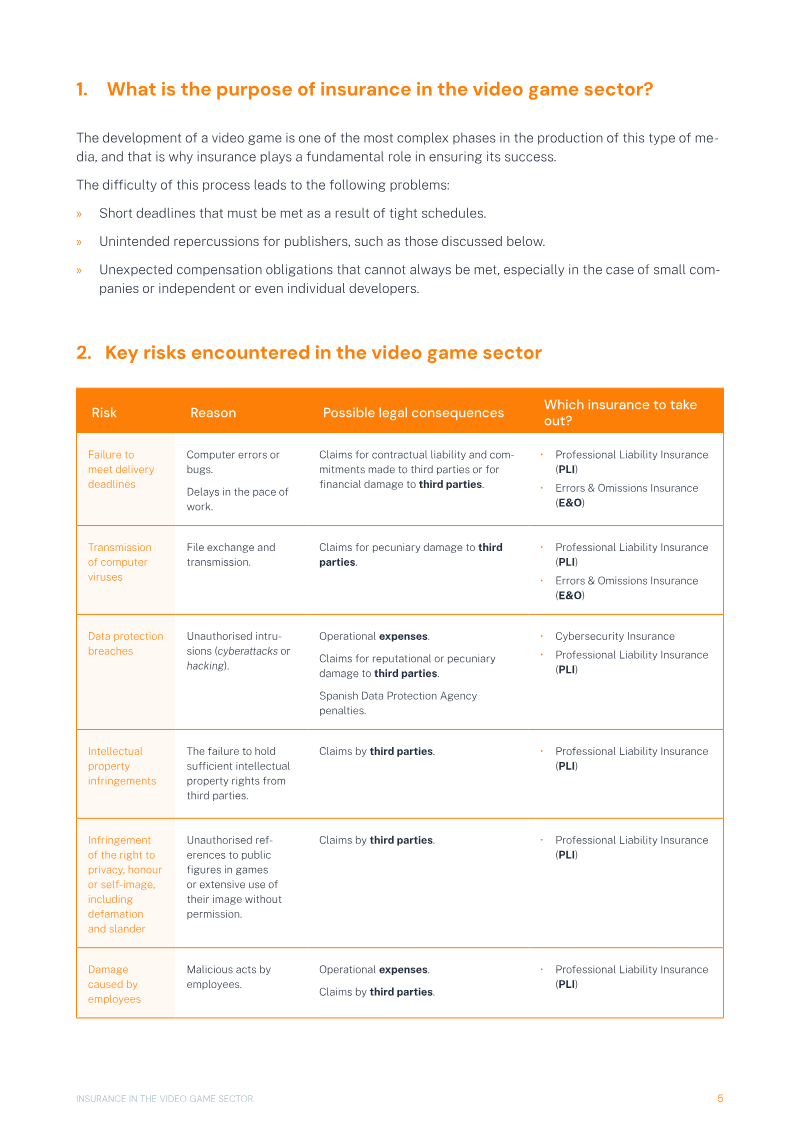
The guide explains that insurance is a critical safeguard for video-game development in Spain, where tight schedules, complex technical workflows and the involvement of multiple parties create a range of legal and financial exposures.
- Spanish video game developers face critical financial and legal exposures from project delays, software bugs, cyber-attacks, and intellectual property infringements.
- Professional Liability Insurance (PLI) and Errors & Omissions (E&O) policies are essential to mitigate risks related to contractual failures and professional errors.
- Cybersecurity insurance is required to address specific threats including ransomware, data-protection breaches, and the transmission of computer viruses.
Taxation in the Video Game Sector: Spain
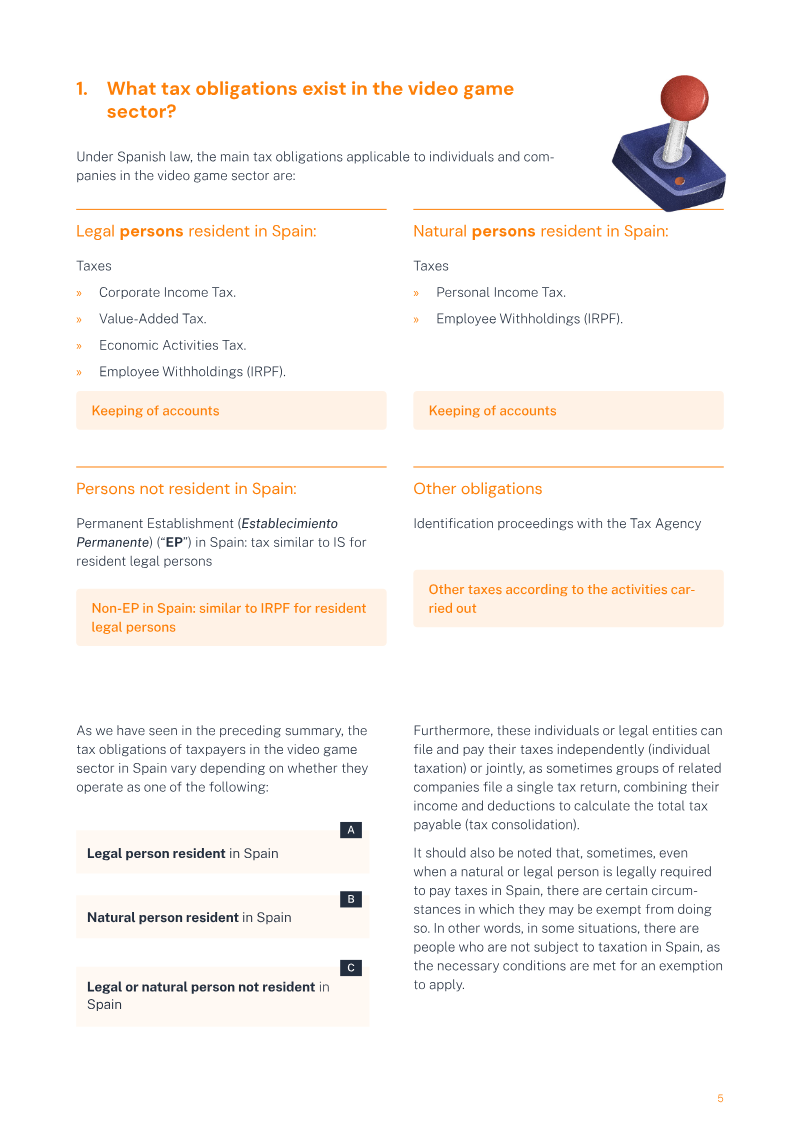
The guide explains the tax framework that applies to video-game companies operating in Spain, outlining both mandatory obligations and the range of incentives available to reduce fiscal burdens.
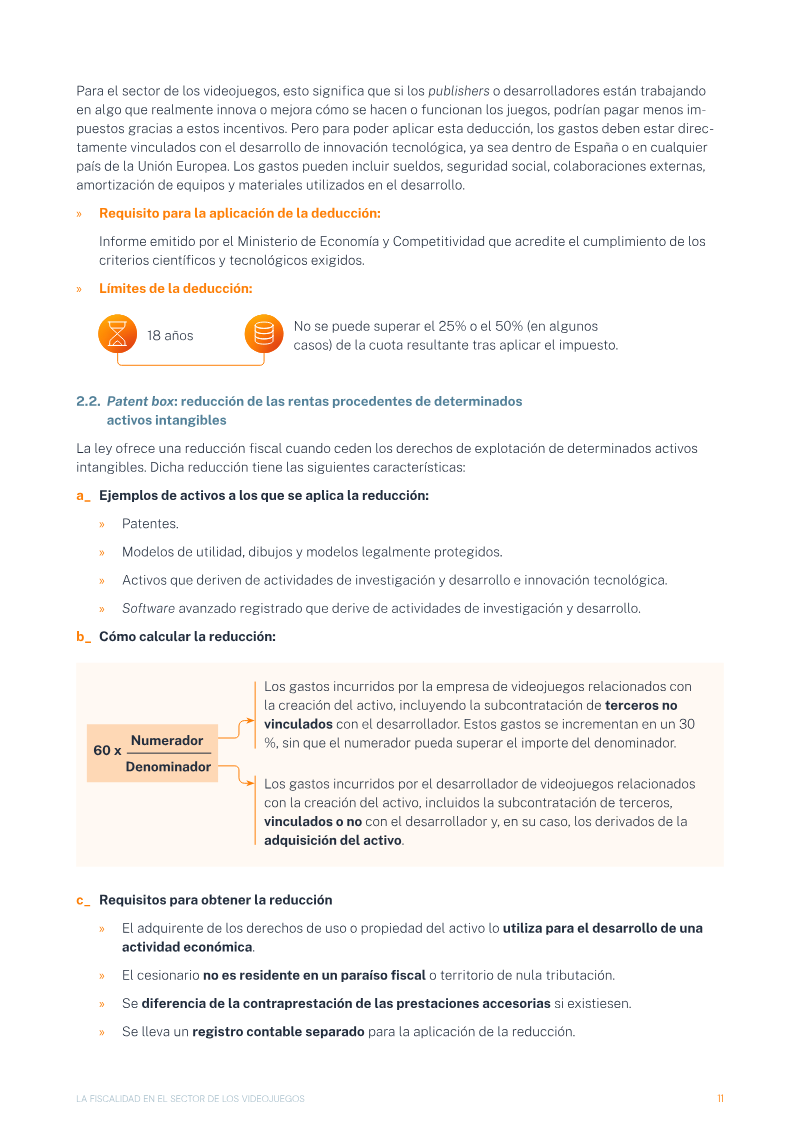
- Resident video game companies in Spain are subject to a 25% corporate income tax rate, while qualifying start-ups can access a reduced 15% rate for four tax periods.
- The Canary Islands offer a highly competitive 4% corporate tax rate and exemptions on property-transfer and IGIC taxes for companies meeting specific investment and employment criteria.
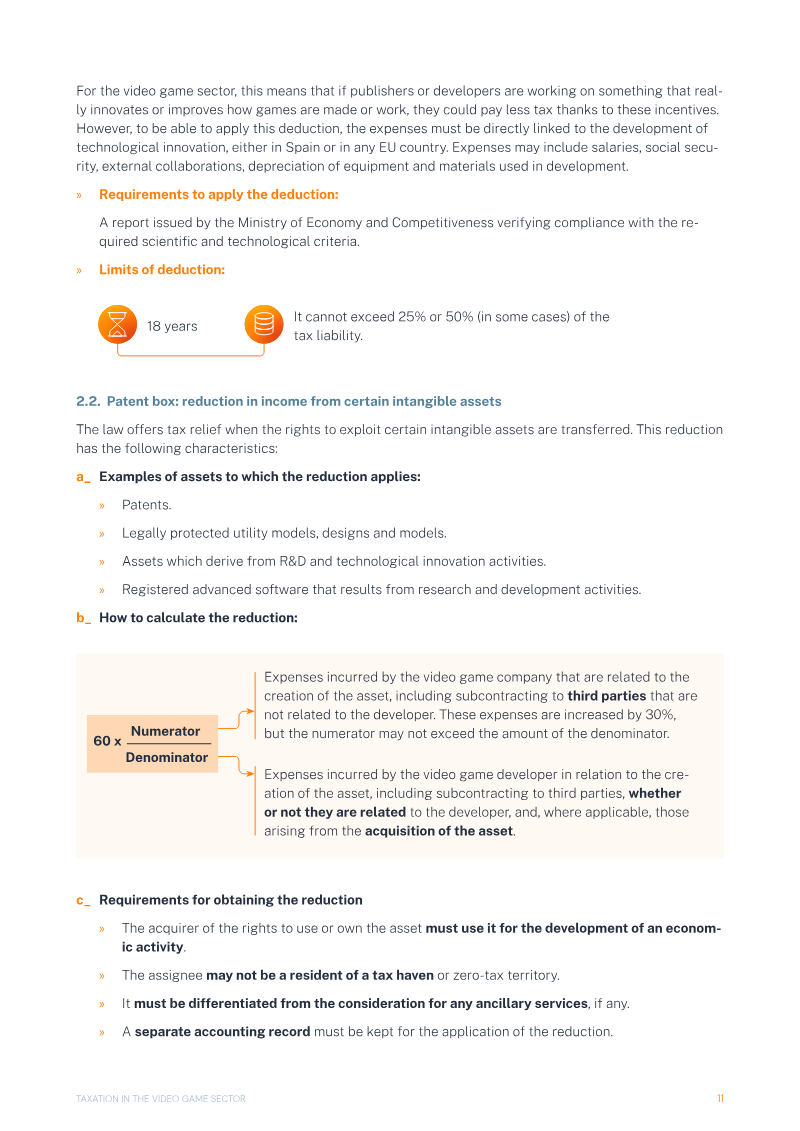
- R&D and technological innovation expenses qualify for a 12% tax credit, capped at 25–50% of total tax liability, alongside a patent-box regime that reduces the taxable base for advanced software.
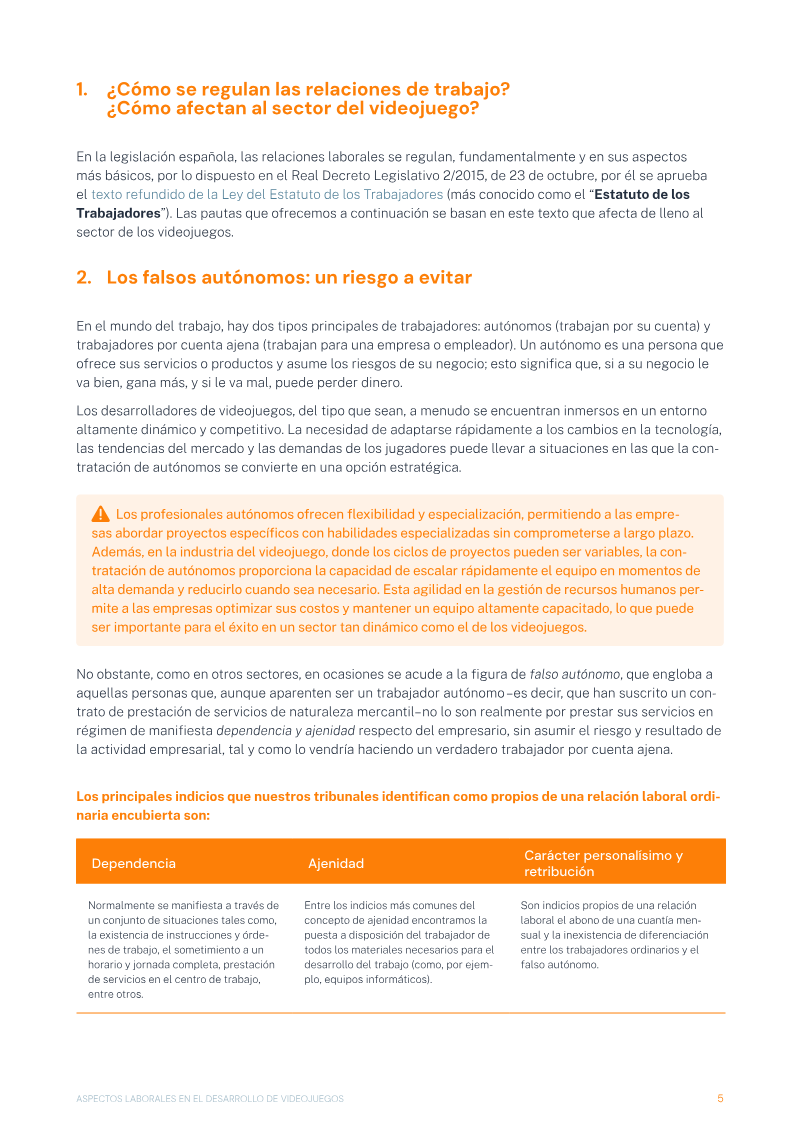
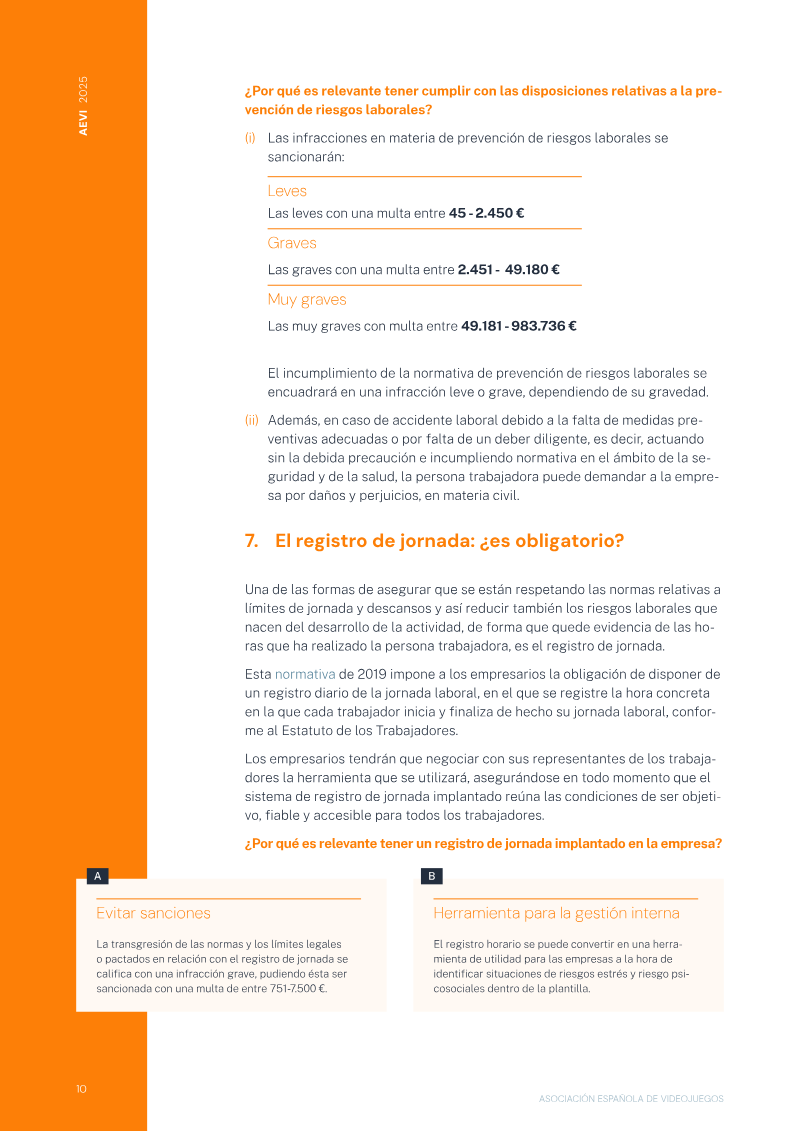

Aspectos Laborales en el Desarrollo de Videojuegos
The guide aims to equip professionals in the Spanish video-game sector with a practical framework for complying with national labour legislation while fostering safe, flexible and sustainable work environments.
- Misclassifying contractors as 'falso autónomo' carries severe financial risk, including Social Security back-payments of up to €50,000, fines of €3,750 to €12,000 per case, and additional penalties of 100–150% of owed contributions.
- Indefinite contracts are the mandatory default under the 2022 labour reform, with improperly formalised temporary contracts triggering automatic conversion to permanent status and fines ranging from €751 to €7,500 per worker.
- Violations of occupational risk prevention laws, particularly regarding 'crunch' culture, can result in fines reaching up to €983,736 and potential civil liability for work-related health issues.

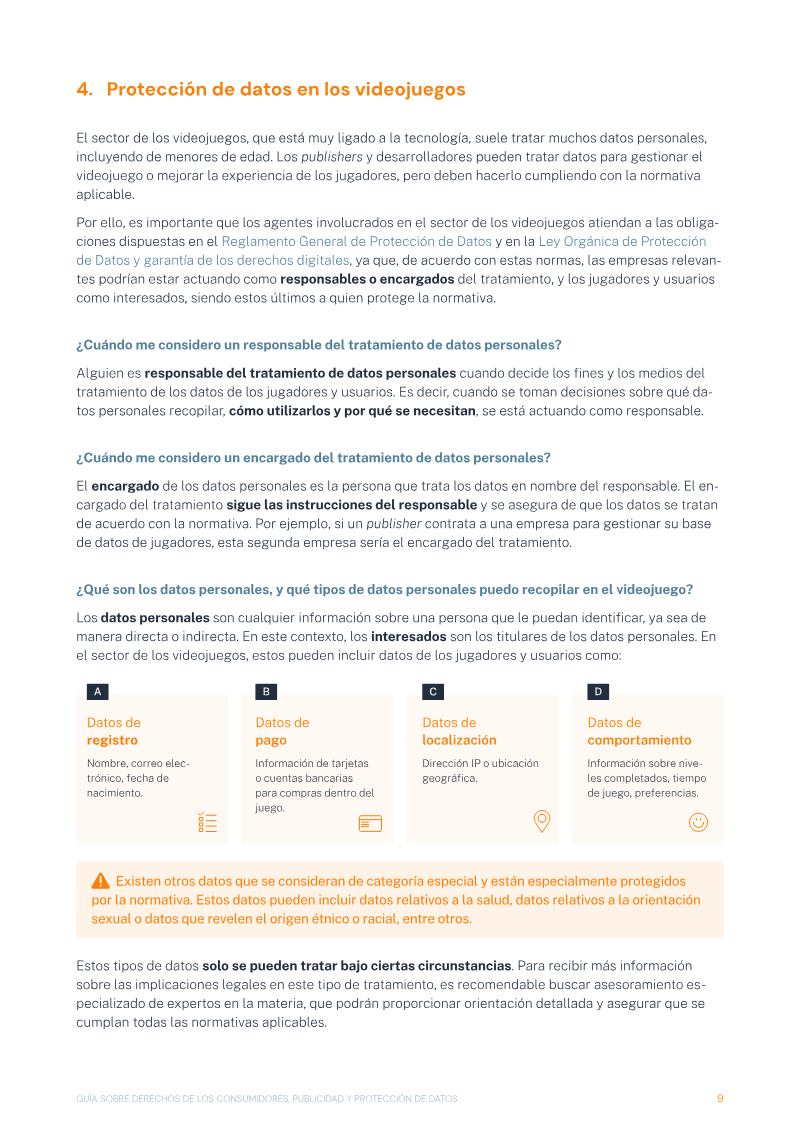

Guía sobre derechos de los consumidores, publicidad y protección de datos: España
The guide serves as a practical reference for video-game publishers, developers and marketers operating in Spain, outlining how consumer-protection, advertising and data-privacy regulations apply to digital game products.
- Digital game consumers in Spain are entitled to the same legal protections as physical goods buyers, including a mandatory 14-day withdrawal period and protection against abusive contract clauses.
- Data privacy regulations require explicit parental consent for processing the personal data of users under 14, necessitating documented verification procedures.
- Advertising standards strictly prohibit concealed sponsorships, misleading urgency, and fake reviews, while mandating that influencer promotions include clear sponsorship disclosures.
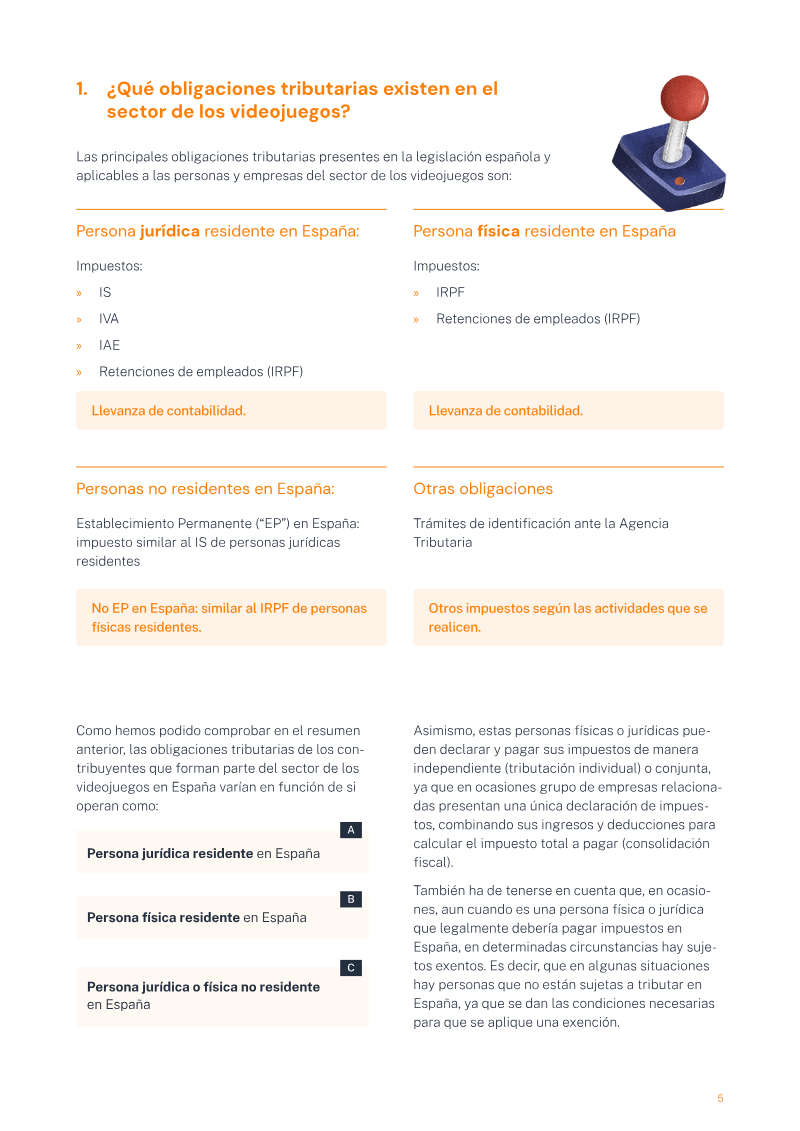
La Fiscalidad en el Sector de los Videojuegos: España
The guide aims to clarify the tax framework that applies to video-game developers, publishers and related service providers operating in Spain, outlining both mandatory obligations and available fiscal incentives.
- Video game companies in Spain can access a 12% tax deduction for qualifying R&D+i expenses, which increases to 45% for projects developed in the Canary Islands.
- Start-ups meeting ENISA criteria qualify for a reduced 15% corporate tax rate for four years, along with exemptions from advance payments and deferred tax liabilities.
- The standard corporate income tax (IS) rate in Spain is 25%, while personal income tax (IRPF) for self-employed professionals ranges from 19% to 47%.
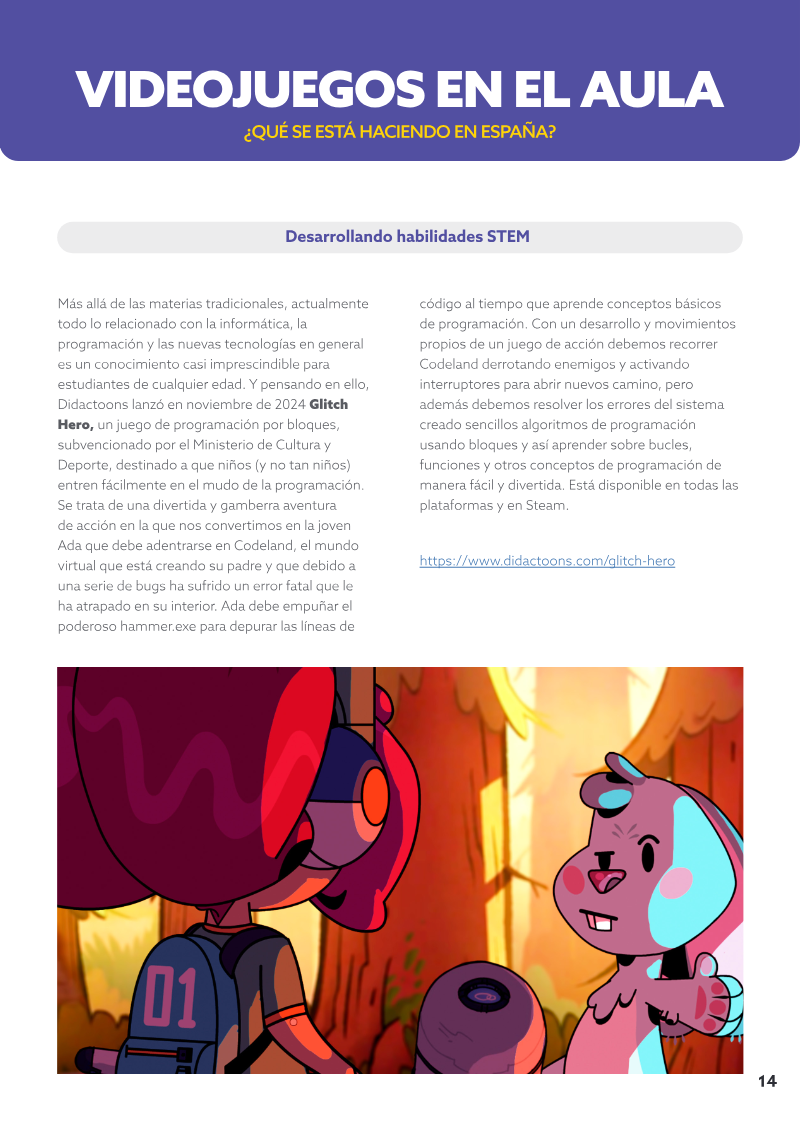

Videojuegos en el Aula: ¿Qué se está haciendo en España? Manual para docentes 2025
Video games have become a central cultural and educational tool in Spain, where more than 22 million people—over half of them women—play an average of 8.2 hours each week.
- Spain’s gaming ecosystem is supported by over 22 million players, with women accounting for more than half of the user base and an average weekly playtime of 8.2 hours.
- Educational integration is facilitated by a standardized infrastructure of platforms including Dok Student, Cokitos, Mundo Primaria, Eutopía, and Escapeweb.
- Publicly funded titles like ABC Dinos, BookyPets, and Quijote: Quest for Glory utilize RPG and tower-defense mechanics to improve early literacy, while games like Dîrok and El Enigma de Toledo support STEM and history curricula.
Big Games Industry Employment Survey 2025: Salaries, Compensation Trends and State of the Games Sector in Europe
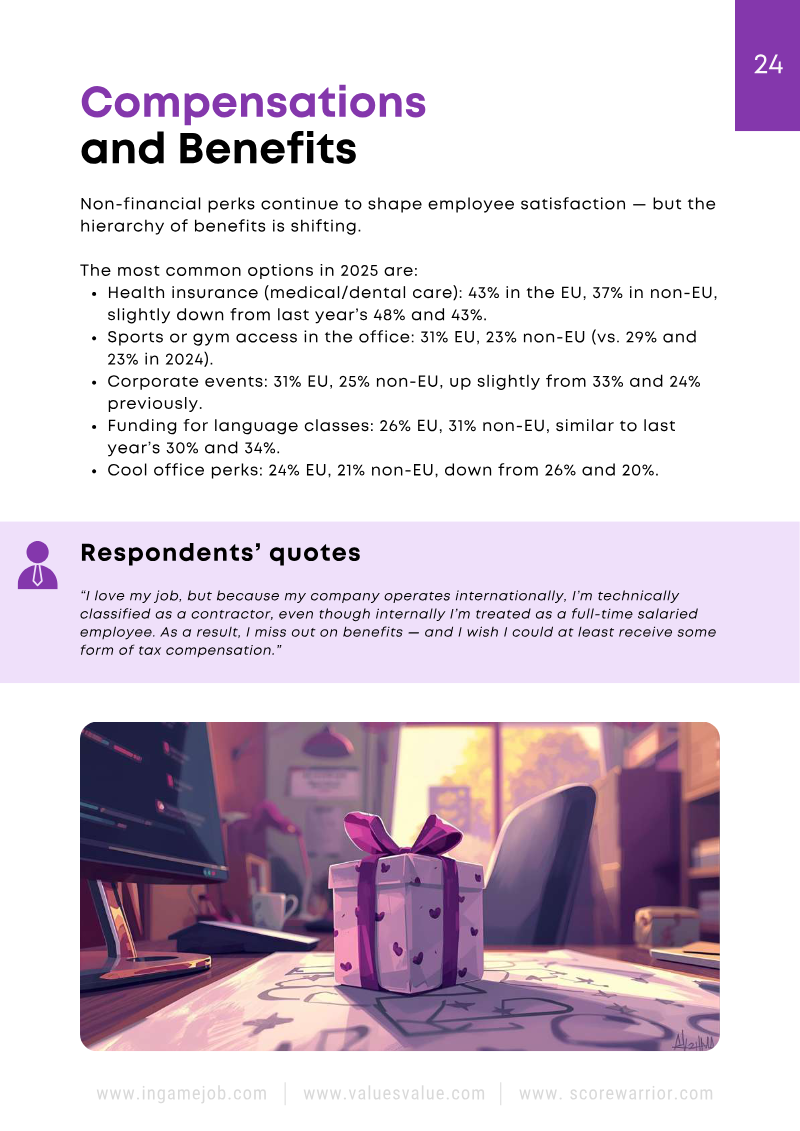
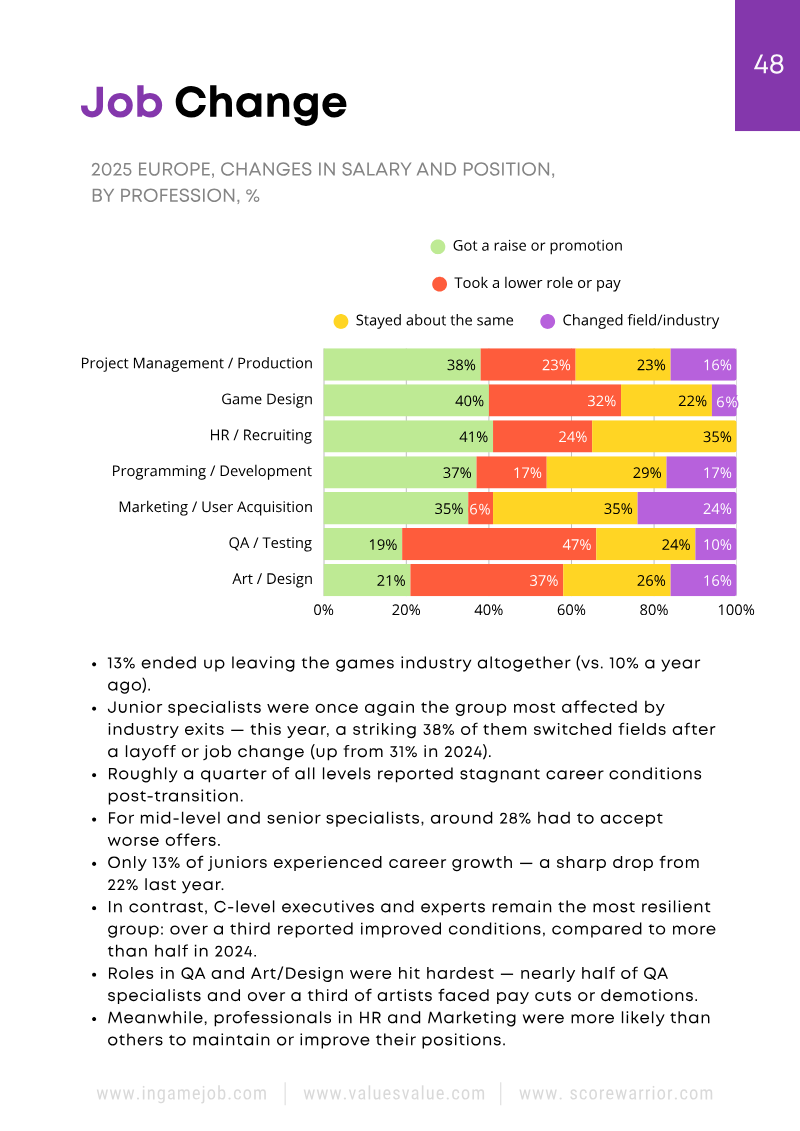
The European games industry entered 2025 in a state of significant distress, characterized by widespread layoffs, stagnant wages, and a sharp decline in employee well-being.
- The European games industry is in a state of contraction, with 26% of professionals experiencing layoffs and 39% of junior-level talent exiting the sector entirely.
- Financial stability has become the primary motivator for 87% of the workforce, leading many to accept pay cuts or inferior contract terms to maintain employment.
- Over 50% of the workforce reports suffering from professional burnout, while 67% of companies now lack dedicated diversity and inclusion specialists.
Unlocking Games Revenue: Player Behavior and Payment Trends in the West
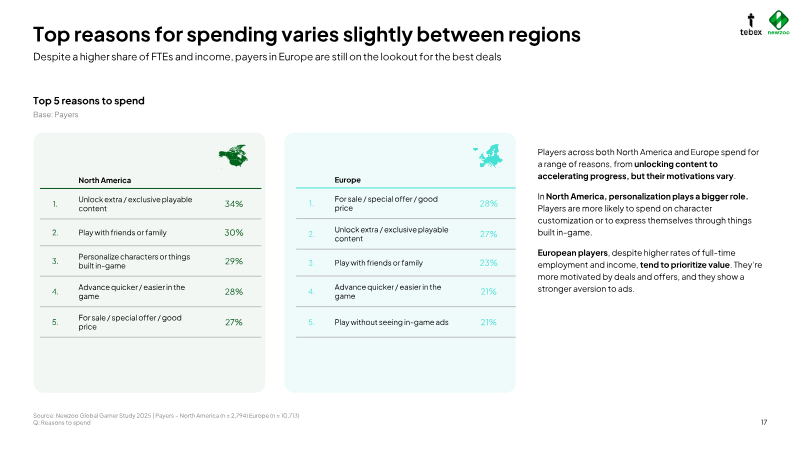
Unlocking Games Revenue: Player Behavior and Payment Trends in the West examines the evolving monetization landscape across North America and Europe.
- Growth in mature Western markets is plateauing, with projected 2027 CAGRs of only 1.1% in North America and 3.1% in Europe, shifting the focus to maximizing value from existing players.
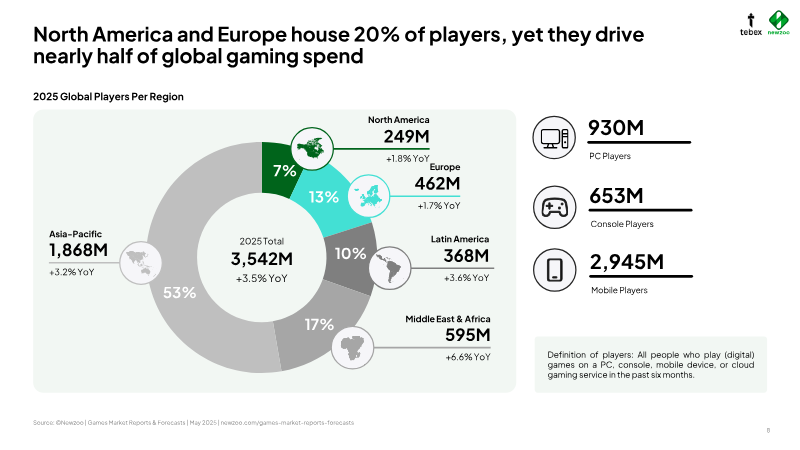
- North America and Europe represent 46% of global gaming spend despite housing only 20% of the global player base.
- North American players spend an average of $324.90 annually, significantly higher than the $125.40 average annual spend per payer in Europe.

Can Alternative App Stores Thrive Post-DMA?
The mobile application ecosystem is undergoing a fundamental transformation as regulatory interventions, most notably the European Union’s Digital Markets Act, dismantle the long-standing duopoly held by Apple and Google.
- The EU’s Digital Markets Act is dismantling the Apple and Google mobile duopoly to foster a fragmented, competitive ecosystem modeled after the diverse multi-store landscape of the Chinese market.
- Aptoide has scaled to 430 million annual users and 10 billion cumulative downloads, currently processing approximately $87 million in annual transactions.
- Alternative app stores are incentivizing developers with more favorable revenue splits, such as Aptoide’s 90/10 model for direct-to-consumer distribution.
Video Games in European Schools: Results from the Games in Schools 2023-2024 Research Project
The Games in Schools 2023-2024 research project provides a comprehensive analysis of the integration of video games into formal education across 26 European countries.
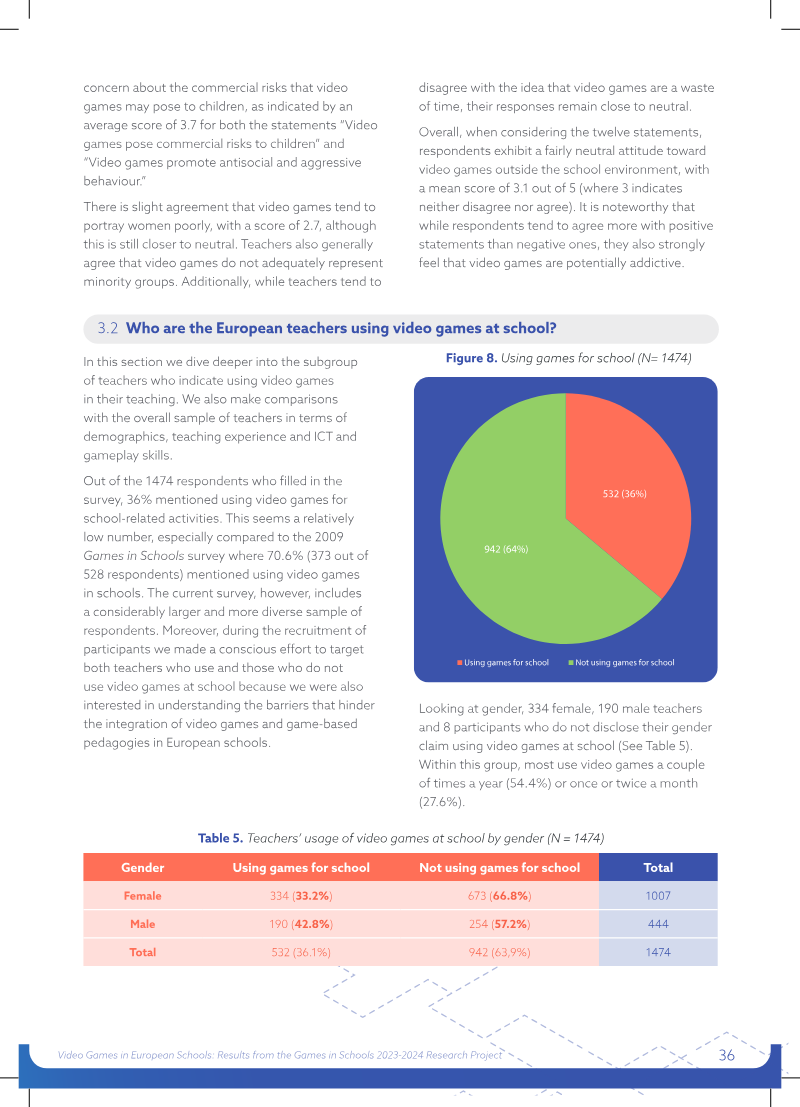
- While 53% of Europeans play video games and the industry exceeds €25 billion in annual revenue, only 36% of surveyed teachers currently use games in the classroom, with 63% explicitly requesting more professional training.
- Teachers who do integrate games report significant improvements in student motivation, problem-solving, and psychological capital, noting particular efficacy for special-needs, low-performing, and female students.
- The primary barriers to adoption include a lack of curriculum-aligned titles, insufficient hardware and broadband infrastructure, and parental concerns regarding screen time and data privacy.
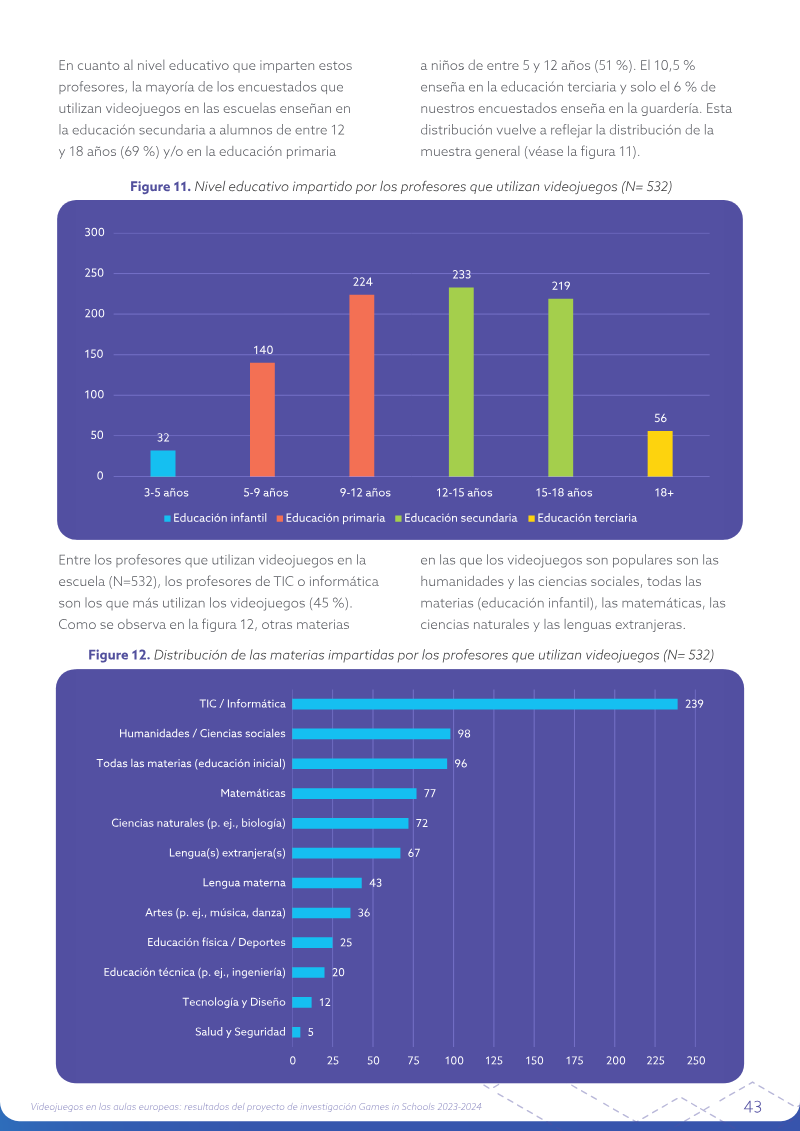
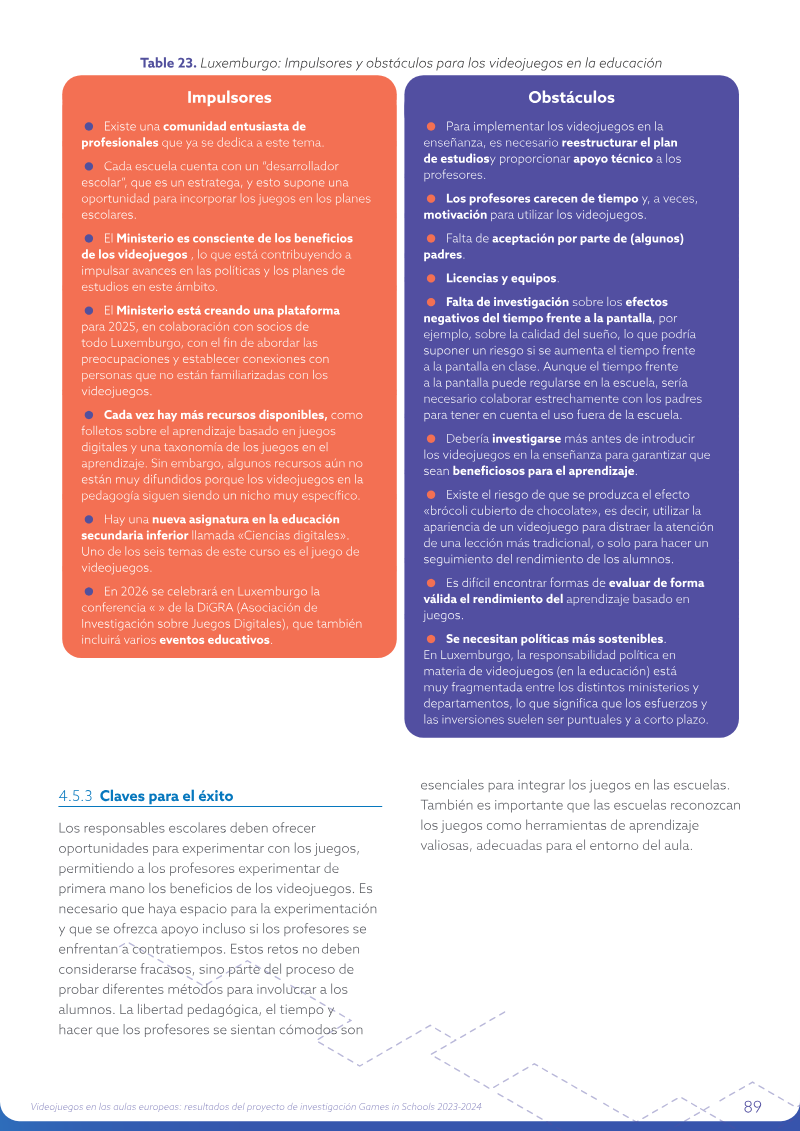
Videojuegos en Aulas Europeas: Resultados del Proyecto de Investigación 'Juegos en las Escuelas 2023-2024'
The study evaluates how video-games are being integrated into European primary and secondary classrooms and argues that, while games hold clear potential to enhance motivation, cognition and 21st-century competencies, systematic support is still required to translate research into widespread practice.
- 36% of the 1,474 European teachers surveyed currently integrate video games into their lessons, with over half of those users employing them regularly.
- The primary barriers to adoption are the difficulty of finding age-appropriate, curriculum-aligned, and GDPR-compliant games (45%) and technical limitations such as inadequate hardware or internet access (42%).
- Teacher digital competence has risen to a self-reported 7.7/10 since the 2009 baseline, supported by more positive attitudes and increased backing from school leadership.

Panel: Is the Digital Markets Act Really Changing the Mobile Games Market for the Better?
The Digital Markets Act represents a pivotal regulatory effort to dismantle the long-standing duopoly of Apple and Google within the mobile gaming ecosystem.
- The Digital Markets Act (DMA) aims to open mobile markets by allowing alternative app stores and direct-to-consumer distribution, though Apple and Google continue to implement restrictive measures that complicate user adoption and obfuscate installation processes.
- Apple’s post-DMA terms include a 'Core Technology Fee' of 50 cents per year per user for any app install exceeding the 1 million threshold, which significantly impacts the cost structure for high-volume developers.
- Developers are increasingly adopting direct-to-consumer strategies, such as web stores and in-game payment SDKs, to bypass platform fees and regain control over their player relationships and profit margins.