Advertising

110 documents·36 publishers

Documents

Page 1
Presentation52 pages

2Q FY2021 Presentation Material: January to March 2021

CyberAgent experienced exceptional financial growth during the second quarter of fiscal year 2021, characterized by a 26.6% year-over-year increase in consolidated sales to 163.4 billion yen and a doubling of operating profit to 25.8 billion yen. This performance was primarily catalyzed by the Game business, which achieved record-high quarterly sales of 63.9 billion yen. The massive success of Uma Musume Pretty Derby, which secured over five million downloads within its first 45 days, served as the primary engine for this expansion. Coupled with the strong performance of titles like NieR Re[in]carnation and a robust pipeline including Final Fantasy VII Ever Crisis, the company significantly upgraded its full-year forecasts, raising sales targets to 600 billion yen and nearly doubling its projected operating profit range.

The media segment, centered on the ABEMA platform, demonstrated significant scale despite ongoing operating losses of 3.4 billion yen. Sales for the segment grew 1.4 times year-over-year, reaching 19.8 billion yen, bolstered by the rapid expansion of the online betting service WINTICKET. Transaction volumes for WINTICKET surged 9.1 times annually to 31.9 billion yen, highlighting a successful diversification of revenue streams beyond traditional advertising. Weekly active users remained stable at approximately 12 million, supported by a strategic mix of original dramas, variety content, and anime.

To sustain this momentum, the organization is prioritizing digital transformation and cross-media strategies. The Internet Advertisement business reached record-high performance levels, while ABEMA is undergoing a comprehensive user interface redesign to better integrate linear and on-demand viewing. These initiatives, combined with AI-driven operational efficiencies, aim to transition the media segment toward long-term monetization while maintaining the high-growth trajectory established by the gaming and advertising divisions within the Japanese market.

  • CyberAgent’s consolidated sales grew 26.6% year-over-year to 163.4 billion yen in 2Q FY2021, with operating profit doubling to 25.8 billion yen.
  • The Game business reached record quarterly sales of 63.9 billion yen, driven primarily by the launch of 'Uma Musume Pretty Derby,' which surpassed five million downloads in 45 days.
  • Due to strong gaming performance, CyberAgent raised its full-year sales forecast to 600 billion yen and nearly doubled its projected operating profit range.
  • The media segment, anchored by ABEMA, saw sales grow 1.4 times year-over-year to 19.8 billion yen, despite recording an operating loss of 3.4 billion yen.
  • WINTICKET online betting transaction volume surged 9.1 times year-over-year to 31.9 billion yen, providing a critical revenue stream outside of traditional advertising.
CyberAgentApr 2021
Page 1
Report30 pages

The State of Mobile Game Advertising: U.S. 2021

The mobile game advertising landscape in the United States remained resilient throughout the first half of 2021, showing no immediate negative impact from industry-wide privacy changes such as the Identifier for Advertisers (IDFA) updates. Data indicates that mobile games continue to dominate the share of voice (SOV) across major ad networks, with several networks reporting an increased focus on gaming-related advertisements. The industry is characterized by a strategic alignment between specific ad networks and target demographics, where networks like YouTube cater to younger, male-dominated audiences interested in strategy and RPG titles, while platforms like Adcolony attract older, female-focused demographics, particularly within the casino genre.

Video remains the primary creative format for mobile game advertisers, though playable ads have gained significant traction. While playable formats were historically reserved for hypercasual and puzzle games, mid-core titles such as Call of Duty: Mobile and State of Survival have increasingly adopted simplified mini-game versions of their titles to drive user acquisition. This trend highlights a broader shift toward creative experimentation, which also includes the use of relaxing background music to differentiate casual titles and the deployment of real-world conversational ads that emphasize social proof or financial rewards.

The analysis, which covers the period from 2018 through the second quarter of 2021, utilizes data from major ad networks including AppLovin, MoPub, Facebook, AdMob, and Unity. Findings suggest that successful user acquisition strategies rely on matching game genres with networks that possess compatible user bases. As the market evolves, publishers are increasingly leveraging these granular insights to optimize their creative assets, moving beyond traditional video formats to more interactive and narrative-driven advertising techniques that capitalize on player psychology and specific genre appeal.

  • Mobile game advertising in the U.S. remained resilient through H1 2021, showing no immediate negative impact from IDFA privacy changes.
  • Mobile games continue to dominate the share of voice across major ad networks, with platforms like AppLovin, MoPub, Facebook, AdMob, and Unity reporting an increased focus on gaming-related advertisements.
  • Successful user acquisition strategies are increasingly dependent on matching specific game genres to networks with compatible demographics, such as YouTube for younger, male-dominated strategy/RPG audiences and Adcolony for older, female-focused casino players.
  • While video remains the primary creative format, mid-core titles like Call of Duty: Mobile and State of Survival are increasingly adopting playable ads, a format previously limited to hypercasual and puzzle games.
  • Publishers are shifting toward creative experimentation, incorporating tactics such as relaxing background music for casual titles and real-world conversational ads that emphasize social proof or financial rewards.
+3
Sensor TowerJan 2021
Page 1
Report7 pages

Audio Ad Engagement in Mobile Games

This analysis examines the efficacy of in-game audio advertising as a non-intrusive alternative to traditional video and banner formats within the mobile gaming industry. The primary thesis posits that audio ads maintain player engagement and retention by allowing gameplay to continue uninterrupted, thereby fostering a more positive brand association compared to conventional, disruptive advertising models.

Research findings are derived from a combination of market surveys and behavioral testing. A YouGov survey of 2,200 respondents highlights that 86% of UK adults dislike video ads, while 28% identify audio ads as their preferred monetization model. Behavioral testing conducted by Go Live Test confirms that 100% of participants continued playing during audio ad delivery and achieved 100% brand recall when ads were paired with a companion banner. Furthermore, the data indicates a significant engagement advantage, with audio ads achieving a click-through rate (CTR) of approximately one click per 1.4 listens, vastly outperforming the 0.08% average CTR typical of static banners.

The effectiveness of this format is further validated by a Warner Music Group case study targeting 18-to-30-year-olds in the United States. The campaign achieved a 1.78% CTR—representing a 1,000% increase over traditional banner standards—and an ad completion rate exceeding 75%, significantly higher than the 4% to 8% industry standard for skippable video ads. Additionally, the campaign recorded a 1.8% bounce rate on the destination page, suggesting high intent among users who engaged with the audio format.

These findings suggest that audio advertising offers a viable solution for developers and brands seeking to monetize a global audience of 2.8 billion mobile gamers without compromising the user experience. By integrating seamlessly into the background of gameplay, audio ads mitigate the frustration associated with screen-blocking video ads, ultimately driving higher engagement and more favorable brand outcomes.

  • Audio ads achieve a click-through rate (CTR) of approximately one click per 1.4 listens, vastly outperforming the 0.08% average CTR of static banners.
  • A Warner Music Group campaign targeting 18-to-30-year-olds achieved a 1.78% CTR, representing a 1,000% increase over traditional banner standards.
  • Behavioral testing shows 100% of participants continued gameplay during audio ad delivery, with 100% brand recall when ads were paired with a companion banner.
  • The Warner Music Group campaign recorded an ad completion rate exceeding 75%, significantly higher than the 4% to 8% industry standard for skippable video ads.
  • A YouGov survey of 2,200 UK adults found that 86% of respondents dislike video ads, while 28% prefer audio ads as a monetization model.
+4
AudioMobJan 2021
Page 1
Whitepaper63 pages

White Paper on Global Mobile Games 2021

The 2021 mobile gaming landscape was defined by a transition toward creative-led advertising strategies necessitated by rising acquisition costs and shifting privacy regulations. As iOS privacy changes prompted a strategic pivot toward Android platforms, the industry experienced a 200% surge in ad creatives and a 34% year-over-year increase in CPMs on major platforms like Meta. With the United States emerging as the most expensive market at an average CPM of $28.18, advertisers increasingly prioritized data-driven optimization and regional targeting to maintain return on investment amidst a broader 5% slowdown in total advertiser market growth.

While casual and puzzle games maintained the highest volume of individual advertisers globally, RPGs consistently dominated in total creative output across key regions, including Southeast Asia, Hong Kong, Macao, and Taiwan. To combat market saturation, developers shifted toward high-engagement formats, specifically vertical video ads exceeding 30 seconds and playable end cards. These creative strategies, often incorporating celebrity endorsements and real-people trailers, became essential tools for driving conversions in a competitive environment where traditional tracking methods faced significant headwinds.

Looking toward future growth, the industry is increasingly focused on globalization and the refinement of hybrid monetization models. Developers are diversifying revenue streams by integrating NFTs and combining traditional in-app purchases with ad-based structures. Furthermore, the adoption of privacy-compliant user acquisition, such as early SKAN testing and AI-driven optimization, has become a prerequisite for success. As companies expand into emerging markets like the Middle East and the CIS, the combination of M&A activity, social feature integration, and sophisticated monetization frameworks will remain central to navigating the complexities of the post-privacy mobile ecosystem.

  • Rising acquisition costs and iOS privacy regulations triggered a 200% surge in ad creatives and a 34% year-over-year increase in CPMs on platforms like Meta.
  • The United States became the most expensive market for mobile advertising, reaching an average CPM of $28.18.
  • Total advertiser market growth slowed by 5% in 2021, forcing developers to prioritize data-driven optimization and regional targeting to protect ROI.
  • While casual and puzzle games lead in advertiser volume, RPGs dominate total creative output in key regions including Southeast Asia, Hong Kong, Macao, and Taiwan.
  • Developers are countering market saturation by adopting high-engagement formats, such as vertical video ads longer than 30 seconds and playable end cards featuring celebrity endorsements.
+4
SocialPetaJan 2021
Page 1
Report30 pages

The State of Mobile Game Advertising 2021

The report examines U.S. mobile game advertising in 2021, focusing on ad network share of voice (SOV), creative formats, genre‑specific trends, and demographic alignment. Five gaming‑centric networks—Chartboost, Unity, Adcolony, ironSource, and Vungle—dominated game advertising, each maintaining over 90 % SOV from games on iOS and Android. In contrast, mainstream social platforms (Facebook, Instagram, TikTok, YouTube) displayed a more balanced mix of gaming and non‑gaming ads, with SOV from games ranging 40–60 %. AppLovin and MoPub shifted toward gaming in late‑2018, investing heavily in hypercasual publishers; this pivot increased their game SOV to roughly 90 % on iOS and 80 % on Android by early‑2021. AdMob’s focus on Google Play titles grew, with its game SOV rising from 60 % to 80 % by Q2 2021.

Creative analysis shows video ads remain the dominant format across networks, accounting for >50 % of game ad spend on iOS and Android. Playable ads gained traction among hypercasual publishers (e.g., AppLovin) and, more recently, mid‑core titles such as Call of Duty: Mobile and State of Survival. Full‑screen ads were more common on Android, especially for Google Play games.

Genre‑level insights reveal puzzle and hypercasual games rely heavily on gaming‑focused networks (Chartboost, Unity), while mid‑core and strategy titles favor broader platforms like Facebook and YouTube. Casino games concentrated on Adcolony, which also hosts many real‑money reward creatives.

The study concludes that despite IDFA changes, game advertising volumes remained stable into 2021. Publishers can optimize spend by matching network demographics to target audiences—YouTube for younger, male strategy players; Adcolony for older, female casino gamers—and by adopting emerging creative trends such as simple playable ads and background music to differentiate in a crowded market.

  • Gaming-centric networks including Chartboost, Unity, Adcolony, ironSource, and Vungle maintained over 90% share of voice (SOV) for mobile game advertising on iOS and Android throughout 2021.
  • AppLovin and MoPub aggressively pivoted toward hypercasual publishers, increasing their game SOV to approximately 90% on iOS and 80% on Android by early 2021.
  • AdMob increased its focus on Google Play titles, raising its game SOV from 60% to 80% by Q2 2021.
  • Video ads remain the primary creative format, accounting for over 50% of total game ad spend across both iOS and Android platforms.
  • Mainstream social platforms like Facebook, Instagram, TikTok, and YouTube maintain a more balanced advertising mix, with gaming-related content representing only 40–60% of their total SOV.
+1
Sensor TowerJan 2021
Page 1
Presentation44 pages

1Q FY2021 Presentation Material: October to December 2020

CyberAgent achieved record-high consolidated sales of 131 billion yen during the first quarter of fiscal year 2021, representing a 13.3% year-over-year increase. This growth was primarily propelled by the Media and Advertising segments, offsetting a temporary downturn in the Game business. While the Game segment saw revenue decline 15% to 29.9 billion yen and operating profit drop 77.8% due to seasonal factors and elevated marketing expenditures, the company maintained a strong financial foundation with 252 billion yen in total assets. This performance establishes a solid trajectory toward meeting full-year targets despite the mixed results across different business units.

The Media segment emerged as a significant growth engine, with ABEMA driving a 67% surge in revenue to 20.4 billion yen. This expansion was supported by a premium subscriber base exceeding 921,000 users and an elevenfold increase in transaction volume for the WINTICKET platform. To capitalize on this momentum, the company restructured ABEMA into distinct Free and Premium business units. Simultaneously, the Game business prepared for a recovery through the high-profile launches of titles such as Uma Musume Pretty Derby and NieR Re[in]carnation, signaling a strategic focus on high-quality content to stabilize future earnings.

Corporate strategy remains centered on governance and technological adaptation within the Japanese market. The organizational structure utilizes a clear distinction between supervision and execution, supported by a board of eight directors that includes significant outside representation. By emphasizing environmental data disclosure and the integration of artificial intelligence within advertising and media functionality, the company aims to align with modern ESG standards. These initiatives, framed within the context of the New Normal, reflect a commitment to long-term sustainability and operational agility in a rapidly evolving digital landscape.

  • CyberAgent achieved record-high consolidated sales of 131 billion yen in 1Q FY2021, a 13.3% year-over-year increase driven by strong performance in the Media and Advertising segments.
  • The Media segment grew revenue by 67% to 20.4 billion yen, bolstered by ABEMA’s premium subscriber base exceeding 921,000 users and an elevenfold increase in WINTICKET transaction volume.
  • The Game business experienced a 15% revenue decline to 29.9 billion yen and a 77.8% drop in operating profit, attributed to seasonal factors and increased marketing spend.
  • To drive future earnings recovery, the company is focusing on high-quality content launches, specifically Uma Musume Pretty Derby and NieR Re[in]carnation.
  • Management restructured ABEMA into separate Free and Premium business units to better capitalize on current growth momentum.
+1
CyberAgentJan 2021
Page 1
Report93 pages

2021 H1 Global Mobile App Marketing Whitepaper

The global mobile marketing landscape experienced a massive surge in activity during the first half of 2021, characterized by a 108% year-on-year increase in advertising creatives totaling over 19 million. This growth was primarily driven by hard-core gaming titles and a significant expansion in the non-game sector, where creatives rose 38% to 47.6 million. Despite this volume increase, Apple’s IDFA policy changes caused a 13% decline in the share of iOS creatives, shifting more focus toward Android platforms. Geographically, the United States remained the largest advertising market, while Oceania emerged as the fastest-growing region for non-game advertisers.

Chinese companies solidified their global dominance during this period, accounting for 70% of top-charting mobile game media buying and over 25% of the total global market share. These developers maintained a particularly strong presence on major social platforms, representing 100% of the top ten advertisers on Facebook’s News Feed. However, this increased competition contributed to a sharp rise in acquisition costs, with Facebook’s average CPC and CPM both climbing 128% year-over-year. RPG and Puzzle genres led in total creative volume, while Strategy games exhibited the highest media buying intensity per advertiser.

Marketing strategies have evolved toward high-engagement, "snackable" short-form video content and influencer-led campaigns to combat rising costs and privacy-related tracking challenges. In the gaming sector, creative tactics shifted toward live-action footage and gameplay extensions, while non-game apps—particularly in the education and shopping sectors—capitalized on pandemic-related lifestyle shifts. As the industry navigates the post-IDFA era, the integration of high-quality in-game ads and diverse creative formats has become essential for maintaining user retention and driving monetization across both domestic Chinese and international markets.

  • Chinese developers dominated the global market in 2021 H1, accounting for 70% of top-charting mobile game media buying and 100% of the top ten advertisers on Facebook’s News Feed.
  • Advertising costs surged significantly, with Facebook’s average CPC and CPM increasing by 128% year-over-year due to heightened competition.
  • Apple’s IDFA policy changes triggered a 13% decline in the share of iOS advertising creatives, forcing a strategic shift in focus toward Android platforms.
  • Total advertising creatives for hard-core gaming and non-game sectors saw massive growth, with non-game creatives rising 38% to 47.6 million and total creatives increasing 108% year-on-year to over 19 million.
  • Strategy games exhibited the highest media buying intensity per advertiser, while RPG and Puzzle genres led the industry in total creative volume.
+1
SocialPetaJan 2021
Page 1
Report8 pages

Post-IDFA Mobile Game Advertising Costs: Casual vs Core

The analysis quantifies how Apple’s post‑IDFA privacy updates have reshaped user‑acquisition economics for mobile games, contrasting casual titles with core experiences. By aggregating 13.5 billion programmatic ad impressions from iOS and Android between January 1 2021 and September 30 2021, the study tracks cost‑per‑install (CPI) trends across three intervals—pre‑iOS 14.5, during the iOS 14.5‑14.6 rollout, and post‑iOS 14.6—using Moloco’s proprietary game taxonomy to separate titles into casual and core categories.

Casual games experienced a sharp decline in iOS CPI, falling 38 % after the iOS 14.6 release, while Android CPI for the same segment rose modestly by 16 %. In contrast, core games saw iOS CPI surge 78 % and Android CPI increase 36 % over the same period, reflecting intensified competition for a shrinking pool of high‑value, trackable users. The narrowing of the historical iOS‑Android CPI gap for casual titles indicates that Android installs now command comparable monetary value, whereas iOS remains the premium channel for core audiences due to higher in‑app‑purchase conversion rates.

Methodologically, the research averages weekly CPI data across the defined date ranges, applying a taxonomy that classifies games by genre and engagement depth, with subcategories overlapping between casual and core groups. Findings suggest that the divergent CPI trajectories are driven by user churn characteristics and lifetime‑value differentials rather than seasonal factors.

Strategic recommendations emphasize diversifying media spend, allocating budget to campaigns optimized for return‑on‑ad‑spend, and leveraging machine‑learning‑based bidding to mitigate volatility. These practices aim to preserve profitability amid the evolving privacy‑driven market dynamics for both casual and core mobile game publishers.

  • Core games experienced a 78% surge in iOS CPI following the iOS 14.6 release, driven by intensified competition for a shrinking pool of high-value, trackable users.
  • Casual games saw a 38% decline in iOS CPI post-iOS 14.6, while Android CPI for the same segment rose by 16%.
  • Android CPI for core games increased by 36% during the same period, reflecting broader market volatility across platforms.
  • The historical CPI gap between iOS and Android has narrowed for casual titles, suggesting that Android installs now provide monetary value comparable to iOS for that segment.
  • iOS remains the premium channel for core games due to higher in-app purchase conversion rates, despite the significant cost increases.
+2
MolocoJan 2021
Page 1
Report30 pages

The State of Mobile Game Advertising: An Analysis of U.S. Mobile Game Advertising Trends in 2021

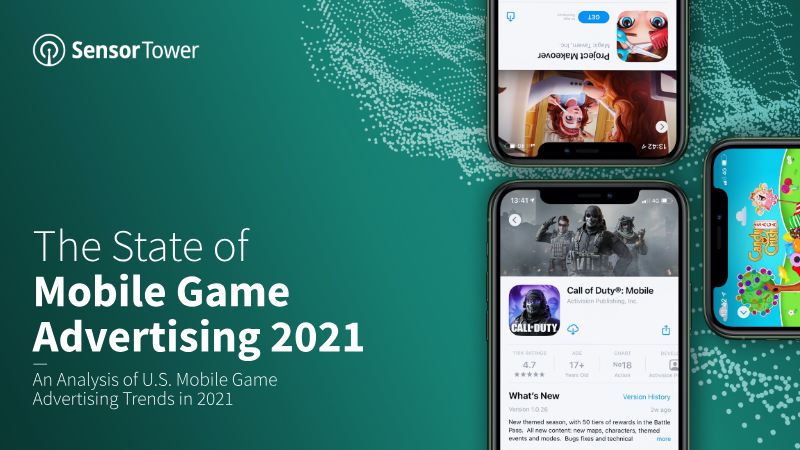
Mobile game advertising in the United States remained resilient through the first half of 2021, showing no immediate negative impact from privacy changes such as the deprecation of IDFA. Analysis of the advertising landscape reveals a strategic divide between ad networks. Specialized platforms like AppLovin, Chartboost, and Vungle maintain a high concentration of gaming content, often exceeding 90 percent share of voice. In contrast, diversified platforms like Facebook, TikTok, and YouTube maintain a more balanced split between gaming and non-gaming advertisements, serving as critical channels for reaching broader audiences.

Market trends indicate that ad network selection is increasingly driven by genre and demographic alignment. Puzzle and Hypercasual games dominate gaming-focused networks, while mid-core genres like Strategy and Shooter find higher engagement on social platforms like YouTube and Instagram. Notably, Adcolony emerged as a primary hub for Casino games, catering to an older, female-leaning demographic. Across most platforms, video remains the dominant creative format, though playable ads have gained significant traction, particularly on AppLovin where they account for over 40 percent of gaming share of voice.

Creative strategies are evolving to include "fake playables," relaxing music for casual titles, and real-world testimonial-style conversations. Even mid-core titles with complex mechanics, such as Call of Duty: Mobile, have begun adopting simplified playable "mini-games" to lower the barrier for user acquisition. This data, compiled by Sensor Tower using its Ad Intelligence platform, covers U.S. trends across iOS and Android from 2018 through the second quarter of 2021, suggesting that success in the current market requires a sophisticated mix of genre-specific network targeting and experimental creative formats.

  • Mobile game advertising in the U.S. remained resilient through H1 2021, showing no immediate negative impact from the deprecation of IDFA.
  • Playable ads have become a dominant creative format, accounting for over 40 percent of the gaming share of voice on AppLovin.
  • Specialized ad networks like AppLovin, Chartboost, and Vungle maintain a gaming-focused inventory exceeding 90 percent share of voice, while platforms like Facebook, TikTok, and YouTube provide broader audience reach.
  • Ad network selection is increasingly genre-specific, with Puzzle and Hypercasual games favoring gaming-focused networks, while Strategy and Shooter titles find higher engagement on social platforms like YouTube and Instagram.
  • Adcolony has established itself as a primary hub for Casino games, effectively targeting an older, female-leaning demographic.
+1
Sensor TowerJan 2021
Page 1
Presentation54 pages

FY2020 Presentation Material

CyberAgent achieved record-high financial performance in fiscal year 2020, reporting consolidated sales of 478.5 billion yen and an operating profit of 33.8 billion yen. These results represent year-over-year increases of 5.5% and 9.9% respectively, surpassing initial forecasts despite the operational challenges posed by the global pandemic. Growth was primarily catalyzed by the Game business, which generated 155.8 billion yen in sales. This segment benefited from the sustained performance of legacy titles and the successful launch of Project SEKAI, which acquired over two million users within its first three weeks.

The Media business, centered on the ABEMA streaming platform, remains a critical pillar for long-term expansion. ABEMA experienced a 22.6% increase in annual sales to 57 billion yen, supported by a cumulative download base exceeding 59 million. While the segment continues to operate at a loss of 18.5 billion yen due to aggressive up-front investments, these losses are narrowing as new monetization streams mature. Specifically, the rapid adoption of Pay-Per-View services and a seventeen-fold increase in transaction volume for the WINTICKET cycling betting service have diversified the platform's revenue model beyond traditional advertising.

Looking toward fiscal year 2021, the strategic focus shifts toward scaling consolidated sales to 500 billion yen while maintaining a robust financial position. To manage this growth, a new governance structure has been implemented to separate management oversight from execution. Although increased selling, general, and administrative expenses led to a quarterly dip in operating profit during the final months of 2020, the overall trajectory remains positive. The combination of a highly profitable gaming portfolio and the accelerating monetization of digital media assets positions the organization for sustained domestic leadership in the Japanese internet services market.

  • CyberAgent achieved record FY2020 performance with 478.5 billion yen in sales and 33.8 billion yen in operating profit, marking year-over-year growth of 5.5% and 9.9% respectively.
  • The Game business served as the primary growth engine, generating 155.8 billion yen in sales driven by legacy titles and the successful launch of Project SEKAI, which reached two million users in three weeks.
  • The Media segment, anchored by ABEMA, grew annual sales by 22.6% to 57 billion yen, supported by a cumulative base of over 59 million downloads.
  • Despite an 18.5 billion yen operating loss in the Media segment due to aggressive investment, monetization is diversifying through Pay-Per-View services and a seventeen-fold increase in transaction volume for the WINTICKET cycling betting service.
  • CyberAgent has set a consolidated sales target of 500 billion yen for FY2021 and implemented a new governance structure to separate management oversight from operational execution.
+1
CyberAgentOct 2020
Page 1
Presentation40 pages

3Q FY2020 Presentation Material

CyberAgent’s performance during the third quarter of fiscal year 2020 remained resilient despite the economic disruptions caused by the COVID-19 pandemic. Consolidated sales reached 112.8 billion yen, a marginal year-over-year decrease of 0.7%, while operating profit stood at 8.2 billion yen. By the end of this period, the company had already achieved between 89% and 102% of its full-year operating profit forecasts. This stability was largely driven by the Internet Advertisement segment, which successfully offset declining demand in certain sectors by pivoting toward advertisers benefiting from stay-at-home trends, and the Game business, which generated 36.7 billion yen in quarterly revenue following major title anniversaries.

The media segment, centered on the streaming platform ABEMA, demonstrated significant growth with a 19.2% year-over-year increase in sales to 13.3 billion yen. This expansion was supported by a record 56 million downloads and a surge in the WINTICKET gambling transaction business, which doubled its volume to 7.2 billion yen. Strategic priorities for this segment include reaching one million ABEMA Premium subscribers by late 2020 and leveraging new virtual production technologies, such as Pay-Per-View systems, to enhance monetization.

Looking forward, the corporate strategy focuses on establishing ABEMA as a long-term financial pillar while maintaining market share in the advertising sector through AI-driven efficiency. In the gaming division, the emphasis remains on the dual approach of developing new intellectual properties and extending the lifecycle of existing titles through robust operational management. These efforts are underpinned by a broader commitment to ESG initiatives and information security, ensuring sustainable value creation across the company’s diverse digital portfolio.

  • CyberAgent reported 112.8 billion yen in consolidated sales for 3Q FY2020, achieving 89% to 102% of its full-year operating profit forecast despite a marginal 0.7% year-over-year revenue decline.
  • The Game business generated 36.7 billion yen in quarterly revenue, bolstered by major title anniversaries and a strategy focused on both new IP development and lifecycle extension for existing games.
  • The media segment, anchored by the ABEMA streaming platform, grew sales by 19.2% year-over-year to 13.3 billion yen, supported by 56 million total downloads.
  • WINTICKET gambling transactions doubled in volume to 7.2 billion yen, contributing significantly to the media segment's growth.
  • The Internet Advertisement segment maintained stability by pivoting toward advertisers benefiting from stay-at-home trends to offset sector-specific demand declines.
+1
CyberAgentJul 2020
Page 1
Presentation43 pages

2Q FY2020 Presentation Material: January to March 2020

CyberAgent achieved record-high financial performance during the second quarter of fiscal year 2020, with consolidated sales reaching 129.1 billion yen and operating profit surging 45.3% year-over-year to 12.4 billion yen. This growth was primarily anchored by the Game Business, which generated 44.8 billion yen in revenue. Success in this segment was driven by high-profile anniversary events for established titles like Granblue Fantasy and the strong market debut of KonoSuba: Fantastic Days. By the end of the first half, the company had already secured between 63% and 72% of its full-year profit targets, though projections for the remainder of the year remain cautious due to anticipated declines in advertising demand stemming from the COVID-19 pandemic.

The media segment, centered on the ABEMA streaming platform, demonstrated significant momentum as stay-at-home orders accelerated user adoption. ABEMA reached 52 million downloads and grew its premium subscriber base to 676,000, with a clear trajectory toward one million subscribers by the end of the calendar year. While the segment still operates at a loss, these losses narrowed to 4.2 billion yen as sales rose nearly 19%. Monetization efforts are diversifying beyond traditional advertising into subscriptions and related services, such as the WinTicket betting platform, which saw transaction volumes double quarter-on-quarter to 3.5 billion yen.

Strategic priorities for the future focus on balancing short-term gains with long-term operational stability. In the gaming sector, the emphasis remains on high-quality development and extending the lifecycle of existing intellectual properties. Simultaneously, the media division is pivoting toward a multi-faceted revenue model to ensure the sustainability of its expanding digital ecosystem. Despite the broader economic uncertainty introduced by global health trends, the current fiscal trajectory suggests a robust foundation built on digital entertainment and diversified media services.

  • CyberAgent achieved record-high Q2 FY2020 consolidated sales of 129.1 billion yen and a 45.3% year-over-year increase in operating profit to 12.4 billion yen.
  • The Game Business drove performance with 44.8 billion yen in revenue, bolstered by anniversary events for Granblue Fantasy and the successful launch of KonoSuba: Fantastic Days.
  • By the end of the first half of FY2020, CyberAgent had already achieved 63% to 72% of its full-year profit targets.
  • The ABEMA streaming platform reached 52 million downloads and 676,000 premium subscribers, with management targeting one million subscribers by the end of the calendar year.
  • The media segment narrowed its operating loss to 4.2 billion yen as sales grew nearly 19%, supported by a doubling of WinTicket betting transaction volumes to 3.5 billion yen.
+1
CyberAgentApr 2020

Publishers

Related Topics