Key insights
5 slides
The resilient market
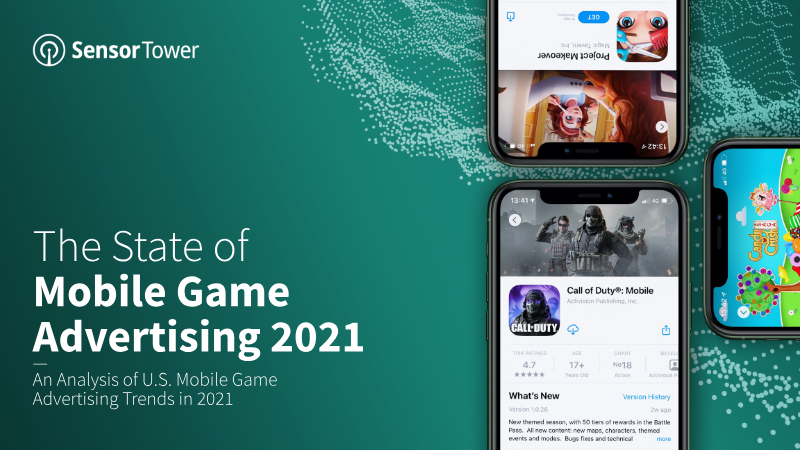
U.S. mobile game advertising showed no immediate negative impact from IDFA changes.
The mobile game advertising landscape in the United States remained resilient throughout the first half of 2021.
No immediate impact. Mobile game advertising in the U.S. remained resilient through H1 2021, showing no immediate negative impact from IDFA privacy changes.
Demographic matching
Successful user acquisition depends on matching game genres to compatible demographics.
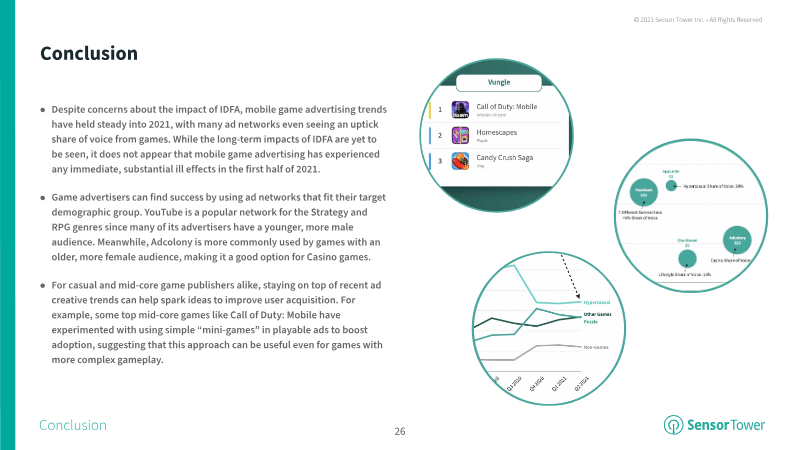
The industry is characterized by a strategic alignment between specific ad networks and target demographics. Networks like YouTube cater to younger, male-dominated audiences interested in strategy and RPG titles, while platforms like Adcolony attract older, female-focused demographics, particularly within the casino genre.
Page 16 of the reportChartboost26
Chartboost19
Chartboost19
Chartboost9
Chartboost6
Adcolony37
Adcolony17
Adcolony9
Playable ads
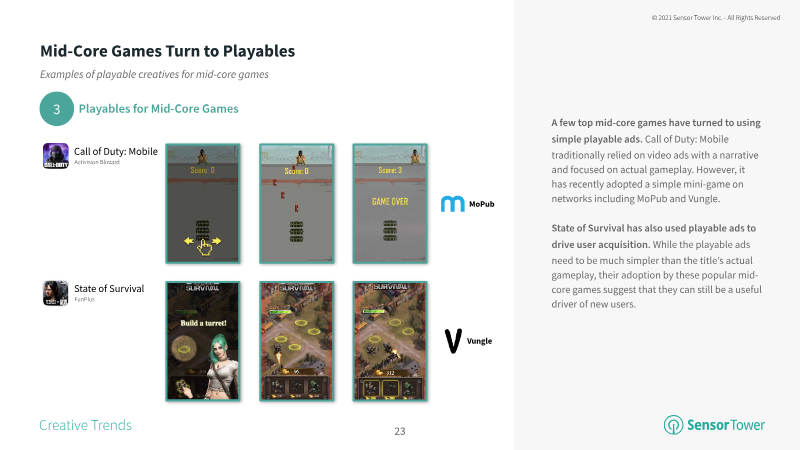
Mid-core titles are increasingly adopting playable ads previously limited to hypercasual games.
Video remains the primary creative format for mobile game advertisers, though playable ads have gained significant traction. Mid-core titles such as Call of Duty: Mobile and State of Survival have increasingly adopted simplified mini-game versions of their titles to drive user acquisition.
Creative experimentation
Publishers are shifting toward interactive and narrative-driven advertising techniques.
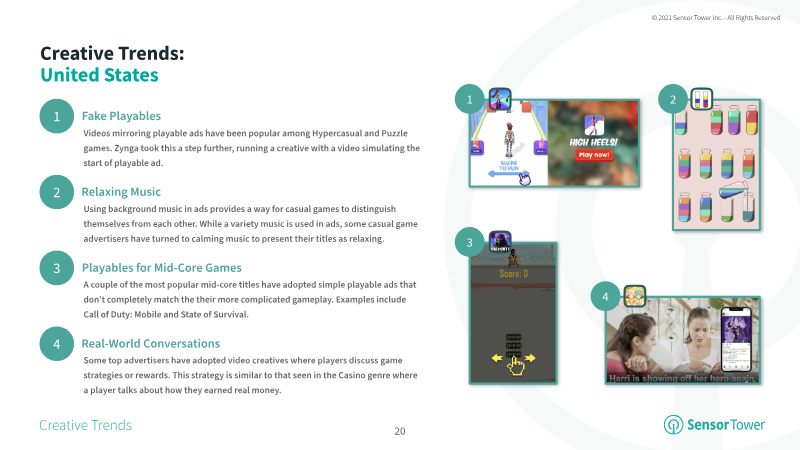
The industry is moving away from traditional video formats toward interactive and narrative-driven advertising techniques. Publishers are incorporating tactics such as relaxing background music for casual titles and real-world conversational ads that emphasize social proof or financial rewards.
Creative shift. The industry is moving away from traditional video formats toward interactive and narrative-driven advertising techniques designed to capitalize on player psychology and specific genre appeal.
Optimization strategy
Publishers are leveraging granular insights to optimize creative assets beyond traditional video.
As the market evolves, publishers are increasingly leveraging these granular insights to optimize their creative assets. They are moving beyond traditional video formats to more interactive and narrative-driven advertising techniques that capitalize on player psychology and specific genre appeal.
Page 20 of the report- 01Match genres to networksAlign specific game genres with networks that possess compatible user bases.
- 02Optimize creative assetsLeverage granular insights to optimize creative assets.
- 03Adopt interactive techniquesMove beyond traditional video formats to interactive and narrative-driven advertising.
1 / 5
Ask AI about this report