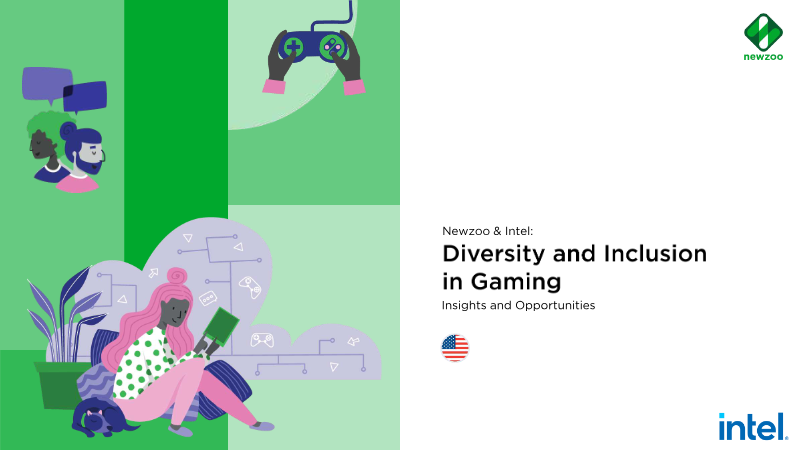
This research, conducted by Newzoo in collaboration with Intel, examines the state of diversity and inclusion within the United States gaming market. The study challenges the misconception that the gaming population is primarily composed of young, white males, noting that there are approximately 2.7 billion gamers globally. By analyzing a representative sample of 1,824 gamers aged 10–65 via Computer Assisted Web Interviewing in early 2020, the findings identify significant gaps in representation, accessibility, and affordability that impact marginalized communities.
The data reveals that gamers of color, particularly Black and Hispanic/Latinx players, tend to be younger and more engaged than their white counterparts. For instance, roughly 75% of Black PC players are under the age of 35, compared to 50% of white players. Furthermore, Black and Asian PC gaming populations skew more female than other groups. Despite this high engagement, 47% of all U.S. gamers report avoiding titles they feel are not made for them, and over half emphasize the importance of diverse character representation—a sentiment strongest among LGBTQIA+ players and those with disabilities.
Economic factors play a critical role in gaming habits and hardware preferences. Due to historical economic disparities and younger average ages, Black and Hispanic/Latinx gamers are more likely to use laptops rather than expensive high-end desktops and show a higher affinity for game library subscriptions like Xbox Game Pass. These services provide a lower barrier to entry for high-quality content. Additionally, the study finds that players of color are more likely to be "Ultimate Gamers" or "Subscribers" compared to white gamers, who have a higher share of "Lapsed Gamers."
The analysis concludes that the industry must move beyond "sitting on the fence" regarding societal issues. Nearly half of U.S. gamers are more likely to support publishers that take active stances on social justice. By prioritizing affordability, accessibility, and authentic representation, hardware and software providers can better serve an evolving, diverse audience and unlock significant untapped revenue and engagement opportunities.

Google · 2026
Newzoo · 2026

Newzoo · 2026
Newzoo · 2026

Deconstructor of Fun · 2026
Newzoo · 2026

Newzoo · 2026
Newzoo · 2026
Newzoo · 2026

Newzoo · 2026
Newzoo · 2026
Newzoo · 2025
Newzoo · 2021
Anzu · 2025

AEVI · 2025

Entertainment Software Association · 2025
Anzu & Semcasting · 2025

AEVI · 2025

European Schoolnet · 2024
Circana · 2024

Xsolla · 2024
Video Games Europe · 2024

Entertainment Software Association · 2024

AEVI · 2024