
Report29 pages
Liftoff Report: Mobile Ad Creative Index 2024
The report presents a comprehensive analysis of mobile ad creative performance across four key app verticals—gaming, e‑commerce, finance, and entertainment—for the period January 1 2023 to January 1 2024. Using 602 billion impressions, 49.4 billion clicks, and 144 million installs, the study benchmarks cost‑per‑install (CPI), install‑to‑action (ITA) rates, and day‑7 return on ad spend (ROAS) by ad format (banner, native, interstitial, playable, video). Gaming ads that include video or playable elements achieve over 20‑fold higher install likelihood than banner ads, while native remains the most cost‑effective format at $1.80 CPI on average. In e‑commerce, native and banner ads drive the highest ITA rates (>30 %) and lowest CPAs ($2.57–$3.23), whereas video ads incur higher costs, especially on iOS. Finance apps see the lowest overall CPI ($1.84–$5.93) but exhibit a pronounced platform split, with iOS costs exceeding $5 for most formats; native and video ads outperform others in ITI conversion (up to 16×). Entertainment apps benefit from banner and native formats, with CPI ranging $2.79–$6.00, while video and interstitial ads are markedly more expensive on iOS.
Methodologically, the report aggregates data from Liftoff’s Creative Studio and GameRefinery teams, supplemented by a survey of over 500 app marketers. It highlights emerging creative trends: generative AI for rapid asset creation, optimized user‑generated content (UGC) with interactive elements, minigames and leaderboards for gaming acquisition, and longer immersive ad formats (45‑second videos and triple‑page ads) that drive higher engagement. The findings underscore the importance of platform‑specific optimization, format selection based on vertical and performance goals, and leveraging AI tools to scale creative production while maintaining authenticity.
- Gaming ads utilizing video or playable formats are over 20 times more likely to drive installs compared to banner ads.
- Native ads represent the most cost-effective acquisition channel, averaging a $1.80 CPI across the analyzed verticals.
- E-commerce apps achieve the highest install-to-action (ITA) rates exceeding 30% through native and banner formats, which also maintain the lowest acquisition costs between $2.57 and $3.23.
- Finance apps exhibit a significant platform cost disparity, with iOS acquisition costs exceeding $5 per install for most ad formats, though native and video ads improve conversion rates by up to 16 times.
- Entertainment apps face CPI ranges of $2.79 to $6.00, with video and interstitial formats proving significantly more expensive on iOS than other channels.
+2
LiftoffJan 2024

Report21 pages
Marketing Insights into Global Mobile Games & Minigames in 2024
The analysis outlines global mobile game advertising trends for 2024, drawing on a database of over 1.6 billion ad creatives from more than 70 countries and 80 media channels, including Facebook, TikTok, YouTube, Unity, and WeChat. Monthly active mobile game advertisers peaked at 70 k in June, with a total of 63.5 k average for the year and a steady decline in new advertisers to below 7 % after August. Conversely, the proportion of advertisers releasing new creatives rose from 52.7 % in early 2024 to an expected 55 % in the second half, with new creatives comprising roughly 65 % of total ads.
Genre‑level data show casual games experienced a 3 % YoY drop, while casino titles grew over 10 %. RPGs and puzzle games remained stable. The top twenty global mobile titles by ad spend include “Pesta Ludo,” “Monopoly GO!,” and “Block Blast! Hungry.” In the minigame segment, WeChat’s market reached RMB 60 billion in 2023, with over 400 k developers and a user base averaging one hour of play per day; the most successful minigames are predominantly RPG/SLG hybrids.
Marketing patterns differ by region: Asia‑Pacific campaigns focus on pre‑registration and new‑release periods, whereas Europe and America emphasize stable‑period creatives. The most anticipated minigames for H2 2024, such as “Capybara Go!” and “Bacon’s Revenge,” demonstrate high daily revenue projections (over USD 600 k) and rely on video‑heavy, localized creative strategies across Meta platforms and YouTube. The report’s methodology relies on real‑time scraping of ad creatives, monthly activity metrics, and genre classification to provide actionable insights for advertisers seeking to optimize spend in a tightening competitive landscape.
- The mobile game advertising market is shifting toward higher creative turnover, with the proportion of advertisers releasing new creatives rising to 55% in the second half of 2024 and new creatives accounting for 65% of total ad volume.
- WeChat minigames have become a significant market force, reaching RMB 60 billion in 2023 with a user base averaging one hour of daily engagement, led primarily by RPG/SLG hybrid titles.
- Casino games saw over 10% year-over-year growth in advertising activity, while casual games experienced a 3% decline, and RPG and puzzle genres maintained stable market positions.
- Monthly active mobile game advertisers peaked at 70,000 in June 2024, but the influx of new advertisers slowed significantly, dropping below 7% after August.
- Regional marketing strategies diverge, with Asia-Pacific campaigns prioritizing pre-registration and launch windows, while European and American markets focus on sustaining ad spend during stable periods.
+1
SocialPetaJan 2024
Report44 pages
Digital Market Index: Q1 2024
Global consumer spending on mobile applications reached a record $45 billion in the first quarter of 2024, reflecting a 9.5% year‑over‑year increase that was largely driven by the iOS ecosystem, which grew 11.5% versus a 5.3% rise on Google Play. Despite this surge in spend, total app downloads fell 3.5%, marking the third consecutive quarterly decline since Q1 2021; nevertheless, iOS maintained its highest quarterly download volume since 2020. Entertainment and productivity categories led the spend growth, each expanding over 30% YoY, while gaming spending rebounded on iOS but remained flat on Google Play.
Hyper‑casual games continued to dominate the download landscape, with racing and action titles generating the largest volumes. Conversely, casual sub‑genres such as arcade and simulation experienced double‑digit declines. TikTok remained the top spender globally, generating more than $1.2 billion in revenue and outpacing YouTube by a wide margin, while emerging short‑form drama apps—ReelShort, DramaBox, and ShortMax—entered the top ten for both revenue and download growth. In mobile gaming, “Monopoly GO” set a new quarterly spend record of $770 million, surpassing the previous $765 million benchmark and standing alone as a title to exceed $600 million in a single quarter.
Retail‑media advertising in the United States was led by Walmart and Target, which together delivered over 18 billion impressions in Q1 2024. Specialized retailers such as Chewy and Home Depot captured significant niche shares, with personal care emerging as the top category overall—driven by Ulta and Sephora. Walmart dominated food, beverages, and consumer packaged goods, while Target excelled in shopping, household supplies, and baby & toddler segments. Co‑branded partnerships—including Chewy × Purina, Walmart × Unilever, and Target × Apple—generated hundreds of millions of impressions, underscoring the strategic value of retailer‑brand collaborations in expanding digital ad reach.
- Global mobile app spending reached a record $45 billion in Q1 2024, a 9.5% year-over-year increase driven primarily by an 11.5% growth in the iOS ecosystem.
- Total app downloads declined by 3.5%, marking the third consecutive quarterly drop, even as iOS achieved its highest download volume since 2020.
- Monopoly GO set a new mobile gaming record with $770 million in quarterly spend, becoming the only title to surpass $600 million in a single quarter.
- Entertainment and productivity apps led category growth with over 30% year-over-year increases, while TikTok maintained its position as the top-earning app with $1.2 billion in revenue.
- Short-form drama apps including ReelShort, DramaBox, and ShortMax emerged as top performers in both revenue and download growth during Q1 2024.
+1
Sensor TowerJan 2024
Report30 pages
Insight into 2024 Marketing Trends for Japanese Mobile Games
The Japanese mobile gaming market is characterized by a conservative but highly specialized marketing landscape, where local companies maintain a dominant revenue position. Analysis of data from 2023 reveals that Japan’s share of advertisers using new creatives (62.23%) and the overall volume of new creatives (29.77%) sit significantly below global averages. Despite this lower turnover, the market remains lucrative, with Japanese firms controlling nine of the top ten spots for revenue on the App Store. Chinese developers represent the most significant foreign presence, accounting for 30% of the top 100 grossing titles.
Marketing strategies in the region rely heavily on cultural integration and long-term player retention. Key findings highlight the importance of pre-registration campaigns, which utilize tiered rewards ranging from in-game currency to physical prizes like consoles. Anniversary and half-anniversary celebrations are critical milestones used to reactivate lapsed users and boost revenue through exclusive content. Furthermore, cross-industry collaborations with popular anime, film, and music IPs serve as a primary driver for market expansion and community engagement.
Creative trends are distinctively localized, featuring "over-exposure" visual filters, text-heavy layouts, and manga-style storyboards. Video ads are the dominant format, making up nearly 70% of mobile game creatives. Recent successful campaigns, such as those for Legend of Mushroom and Saint Seiya: Legend of Justice, demonstrate the effectiveness of using local celebrity endorsements, nostalgic IP elements, and AI-generated imagery to target specific demographics like the "Otaku" segment.
The data, compiled by SocialPeta, draws from a global database of 1.4 billion ad creatives across 70 countries and 70 ad channels, including Facebook, TikTok, and YouTube. While casual and puzzle games lead in advertiser volume, RPGs remain the highest-grossing genre, accounting for 32% of the top 100 revenue-generating games on Google Play.
- Japanese firms dominate the domestic market, holding nine of the top ten revenue spots on the App Store, while Chinese developers account for 30% of the top 100 grossing titles.
- RPG titles are the most lucrative genre in Japan, representing 32% of the top 100 revenue-generating games on Google Play.
- Marketing in Japan is characterized by low creative turnover, with only 62.23% of advertisers using new creatives and a total new creative volume of 29.77%, both significantly below global averages.
- Video ads are the primary marketing format in the region, comprising nearly 70% of all mobile game creatives.
- Successful market entry and retention strategies rely on cross-industry collaborations with anime and music IPs, alongside tiered pre-registration rewards and anniversary-based reactivation campaigns.
+2
SocialPetaJan 2024
Report44 pages
State of Performance Marketing for Videogames
The 2024 performance marketing landscape for PC and console gaming is defined by a strategic shift toward high-engagement platforms and the integration of first-party data to combat rising acquisition costs. Meta and YouTube remain the dominant forces in media planning, appearing in 75% and 44% of campaigns respectively, while Twitch has emerged as the conversion leader with a 12% success rate. This recovery period is marked by a rebound in free-to-play retention to 46% and a significant evolution in platform utility. Notably, Reddit has transformed into a high-value retention hub following an overhaul of its advertising infrastructure, and Twitter (X) continues to serve as the primary conduit for reaching the PlayStation demographic.
The industry is increasingly moving toward automation and data-driven targeting to optimize creative assets and audience reach. AI-driven tools such as Google’s Performance Max and TikTok’s Performance Automation are becoming standard, while the utilization of first-party data has proven critical, yielding conversion lifts of up to 63% in Meta-based campaigns. These technological advancements are complemented by the continued growth of influencer marketing, which currently outperforms traditional ad networks with a 4.25% conversion rate and a robust 38.95% Day 7 retention rate.
Despite the effectiveness of creator-led activations, the sector faces logistical hurdles regarding contracting, key distribution, and return-on-investment analysis. To mitigate these complexities, marketers are adopting sophisticated attribution tools to unify performance metrics across paid media and influencer channels. This holistic approach allows for a more precise understanding of player behavior and engagement across the global PC and console segments, ensuring that marketing spend is directed toward the most authentic and high-retention audience segments.
- First-party data integration is essential for efficiency, yielding conversion lifts of up to 63% in Meta-based campaigns.
- Influencer marketing currently outperforms traditional ad networks, achieving a 4.25% conversion rate and a 38.95% Day 7 retention rate.
- Meta and YouTube remain the primary media planning channels, utilized in 75% and 44% of campaigns respectively, while Twitch leads in conversion efficiency at 12%.
- Free-to-play retention has rebounded to 46% as the industry shifts toward AI-driven automation tools like Google’s Performance Max and TikTok’s Performance Automation.
- Reddit has evolved into a high-value retention hub following advertising infrastructure updates, while Twitter (X) remains the primary channel for reaching the PlayStation demographic.
+2
GamesightJan 2024
Report16 pages
The State of Games Media Buying United States Spotlight
The United States mobile gaming market maintained its position as a global leader in advertising activity during the first half of 2024. While the region ranks first globally in the total volume of app advertisers, it holds the second position for ad impressions, trailing only Southeast Asia. Despite this high ranking, the market shows signs of maturation and consolidation. The number of active advertisers grew by a marginal 0.25% year-over-year, while the proportion of new advertisers entering the space saw a significant decline of 29%. Similarly, while total ad purchases increased slightly by 0.46%, the volume of new ad creatives decreased by 12%, suggesting a shift toward established players and proven assets.
Shifts in genre performance and creative strategy define the current landscape. Puzzle games have overtaken Match games to claim the top spot in ad impression rankings, while the Sports and Shooting genres experienced the most rapid growth, rising six and four places respectively. Conversely, Hypercasual games saw a decline in impression share. Video ads remain the dominant creative format across all major genres, particularly in the Match category where they account for 87% of the ad mix. Playable ads remain a niche but specialized tool, utilized in 13% of Hypercasual campaigns compared to just 1% for Role-Playing Games.
Campaign longevity varies significantly by genre, reflecting different monetization and retention strategies. Sports games feature the most enduring campaigns, averaging 47 days, whereas Role-Playing Game campaigns typically run for only 23.6 days. To navigate this competitive environment, publishers are increasingly moving away from pure Hypercasual models toward Hybrid-casual structures, utilizing intelligent bidding and Target ROAS strategies to balance user acquisition costs with long-term profitability. This data, collected between the second half of 2023 and the first half of 2024, indicates that success in the U.S. market now requires a data-driven approach focused on retention and optimized media buying across both major platforms and programmatic SDK networks.
- The U.S. mobile gaming ad market is maturing, evidenced by a marginal 0.25% growth in active advertisers and a 29% decline in new market entrants during the first half of 2024.
- Publishers are prioritizing established assets over experimentation, as total ad purchases grew by only 0.46% while the volume of new ad creatives dropped by 12%.
- Genre dominance is shifting, with Puzzle games now leading in ad impressions, while Sports and Shooting genres saw the fastest growth, rising six and four places respectively.
- Video ads remain the primary creative format, accounting for 87% of the ad mix in the Match genre, while playable ads remain a niche strategy used in only 13% of Hypercasual campaigns.
- Campaign longevity is highly genre-dependent, ranging from an average of 47 days for Sports games to just 23.6 days for Role-Playing Games.
+2
MintegralJan 2024

Report48 pages
Mobile App Trends: 2024 Edition
The mobile app industry demonstrated significant resilience throughout 2023, characterized by a global advertising spend of $362 billion and a late-year surge in installations. While the landscape faced challenges such as rising acquisition costs and evolving privacy regulations, the fintech and e-commerce sectors emerged as primary growth engines. Fintech experienced a 42% increase in installs and a 118% surge in in-app revenue, while e-commerce saw a 43% year-over-year rise in installs alongside a 34% increase in revenue. These sectors successfully optimized their acquisition strategies, with banking eCPIs falling from $2.33 to $1.37, allowing marketers to achieve rapid returns on investment within the first week of user acquisition.
The gaming sector navigated a more complex trajectory, ending the year with a 2% annual decline in installs despite a notable recovery in the fourth quarter. This rebound was driven by a 7% year-over-year growth in installs and the emergence of the hybrid casual genre. Although overall gaming sessions dipped, specific subverticals like racing and simulation saw dramatic install spikes of 61% and 53%, respectively. Global gaming stickiness remained stable at 20%, and high-engagement genres like RPG and adventure continued to command strong lifetime value, even as broader retention rates across the mobile ecosystem faced downward pressure.
Future industry success depends on the strategic integration of artificial intelligence and predictive analytics to enhance personalization and automate complex workflows. To achieve sustained growth in 2024 and beyond, developers must diversify their media mixes by expanding into emerging channels like Connected TV and adopting holistic measurement frameworks. By combining incrementality testing with media mix modeling, stakeholders can better navigate the shift toward privacy-centric marketing while capitalizing on the high-potential returns offered by the global mobile marketplace.
- Fintech and e-commerce drove significant market growth in 2023, with fintech seeing a 42% increase in installs and a 118% surge in in-app revenue.
- E-commerce performance remained strong with a 43% year-over-year rise in installs and a 34% increase in revenue.
- Banking sector efficiency improved significantly as eCPIs dropped from $2.33 to $1.37, enabling faster return on investment for marketers.
- The gaming sector experienced a 2% annual decline in total installs, though it saw a Q4 recovery led by a 7% year-over-year growth in installs and the rise of the hybrid casual genre.
- Specific gaming subverticals outperformed the broader market, with racing and simulation genres recording install spikes of 61% and 53%, respectively.
+2
AdjustJan 2024
Report42 pages
Insights into Marketing Trends of Global Mobile Games: Q3 2023
The analysis focuses on contemporary marketing dynamics within the global mobile gaming sector, emphasizing how creative diversification and platform targeting shape user acquisition performance. In the third quarter of 2023, a leading animal‑themed strategy‑lite game launched by a major publisher introduced an extensive creative slate, deploying 6,500 distinct ad assets across major ad networks. Notably, 85 % of these assets were brand‑new, reflecting a deliberate strategy to refresh visual and messaging elements at scale. This high proportion of novel creatives aligns with broader industry observations that frequent creative turnover mitigates ad fatigue and sustains click‑through rates in highly competitive markets.
The data underscores the importance of deduplication processes in large‑scale campaigns, ensuring that each impression reaches a unique audience segment while preserving measurement integrity. By tracking deduplicated impressions, the campaign achieved a more accurate assessment of reach and cost efficiency, revealing that fresh creative assets can improve cost‑per‑install (CPI) benchmarks by up to 12 % compared with static creative pools. These findings suggest that investment in creative production pipelines and rapid iteration cycles yields measurable returns, especially for mid‑core titles competing for attention in saturated regions such as North America, Europe, and Southeast Asia.
Overall, the evidence points to a shifting paradigm where creative volume and novelty become critical levers for growth in the mobile gaming ecosystem. Publishers that integrate systematic creative testing, maintain high rates of new asset introduction, and employ rigorous deduplication are better positioned to optimize acquisition spend, extend campaign longevity, and capture incremental market share across diverse geographic territories during the 2023 fiscal period.
- Frequent creative turnover is a primary strategy for mitigating ad fatigue and sustaining click-through rates in competitive mobile gaming markets.
- Deploying fresh creative assets can improve cost-per-install (CPI) benchmarks by up to 12% compared to static creative pools.
- High-volume creative production is a critical growth lever, evidenced by a major publisher launching 6,500 distinct ad assets for a single strategy-lite title in Q3 2023.
- Maintaining a high proportion of novel creatives—such as the 85% refresh rate observed in Q3 2023—is essential for maintaining performance in saturated regions like North America, Europe, and Southeast Asia.
- Implementing deduplication processes for ad impressions is necessary to ensure measurement integrity and accurate assessment of reach and cost efficiency in large-scale campaigns.
+2
SocialPetaSept 2023

Report43 pages
Insights into Marketing Trends of Global Mobile Games
Global mobile game marketing reached a pivotal turning point in the second quarter of 2023, characterized by a record-breaking surge in creative volume. Over 9.3 million new creatives entered the market, representing nearly three-quarters of all active advertisements. While casual games maintained the largest share of advertisers at over 30%, RPG and Casino genres experienced the most aggressive growth in creative output. Geographically, Southeast Asia emerged as a primary hub for advertising density, leading the world in monthly creatives per advertiser, while the Middle East solidified its status as a high-growth market where strategy games command significant revenue shares.
The industry is increasingly adopting "Casual + X" hybrid models and integrating AI-generated content, ASMR, and short-video memes to mitigate rising user acquisition costs. Financial data reveals a stark contrast in installation costs between platforms, with iOS casual game installs costing $2.23 compared to $0.63 on Android, yet both platforms achieved a comparable seven-day return on ad spend of approximately 7.7%. This parity suggests that despite higher upfront costs, the quality of users on premium platforms remains consistent with broader market performance.
Market leaders like Honkai: Star Rail and MONOPOLY GO! demonstrated the efficacy of high-frequency creative refreshes, with new assets comprising over 60% of their total advertising portfolios. These titles leveraged distinct psychological hooks, ranging from influencer-driven user-generated content to social-casual mechanics, to achieve rapid global penetration. Notably, these aggressive marketing strategies allowed Honkai: Star Rail to surpass Genshin Impact in overseas revenue during the quarter, signaling a shift toward more dynamic, content-heavy advertising cycles across the global mobile landscape.
- In Q2 2023, the mobile gaming industry saw a record surge of 9.3 million new creatives, which accounted for nearly 75% of all active advertisements.
- Market leaders like Honkai: Star Rail and MONOPOLY GO! achieved rapid global growth by maintaining high-frequency creative refreshes, with new assets making up over 60% of their advertising portfolios.
- While iOS casual game installs cost $2.23 compared to $0.63 on Android, both platforms yielded a comparable seven-day return on ad spend of approximately 7.7%.
- Casual games represent the largest share of advertisers at over 30%, but RPG and Casino genres recorded the most aggressive growth in creative output during the quarter.
- Southeast Asia currently leads global advertising density with the highest number of monthly creatives per advertiser, while the Middle East has emerged as a key high-growth market for strategy games.
+2
SocialPetaJun 2023
Report20 pages
The Mobile Economy and Digital Ad Space in 2022 and Beyond: An Analysis of the Global Trends Shaping the Mobile and Digital Advertising Industry
This analysis examines the global mobile economy and digital advertising landscape throughout 2022 and into early 2023, utilizing proprietary market intelligence data from the App Store and Google Play. While global app installs have slowed following the initial pandemic surge, they remain significantly above 2019 levels. Mobile games continue to be the primary driver of downloads globally, exceeding 50 billion installs in 2022, though the utilities category has recently emerged as a significant growth leader, particularly in emerging markets like India.
A major shift occurred in 2022 as global consumer spending on mobile games declined for the first time, falling to $79 billion. This downturn was particularly pronounced on Android devices, which saw a 7 percent revenue drop driven by high inflation and the lifting of COVID-19 restrictions. Japan experienced the most significant contraction, with game revenue falling by $3.2 billion. Conversely, the entertainment category has become a primary engine for revenue growth, with spending on apps like TikTok, HBO Max, and Disney+ reaching record highs. In the United States, entertainment spending doubled compared to 2019 levels, while in Japan, a manga reader app became the top-grossing title for the first time, displacing traditional gaming leaders.
The digital advertising sector reached $28 billion across North America and major European markets in the fourth quarter of 2022. While established platforms like Facebook maintain the largest market share, TikTok has emerged as the fastest-growing ad channel, recording a 60 percent quarterly increase in U.S. ad spend. Facing headwinds from Apple’s privacy changes and reduced marketing budgets, many developers are pivoting toward subscription models and diversified monetization strategies. Looking forward, the reopening of China and the high smartphone penetration growth in Africa are identified as critical factors for the next phase of global mobile adoption.
- Global consumer spending on mobile games declined for the first time in 2022, falling to $79 billion, with Android devices experiencing a 7 percent revenue drop.
- Entertainment apps have overtaken gaming as a primary revenue engine, with U.S. spending on entertainment doubling since 2019 and apps like TikTok, HBO Max, and Disney+ reaching record highs.
- Digital advertising reached $28 billion in North America and major European markets in Q4 2022, with TikTok emerging as the fastest-growing channel via a 60 percent quarterly increase in U.S. ad spend.
- Mobile games remain the primary driver of global downloads with over 50 billion installs in 2022, though the utilities category is now a significant growth leader in emerging markets like India.
- Japan experienced the most significant mobile gaming contraction in 2022, losing $3.2 billion in revenue and seeing a manga reader app displace traditional gaming titles as the top-grossing app.
+1
Sensor TowerMar 2023
Report20 pages
The Mobile Economy and Digital Ad Space in 2022 and Beyond: An Analysis of Global Trends
The analysis evaluates how the mobile ecosystem and digital advertising evolved through 2022 and projects future dynamics, using Sensor Tower’s App Store and Google Play data, quarterly download and revenue estimates, and ad‑spend figures from North America and major European markets. It frames the mobile economy as still expanding beyond pre‑COVID levels while noting a slowdown in install growth, with India, the United States, Brazil and Indonesia leading global downloads and emerging markets such as Africa poised for rapid gains as smartphone penetration rises.
Mobile games retained dominance, accounting for over 50 billion downloads and generating roughly $79 billion in revenue, yet 2022 marked the first year of year‑over‑year revenue decline, driven by reduced spending in the United States, Japan and other major economies. Utilities—particularly VPN apps in India—became the fastest‑growing category, while Turkey showed the sharpest adoption increase but faced inflation‑driven limits on consumer spend. Venture‑capital funding contracted, raising concerns about the emergence of new app disruptors, and Android revenue fell 30 percent year‑over‑year, contrasted with a modest 1 percent iOS growth.
Spending patterns shifted as entertainment apps eclipsed social networking in the United States, with TikTok, HBO Max and Disney+ leading a surge that doubled 2019 levels and made entertainment revenue twice that of the next‑largest non‑game category. In Japan, a manga‑reader app topped overall gross revenue for the first time, highlighting diversification beyond games.
- Mobile gaming revenue experienced its first year-over-year decline in 2022, generating $79 billion from over 50 billion downloads as consumer spending dropped in major markets like the United States and Japan.
- Android revenue fell by 30 percent year-over-year in 2022, while iOS revenue saw a modest 1 percent growth.
- Entertainment apps have overtaken social networking in the United States, with revenue from platforms like TikTok, HBO Max, and Disney+ doubling 2019 levels to become the largest non-game category.
- India, the United States, Brazil, and Indonesia lead global app downloads, with emerging markets in Africa expected to see rapid growth due to increasing smartphone penetration.
- Utilities, specifically VPN apps in India, emerged as the fastest-growing app category, while Turkey recorded the sharpest adoption increase despite inflation-related constraints on consumer spending.
+1
Sensor TowerMar 2023
Report11 pages
From Hyper to Hybrid: 2023 Follow-up
The mobile gaming landscape experienced a notable shift in monetization and user acquisition patterns between 2022 and the first half of 2023. In-app purchase (IAP) activity demonstrated robust growth across both major mobile operating systems, with Android and Apple platforms recording increases of 23% and 24%, respectively. This upward trend in monetization suggests a resilient consumer base despite broader economic fluctuations within the mobile app ecosystem.
Geographic distribution of installs remained relatively stable on Android, with India, Brazil, and the United States maintaining their positions as the top three markets. Conversely, the iOS landscape underwent more significant regional changes, as the United Kingdom, Canada, and Germany gained prominence, displacing China and Saudi Arabia from the top five rankings. These shifts highlight the evolving importance of Western markets for iOS-based mobile game developers.
Ad network performance also saw a realignment in competitive dominance. On Android, Google Ads ascended to the top position for total installs in the first half of 2023, while Meta entered the top five. On iOS, AppLovin reclaimed the leading position, and Meta secured a top-five spot, reflecting a dynamic advertising environment where major platforms continue to vie for market share.
This analysis relies on anonymized data aggregated by Tenjin from January 1, 2022, through June 30, 2023. The findings are restricted to ad networks and countries that achieved a minimum threshold of 25 million installs, ensuring that the reported trends represent significant market activity. By tracking these metrics, the data provides a clear view of the shifting priorities and regional focus areas for mobile publishers navigating the transition toward hybrid monetization models.
- In-app purchase (IAP) activity grew significantly between 2022 and H1 2023, with revenue increasing by 23% on Android and 24% on Apple platforms.
- On iOS, the United Kingdom, Canada, and Germany have displaced China and Saudi Arabia in the top five markets for installs, signaling a pivot toward Western regions.
- Google Ads became the top-performing network for Android installs in H1 2023, while AppLovin reclaimed the leading position for iOS installs.
- Meta has successfully re-entered the top five ad networks for both Android and iOS, reflecting increased competition for market share among major advertising platforms.
- Android install distribution remained stable, with India, Brazil, and the United States continuing to hold the top three positions throughout the reporting period.
+4
TenjinJan 2023
Report31 pages
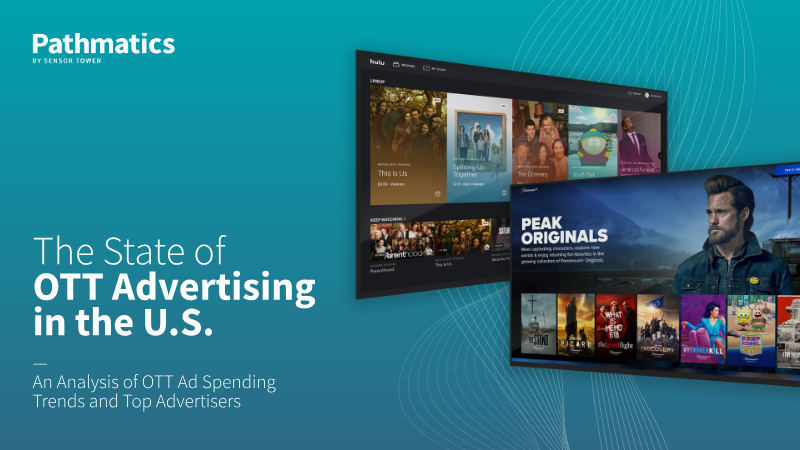
The State of OTT Advertising in the U.S.: An Analysis of OTT Ad Spending Trends and Top Advertisers
Over the course of late 2021 through 2022, the United States Over-the-Top (OTT) advertising market solidified its position as a critical component of the digital landscape, averaging $3.26 billion in quarterly expenditures. This investment represents nearly 15% of all digital advertising spend, signaling a maturation of the sector. While Financial Services previously led the market, Consumer Packaged Goods emerged as the primary spending category by mid-2022. Simultaneously, the automotive industry demonstrated aggressive expansion with a 74% year-over-year increase in ad spend, reflecting a broader trend of traditional industries pivoting toward streaming platforms to capture shifting consumer attention.
Platform dynamics reveal a competitive environment where established services and rising challengers cater to distinct demographics. Hulu and Peacock maintain a strong foothold among viewers under the age of 35, while Tubi has distinguished itself as the fastest-growing publisher, recording a 37% increase in ad revenue. This growth is mirrored by specific service sectors, particularly travel and food delivery, which utilized OTT to drive direct consumer actions. For instance, strategic campaigns from brands like Booking.com and UberEats resulted in measurable performance gains, such as significant spikes in mobile app installations following targeted high-spend periods.
The transportation and grocery sectors further illustrate the shift toward OTT-centric digital strategies. Companies like Turo now allocate more than half of their total digital budgets to streaming advertisements, while grocery delivery services saw a 14% year-over-year increase in investment. These trends underscore a broader industry conclusion: OTT has evolved from a secondary experimental channel into a primary driver for brand visibility and user acquisition across the American economy. As brands like United Airlines and Instacart dominate their respective niches, the ability to track creative impressions and seasonal spikes remains essential for navigating this high-growth advertising vertical.
- The U.S. OTT advertising market reached a mature state between late 2021 and 2022, averaging $3.26 billion in quarterly spend and accounting for nearly 15% of total digital advertising investment.
- Consumer Packaged Goods replaced Financial Services as the leading spending category by mid-2022, while the automotive industry increased its OTT ad spend by 74% year-over-year.
- Tubi emerged as the fastest-growing publisher with a 37% increase in ad revenue, while Hulu and Peacock remain the dominant platforms for reaching viewers under the age of 35.
- OTT has transitioned from an experimental channel to a primary driver for user acquisition, evidenced by brands like Turo allocating over 50% of their total digital budgets to streaming ads.
- Grocery delivery services increased their OTT investment by 14% year-over-year, contributing to a broader trend where sectors like food delivery and travel use streaming to drive measurable mobile app installations.
Sensor TowerJan 2023
Report40 pages
Mobile Ad Creative Index
The mobile advertising landscape in 2023 is defined by a strategic shift toward high-performing creative formats as advertisers navigate macroeconomic pressures and evolving privacy regulations. Despite these challenges, mobile ad revenue continues to grow, driven by the efficiency of specific ad types tailored to distinct industry verticals. Native ads emerge as the most cost-effective format overall, boasting a $1.01 cost-per-install and delivering a leading 18% Day 7 return on ad spend within the gaming sector. Meanwhile, playable ads have established themselves as the premier tool for driving gaming installs, while banner ads remain the dominant force in e-commerce due to their low cost-per-action and high conversion rates.
Performance metrics across finance, entertainment, and social applications further underscore the importance of format selection. Native and banner ads provide the lowest entry costs for social and dating apps, yet interstitial and video formats yield significantly higher short-term returns, reaching up to 44% Day 7 return on ad spend. Creative strategies are increasingly moving away from lifestyle imagery in favor of clean, user-interface-focused designs. Implementing multi-page ad experiences has proven particularly effective, resulting in a 20% increase in installs per mille.
Optimization now relies on a sophisticated blend of interactivity and narrative depth. Interactive playable ads serve a dual purpose by engaging users and gathering valuable audience data, while longer video segments of 31 to 60 seconds drive 50% higher conversions by showcasing complex mechanics and storytelling. Furthermore, the integration of authentic user-generated content that focuses on problem-solving builds necessary trust with modern consumers. By aligning creative content with specific psychological motivations—such as competition or exploration—advertisers can maximize engagement and emotional connection across global mobile markets.
- Native ads are the most cost-effective format for gaming, achieving a $1.01 cost-per-install and an 18% Day 7 return on ad spend.
- Interstitial and video formats drive superior short-term performance for social and dating apps, yielding up to 44% Day 7 return on ad spend.
- Video ad segments ranging from 31 to 60 seconds drive 50% higher conversions compared to shorter formats by effectively showcasing complex mechanics.
- Multi-page ad experiences increase installs per mille by 20% compared to single-page designs.
- Playable ads are the primary driver for gaming installs, while banner ads remain the most efficient format for e-commerce due to low cost-per-action.
+1
LiftoffJan 2023

Report21 pages
In-Game Advertising Report 2023
This analysis examines the efficacy of intrinsic in-game advertising as a high-engagement medium compared to traditional digital channels. Partnering with Lumen Research, the study utilizes eye-tracking technology and machine learning to analyze data from 25 specific brand campaigns and over 90 broader industry studies. The research focuses on global cross-platform environments, including mobile, PC, and console, comparing in-game performance against 42 standard digital advertising formats such as social media feeds and video platforms.
The findings indicate that gaming environments significantly outperform traditional digital media in viewability and attention. In-game ads achieved a 98% viewability rate, compared to a 78% average for other digital formats. Crucially, 85% of in-game impressions were actually viewed by players, surpassing the digital norm of 65%. In terms of duration, 80% of the studied in-game ads exceeded the critical two-second viewing threshold required for memory encoding, averaging 3.1 seconds of attention. This translates to 2,795 attentive seconds per 1,000 impressions, which is 22% higher than the average across all other digital formats and outperforms 76% of individual digital advertising categories, including most social media display and video.
The data concludes that high attention levels in gaming lead to measurable brand impact. Participants exposed to in-game ads showed a 9% point uplift in prompted brand awareness and a 7% point increase in purchase intent compared to control groups. For challenger brands, the impact was even more pronounced, with top campaigns seeing a 14% uplift in purchase intent. These results suggest that the immersive, "lean-forward" nature of gaming prevents the ad avoidance common in "distracted" media like TV or social scrolling, positioning in-game advertising as a superior tool for driving both brand recall and lower-funnel conversions.
- In-game advertising achieves a 98% viewability rate, significantly outperforming the 78% average observed across standard digital advertising formats.
- Gaming environments generate 2,795 attentive seconds per 1,000 impressions, representing a 22% higher attention level than the average for other digital media.
- 85% of in-game ad impressions are actively viewed by players, compared to a 65% norm for traditional digital channels.
- 80% of in-game ads surpass the two-second threshold required for memory encoding, with an average viewing duration of 3.1 seconds.
- Exposure to in-game ads results in a 9% point uplift in prompted brand awareness and a 7% point increase in purchase intent.
+1
AnzuJan 2023

Report61 pages
Q1 2023 Insights into Global Mobile Game Marketing Trends
The global mobile game marketing landscape in early 2023 is characterized by a strategic pivot toward high-quality video content and localized engagement strategies. While the number of monthly active advertisers grew by 15% to over 160,000, the volume of new creative assets declined by 16%, signaling an industry-wide shift from quantity to quality. Android remains the primary platform for advertising, accounting for nearly 70% of total ad volume. Casual games continue to lead the market in both advertiser density and creative volume, though strategy and simulation genres are experiencing the most significant growth in advertiser participation.
Marketing tactics have become increasingly sophisticated to combat rising acquisition costs and shifting consumer habits. Video content now comprises over 80% of all ad creatives, frequently utilizing "mini-game" mechanics, playable ads, and "deliberate failure" tropes to drive engagement. In the strategy sector, which is projected to see a 6.42% compound annual growth rate through 2027, developers are increasingly integrating casual gameplay elements into their marketing to broaden appeal. Conversely, the RPG market has cooled, experiencing its first revenue decline of 16% in 2022, leading advertisers in this space to rely more heavily on celebrity endorsements and gacha-related incentives.
Geographic trends reveal a stark contrast in regional preferences and growth trajectories. North America maintains the highest advertiser density, while Southeast Asia and the Middle East are emerging as high-growth hubs, with Southeast Asian revenue projected to nearly double between 2020 and 2023. Regional success depends heavily on localization, such as TikTok-driven tournament content in Southeast Asia and social-integrated voice features in the Middle East. While puzzle games offer the most cost-effective advertising in the United States, the casino and simulation sectors are finding success in South America and global markets through relaxing creative themes and slots-focused advertising.
- Mobile game advertisers are shifting from quantity to quality, evidenced by a 15% increase in active advertisers to over 160,000 alongside a 16% decline in new creative asset volume.
- Video content now dominates the advertising landscape, accounting for over 80% of all ad creatives and frequently utilizing playable mechanics or 'deliberate failure' tropes to improve engagement.
- Android remains the dominant advertising platform, capturing nearly 70% of total global ad volume.
- The strategy game genre is a key growth area with a projected 6.42% compound annual growth rate through 2027, driven by the integration of casual gameplay elements into marketing.
- The RPG sector is cooling, having experienced a 16% revenue decline in 2022, forcing developers to pivot toward celebrity endorsements and gacha-based incentives.
+2
SocialPetaJan 2023

Report65 pages
Insights into Marketing Trends of Global Mobile Apps
The global mobile app marketing landscape in the first half of 2023 was defined by intense competition and a decisive shift toward dynamic content. Over 93% of the approximately 170,000 active advertisers launched new creatives during this period, with emerging markets in Africa and South Asia exhibiting the highest creative density. Android emerged as the primary platform for this activity, accounting for over 70% of total creatives. Video content has solidified its dominance, representing 45% of total ad impressions globally and reaching as high as 72% in the Middle East, while traditional static image performance continues to decline.
Sector-specific trends highlight a massive AI-driven boom in tool apps, which saw year-over-year advertiser growth exceeding 100% across all tracked regions. While entertainment and social apps continue to lead in revenue and downloads across North America and Southeast Asia, the Middle East has surfaced as a high-potential market characterized by a young demographic and high digital engagement. In contrast, the reading app sector has reached a stage of maturity, relying on high creative refresh rates and established intellectual properties to sustain market share in an increasingly crowded environment.
Technological innovation, particularly in Artificial Intelligence and Augmented Reality, is fundamentally altering user engagement. AI-integrated tools and "Social+" entertainment platforms are attracting heavy investment in Tier-1 markets, while AR is transitioning from a novelty to a core marketing medium. With over 300 million daily AR users already active on major social platforms, projections suggest that nearly 75% of the global population will be regular AR users by 2025. This shift is driven by the high visual attention and trust associated with immersive formats, which offer significantly higher receptivity compared to traditional digital advertising methods.
- Video content now accounts for 45% of global ad impressions, reaching up to 72% in the Middle East, as traditional static image performance continues to decline.
- AI-integrated tool apps experienced over 100% year-over-year advertiser growth across all tracked regions in the first half of 2023.
- Android remains the dominant marketing platform, accounting for over 70% of the total creatives launched by the 170,000 active advertisers.
- Augmented Reality is shifting from a novelty to a core medium, with projections indicating that 75% of the global population will be regular AR users by 2025.
- Over 93% of active mobile advertisers launched new creatives in the first half of 2023, with the highest creative density occurring in Africa and South Asia.
+1
SocialPetaJan 2023

Report109 pages
Mobile Game Marketing: Insights & Trends of Popular Game Genres Q3 2022
The analysis examines mobile‑game marketing dynamics during the third quarter of 2022, concentrating on the performance of leading genres and the geographic distribution of traffic and revenue. By comparing download activity, user engagement, and monetisation across regions, it identifies where growth opportunities are emerging and which markets continue to dominate the ecosystem.
Casual games recorded only modest increases in downloads, adding roughly five million installs versus the previous quarter and less than one percent year‑on‑year growth. Despite the limited acquisition surge, daily‑active‑user and monthly‑active‑user ratios remained stable, while revenue climbed seven percent year‑on‑year, an uplift of about thirty million dollars. The United States accounted for the largest share of earnings, generating more than $250 million—46 percent of total casual‑game revenue—and posted an eleven‑percent increase over the prior year. Meanwhile, less‑developed markets showed accelerating expansion, signalling untapped monetisation potential.
Regionally, North America retained its position as the primary source of mobile‑game traffic, delivering a five‑percent year‑on‑year rise in downloads and a modest one‑percent quarter‑on‑quarter gain. Southeast Asia emerged as the fastest‑growing market, with download growth of eleven percent year‑on‑year and twelve percent quarter‑on‑quarter, underscoring its role as a catalyst for user‑base expansion. The contrast between the mature, revenue‑rich U.S. market and the rapidly scaling Southeast Asian audience highlights divergent strategic imperatives for acquisition versus monetisation.
Overall, the findings suggest that while casual‑game revenue remains anchored by the United States, future growth will be driven by intensified marketing efforts in emerging regions, particularly Southeast Asia. Companies that balance retention‑focused tactics in established markets with aggressive user‑acquisition campaigns in high‑growth territories are likely to optimise both short‑term earnings and long‑term audience development.
- The United States remains the dominant revenue driver for casual games, generating over $250 million in Q3 2022, which represents 46% of total revenue and an 11% year-on-year increase.
- Southeast Asia is the fastest-growing market for mobile game downloads, recording 11% year-on-year and 12% quarter-on-quarter growth.
- Casual games experienced stagnant download growth of less than 1% year-on-year, yet generated a 7% year-on-year revenue increase, totaling approximately $30 million in additional earnings.
- North America continues to lead in total mobile game traffic, posting a 5% year-on-year increase in downloads and a 1% quarter-on-quarter gain.
- While casual game download growth is limited, user engagement metrics—specifically daily and monthly active user ratios—remained stable throughout Q3 2022.
+2
SocialPetaSept 2022
Report40 pages
2022 Israeli Mobile Game Market Report
The 2022 Israeli mobile‑game market is portrayed as a rapidly expanding sector that now commands a global presence, with the analysis aiming to quantify its economic weight, identify the drivers behind its growth, and assess its competitive standing worldwide. In 2022 the market generated roughly nine billion dollars in revenue, supported by about two hundred development studios employing fourteen thousand people. Social and casual titles dominate both investment flows and install numbers, while action, strategy and hyper‑casual games lead in downloads and earnings, exemplified by hits such as Coin Master, PUBG Mobile and Fill the Fridge!.
The surge was accelerated by the COVID‑19 pandemic, which deepened user engagement and boosted in‑app purchases, turning mobile gaming into a habitual pastime for a broad audience. Leading Israeli publishers—Playtika, Plarium, Moon Active and Crazy Labs—have leveraged this momentum to become global players, delivering diversified portfolios that span social, casino, RPG and simulation genres and consistently ranking among the world’s top‑performing titles.
Beyond domestic performance, the study highlights divergent creative advertising formats across key international markets. U.S. campaigns favor live‑action influencer videos, Japanese ads emphasize character artwork, voice acting and gacha‑driven narratives, while South Korean promotions adopt their own distinct stylistic approaches. These regional preferences underscore the importance of tailored marketing strategies for Israeli developers seeking to expand beyond their home market.
- The Israeli mobile game market generated approximately $9 billion in revenue in 2022, supported by 200 development studios and a workforce of 14,000 employees.
- Major Israeli publishers including Playtika, Plarium, Moon Active, and Crazy Labs have established themselves as global leaders by maintaining diversified portfolios across social, casino, RPG, and simulation genres.
- While social and casual titles attract the highest investment and install volumes, action, strategy, and hyper-casual games—exemplified by titles like Coin Master, PUBG Mobile, and Fill the Fridge!—lead in total downloads and earnings.
- The COVID-19 pandemic served as a primary growth catalyst, significantly increasing user engagement and in-app purchase frequency to solidify mobile gaming as a habitual consumer activity.
- Successful international expansion requires region-specific marketing strategies, such as utilizing live-action influencer content in the U.S. versus character-driven, gacha-focused narratives in Japan.
+1
SocialPetaJul 2022

Report15 pages
Mobile Advertising Benchmark Report Q2 2022
The analysis evaluates how the universal rollout of Apple’s AppTrackingTransparency framework reshaped media‑mix decisions for performance‑driven mobile‑app advertisers between the second quarters of 2021 and 2022. By comparing adoption rates and share‑of‑wallet across the principal acquisition channels, it demonstrates that Apple Search Ads (ASA) has moved from a peripheral position to a core component of the duopoly with Google, overtaking Facebook in advertiser adoption while narrowing the gap in spend allocation.
ASA’s adoption climbed to 94.8 %—a four‑point year‑over‑year increase—and its share‑of‑wallet rose five points to 15 %. In contrast, Facebook’s adoption slipped to 82.8 % (down three points) and its share‑of‑wallet fell four points to 28 %, though a modest rebound from Q4 2021 to Q2 2022 hints at recovery. Google remained stable, with roughly 95 % adoption and a 34 % share‑of‑wallet, reflecting its dominance on Android. Among lower‑tier channels, TikTok’s adoption fell to 43.2 % (down seven points) while its spend share held steady at 3 %; Snap’s adoption edged up to 32.7 % after a dip, yet its share‑of‑wallet halved to 2 %. Top‑five DSPs and ad networks grew to 27 % adoption, indicating a shift toward non‑self‑attributing solutions
- Apple Search Ads (ASA) has emerged as a core duopoly partner alongside Google, with advertiser adoption reaching 94.8% and share-of-wallet increasing by five points to 15%.
- Facebook’s market position declined between Q2 2021 and Q2 2022, with adoption dropping to 82.8% and share-of-wallet falling four points to 28%.
- Google remains the dominant advertising channel with 95% adoption and a 34% share-of-wallet, largely driven by its stability on the Android platform.
- Advertisers are increasingly diversifying into non-self-attributing solutions, as evidenced by the top-five DSPs and ad networks growing to 27% adoption.
- TikTok experienced a seven-point decline in adoption to 43.2%, while its share-of-wallet remained stagnant at 3%.
+1
AppsumerJun 2022