Report74 pages
Games Industry Employment Survey: Europe 2025
The European games industry is currently navigating a period of profound instability, characterized by widespread layoffs and a significant exodus of talent. Over the past year, 26% of professionals have faced involuntary unemployment, with junior-level staff suffering a disproportionate 39% exit rate. This volatility is driven by a transition from rapid market expansion to a focus on operational optimization, further complicated by the rapid integration of artificial intelligence. While 63% to 69% of the workforce now utilizes AI for core tasks, this shift has fostered deep-seated skepticism among creative and quality assurance roles regarding long-term job security and the potential devaluation of human expertise.
Financial dissatisfaction has become a defining feature of the current landscape, exacerbated by salary freezes, reduced bonuses, and a persistent gender pay gap. With over a third of companies eliminating financial bonuses entirely, salary has emerged as the primary motivator for 87% of employees. This economic pressure, combined with a lack of structured support—such as the absence of dedicated diversity and inclusion specialists in 67% of firms—has contributed to a sharp decline in employee engagement. Burnout, affecting up to 63% of the workforce, and ineffective management are now the leading drivers for professionals considering career changes or leaving the industry altogether.
Despite these challenges, the workforce remains committed to hybrid work models, though a growing disconnect exists between employee preferences for flexibility and actual workplace mandates. Relocation trends have shifted toward a pragmatic focus on cost-of-living stability rather than traditional geographic mobility. As the industry matures, the data underscores a critical need for improved management practices and better alignment between organizational goals and employee well-being to mitigate the ongoing loss of talent and restore professional morale across the European sector.
- The European games industry is experiencing significant volatility, with 26% of professionals facing involuntary unemployment and a 39% exit rate among junior-level staff.
- Financial dissatisfaction is widespread, as 87% of employees now prioritize salary above all else following salary freezes and the elimination of bonuses at over one-third of firms.
- Burnout affects up to 63% of the workforce, serving as a primary driver for professionals considering leaving the industry alongside ineffective management practices.
- While 63% to 69% of employees now utilize AI for core tasks, the integration has triggered deep skepticism regarding job security and the devaluation of human expertise.
- Organizational support structures are lacking, evidenced by the absence of dedicated diversity and inclusion specialists in 67% of European gaming companies.
+2
InGameJobJan 2025

Report39 pages
Annual Report of the German Games Industry 2025
Germany’s video‑game sector generated €5.84 billion in 2024, ranking fifth globally but declining 6 % year‑on‑year. The contraction was most pronounced in game purchases, which fell 17 %, while online gaming and subscription services surged 43 % to €3.26 billion, underscoring a decisive shift toward digital and cloud‑based play. In‑game and in‑app purchases accounted for €4.6 billion, a modest 3 % drop, yet mobile gaming alone grew 63 % since 2019 to €3 billion. Console and PC revenues were €1.9 billion and €1.5 billion, respectively, while hardware sales fell 10 %, with consoles down 26 %. The workforce expanded to 37.5 million players, nearly half women and with an average age of 39.5 years, indicating broader demographic penetration.
Policy analysis reveals that restrictive federal and state funding schemes have limited access for start‑ups, contributing to an 87 % negative perception of Germany’s international competitiveness. The 2025 coalition agreement introduces tax breaks and a €2 750/month “Press Start” grant for new studios, signalling a shift toward a hybrid funding model. A projected €125 million annual increase from 2026, with each tax‑credit euro expected to generate €4.80 in economic spill‑overs, is coupled with calls for university programmes, incubators, and a dedicated “Games University” to supply skilled talent. Without these reforms, Germany risks falling behind global leaders.
The industry’s ecosystem has expanded through high‑profile events such as devcom and gamescom, which attracted record attendance and showcased international diversity. Initiatives like the Press Start: Games Founding Grant, esports talent pipelines, and the Equal Esports Cup demonstrate a coordinated effort to build inclusive professional pathways. The German Games Association, through gamescom and sustainability initiatives such as “Playing for the Planet,” positions Germany as a climate‑friendly, diverse hub. Market data confirm that 60 % of Germans play video games, with mobile gaming dominating at 37.9 %, while over 90 % of households have internet access, underscoring a mature, multi‑platform market poised for continued growth across consoles, PC and mobile channels.
- Germany’s video game sector generated €5.84 billion in 2024, representing a 6% year-on-year decline despite the country maintaining its position as the world's fifth-largest market.
- Consumer spending has decisively shifted toward digital models, with online gaming and subscription services surging 43% to €3.26 billion, while traditional game purchases dropped by 17%.
- Mobile gaming has become a primary market driver, growing 63% since 2019 to reach €3 billion in revenue, while hardware sales contracted by 10% overall, led by a 26% decline in console sales.
- To combat an 87% negative perception of international competitiveness, the 2025 coalition agreement introduces a hybrid funding model featuring tax breaks and a €2,750/month 'Press Start' grant for new studios.
- The government projects a €125 million annual funding increase starting in 2026, with each euro of tax credit expected to generate €4.80 in economic spill-overs.
gameJan 2025

Report39 pages
State of the Game Industry
The survey of more than 3,000 global developers in 2025 reveals a gaming industry grappling with persistent instability while making modest progress on diversity. Layoffs have risen, with one‑tenth of respondents reporting job losses in the past year and 58 % worried about future cuts. Women and non‑binary developers now account for 32 % of the workforce, up from 29 % in 2024, and LGBTQ+ representation reached 24 %, yet white males still dominate at 66 %. Revenue pressures and market shifts continue to drive restructuring, underscoring the sector’s vulnerability.
Generative AI has transitioned from a niche experiment to an integral part of many studios, with 36 % of developers using it personally and 52 % reporting company‑wide adoption. However, enthusiasm has cooled: only nine percent of companies plan to expand AI use, and negative perceptions have climbed to 30 % from 21 %. Ethical concerns, intellectual‑property risks, and fears of job displacement now affect more than half of respondents. Internal AI policies have expanded to 64 % of studios, and optional use has become more common, though a small minority mandate AI tools.
Live‑service development remains polarised. While 42 % of studios already produce live titles, only 13 % intend to launch one next year. AAA developers are more inclined (33 %) due to potential financial upside and sustained player engagement, yet worries about market saturation, creative fatigue, predatory monetization, and burnout persist. Media adaptations interest 36 % of AAA studios, whereas internal pitch activity has fallen. Self‑funding remains the dominant financing method (56 %), though success rates vary across funding models.
Work‑hour patterns signal growing strain: the share of developers working over 50 hours a week has risen from 8 % to 13 %, and half of respondents now view excess hours as problematic. Union support remains robust at 69 %, with 58 % advocating industry unionisation, yet only 22 % have discussed it in the past year. These findings illustrate a sector negotiating between rapid technological change, creative ambition, and labour‑market pressures across diverse geographic regions and studio sizes.
- Job instability is widespread, with 10% of developers experiencing layoffs in the past year and 58% expressing concern over future job security.
- Generative AI adoption is high, with 52% of studios using it company-wide, yet negative sentiment has risen to 30% due to ethical, IP, and displacement concerns.
- Work-life balance is deteriorating, as the proportion of developers working over 50 hours per week increased from 8% to 13%, with half of the workforce viewing these hours as problematic.
- Live-service development is cooling, with only 13% of studios planning to launch a new live title next year despite 42% currently maintaining existing ones.
- Workforce diversity is showing modest gains, with women and non-binary developers rising to 32% of the industry and LGBTQ+ representation reaching 24%.
+1
GDCJan 2025
Report139 pages
The Game Industry of Poland: 2025
Collective work under the direction of dr Jakub Marszałkowski dr Jakub Marszałkowski, Indie Games Poland, Poznan University of Technology (chapters 3, 5, 8, 9) Eryk Rutkowski, Polish Agency for Enterprise Development (chapters 2, 4, 6) Wojciech Trusz, Creative Industries Institute (chapters 1) Piotr Milewski, Sirius Game Studio, Gdynia Maritime University (chapters 7) Game Industry Conference team: Olga Matej, Agnieszka Wołoszyn, Kacper Żubryk, Hanna Marszałkowska, Dominik Latos Extra data minin...
- The provided report content contains only the title and author credits, lacking the body text, statistical data, or specific industry findings required to generate factual insights.
- Due to the absence of substantive data in the provided source, it is impossible to extract growth rates, company performance metrics, or industry trends for the Polish game industry in 2025.
- The source material consists exclusively of administrative metadata regarding the report's contributors and institutional affiliations.
- No concrete takeaways regarding market size, employment figures, or economic impact can be derived from the provided text.
- The input provided is insufficient to fulfill the request for a data-driven summary of the Polish game industry.
+3
Polish Agency for Enterprise DevelopmentJan 2025
Report39 pages
German Games Industry: 2025
The German games industry navigated a period of significant contraction in 2024, with total market revenue falling 6% to €9.4 billion. This downturn, driven by a decline in mobile revenue and console hardware sales, resulted in the first recorded reduction in the number of active companies and industry employees in recent years. Despite these headwinds, Germany maintains its status as the largest games market in Europe and the fifth largest globally. The domestic player base remains robust and increasingly diverse, encompassing 37.5 million individuals with an average age of 39.5 years, reflecting the deep integration of gaming into the national cultural fabric.
Strategic instability during this period stemmed largely from restrictive federal funding guidelines and project application freezes, which disproportionately impacted smaller studios. However, the outlook for 2025 is increasingly positive, anchored by a new coalition agreement that pledges to increase federal funding to €125 million annually by 2026 and introduce competitive tax incentives. These policy shifts aim to bolster Germany’s international standing, which industry leaders currently view as suboptimal despite the nation’s strong infrastructure, academic training programs, and successful startup initiatives like the "Press Start" grant.
To secure long-term growth, the industry is prioritizing a hybrid funding model, the establishment of a dedicated "Games University," and the expansion of digital cultural heritage projects, such as the AI-driven archiving of over 40,000 titles. Professionalization efforts continue through the game association, which represents over 500 members and manages critical networking platforms like gamescom. By integrating esports development, sustainability commitments, and structured career pathways, the German ecosystem is positioning itself to transition from a period of market correction toward a more resilient and internationally competitive future.
- The German games market contracted by 6% in 2024, resulting in total revenue of €9.4 billion and the first recorded decline in industry employment and active companies.
- Federal funding is set to increase to €125 million annually by 2026, supported by new competitive tax incentives designed to improve Germany's international market standing.
- Germany remains Europe's largest games market and the fifth largest globally, supported by a robust player base of 37.5 million people with an average age of 39.5.
- Market instability in 2024 was primarily driven by a downturn in mobile revenue and console hardware sales, alongside restrictive federal funding guidelines and project application freezes.
- The industry is prioritizing long-term growth through a hybrid funding model, the creation of a dedicated 'Games University,' and the AI-driven archiving of over 40,000 titles.
+1
game – Verband der deutschen Games-Branche e. V.Jan 2025
Report47 pages
Impact Report 2025
The FY 2025 impact analysis presents Electronic Arts’ comprehensive ESG strategy, arguing that responsible stewardship of people, planet, and data is integral to sustainable growth in the interactive‑entertainment sector. By quantifying progress across talent, climate, privacy and security, the report demonstrates how the company translates corporate responsibility into measurable outcomes while maintaining its global market position.
Across a workforce of more than 6,000 employees worldwide, 83 % now have access to internal AI tools, and 17 % of new hires are returning staff, contributing to an industry‑leading attrition rate of –0.1 %. Expanded benefits—including paid parental leave and bereavement support—paired with a balanced gender composition, underpin the talent‑focused results. Community engagement generated 18,000 volunteer hours and $5.9 million in investments, reinforcing the social dimension of the strategy. Environmental performance shows a clear downward trajectory: total operational emissions fell to 6.6 Mt CO₂e in FY25, down from 7.3 Mt in FY24 and 10.6 Mt in FY23, with Scope 1 emissions at 2.98 Mt and Scope 2 (market‑based) comprising the remainder, while energy consumption reached 380,859 GJ, fully sourced from office operations. The company’s carbon‑neutral status and renewable‑energy initiatives address identified climate risks such as acute physical events, volatile energy prices, rising carbon costs and emerging reporting regulations.
Data‑privacy and security are governed by a privacy‑by‑design framework overseen by the Audit Committee, delivering explicit player notice, consent and control, data‑minimisation, and partner‑risk contracts. The security management system aligns with ISO, NIST and CIS standards, undergoes annual independent validation, operates a 24‑hour SOC and mandates annual training for all staff. An articulated AI governance model completes the governance pillar, ensuring responsible deployment of emerging technologies. Collectively, these initiatives illustrate a holistic, globally scoped commitment to ESG excellence throughout FY 2025.
- Electronic Arts achieved a net-zero attrition rate of -0.1% in FY2025, supported by a workforce of over 6,000 employees and a 17% rate of returning staff among new hires.
- Operational carbon emissions decreased to 6.6 Mt CO2e in FY2025, down from 7.3 Mt in FY2024 and 10.6 Mt in FY2023, maintaining the company's carbon-neutral status.
- 83% of the global workforce now has access to internal AI tools, supported by a formal AI governance model to ensure responsible technology deployment.
- The company invested $5.9 million and logged 18,000 volunteer hours in community engagement initiatives during the 2025 fiscal year.
- Total energy consumption reached 380,859 GJ in FY2025, with all office operations fully sourced from renewable energy.
+1
Electronic ArtsJan 2025
Report29 pages
Game Developer Survey 2025
The 2025 Game Developer Survey captures the technology preferences and strategic shifts of game studios worldwide, focusing on platform targets, engine adoption, 3D creation tools, backend services, analytics, user‑acquisition solutions, and generative‑AI usage. By segmenting respondents across six studio‑size categories—from solo developers to enterprises with over 100 employees—the survey reveals how development priorities evolve as companies scale and as pricing models change.
Unity remains the most widely used engine, yet studios of all sizes report a notable decline in planned future use, driven by Unity’s revised pricing that introduced a 25 % increase for enterprise licenses and an $2,200 per‑seat fee for pro users. Open‑source alternatives such as Godot and Defold are gaining traction, while Unity’s ProBuilder and SideFX’s Houdini emerge as the fastest‑growing 3D modeling and level‑design tools, especially among studios under 100 employees focused on PC and web titles. Conversely, Adobe’s suite and Autodesk products experience the steepest drop‑offs, with declines ranging from 4 % to 10 % in anticipated usage.
Backend infrastructure shows a shift away from Photon, whose hybrid‑plus offering has sparked a modest decline, toward Edgegap, which leverages bare‑metal and cloud resources to deliver cost‑effective matchmaking. Xsolla’s recent rollout of loyalty programs, regional tiering, and cloud‑gaming integration underscores a broader move toward web‑based delivery and progressive‑web‑app capabilities, particularly in the MENA region. Analytics remain dominated by Google, but Mixpanel records a 120 % surge in interest, buoyed by a new startup‑focused pricing tier that promises over $150 k in value for qualifying studios.
User‑acquisition trends indicate a universal retreat from Apple Search Ads after its shift to a cost‑per‑tap model, while privacy‑centric platforms such as Tenjin and Branch experience rapid adoption, leveraging OpenAI‑enabled features and enhanced compliance tools. Generative AI is employed across a spectrum of development stages—from storyboarding to performance optimization—but studios report a consistent decline in its use for content creation, with smaller teams showing a 7 % drop and larger teams a 5 % reduction.
Overall, the survey highlights a diversification of technology stacks, a cautious response to pricing reforms, and an accelerating embrace of open‑source, cloud‑native, and AI‑augmented solutions as the industry navigates
- Unity remains the dominant engine, but studios are increasingly planning to move away from the platform following a 25% enterprise license price hike and the introduction of a $2,200 per-seat fee for pro users.
- Open-source engines like Godot and Defold are gaining significant traction as alternatives to traditional engines, while ProBuilder and Houdini have become the fastest-growing 3D modeling tools for studios with fewer than 100 employees.
- Mixpanel has seen a 120% surge in interest among developers, driven by a new startup-focused pricing tier that offers over $150,000 in value.
- User-acquisition strategies are shifting away from Apple Search Ads due to its move to a cost-per-tap model, favoring privacy-centric platforms like Tenjin and Branch that integrate OpenAI features.
- Studios are reporting a decline in the use of generative AI for content creation, with usage dropping by 7% among smaller teams and 5% among larger teams.
+2
KonvoyJan 2025
Report2 pages
The Romanian Video Games Development Industry
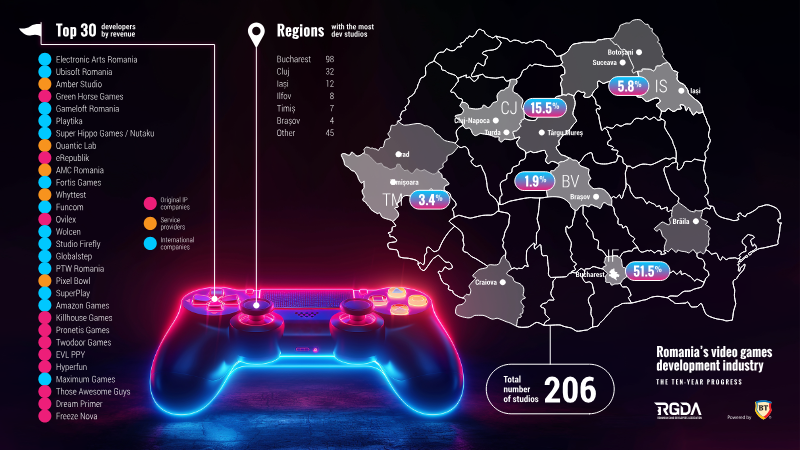
The analysis presents a comprehensive overview of Romania’s video‑game development sector, focusing on revenue performance, geographic concentration, and workforce trends over the past decade. Its central thesis is that the industry has experienced rapid expansion, with total turnover rising from roughly €119 million in 2015 to more than €340 million in 2024, while the number of active studios grew by 70 % within the same period.
Revenue concentration is illustrated by a ranking of the top thirty developers, highlighting that multinational publishers such as Electronic Arts Romania (Bucharest) and Ubisoft Romania (Cluj‑Napoca) dominate the market, together accounting for a substantial share of the €340 million total. Mid‑size studios—including Amber Studio (Iași), Green Horse Games (Ilfov), and Playtika (Brașov)—contribute notable percentages, ranging from 5 % to 15 % of overall earnings. The data also maps studio locations, revealing a strong clustering in Bucharest, Cluj‑Napoca, Iași, and Brașov, with emerging hubs in Timișoara, Turda, and Arad.
Workforce figures show headcount increasing from 279,986 employees in 2015 to a projected 343,160 in 2024, reflecting a 12 % annual growth rate in personnel. Productivity, measured as turnover per employee, rose by 7.4 % over the ten‑year span, indicating that revenue gains are not solely driven by hiring but also by higher efficiency. Service‑oriented companies and international providers together represent 51.5 % of the sector, underscoring the importance of outsourcing and cross‑border collaborations.
The scope encompasses the entire Romanian market, covering all development, publishing, and service activities from 2015 through 2024. Figures appear to be compiled from company‑reported revenues, employee registers, and regional studio counts, suggesting a mixed methodology of financial reporting and industry surveys. Overall, the evidence points to a robust, diversifying ecosystem that is increasingly integrated with the global video‑game supply chain.
- The Romanian video game industry has nearly tripled its turnover in the last decade, growing from approximately €119 million in 2015 to over €340 million in 2024.
- The sector’s workforce has expanded at an annual rate of 12%, with total headcount projected to reach 343,160 employees by 2024.
- Market dominance is held by major multinational publishers like Electronic Arts in Bucharest and Ubisoft in Cluj-Napoca, while mid-size studios such as Amber, Green Horse Games, and Playtika contribute between 5% and 15% of total earnings.
- Industry efficiency has improved alongside growth, with productivity—measured as turnover per employee—increasing by 7.4% over the ten-year period.
- The number of active development studios in Romania has increased by 70% since 2015, with operations clustering in major hubs like Bucharest, Cluj-Napoca, Iași, and Brașov.
+2
RGDA – Romanian Game Developers AssociationJan 2025
Report14 pages
Employment Issues in Video Game Development: Spain
The guideaims to help video‑game publishers, developers and related staff in Spain navigate employment legislation while fostering safe, productive workplaces. It stresses that compliance with the Workers’ Statute, the 2022 labour reform and the Remote‑Working Law is essential to avoid costly legal sanctions and to protect staff from the health‑risk phenomenon known as “crunch.”
Key findings highlight the danger of false self‑employment, where workers appear independent but are actually subject to employer control. Spanish courts identify dependency, subordination and fixed remuneration as hallmarks; violations can trigger Social‑Security fines of €3,750‑€12,000 per worker, plus surcharges up to 150 % of unpaid contributions. The guide confirms that indefinite contracts are the default; fixed‑term contracts are permissible only for production‑related needs or to replace absent employees, with a maximum six‑month duration for the former and 90 days per calendar year for the latter. Misusing temporary contracts converts the relationship to permanent status and incurs fines of €751‑€7,500 per affected employee.
Remote work must be voluntarily agreed, cover at least 30 % of a worker’s time, and include employer‑funded equipment costing roughly €25‑€35 per month; non‑compliance also attracts fines of €751‑€7,500. Occupational‑risk prevention is mandated under Law 31/1995, with penalties ranging from €45 to €983,736 depending on severity, and requires systematic risk analyses to curb physical and psychosocial harms linked to crunch periods. Additionally, firms must maintain objective daily time‑recording systems, respect the irregular distribution of hours (up to a 10 % pool, notified five days in advance), and implement digital‑disconnection protocols, equality plans for organisations with over 50 employees, and whistle‑blowing channels.
Overall, the guide provides a practical checklist for Spanish video‑game companies: verify contract types, assess self‑employment arrangements, formalise remote‑work agreements, enforce occupational‑risk measures, and ensure accurate time‑keeping and compliance with broader digital‑and‑equality obligations, thereby reducing legal exposure and promoting healthier work environments.
- Misclassifying employees as independent contractors can result in Social Security fines of €3,750–€12,000 per worker, plus potential surcharges of up to 150% of unpaid contributions.
- Indefinite contracts are the legal default in Spain, with fixed-term contracts strictly limited to production needs (six-month maximum) or employee replacement (90 days per year); misuse of these terms triggers fines of €751–€7,500 per employee.
- Occupational risk prevention, specifically regarding 'crunch' and psychosocial health, is mandated under Law 31/1995, with non-compliance penalties ranging from €45 up to €983,736 for severe violations.
- Remote work agreements must be voluntary, cover at least 30% of working hours, and include employer-funded equipment costs of approximately €25–€35 per month to avoid fines of €751–€7,500.
- Companies are legally required to implement objective daily time-recording systems and adhere to digital-disconnection protocols, while organizations with over 50 employees must also maintain formal equality plans and whistle-blowing channels.
+1
AEVIJan 2025

Report15 pages
Aspectos Laborales en el Desarrollo de Videojuegos
The guide aims to equip professionals in the Spanish video‑game sector with a practical framework for complying with national labour legislation while fostering safe, flexible and sustainable work environments. It stresses that employment relationships must be governed primarily by the Estatuto de los Trabajadores and the 2022 labour reform, positioning indefinite contracts as the default model and limiting temporary contracts to production‑related needs or substitution of specific workers.
Key legal risks are highlighted, notably the use of “falso autónomo” arrangements. Indicators such as dependence, lack of entrepreneurial risk, fixed remuneration and provision of equipment can reclassify a contractor as an employee, exposing firms to Social Security back‑payments of up to €50 000, fines ranging from €3 750 to €12 000 per case and additional penalties of 100‑150 % of the owed contributions. Incorrectly formalised temporary contracts trigger automatic conversion to permanent status and fines between €751 and €7 500 per affected worker.
The document outlines the regulatory regime for teleworking, requiring a voluntary agreement, employer‑borne provision costs of roughly €25‑35 per month, and detailed specifications on schedules and monitoring tools. Non‑compliance is penalised as a grave infringement with fines identical to those for improper temporary contracts. Prevention of occupational risks, especially the “crunch” phenomenon, is mandated under the 1995 Prevention of Risks Law; violations can attract fines from €45 up to €983 736, and employers may face civil liability for work‑related injuries or illnesses.
Additional obligations include mandatory daily working‑time records introduced in 2019, the use of irregular‑hour distribution up to 10 % of total hours with five‑day notice and strict rest‑period safeguards, and the implementation of digital‑disconnection protocols, equality plans for firms with more than fifty employees, whistle‑blowing channels and digital‑device usage policies. The guide, authored by legal experts and industry consultants, synthesises statutory provisions and recent reforms to provide a comprehensive compliance checklist for developers, publishers and marketing teams operating within Spain’s
- Misclassifying contractors as 'falso autónomo' carries severe financial risk, including Social Security back-payments of up to €50,000, fines of €3,750 to €12,000 per case, and additional penalties of 100–150% of owed contributions.
- Indefinite contracts are the mandatory default under the 2022 labour reform, with improperly formalised temporary contracts triggering automatic conversion to permanent status and fines ranging from €751 to €7,500 per worker.
- Violations of occupational risk prevention laws, particularly regarding 'crunch' culture, can result in fines reaching up to €983,736 and potential civil liability for work-related health issues.
- Teleworking requires a formal voluntary agreement and employer-covered costs of approximately €25–35 per month, with non-compliance classified as a grave infringement subject to fines of €751 to €7,500.
- Employers must maintain mandatory daily working-time records and adhere to strict rest-period safeguards, while also implementing digital-disconnection protocols and whistle-blowing channels.
+1
AEVIJan 2025
Report60 pages
PowerUP: Spelbranschen – en svensk basnäring
Sweden’s video‑game sector is positioned as a culturally driven, “born‑global” industry that, despite generating more than SEK 3.5 billion in revenue and employing over 15 000 staff abroad, remains fragmented and under‑supported at the national level. The analysis maps the ecosystem of roughly 1 000 firms—87 % micro‑enterprises, 42 % with no employees, and only 1 % large companies—highlighting that 97 % of studios rely on regional clusters such as Skövde, Malmö and the northern hub, which suffer from chronic under‑financing and a lack of long‑term planning. The sector’s growth is constrained by low legitimacy, inadequate national financing mechanisms, and regulatory barriers that impede talent recruitment, especially for start‑ups and regional firms.
Key findings show a mismatch between the sector’s cultural impact—average player age 32, documented benefits for creativity, problem‑solving, STEM interest and mental health—and the absence of coordinated public‑private structures to translate these gains into economic value. Comparative data reveal Sweden’s early‑stage funding to be far below peer EU nations, while the talent pipeline is strained, with a projected need for 25 000 developers over the next decade and 40 % of the current workforce being foreign‑born. The report recommends establishing a comprehensive national game strategy, a dedicated investment fund modeled on Industrifonden, long‑term financing for regional clusters, and a Swedish games institute to de‑risk commercial projects and retain IP ownership.
To secure sustainable growth, the analysis calls for reform of innovation metrics, inclusion of game‑specific occupations in labour policy, expanded vocational and research education, and the separation of cultural and commercial funding streams. By implementing these measures, Sweden could elevate its position from the EU’s fourth‑largest producer to a leading contender alongside France and Germany by 2025.
- Sweden's video-game sector requires a national strategy and a dedicated investment fund to support an ecosystem of 1,000 firms, 87% of which are micro-enterprises.
- The industry faces a critical talent shortage with a projected need for 25,000 new developers over the next decade, while 40% of the current workforce is already foreign-born.
- Despite generating over SEK 3.5 billion in revenue and employing 15,000 staff abroad, the sector is hindered by inadequate national financing and regulatory barriers that impede start-up growth.
- 97% of studios are concentrated in regional clusters like Skövde, Malmö, and northern hubs, which currently suffer from chronic under-financing and a lack of long-term planning.
- The sector remains highly fragmented, with 42% of firms having no employees and only 1% classified as large companies.
DataspelsbranschenJan 2025
Report48 pages
Uppdaterad Statistik för de Kulturella och Kreativa Branscherna: Sverige
Sweden’s cultural and creative economy is quantified through an extensive 2023 update that records more than 140 000 firms employing roughly 250 000 people and generating over SEK 650 billion in turnover. Limited companies account for the bulk of activity (SEK 607 billion from 48 000 entities), while sole traders and other legal forms contribute SEK 16 billion and SEK 30 billion respectively. Revenue per employee averages SEK 2.6 million and intangible assets are valued at SEK 20 billion, underscoring the sector’s high productivity and knowledge intensity.
The core thesis asserts that existing SNI‑code classifications markedly under‑represent large and fast‑growing components such as digital platforms, video‑games, furniture design, and numerous craft activities, leading to distorted employment, value‑added and regional statistics. By revising the SNI list, eliminating irrelevant codes, and cross‑checking company accounts, a more accurate database—derived from roughly 73 000 active limited companies and refined to about 40 000 distinct firms—has been assembled. The transition to the 2025 SNI framework introduces five‑digit codes that improve granularity for design, illustration and literary arts, though short‑term classification gaps persist.
Turnover concentration is evident in a few dominant markets: music (SEK 11.4 billion, 12 % nominal growth), cultural events (SEK 42.3 billion), design (SEK 78.5 billion) and video‑games (SEK 34.6 billion). Data collection relied on commercial databases because Bolagsverket’s APIs cannot filter by SNI, highlighting a systemic data‑access limitation. The report recommends appointing a lead agency—suggested as Tillväxtverket—to oversee an annual analytical publication and maintain a comprehensive KKB database that integrates cultural VAT, service exports, firm size, region and activity type, ensuring reliable, comparable statistics across Sweden’s cultural and creative sectors.
- Sweden’s cultural and creative economy comprises over 140,000 firms and 250,000 employees, generating a total annual turnover exceeding SEK 650 billion.
- Limited companies drive the vast majority of sector revenue, contributing SEK 607 billion of the total turnover compared to SEK 46 billion from other legal entities.
- The sector demonstrates high productivity and knowledge intensity, with an average revenue per employee of SEK 2.6 million and intangible assets valued at SEK 20 billion.
- Key industry segments include design (SEK 78.5 billion), cultural events (SEK 42.3 billion), video games (SEK 34.6 billion), and music (SEK 11.4 billion, reflecting 12% nominal growth).
- Current SNI-code classifications significantly under-represent high-growth areas like digital platforms and video games, necessitating a transition to a more granular 2025 five-digit SNI framework.
Kreativ SektorJan 2025
Report32 pages
Association of Swedish Game Developers: 2024 Report
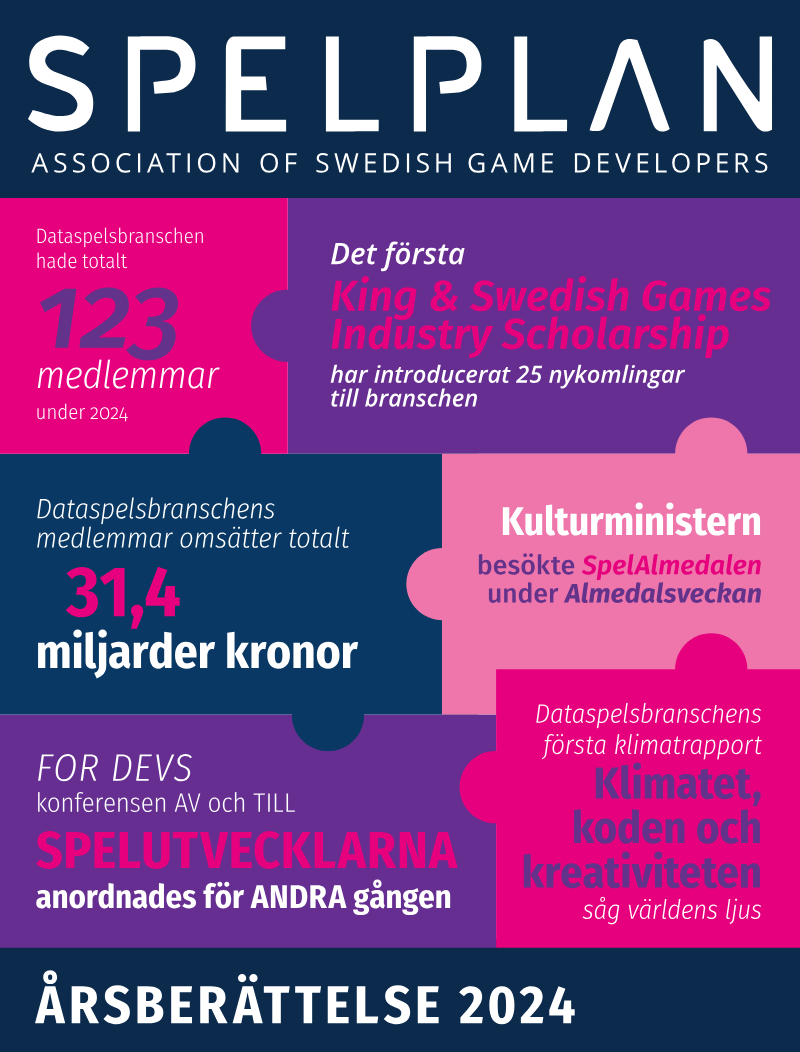
The 2024 overview of Sweden’s games industry presents a comprehensive assessment of the sector’s performance, challenges, and forward‑looking dynamics within the Swedish market. It argues that, despite a noticeable wave of studio closures, the industry remains resilient and is entering a phase of regeneration driven by regional clusters, targeted investment schemes, and internationally successful titles.
Analysis of the year shows that development activity is increasingly concentrated in hubs such as Skövde, where new studios have emerged and produced world‑hit games like Satisfactory, a title that secured both D.I.C.E. and Golden Joystick awards. This creative output underscores Sweden’s capacity to generate globally competitive products even as legacy firms exit the market. Growth is attributed largely to coordinated programmes—including Redeye Gaming Day, Invest in Games, and the EU‑funded CDG‑Booster mentoring cohort—that channel capital, mentorship, and market access to emerging developers.
The findings highlight a sector that, while contending with consolidation pressures, is expanding its export footprint and sustaining employment through the formation of new companies and the scaling of award‑winning projects. Investment in talent development and cluster formation emerges as a decisive factor in maintaining Sweden’s reputation as a leading European game‑development hub.
Overall, the 2024 snapshot confirms that Sweden’s games industry, spanning development, publishing, and ancillary services, continues to generate significant economic value and cultural impact, positioning itself for sustained growth in the coming years.
- Sweden’s games industry is undergoing a structural shift characterized by legacy studio closures offset by the emergence of new, high-performing development hubs.
- Regional clusters like Skövde have become primary drivers of industry output, exemplified by the commercial and critical success of the title Satisfactory.
- Industry resilience is supported by targeted support initiatives, including Redeye Gaming Day, Invest in Games, and the EU-funded CDG-Booster mentoring program.
- The sector is maintaining its international export footprint and employment levels by successfully scaling new companies and award-winning projects.
- Strategic investment in talent development and cluster-based infrastructure is identified as the core factor sustaining Sweden’s position as a leading European game-development hub.
+1
Spelplan-ASGDJan 2025
Report68 pages
Spelutvecklarindex: Sweden 2025
The analysis maps Sweden’s game‑development landscape, arguing that the sector’s rapid expansion has positioned the country as a leading European hub while simultaneously exposing new regulatory and societal challenges. Over the past twenty years the industry has multiplied from 71 firms with SEK 0.5 billion in revenue to more than 1 100 companies generating roughly SEK 37 billion—an increase of about 7 500 %—and employing 9 130 staff domestically, complemented by an additional 11 000 workers abroad. This growth underscores the sector’s escalating economic weight and its contribution to national employment.
Geographically, the ecosystem spans all Swedish counties, comprising over 300 development studios. The highest concentrations are found in Stockholm and its surrounding regions, notably Uppsala, Värmland and Örebro, where studio density exceeds twelve entries per county. Domestically, Swedish‑produced titles commanded the majority share of the Steam market in 2024, reflecting strong consumer preference for locally created content and reinforcing the sector’s market relevance.
Artificial intelligence has become a dual‑purpose tool within the industry: it is employed to generate novel game assets and to identify players exhibiting signs of radicalisation or harassment. The analysis stresses that radicalisation often migrates from in‑game interactions to external, unmoderated forums, distinguishing it from broader online hate. Consequently, it calls for coordinated, cross‑border interventions that involve regulators, academic researchers and game companies to mitigate these risks while preserving the sector’s innovative momentum.
- Sweden’s game industry has grown to over 1,100 companies generating SEK 37 billion in annual revenue, a 7,500% increase from the SEK 0.5 billion recorded twenty years ago.
- The sector currently employs 9,130 staff domestically and an additional 11,000 workers abroad.
- Swedish-produced titles held the majority market share on Steam in 2024, demonstrating strong consumer demand for local content.
- The industry ecosystem is comprised of over 300 development studios distributed across all Swedish counties, with the highest density concentrated in Stockholm, Uppsala, Värmland, and Örebro.
- Artificial intelligence is being utilized as a dual-purpose tool for both generating game assets and monitoring player behavior for signs of radicalization and harassment.
+1
DataspelsbranschenJan 2025

Report4 pages
Top Game Creators Academy: Tokyo Game Show 2025 Exhibition
Top Game Creators Academy (TGCA) is being introduced to the public for the first time at the Tokyo Game Show 2025, where it will occupy Hall 10’s organizer’s corner. The initiative, run by the Computer Entertainment Association in partnership with the Agency for Cultural Affairs and the Japan Arts & Culture Promotion Agency, aims to accelerate the development of next‑generation game creators by pairing them with active industry advisors and providing exposure through domestic and international events. The exhibition showcases ten emerging developers, each presenting a work‑in‑progress title ranging from an online cooperative 3D jump‑action (IN HARNESS) to a 2D puzzle platformer (Out of Skull), a collaborative “game‑making relay” (カラクリリレー!), a first‑person horror action (Ghost in the brain), a formula‑driven shooter (CYBER JANITOR), a rhythm‑action experience (OVER BEATS MYSELF), an exploratory RPG (Recover from Ruin), a 2D stealth‑action novel (Near The Sun), and a competitive typing‑board hybrid (NyctoType). All projects remain under development and may evolve before final release.
The program, launched in April 2025, is structured as a two‑year pipeline in which creators receive ongoing mentorship and are encouraged to gather visitor impressions as direct feedback for iterative improvement. Although no quantitative metrics are provided, the breadth of genres and innovative mechanics underscores TGCA’s commitment to diversifying Japan’s game development talent pool and facilitating global market entry. The announcement concludes with a call for attendees to submit their reactions, positioning audience interaction as a core component of the creators’ growth trajectory.
- The Computer Entertainment Association, in partnership with the Agency for Cultural Affairs and the Japan Arts & Culture Promotion Agency, launched the Top Game Creators Academy (TGCA) in April 2025 to accelerate the development of next-generation talent.
- The TGCA program utilizes a two-year pipeline structure that pairs emerging developers with active industry advisors to facilitate professional growth and global market entry.
- Ten emerging developers are debuting work-in-progress titles at the Tokyo Game Show 2025 in Hall 10, representing diverse genres including 3D action, 2D puzzle platformers, horror, and rhythm-action.
- Audience interaction is a core component of the program, with creators actively soliciting visitor feedback at the Tokyo Game Show to drive iterative improvements for their projects.
- The initiative aims to diversify Japan’s game development talent pool by providing creators with exposure through both domestic and international industry events.
+3
CESA – Computer Entertainment Supplier's AssociationJan 2025
Report45 pages
Game Developer Employment: Career Formation of Student Game Creators 2019 Survey 2025
The 2025 Japanese survey of students’ career aspirations investigates how the role of “game creator” is perceived across gender, age, and educational level, aiming to gauge the pipeline of future talent for the domestic game development sector. It encompasses elementary, middle, high‑school, technical‑college and university respondents nationwide, providing a comprehensive snapshot of attitudes toward a profession that remains peripheral in the broader labor market.
Findings reveal a stark gender divide. Among male pupils in elementary and middle school, the game‑creator career ranks first overall and consistently appears within the top two choices for grades three through nine, indicating strong early enthusiasm. In contrast, female students place the same role far lower, with the position falling to nineteenth overall for females and remaining near the bottom of their preference lists at every age level. When respondents reach higher‑education stages, roughly eighty percent of those who still consider the occupation view it primarily as a professional pathway rather than a hobby or ancillary activity.
The data suggest that while the game‑creator profession enjoys robust appeal among young males, it fails to attract comparable interest from females, potentially limiting diversity in the future workforce. The pronounced early‑stage gender gap underscores the need for targeted outreach, curriculum development, and mentorship programs that can broaden awareness and appeal among female students, thereby strengthening the talent base for Japan’s evolving game industry.
- A significant gender divide exists in career aspirations, with game creator ranking as the top choice for male elementary and middle school students while placing nineteenth for females.
- The appeal of a game development career for males remains consistently high, appearing in the top two career choices for students from grade three through nine.
- Approximately 80% of higher-education students interested in game creation view the role as a professional career path rather than a hobby or secondary activity.
- The persistent lack of interest among female students across all age levels suggests a potential long-term bottleneck for diversity in the Japanese game industry workforce.
- The 2025 survey data indicates that the game creator profession remains a peripheral career choice within the broader Japanese labor market despite strong early enthusiasm from young males.
+1
CESA – Computer Entertainment Supplier's AssociationJan 2025
Report74 pages
Big Games Industry Employment Survey 2025: Salaries, Compensation Trends and State of the Games Sector in Europe
The European games industry entered 2025 in a state of significant distress, characterized by widespread layoffs, stagnant wages, and a sharp decline in employee well-being. Approximately 26% of professionals across the continent experienced layoffs, with junior-level talent bearing the brunt of the instability as 39% exited the sector entirely. This contraction has shifted the labor market from a growth-oriented environment to one focused on cost optimization. Consequently, employee engagement scores have plummeted, and over half of the workforce reports suffering from professional burnout. Financial stability has replaced company mission as the primary motivator for 87% of workers, many of whom are now accepting inferior contract terms or pay cuts to remain employed.
Compensation trends reveal a deepening divide based on geography, seniority, and specialization. While median salaries remain highest in the Fighting and MMO genres, reaching up to €90,000 in the EU and UK, a persistent gender pay gap continues to affect technical and C-level roles. Programmers have seen a downward trend in compensation due to increased competition and the rapid integration of artificial intelligence. AI adoption has surged, with over 60% of professionals now using these tools regularly, particularly in analytics and management. However, creative fields like art and quality assurance remain more resistant to AI integration, even as these specific roles face the highest risks of unemployment and long-term job searches.
Workplace culture is currently defined by a regression in structured support and a rise in management inefficiency. The number of companies lacking dedicated diversity and inclusion specialists has increased to 67%, while nearly one-third of developers report stagnant professional growth. Although remote flexibility remains a high priority, the shift toward pragmatic relocation suggests that workers are increasingly making career decisions based on cost-of-living calculations rather than traditional ambition. This environment of instability has doubled the rate of long-term unemployment, leaving the European games industry with a workforce that is increasingly disillusioned and prioritized toward survival over innovation.
- The European games industry is in a state of contraction, with 26% of professionals experiencing layoffs and 39% of junior-level talent exiting the sector entirely.
- Financial stability has become the primary motivator for 87% of the workforce, leading many to accept pay cuts or inferior contract terms to maintain employment.
- Over 50% of the workforce reports suffering from professional burnout, while 67% of companies now lack dedicated diversity and inclusion specialists.
- AI adoption has reached 60% among professionals, contributing to a downward trend in compensation for programmers, while art and quality assurance roles face the highest risks of unemployment.
- Median salaries for top-tier genres like Fighting and MMOs reach up to €90,000 in the EU and UK, though a persistent gender pay gap remains in technical and C-level positions.
+1
InGameJob & Values ValueJan 2025

Report27 pages
Making Games, Making Future: Inside the Realities of Game Careers
This research examines the professional landscape of the global gaming industry, drawing on a survey of over 160 professionals conducted during Gamescom 2025. The sample represents a diverse geographic spread, with significant participation from Europe and North America, alongside emerging representation from Latin America, Asia-Pacific, and Africa. Demographically, the industry remains male-dominated (65%), though women (30%) and non-binary individuals (6%) constitute a notable portion of the workforce. The data highlights a mid-career-heavy industry, where nearly half of the respondents possess six to ten years of experience, while newcomers are increasingly rare due to slowed recruitment and a preference for senior talent.
The central thesis identifies a stark paradox: while 76% of professionals report high job satisfaction driven by a deep passion for creative expression, trust in the industry as a sustainable career path has collapsed, evidenced by a Net Promoter Score (NPS) of -40. This disillusionment is most pronounced among veterans aged 45 and older. While the "spark of passion" remains the primary motivator for joining and staying in the field, it is increasingly undermined by systemic issues. Key deterrents include low compensation (54%), unstable employment (43%), and burnout (30%).
The findings conclude that the industry is at a critical juncture. Professionals envision a future defined by player-centric design, cross-platform development, and increased diversity. However, they warn that the current model—characterized by "suits" maximizing short-term profits and frequent layoffs—is unsustainable. The research suggests that a "Golden Age" of gaming can only be achieved by shifting from profit-driven exploitation of passion toward structural stability, fair compensation, and genuine collaboration. Without these changes, the industry risks a continuous drain of the talent required to sustain its creative output.
- Despite 76% of professionals reporting high job satisfaction, the industry's Net Promoter Score (NPS) has plummeted to -40, signaling a collapse in trust regarding long-term career sustainability.
- The industry is experiencing a talent bottleneck as recruitment slows and employers prioritize senior staff, leaving nearly half of the workforce concentrated in the 6-to-10-year experience bracket.
- Systemic instability is driving professional disillusionment, with 54% of respondents citing low compensation, 43% citing job insecurity, and 30% citing burnout as primary deterrents.
- The workforce remains male-dominated at 65%, with women comprising 30% and non-binary individuals making up 6% of the surveyed population.
- Industry professionals identify a critical conflict between creative, player-centric goals and a current business model focused on short-term profit maximization and frequent layoffs.
+1
Duamentes GamingJan 2025
Report3 pages
CESA Game Industry Report 2024
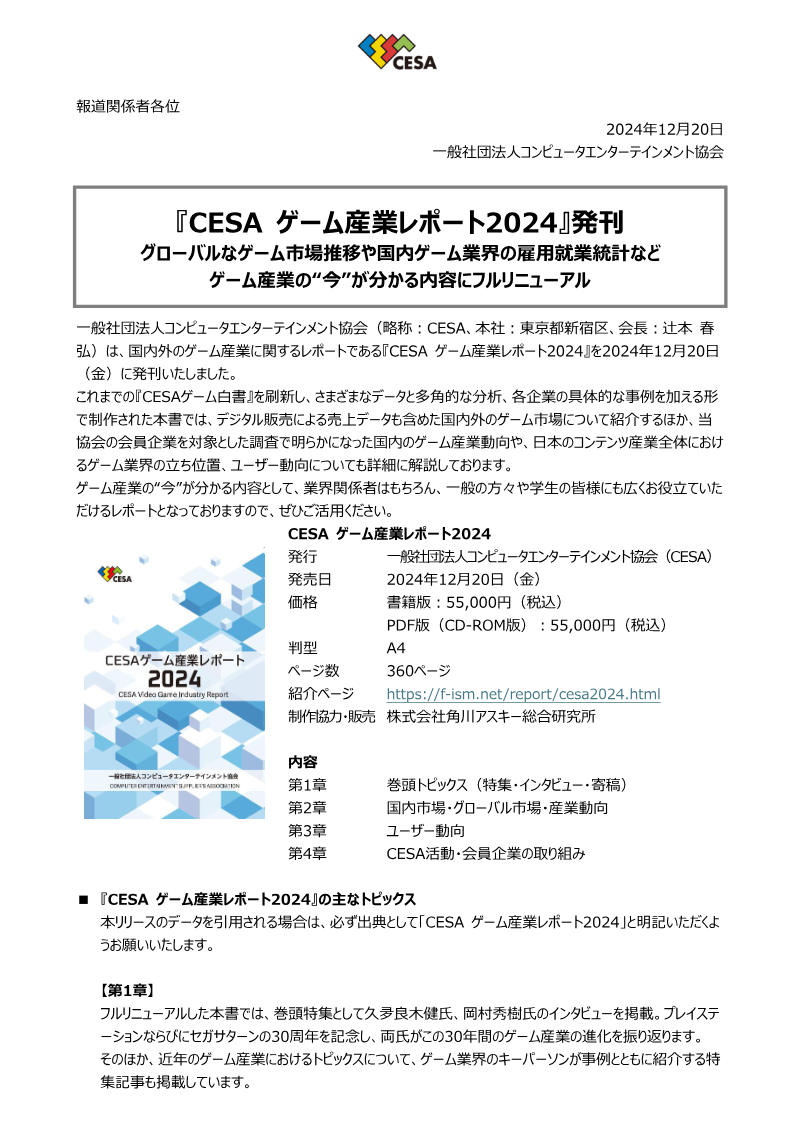
CESA Game Industry Report 2024 – Executive Summary (English)
1. Publication Details | Item | Information | |------|--------------| | Title | CESA ゲーム産業レポート 2024 (CESA Game Industry Report 2024) | | Publisher | 一般社団法人コンピュータエンターテインメント協会 (Computer Entertainment Supplier’s Association, CESA) | | Release date | 20 December 2024 (Friday) | | Price | ¥55,000 (incl. tax) – both printed book and PDF/CD‑ROM versions | | Format | A4, 360 pages | | ISBN / Catalog | CESAJ‑LV‑ (internal code) | | Production partner | 株式会社角川アスキー総合研究所 (Kadokawa ASCII Research Institute) | | Official page | <https://f-ism.net/report/cesa2024.html> | | Contact | [email protected] |
> Citation note – When quoting any data from the report, cite it as “CESA ゲーム産業レポート 2024”.
2. Report Structure
| Chapter | Focus | |---------|-------| | Chapter 1 – Front‑matter (Topics, Interviews, Contributions) | Interviews with industry veterans (久夛良木健, 岡村秀樹) reflecting on 30 years of PlayStation & Sega Saturn; other key‑person case studies. | | Chapter 2 – Market & Industry Trends (Domestic & Global) | Macro‑level market size, platform breakdown, development costs, employment, cross‑media context. | | Chapter 3 – User Trends | Player demographics, platform usage, esports, multi‑platform activity. | | Chapter 4 – CESA Activities & Member Initiatives | Overview of CESA‑hosted events (Tokyo Game Show, CEDEC) and member‑company projects. |
3. Key Findings
3.1 Global Game‑Content Market Size (2020‑2024) – Approximately ¥30 trillion in 2024, nearly double the 2020 level (¥20 trillion). Growth drivers – Strong yen‑depreciation effect post‑2022, continued expansion of mobile gaming, and rising PC‑gaming share (thanks to Steam). Platform share (2024) – Mobile: dominant share (≈ 60 % of global revenue). Console: ~ 20 % of revenue. PC: ~ 20 % (growing steadily).
3.2 Japan’s Content Industry & Game Share Total overseas export of Japanese content: ¥4.7 trillion (on par with semiconductor & steel sectors). Games’ contribution: ≈ 60 % of that export value → games are the primary driver of foreign‑exchange earnings within the broader content sector.
3.3 Domestic Game‑Industry Employment & Compensation Total industry employment: ≈ 200,000 workers (including peripheral sectors). Average annual salary: ¥7.08 million – markedly higher than the average across
- The global game-content market reached approximately ¥30 trillion in 2024, nearly doubling from the ¥20 trillion recorded in 2020.
- Mobile gaming remains the dominant global platform, accounting for approximately 60% of total revenue, while console and PC sectors each hold roughly 20% shares.
- Japanese game exports generate approximately ¥2.82 trillion, representing about 60% of the country's total ¥4.7 trillion content industry exports.
- The Japanese game industry's export value is now on par with major industrial sectors such as semiconductors and steel.
- The domestic game industry employs approximately 200,000 workers, including those in peripheral sectors.
一般社団法人コンピュータエンターテインメント協会 (Computer Entertainment Supplier’s Association)Dec 2024

Report68 pages
Game Development and the Green Transition: Code, Climate, Creativity
Executive Summary – “Code, Climate, Creativity: Game Development and the Green Transition”
1. Rapid Industry Growth, Low Relative Carbon Footprint Turnover: €427 M (2012) → €3.1 B (2023) – a ≈ 900 % increase. Employment: > 9 000 people across 1 000+ firms; 87 % are micro‑enterprises (≤10 staff). Carbon Profile: Despite the boom, the Swedish games sector’s emissions remain modest compared with other Swedish industries. Electricity & travel: only a slight rise. Scope 3 (down‑stream) emissions dominate, mainly from the energy used while players are gaming.
Key Insight: The sector’s carbon intensity is low, but the sheer scale of downstream use means total emissions can still be significant.
2. A Dense, Emerging Climate‑Action Network Handbooks & Alliances: Nordic PlayCreateGreen guide, UN‑backed Playing for the Planet Alliance, European Sustainable Games Alliance. Industry Footprint: Global gaming ≈ 14 Mt CO₂e (≈ Sweden’s total industrial emissions). Swedish Share: 2.3 kt CO₂e (2022) – 0.015 % of national industry output. Emission Distribution: 90‑99 % of Swedish games‑sector emissions are Scope 3.
Take‑away: A well‑connected ecosystem of NGOs, academia, and industry is already mobilising around measurement, best‑practice sharing, and player engagement.
3. Scope 3 Dominance & Regulatory Pressure Average Intensity: ≈ 99 t CO₂e per MEUR of turnover → ≈ 302 kt CO₂e total for Swedish firms. Potential Reduction: Up to 90 % cut if all players switch to fossil‑free electricity. Policy Landscape: Science‑Based Targets initiative (SBTi): Requires Scope 3 reduction targets for developers. EU Corporate Sustainability Reporting Directive (CSRD): Will soon mandate detailed Scope 1‑3 disclosures.
Implication: Companies must embed Scope 3 accounting into strategy now, not later.
4. Where Scope 3 Emissions Come From Primary Sources: Production & use of consoles and PCs. Emerging Mitigation: Cloud‑gaming and thin‑client streaming can lower the energy needed for high‑performance gaming, but the net impact depends on data‑center efficiency and network load.
5. Sweden’s R&D Strength – A Launchpad for Green Tech Opportunities: Strong certification schemes and a culture of open innovation. Existing digital‑tool stack (game engines, GPUs, XR platforms,
- The Swedish games industry grew nearly 900% in turnover between 2012 and 2023, reaching €3.1 billion while maintaining a relatively low carbon footprint compared to other industrial sectors.
- Scope 3 emissions—primarily generated by energy consumption during player use—account for 90–99% of the Swedish games sector's total carbon footprint.
- Global gaming emissions are estimated at 14 Mt CO₂e annually, roughly equivalent to the total industrial emissions of Sweden.
- Regulatory pressure is mounting, as the EU Corporate Sustainability Reporting Directive (CSRD) and Science-Based Targets initiative (SBTi) will soon mandate detailed Scope 1–3 disclosures and reduction targets for developers.
- Transitioning players to fossil-free electricity could reduce the sector's total carbon impact by up to 90%.
+1
Swedish Games IndustryOct 2024