Game Development Studie 2024: Die wirtschaftliche Bedeutung der österreichischen Spieleentwicklungsbranche, ihre Dynamiken und Einflüsse auf die Gesamtwirtschaft
1 Oct 202413 pages~27 min full read
The study evaluates the state of Austria’s game‑development sector in the first half of 2024, tracing its evolution since a comparable survey in 2018 and quantifying its economic contribution. By updating the Institute of Industrial Research’s developer database to 149 active firms and collecting completed questionnaires from 80 companies (a 53.7 % response rate), the analysis combines firm‑level survey data with input‑output modelling to assess employment, turnover and multiplier effects.
The industry has expanded rapidly: the number of firms rose 71.3 % to 149, with 81 % classified as micro‑enterprises (≤9 employees) and 54 % located in Vienna. Turnover reached €92.8 million in 2023—a nominal increase of 285 % since 2017—and employment grew from 474 jobs in 2017 to 1 080 in 2024 (128 % rise). Direct, indirect and induced effects generate a total of €188.7 million in revenue and support roughly 2 260 jobs across the Austrian economy, a multiplier of about 2.0 for both revenue and employment.
Product portfolios remain dominated by entertainment titles (85 % of respondents), while serious and educational games have gained prominence (29 % and 30 %). Development focuses on PC and mobile platforms, with Unity used by 55 % of firms. The workforce is young and highly educated—nearly half are aged 25‑34 and 80 % hold tertiary degrees. Export orientation is strong, 82 % of firms sell to the EU‑27/UK and substantial shares reach the Americas and Asia. Financing relies chiefly on internal funds (92 % deem it very important); public subsidies rank second (62 %). One‑third of firms applied for public funding in the past two years, achieving a 65 % success rate.
Looking ahead, respondents anticipate a slowdown in growth; projections suggest 2029 revenues of €149 million and employment of about 1 540, still representing robust expansion. Nevertheless, the sector rates Austria’s location policy poorly, calling for stronger governmental support, clearer financing mechanisms and improved tax conditions

8Bit · 2026

Ukie · 2025

Direcció General d’Innovació i Cultura Digital · 2025
InGameJob · 2025
Polish Agency for Enterprise Development · 2025
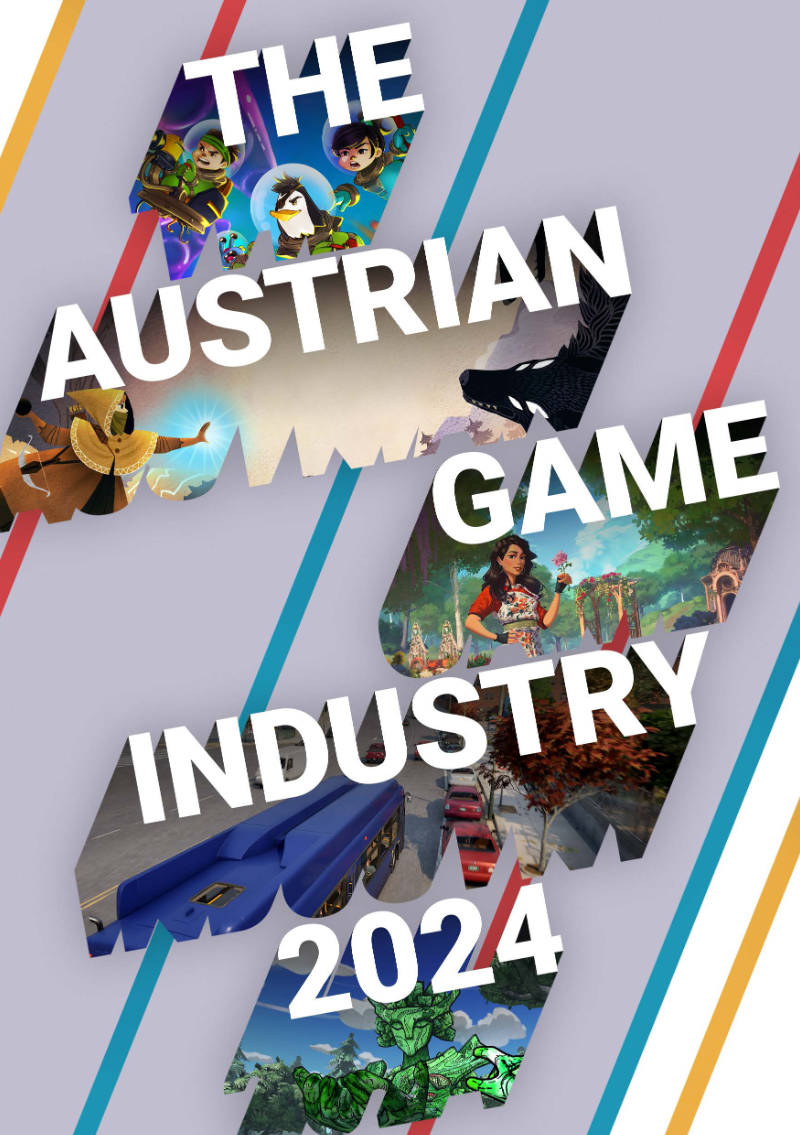
Austrian Professional Association of Management Consultancy · 2024

European Games Developer Federation · 2016

Asociación Española de Empresas Productoras y Desarrolladoras de Videojuegos

Asociación Española de Empresas Productoras y Desarrolladoras de Videojuegos

Values Value · 2026
PCF Group · 2025
PCF Group · 2025