Presentation13 pages
Financial Results 2022
The financial results for PCF Group S.A. in 2022 reflect a transitional period for the company, characterized by a strategic shift toward self-publishing and a significant expansion of its global workforce. The primary objective of the data is to provide a comprehensive overview of the Group’s financial health and operational growth during the fiscal year ending December 31, 2022. The scope of the reporting covers the Group’s international presence, including studios in Warsaw, Rzeszów, Newcastle, Montreal, and New York, encompassing segments such as game development, quality assurance, and specialized subsidiaries like GameOn and Incuvo.
Financial performance in 2022 saw a decline compared to the previous year, with total revenues reaching 171.5 million PLN, down from 180.3 million PLN in 2021. This decrease is primarily attributed to the termination of a major development agreement with Take-Two Interactive Software. Adjusted EBITDA fell from 70.5 million PLN in 2021 to 49.7 million PLN in 2022, while net profit dropped significantly from 61.3 million PLN to 22.0 million PLN. Despite these lower earnings, the balance sheet shows a substantial increase in development work in progress, rising from 68.0 million PLN to 137.1 million PLN. This shift indicates a higher allocation of developer salaries toward internal assets as the company pivots toward independent production.
Operational growth remains a key highlight, with the total workforce expanding from 495 employees at the end of 2021 to 612 by the end of 2022. The majority of this team consists of developers, supported by QA and back-office staff. Geographically, the Group maintains a strong European base with 418 employees, while its North American operations grew to 194 staff members. The data suggests that while short-term profitability was impacted by the loss of a major partner, the Group is aggressively investing in its internal pipeline and human capital to support future self-published titles.
- PCF Group S.A. experienced a decline in financial performance in 2022, with net profit falling to 22.0 million PLN from 61.3 million PLN in 2021.
- Total revenue decreased to 171.5 million PLN in 2022, down from 180.3 million PLN the previous year, primarily due to the termination of a development agreement with Take-Two Interactive Software.
- The company is aggressively shifting toward self-publishing, evidenced by development work in progress doubling from 68.0 million PLN in 2021 to 137.1 million PLN in 2022.
- Adjusted EBITDA dropped to 49.7 million PLN in 2022, compared to 70.5 million PLN in 2021, reflecting the costs associated with the company's strategic transition.
- The Group expanded its total workforce by approximately 24%, growing from 495 employees at the end of 2021 to 612 by the end of 2022.
PCF GroupApr 2023
Report19 pages
Global Gaming Report Q1 2023
The global gaming industry entered 2023 showing signs of a robust public market recovery, evidenced by a 12% rise in the Drake Star Gaming Index and a notable expansion in valuation multiples. While the volume of mergers and acquisitions experienced a temporary dip to 43 deals, private financing remained resilient. Over 200 deals raised approximately $1.3 billion during the first quarter, driven primarily by early-stage investments. A strategic shift in investor interest became apparent as capital moved away from blockchain-centric projects toward gaming tools and artificial intelligence platforms.
Investment activity was characterized by significant capital injections from major players, most notably Savvy Gaming Group’s $265 million investment in VSPO and Believer’s $55 million raise for open-world development. Venture capital firms such as BITKRAFT and Andreessen Horowitz maintained high deal volumes across PC, console, and platform segments. Despite the broader slowdown in consolidation, Embracer Group remained highly active, completing 18 deals totaling over $1.1 billion. Public market valuations revealed distinct regional and sectoral trends, with Japan and Korea-based developers commanding higher median EV/EBITDA multiples of 9.2x compared to the 5.7x seen in Western PC and console firms.
The financial landscape remains complex and volatile, marked by modest median revenue growth of 1% for hardware and platforms and negative average profit margins across several segments. Regional disparities are particularly sharp in the Chinese market, where Shenzhen-listed firms maintain significantly higher valuation multiples than their counterparts. In the hardware sector, NVIDIA continues to dominate with a market capitalization exceeding $680 billion, despite facing substantial declines in EBITDA. Looking forward, the industry is positioned for a significant M&A rebound in the latter half of the year, supported by massive capital earmarks from sovereign wealth funds and high-profile acquisitions in the mobile and social gaming space.
- The Drake Star Gaming Index rose 12% in Q1 2023, signaling a robust public market recovery despite a temporary dip in M&A volume to 43 deals.
- Private financing remained resilient with over 200 deals raising $1.3 billion, driven primarily by early-stage investments and a strategic pivot away from blockchain toward AI and gaming tools.
- Embracer Group remained the most active consolidator, completing 18 deals totaling over $1.1 billion during the quarter.
- Valuation disparities are significant, with Japan and Korea-based developers commanding median EV/EBITDA multiples of 9.2x, compared to 5.7x for Western PC and console firms.
- Major capital injections included Savvy Gaming Group’s $265 million investment in VSPO and Believer’s $55 million raise for open-world development.
+1
Drake Star PartnersMar 2023
Report15 pages
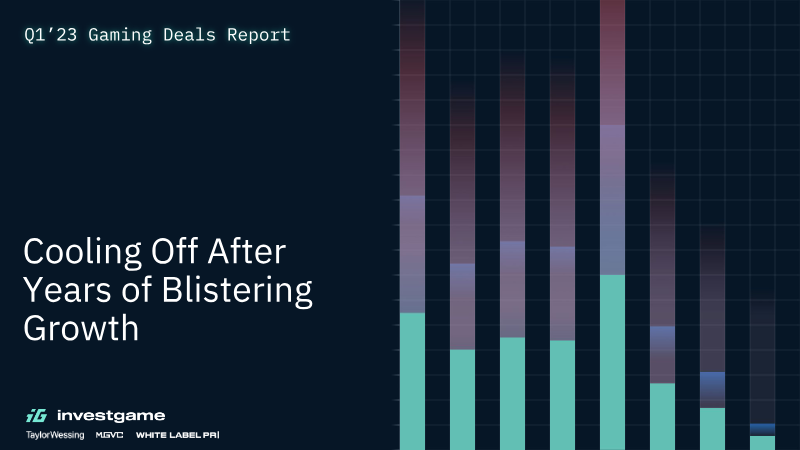
Q1'23 Gaming Deals Report
Analysis of the global video game industry’s financial activity in the first quarter of 2023 reveals a period of market correction and stabilization following previous record highs. While total deal value across private investments, mergers and acquisitions (M&A), and public offerings saw significant year-over-year declines, the volume of private deals suggests a return to regular levels of activity. The data indicates a bifurcated market where early-stage venture capital remains robust while late-stage and public market activities struggle under the pressure of high interest rates and bearish sentiment.
Private investment reached $3.3 billion across 141 deals, representing a 71% decrease in value compared to the same period in 2022. However, early-stage investments showed resilience, acting as a primary driver for future industry growth. In contrast, late-stage deals were scarce, with a single $265 million investment in VSPO accounting for 65% of the total late-stage value. The M&A sector hit a multi-year low with only 43 closed deals totaling $11.4 billion—a 94% drop in value from the previous year—though pending major acquisitions like Scopely and Rovio suggest a potential rebound in subsequent quarters.
Public offerings remained stalled, totaling $0.7 billion across nine deals, as macroeconomic conditions continued to deter companies from entering public markets. The most active venture capital firms during this period included Andreessen Horowitz, Makers Fund, and BITKRAFT Ventures, with a heavy focus on early-stage rounds.
The findings are based on data from InvestGame, which tracks closed transactions in the video game sector excluding gambling and non-gaming blockchain entities. Methodology involves a weighted ranking system for investors that prioritizes lead deal volume and value. Data sources include public media, S&P Capital IQ, and internal market insights.
- M&A activity hit a multi-year low in Q1 2023 with only 43 closed deals totaling $11.4 billion, representing a 94% year-over-year decline in value.
- Private investment value plummeted 71% year-over-year to $3.3 billion across 141 deals, reflecting a broader market correction and stabilization.
- The market is bifurcated, as early-stage venture capital remains robust while late-stage and public market activities are constrained by high interest rates and bearish sentiment.
- Late-stage investment was exceptionally scarce, with a single $265 million deal for VSPO accounting for 65% of the total value in that category.
- Public offerings remained stalled with only $0.7 billion raised across nine deals, as macroeconomic conditions continue to deter market entry.
+1
InvestGameMar 2023
Report5 pages
State of Blockchain Gaming Q1 2023 Report
Investment in Blockchain Games (Q4 2022 → Q1 2023)
| Quarter | Investment (USD) | Investment (Bn USD) | % Quarter‑over‑Quarter Change | |---------|------------------|----------------------|--------------------------------| | Q4 2022 | ≈ $654.5 million | ≈ 0.655 Bn | – | | Q1 2023 | $739 million | 0.739 Bn | +12.95 % |
How the numbers were derived
The report states that Q1 2023 saw a 12.95 % increase over the previous quarter and that the Q1 2023 total was $739 M. To back‑calculate the Q4 2022 figure:
\[ \text{Q4 2022 Investment} = \frac{\text{Q1 2023 Investment}}{1 + 0.1295} = \frac{739\text{ M}}{1.1295} \approx 654.5\text{ M} \]
Converting to billions (1 Bn = 1,000 M):
\[ 654.5\text{ M} \approx 0.655\text{ Bn} \qquad 739\text{ M} = 0.739\text{ Bn} \]
Key take‑away
Q1 2023 investment in blockchain gaming and metaverse projects reached $739 M (0.739 Bn), marking a robust 12.95 % quarter‑over‑quarter growth from the ≈ $654.5 M (0.655 Bn) invested in Q4 2022. This upward trajectory underscores the accelerating capital interest in the blockchain gaming sector.
- Blockchain gaming and metaverse projects secured $739 million in investment during Q1 2023.
- Investment in the sector grew by 12.95% quarter-over-quarter compared to the $654.5 million recorded in Q4 2022.
- The $739 million total for Q1 2023 represents a sustained upward trajectory in capital interest for blockchain-based gaming.
- Quarterly investment figures rose from approximately $0.655 billion in Q4 2022 to $0.739 billion in Q1 2023.
+1
DappRadarMar 2023
Report15 pages
Japanese Esports on the Rise: Five Teams to Watch
Japan is rapidly evolving from a video game superpower into a significant esports market, overcoming historical regulatory and cultural hurdles. While the country previously lagged behind China and South Korea due to strict anti-gambling laws that capped prize pools and a lack of domestic titles in popular esports genres like MOBAs, recent policy shifts have transformed the landscape. Following the 2019 removal of most legal restrictions and the formation of the Japan Esports Union (JeSU), the market grew by 11% to reach $77 million in 2022.
The ecosystem is characterized by a unique "watching but not playing" culture, where livestreaming and content creation drive engagement among both gamers and non-gamers. This has led to the rise of prominent organizations such as Crazy Raccoon, DetonatioN FocusMe, FENNEL, SCARZ, and ZETA DIVISION. These teams increasingly operate as lifestyle brands, generating revenue through traditional sponsorships, merchandise, and specialized content partnerships. Notably, non-endemic brands like Nissin Foods have entered the space, with sponsorship fees reportedly increasing tenfold over the last five years.
Despite this momentum, the industry faces challenges, including a "Galapagos syndrome" where domestic game preferences differ from global trends, and a power imbalance where publishers maintain strict control over tournament formats. However, the outlook remains optimistic. Industry leaders anticipate further consolidation and professionalization, mirroring the evolution seen in Western markets a decade ago. As teams seek international expansion and venture capital, Japan is positioned to become a major hub for esports talent and tourism in Asia.
- Japan's esports market reached $77 million in 2022, marking an 11% growth following the 2019 removal of restrictive anti-gambling laws and the establishment of the Japan Esports Union (JeSU).
- Non-endemic brand involvement is surging, evidenced by companies like Nissin Foods entering the space and sponsorship fees increasing tenfold over the last five years.
- Leading organizations including Crazy Raccoon, DetonatioN FocusMe, FENNEL, SCARZ, and ZETA DIVISION are operating as lifestyle brands to monetize through merchandise, content partnerships, and sponsorships.
- The Japanese market is driven by a unique 'watching but not playing' culture, where high engagement in livestreaming and content creation attracts both gamers and non-gamers.
- The industry faces structural challenges including 'Galapagos syndrome,' where domestic game preferences diverge from global trends, and strict tournament control by game publishers.
+1
Niko PartnersFeb 2023

Presentation11 pages
Aktualizacja Strategii Nowe Otwarcie: Polska
People Can Fly’s strategic update, issued on 31 January 2023, outlines a transformation from a single‑title studio into a multi‑project, globally distributed developer and emerging self‑publisher. The core thesis is that leveraging the group’s expertise in AAA shooters, Unreal Engine technology, and a newly expanded talent pool will enable simultaneous delivery of several high‑quality games while shifting revenue generation toward Game‑as‑a‑Service and diversified monetisation models.
Over the past two years the group has completed the Outriders launch and its Worldslayer expansion, restructured its production pipeline from one‑game‑at‑a‑time to parallel development, and opened new studios in Kraków and Montréal. Acquisitions of Phosphor Games (Chicago), Game On Creative (motion‑capture and cinematics), and Incuvo S.A. (VR) have broadened capabilities into compact‑AAA, virtual‑reality and live‑service titles. The workforce now exceeds 600 “Aviators,” including roughly 400 developers, with two‑thirds based in Europe and one‑third in North America. Internal processes rely on agile, matrix‑based feature teams, a proprietary PCF Framework for Unreal Engine, and Centers of Excellence that foster cross‑project knowledge sharing.
Future plans target six new releases by 2027, aiming for at least 3 billion PLN in combined revenue from 2023‑2027. The pipeline includes the AAA work‑for‑hire title Gemini (partnered with Square Enix, slated for 2026), the self‑funded AAA projects Dagger, Bifrost and Victoria (all projected for 2025‑26), the compact‑AAA concept Red, and the self‑published VR titles Thunder (2023) and Green Hell VR (202
- People Can Fly aims to generate at least 3 billion PLN in combined revenue between 2023 and 2027 through a portfolio of six new releases.
- The studio is transitioning from a single-title developer to a multi-project, self-publishing entity capable of simultaneous AAA production.
- The development pipeline includes the AAA work-for-hire title Gemini (2026), three self-funded AAA projects (Dagger, Bifrost, and Victoria) slated for 2025-2026, and various compact-AAA and VR titles.
- The company has scaled to over 600 employees, with approximately 400 developers distributed across North American and European studios.
- Strategic acquisitions of Phosphor Games, Game On Creative, and Incuvo S.A. have expanded the studio's capabilities into motion capture, cinematics, and virtual reality.
+1
PCF GroupJan 2023
Report24 pages
Global Gaming Report 2022
The global gaming market achieved a record $127 billion in total deal value across 1,320 transactions in 2022, a surge primarily fueled by a threefold increase in merger and acquisition volume. This consolidation was headlined by transformative deals such as Microsoft’s $68.9 billion pending acquisition of Activision Blizzard and Take-Two’s $12.7 billion purchase of Zynga. While the PC, console, and platform tools segments attracted the highest volume of interest, major technology firms including Meta, Google, and Netflix simultaneously expanded their internal capabilities through strategic acquisitions in virtual reality, artificial intelligence, and independent studio development.
Despite the record-breaking M&A activity, the broader financial landscape reflected significant volatility. Public gaming stocks experienced sharp declines, with many market capitalizations falling by more than 30%. Private financing deal counts rose by 29%, yet the total capital raised decreased to $11.1 billion as late-stage investments cooled. Blockchain gaming emerged as a particularly resilient sub-sector, securing $4 billion in funding across nearly 400 companies, supported by over $13 billion raised by specialized venture capital funds. Established industry leaders like Sony and Nintendo maintained robust EBITDA margins of 19.5% and 35.0% respectively, demonstrating operational stability amidst macroeconomic shifts.
The industry is transitioning into a period of heavy consolidation and potential "taking private" transactions as companies capitalize on lower public valuations. Future growth and investment are expected to concentrate on augmented and virtual reality, AI-driven development tools, and mobile audience expansion. Furthermore, the emergence of the Savvy Gaming Group, backed by a $35 billion investment fund, signals a shift toward new geographic centers of influence. As the market matures, the first significant wave of consolidation within the blockchain gaming sector is anticipated, marking a move toward more sustainable, high-quality project development.
- The global gaming market reached a record $127 billion in deal value across 1,320 transactions in 2022, driven by a threefold increase in M&A volume headlined by Microsoft’s $68.9 billion pending acquisition of Activision Blizzard and Take-Two’s $12.7 billion purchase of Zynga.
- Public gaming stocks faced significant volatility with many market capitalizations dropping over 30%, while private financing deal counts rose 29% despite a decline in total capital raised to $11.1 billion due to cooling late-stage investment.
- Blockchain gaming proved resilient, securing $4 billion in funding across nearly 400 companies, bolstered by over $13 billion in specialized venture capital fund commitments.
- Established industry leaders maintained operational stability, with Nintendo and Sony reporting robust EBITDA margins of 35.0% and 19.5% respectively.
- The industry is shifting toward consolidation and potential 'taking private' transactions to exploit lower public valuations, with future investment targeting AI-driven tools, AR/VR, and mobile expansion.
+1
Drake Star PartnersJan 2023

Report18 pages
H1 2023 Gaming Deals Report: Navigating Turbulence
The gaming industry experienced a significant contraction in deal-making activity during the first half of 2023, characterized by a challenging macroeconomic environment and a cooling of investor sentiment. The primary thesis of this analysis is that the sector is navigating a period of turbulence where high-value exits and late-stage investments have stalled, forcing companies to prioritize profitability, cost optimization, and internal restructuring over aggressive growth.
Key data points highlight a sharp decline across all major investment categories compared to the first half of 2022. Private investments fell to $1.5 billion across 239 deals, representing a substantial decrease in both volume and value. M&A activity saw an even more pronounced drop, with deal values plummeting as strategic investors shifted focus toward internal housekeeping and portfolio management. Public offerings remained largely muted, with companies increasingly opting to postpone listings due to unfavorable market conditions and valuation corrections. While early-stage venture capital remains the most resilient segment, it has also seen a shift in mindset, with startups moving away from "growth at all costs" toward sustainable business models.
The scope of this analysis covers global gaming industry transactions, including private investments, M&A, and public offerings, throughout the first half of 2023. The methodology relies on tracking closed transactions involving companies with core operations in the video game sector, excluding pure gambling, betting, and non-gaming blockchain entities. Data is synthesized from public media, S&P Capital IQ, and market insights to provide a comprehensive view of the industry's financial health. Despite the current downturn, the report identifies emerging interest in artificial intelligence as a potential driver for future deal activity, even as the broader market continues to face headwinds.
- H1 2023 saw a significant contraction in gaming deal-making, with private investments falling to $1.5 billion across 239 deals compared to the same period in 2022.
- M&A activity experienced a sharp decline as strategic investors prioritized internal restructuring and portfolio management over new acquisitions.
- Public offerings remained largely stagnant throughout the first half of 2023 due to unfavorable market conditions and necessary valuation corrections.
- The industry has shifted its primary focus from aggressive growth strategies to profitability, cost optimization, and sustainable business models.
- Early-stage venture capital remains the most resilient segment of the market, though startups are increasingly abandoning 'growth at all costs' mentalities.
+2
InvestGameJan 2023
Report15 pages
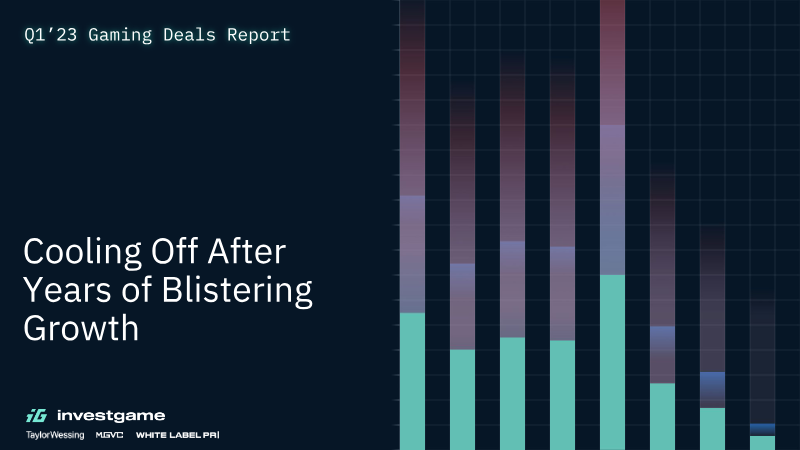
Q1 2023 Gaming Deals Report: Cooling Off After Years of Blistering Growth
The gaming industry experienced a significant cooling period in the first quarter of 2023, characterized by a sharp decline in deal activity across private investments, mergers and acquisitions (M&A), and public offerings. Following years of rapid expansion, the market has returned to more normalized levels as high interest rates and bearish public market conditions create a challenging environment for capital deployment. The analysis, which tracks closed transactions within the global video game industry, highlights a transition toward cautious investment strategies and a notable scarcity of late-stage funding.
Private investment activity remains the most resilient segment, though it has retreated from previous record highs. While early-stage funding continues to show robustness and serves as a primary driver for future industry unicorns, late-stage deals have stalled significantly, with only two closed transactions recorded in the quarter. Corporate investment activity has remained relatively stable compared to the previous year, though many participants have opted to keep deal values undisclosed. M&A activity reached a low point during the quarter, recording roughly half the volume of previous years, though early indicators suggest a potential rebound in subsequent periods driven by major strategic acquisitions.
Public offerings remain largely stagnant, with no immediate signs of recovery due to the prevailing macroeconomic climate. The methodology relies on tracking closed transactions—excluding pure gambling and non-gaming blockchain entities—using data from public media, business partners, and S&P Capital IQ. Despite the current downturn, the industry maintains a focus on early-stage development, with venture capital firms such as Andreessen Horowitz, Makers Fund, and BITKRAFT Ventures leading in deal volume and value. The overall outlook suggests a period of adjustment where market participants are prioritizing smaller, early-stage opportunities while navigating the uncertainties of the broader financial landscape.
- Q1 2023 marked a significant industry-wide cooling period, characterized by a sharp decline in private investments, M&A activity, and public offerings compared to previous years of rapid growth.
- M&A activity hit a low point in Q1 2023, recording approximately half the volume seen in previous years.
- Late-stage funding has stalled significantly, with only two closed transactions recorded throughout the entire first quarter.
- Private investment remains the most resilient segment, with early-stage funding continuing to show robustness despite a retreat from record-high deal volumes.
- Public offerings remain stagnant with no immediate signs of recovery, driven by high interest rates and bearish public market conditions.
+2
InvestGameJan 2023
Presentation17 pages
Aktualizacja Strategii Nowe Otwarcie 2023
The strategy overview presents PCF Group S.A. as a leading Polish producer of AAA‑level shooter games built on Unreal Engine, emphasizing its extensive experience, proprietary technology, and international development network. It positions the company as a high‑profile creator of original and co‑produced titles that have repeatedly appeared on the cover of the prestigious “Game Informer” magazine, citing notable releases such as Gears of War series, Bulletstorm, and collaborations with Epic Games on Fortnite.
Financial highlights indicate that cumulative revenue reached 608 million złoty between 2018 and 2022, representing a 4.9‑fold increase and a 2.4‑fold rise in EBITDA to 185 million złoty. The firm projects a similar revenue multiplier for 2023‑2027, driven primarily by a self‑publishing model and the launch of four core AAA projects and three supplementary titles, including two VR offerings slated for 2025‑2026. Shareholder structure after the IPO shows a diversified ownership with significant ESOP participation, and the capital plan anticipates issuing up to 5.85 million new shares.
Operationally, the group employs more than 600 specialists across two continents, organized into matrix‑based centers of excellence that support simultaneous development of multiple projects. The PCF Framework, an Unreal Engine add‑on, accelerates production pipelines and standardizes agile practices across seven development studios located in Warsaw, Newcastle, Montreal, Katowice, Rzeszów, New York, and Kraków. Recent acquisitions have expanded the portfolio with new IPs such as Gemini, Dagger, Bifrost, and Victoria, now in pre‑production.
Strategic goals focus on scaling the self‑publishing business, introducing “games‑as‑a‑service” monetization with micro‑transactions and seasonal passes, and strengthening the company’s position as an independent AAA publisher. The plan anticipates a workforce of over 1 200 employees by 2027, supported by incentive programs for shareholders and a robust cash flow structure designed to fund continued growth without external dilution.
- PCF Group targets a revenue multiplier for 2023–2027 comparable to the 4.9-fold growth seen between 2018 and 2022, when cumulative revenue reached 608 million złoty.
- The company is shifting to a self-publishing model to support the launch of four core AAA projects and three supplementary titles, including two VR games scheduled for 2025–2026.
- Strategic monetization will pivot toward a 'games-as-a-service' model, incorporating micro-transactions and seasonal passes to scale independent AAA publishing.
- The firm plans to double its workforce to over 1,200 employees by 2027, supported by a matrix-based operational structure across seven international studios.
- Development efficiency is driven by the proprietary 'PCF Framework' add-on for Unreal Engine, which standardizes production pipelines across studios in locations including Warsaw, Montreal, and New York.
+1
PCF GroupJan 2023
Report14 pages
Australian Game Development Survey FY 2023
The Australian Game Development Survey FY2023 reveals a maturing industry experiencing significant growth in both revenue and employment. Total income generated by local studios reached $345.5 million, a 21% increase over the previous year, while the workforce expanded by 17% to 2,458 full-time equivalent employees. This growth is largely attributed to increased federal and state government support, including the Digital Games Tax Offset (DGTO), which has bolstered developer confidence and attracted international interest.
The sector is heavily export-oriented, with 87% of revenue derived from markets outside of Australia. While the industry is diversifying, it remains concentrated in the eastern states, with Victoria housing 29% of studios and 41% of the workforce. The ecosystem is characterized by a mix of established and emerging entities; 32% of studios have operated for over a decade, yet 45% are five years old or less, and 29% are currently developing their first title. Small businesses dominate the landscape, with 79% of respondents employing fewer than 20 people.
Despite this upward trajectory, the industry faces notable headwinds. The primary challenges identified include difficulty hiring staff with specialized technical skills, attracting early-stage development funding, and securing international publishing deals amidst tightening global economic conditions. Nevertheless, 63% of studios intend to hire more staff in the coming year, and 68% predict continued income growth.
The findings are based on a survey of 111 Australian game development studios conducted by Bond University on behalf of the Interactive Games & Entertainment Association (IGEA). The data covers the financial year from July 1, 2022, to June 30, 2023, and includes metrics on gender diversity, which showed an increase in the representation of women and gender-diverse individuals within the workforce.
- The Australian game development industry generated $345.5 million in revenue during FY2023, marking a 21% year-over-year increase.
- Total industry employment grew by 17% to 2,458 full-time equivalent employees, with 63% of studios planning further hiring in the coming year.
- The sector is highly export-focused, with 87% of total revenue derived from international markets.
- Government support, specifically the Digital Games Tax Offset (DGTO), is a primary driver of developer confidence and international investment.
- The industry is geographically concentrated in Victoria, which accounts for 29% of studios and 41% of the total workforce.
+1
Interactive Games & Entertainment AssociationJan 2023

Report33 pages
White Paper Catalan Video Game Industry 2023
The 2023 white paper on Catalonia’s video‑game industry presents a detailed assessment of the sector’s economic performance and labour dynamics for the year 2022. It establishes that the regional market generated €709 million in revenue, reflecting a 7.5 percent decline compared with the previous year, while employment rose to 4 619 workers, an increase of 8.7 percent. This juxtaposition of falling turnover and rising headcount suggests a shift toward more labour‑intensive activities, such as development and ancillary services, even as overall sales pressures persist.
The analysis situates the sector within Catalonia’s broader creative economy, emphasizing its continued relevance as a source of high‑skill jobs and its capacity to attract talent despite modest revenue contraction. The data underline the resilience of the local ecosystem, which appears to be sustaining employment growth through diversification and possibly increased public or private investment in development capacities.
Overall, the findings portray a video‑game industry that, while facing short‑term market headwinds, maintains a solid employment base and remains a pivotal component of Catalonia’s digital and cultural output. The report implies that strategic support and continued innovation could reverse the revenue dip and further strengthen the region’s position in the European gaming landscape.
- Catalonia’s video game industry generated €709 million in revenue during 2022, representing a 7.5 percent decline from the previous year.
- Total employment in the sector grew by 8.7 percent in 2022, reaching a workforce of 4,619 people.
- The simultaneous decrease in revenue and increase in headcount indicates a strategic shift toward more labor-intensive development and ancillary service activities.
- The regional gaming ecosystem demonstrates resilience by sustaining job growth despite broader market headwinds and revenue contraction.
- The industry remains a critical component of the Catalan creative economy, serving as a primary driver for high-skill employment and digital innovation.
+3
DEVJan 2023

Report24 pages
Brazilian Game Industry 2023
Fact Sheet 2023 – Brazil Game Industry – Executive Summary
Below is a concise synthesis of the most relevant data, trends and insights from the 2023 Fact Sheet (compiled July 2023) on the Brazilian games sector. All figures refer to the 2022‑2023 survey period unless otherwise noted.
1. Macro‑economic context | Indicator | 2022 | 2023 (survey) | |-----------|------|---------------| | Growth of the sector | +3 % (contrasting with a 4,3 % global decline) | Continued modest growth; Brazil remains one of the few markets expanding year‑on‑year. | | International revenue share | 70 % of studios earn > 50 % of their turnover abroad | 58 % of studios now sell internationally; 10 % have permanent reps or PR offices overseas. | | Key export markets | United States (58 %), Latin America (57 %), Western Europe (54 %) | Same hierarchy, with a noticeable rise in Western‑European share (from 49 % to 54 %). |
2. Industry structure & geography | Metric | Value | |--------|-------| | Active development studios (2022) | ≈ 1 042 (↑ ~ 2 % YoY) | | Studios > 10 yr old | 17 % | | Studios < 2 yr old | 19 % | | Formalised studios | 85 % (63 % of the non‑formalised plan to formalise within 2 yr) | | Regional distribution | Southeast 58 % (dominant hub), South 20 % (‑1 % YoY), Northeast 15 % (+1 % YoY), Center‑West 6 %, North 2 % (‑1 % YoY) | | Unlocated studios | 222 (data gaps) |
Implication: The sector is highly concentrated in the Southeast, but growth is emerging in the Northeast and other regions, driven by remote‑work adoption and expanding local education programs.
3. Internationalisation & market exposure Export activity: 58 % of surveyed studios reported sales abroad in 2022. Foreign representation: 10 % maintain a dedicated overseas representative or PR office. International business exposure (2022 vs 2023): Visitor/Listener at foreign events – 33 % → 39 % Exhibitor/Presenter – 17 % → 14 % Commercial missions – 10 % → 13 % International round‑tables – 30 % → 33 %
Key takeaway: Participation in B2B events abroad is the most effective lever for increasing foreign sales and partnerships.
4. Technology stack (engines) |
- The Brazilian game industry grew by 3% in 2022, bucking the global trend of a 4.3% market decline.
- International revenue is a primary driver for the sector, with 58% of studios selling abroad and 70% of those studios generating more than half of their turnover from foreign markets.
- The industry consists of approximately 1,042 active development studios, with 85% of these entities formally registered.
- The Southeast region remains the dominant hub, hosting 58% of all studios, though emerging growth is visible in the Northeast, which saw a 1% year-over-year increase.
- Export activity is heavily concentrated in the United States (58%), Latin America (57%), and Western Europe, with the latter showing the most significant growth in market share from 49% to 54%.
AbragamesJan 2023
Presentation14 pages
Results Presentation: First Nine Months 2022
This analysis outlines the financial and operational performance of PCF Group S.A. (People Can Fly) for the first nine months of 2022. The primary thesis centers on the company’s strategic transition toward a self-publishing model and the expansion of its global production capabilities, despite facing financial headwinds due to the termination of a major development agreement with Take-Two Interactive.
Financial data indicates a year-over-year decline in key metrics. Revenue for the first nine months of 2022 reached 130.9 million PLN, compared to 131.8 million PLN in the same period of 2021. EBITDA fell from 54.9 million PLN to 40.3 million PLN, while net profit decreased from 46.4 million PLN to 42.1 million PLN. These declines are attributed largely to the conclusion of the Take-Two partnership. However, the balance sheet shows a significant increase in development work in progress, rising from 25.9 million PLN at the end of 2021 to 95.7 million PLN by September 30, 2022. This shift reflects higher internal resource allocation toward self-published titles.
The geographic and operational scope covers nine locations across Europe and North America, including studios in Warsaw, New York, and Montreal. The workforce grew substantially from 425 employees in September 2021 to 614 by September 2022. The group’s portfolio currently consists of seven projects, including major IPs such as Gemini, Dagger, and Bifrost, alongside VR titles like Thunder and Red. Four of these projects are in the pre-production phase.
Methodologically, the findings are based on consolidated financial results and internal management reporting. The data highlights a pivot from purely work-for-hire contracts to a hybrid model emphasizing intellectual property ownership and independent publishing, supported by a growing international team and the integration of specialized studios like Incuvo for VR development.
- People Can Fly is aggressively pivoting from a work-for-hire model to self-publishing, evidenced by a surge in development work in progress from 25.9 million PLN at the end of 2021 to 95.7 million PLN by September 30, 2022.
- The company experienced a financial contraction in the first nine months of 2022, with EBITDA falling to 40.3 million PLN from 54.9 million PLN and net profit dropping to 42.1 million PLN, largely due to the termination of a major development agreement with Take-Two Interactive.
- The studio is scaling its global operations rapidly, increasing its total headcount by 44% from 425 employees in September 2021 to 614 by September 2022 across nine locations in Europe and North America.
- Revenue remained relatively flat year-over-year at 130.9 million PLN for the first nine months of 2022, compared to 131.8 million PLN during the same period in 2021.
- The current development pipeline consists of seven active projects, including major IPs titled Gemini, Dagger, and Bifrost, as well as VR titles Thunder and Red.
+1
PCF GroupNov 2022
Report29 pages
Gaming Industry Report: Q4 2022
The analysis presents a comprehensive overview of the global gaming market in 2022 and its projected trajectory to 2027, emphasizing a modest expansion of the sector’s revenue base and a shifting investment landscape. The market reached $184.4 billion in 2022, a 2.3 % year‑over‑year increase, and is forecast to climb to $283 billion by 2027, reflecting an annual growth rate of roughly 9 %. Mobile platforms remain the dominant distribution channel, accounting for $116 billion of consumer spend in 2021, or 64 % of total gaming revenue, while console and emerging XR segments experience divergent pressures.
Venture capital activity illustrates a pronounced contraction after a 2021 peak, with total funding falling from $8.8 billion to $5.3 billion in 2022 and growth‑stage deals declining despite a stable number of transactions. Funding for web3 gaming collapsed by 83 % in Latin America and saw a global downturn, driven by concerns over token utility, game quality, and high-profile fraud incidents. Concurrently, regulatory scrutiny intensified, particularly around data‑privacy measures such as Apple’s IDFA and Google’s AAID, which have raised user‑acquisition costs and forced developers to prioritize content depth over advertising efficiency.
Corporate liquidity underscores a robust M&A environment: gaming firms collectively hold $47.7 billion in cash, while major tech companies with gaming divisions command $157 billion. Nevertheless, gaming‑focused ETFs underperformed, with ESPO and GAMR posting year‑to‑date declines of 35 % and 37 % respectively. The report draws on a blend of public market data, venture‑capital databases, and industry surveys from sources such as CB Insights, Newzoo, and major console manufacturers, covering all major regions and spanning the period from 2019 through Q4 2022.
- The global gaming market reached $184.4 billion in 2022, a 2.3% year-over-year increase, with projections estimating growth to $283 billion by 2027.
- Mobile gaming remains the primary revenue driver, accounting for 64% of total industry spend, or $116 billion in 2021.
- Venture capital funding for the gaming sector contracted significantly in 2022, falling from $8.8 billion to $5.3 billion, with web3 gaming experiencing a global downturn and an 83% funding collapse in Latin America.
- Regulatory changes to data privacy, specifically Apple’s IDFA and Google’s AAID, have increased user-acquisition costs and shifted developer focus toward content depth over advertising efficiency.
- Despite a robust M&A environment supported by $47.7 billion in cash held by gaming firms and $157 billion by major tech companies, gaming-focused ETFs like ESPO and GAMR declined by 35% and 37% respectively in 2022.
+2
KonvoyOct 2022
Report54 pages
2022 Blockchain Gaming Report: New Frontiers And The Path Forward
The blockchain gaming industry underwent a significant market correction in late 2022, signaling a transition from speculative "Play-to-Earn" (P2E) models toward more sustainable, gameplay-focused ecosystems. While unique active wallets stabilized at approximately one million, NFT transaction volumes fell 30% to $500 million, and major project market capitalizations plummeted by over 90%. Despite a 19% year-over-year decline in total deal value to $875 million in the third quarter, the sector saw a 2.6x increase in the number of funding deals. This shift indicates a move away from infrastructure-heavy "picks and shovels" investments toward seed-stage funding for game studios and user-friendly wallet solutions.
The collapse of unsustainable economic designs has catalyzed a pivot toward "Free-to-Own" (F2O) and "Play-and-Own" (P&O) models. These frameworks prioritize fun-first gameplay and lower entry barriers by offering free initial digital assets, moving away from the yield-focused mechanics that previously dominated the space. This evolution is supported by a significant talent migration from traditional AAA and mobile gaming companies, which is professionalizing development and introducing more sophisticated tokenomics. Furthermore, the industry is expanding its reach through casual genres and the integration of established intellectual properties from major Asian studios like Square Enix and SEGA.
Mass adoption efforts are increasingly focused on distribution and technical scalability. Notable milestones include the launch of blockchain titles on mainstream platforms like the Epic Games Store and the clarification of NFT guidelines within the Apple App Store. However, the industry faces ongoing challenges, including a crisis in the gaming guild model and intensifying regulatory scrutiny. As the SEC investigates major entities regarding the classification of digital assets as securities, developers are balancing innovation in on-chain mechanics and AI-driven content with the need for compliance in an increasingly complex global legal landscape.
- The blockchain gaming sector shifted from speculative 'Play-to-Earn' models toward 'Free-to-Own' and 'Play-and-Own' frameworks that prioritize gameplay over yield-focused mechanics.
- Market valuations for major projects dropped by over 90% in 2022, while NFT transaction volumes fell 30% to $500 million despite unique active wallets stabilizing at approximately one million.
- Investment activity transitioned toward seed-stage game studios and user-friendly wallets, resulting in a 2.6x increase in the number of funding deals even as total deal value declined 19% year-over-year to $875 million in Q3.
- The industry is professionalizing through a significant talent migration from traditional AAA and mobile gaming companies, alongside the integration of established IP from major Asian studios like Square Enix and SEGA.
- Blockchain titles are gaining mainstream distribution through the Epic Games Store and clarified NFT guidelines on the Apple App Store.
+2
CMC ResearchOct 2022
Presentation13 pages
Financial Results Presentation: Half Year 2022
PCF Group S.A. presents its financial and operational results for the first half of 2022, highlighting a period of steady growth and strategic expansion. The primary objective is to maintain its trajectory toward becoming a leading global independent developer by implementing a dual-track production model. This strategy involves releasing at least one game annually starting in 2024, utilizing both traditional publisher-funded partnerships and a self-publishing framework.
Financial performance for HY 2022 shows a 17.2% increase in revenue, reaching 90.6 million PLN compared to 77.3 million PLN in HY 2021. Net profit rose by 17.5% to 25.5 million PLN. EBITDA remained stable at 29.0 million PLN, while adjusted EBITDA, accounting for warrant valuations under IFRS2, grew by 7.6% to 29.7 million PLN. The group’s balance sheet remains strong with 134.6 million PLN in cash and a 9.1% increase in equity to 283.1 million PLN. Notably, investment in development work in progress surged by 152.9%, reflecting intensified production activity.
The group’s portfolio currently consists of seven projects, including two VR titles. Key projects such as Gemini and Dagger are in pre-production, with others like Bifrost and Victoria also in development. Geographically, the company has expanded its footprint across Europe and North America, with offices in Warsaw, New York, Chicago, Montreal, and Newcastle. The total workforce grew from 495 at the end of 2021 to 580 by June 30, 2022, supported by the acquisition of Incuvo and the expansion of the PCF Framework, a proprietary software suite designed to streamline multi-studio game development.
- PCF Group S.A. achieved a 17.2% revenue increase to 90.6 million PLN and a 17.5% net profit rise to 25.5 million PLN for the first half of 2022.
- The company is executing a dual-track production strategy aiming for at least one game release annually starting in 2024 through a mix of publisher-funded and self-publishing models.
- Investment in development work in progress surged by 152.9% during the period, signaling a significant ramp-up in production activity across the group's seven active projects.
- The group maintains a strong financial position with 134.6 million PLN in cash and a 9.1% increase in equity to 283.1 million PLN.
- The workforce expanded from 495 to 580 employees by June 30, 2022, supported by the acquisition of Incuvo and the implementation of the proprietary PCF Framework for multi-studio development.
PCF GroupSept 2022
Report22 pages
Drake Star Global Gaming Report Q3 2022
The global gaming industry experienced a year of unprecedented transaction volume through the first nine months of 2022, reaching a total disclosed deal value of $123 billion across 976 transactions. While a record-breaking first quarter gave way to a macroeconomic slowdown, the third quarter demonstrated resilience through a resurgence in activity, including 81 announced mergers and acquisitions and 216 private financings. This period was defined by a stark contrast between robust private investment and significant public market volatility, where major entities like Ubisoft and Roblox saw stock valuations decline by more than 45% since early 2021.
Blockchain and Web3 gaming emerged as the primary catalysts for private capital, accounting for nearly half of all private financing value and 40% of total deal rounds in the third quarter. Significant capital infusions, such as Epic Games’ $2 billion round and the $4.5 billion raised for dedicated crypto gaming funds in May 2022, underscore the sector's shift toward decentralized models and "free-to-own" mechanics. Venture capital activity remained concentrated among top-tier firms like Andreessen Horowitz and Animoca Brands, even as the broader public market faced contraction and a quiet IPO landscape.
Strategic consolidation remains a dominant trend as major players like Microsoft, Tencent, and Savvy Games Group leverage lower public valuations to pursue mid-sized acquisitions and take-private events. This shift toward consolidation is increasingly driven by a necessity for profitability and margin maintenance, particularly in high-growth regions like Southeast Asia and India, where strong revenue growth has been offset by negative EBITDA margins. Moving forward, the industry appears positioned for continued structural realignment as strategic buyers capitalize on market corrections to secure long-term intellectual property and technological infrastructure.
- The global gaming industry recorded $123 billion in deal value across 976 transactions during the first nine months of 2022.
- Blockchain and Web3 gaming dominated private investment in Q3 2022, accounting for 40% of all deal rounds and nearly half of total private financing value.
- Public market volatility has significantly impacted valuations, with major entities like Ubisoft and Roblox experiencing stock declines exceeding 45% since early 2021.
- Strategic consolidation is accelerating as major players like Microsoft, Tencent, and Savvy Games Group leverage lower public valuations to acquire mid-sized companies and pursue take-private events.
- Venture capital remains concentrated among top-tier firms such as Andreessen Horowitz and Animoca Brands, highlighted by a $2 billion funding round for Epic Games and $4.5 billion raised for crypto gaming funds in May 2022.
+1
Drake Star PartnersSept 2022

Report21 pages
Global Gaming Report H1 2022
The first half of 2022 marked the most active period in the history of the gaming industry, characterized by unprecedented consolidation and record-breaking investment levels. Total deal value exceeded $107 billion across 651 transactions, with mergers and acquisitions accounting for $95 billion of that total. This surge was primarily driven by massive strategic consolidations, most notably Microsoft’s acquisition of Activision Blizzard and Take-Two’s purchase of Zynga. While the public markets faced significant headwinds and valuation corrections, the private sector remained resilient, securing $7 billion in financing across nearly 500 deals.
Blockchain gaming and metaverse infrastructure emerged as the dominant catalysts for growth, representing over half of all financing transactions in the second quarter. This sector attracted more than $2.2 billion in funding, supported by the launch of multi-billion dollar funds from major venture capital firms. Despite the robust private activity, public gaming stocks largely underperformed, leading to a shift in investor focus toward high-quality, profitable targets. The absence of activity in the IPO and SPAC markets further underscored a transition toward private equity and strategic M&A as the primary vehicles for industry movement.
The industry landscape is currently defined by a divergence between aggressive private investment and cautious public market sentiment. As valuation multiples adjust to new economic realities, the sector is positioned for a second half of the year focused on opportunistic acquisitions and potential take-private transactions. The continued integration of Web3 technologies and the entry of massive capital reserves suggest that while the pace of "mega deals" may fluctuate, the fundamental restructuring of the gaming ecosystem toward a consolidated, blockchain-integrated future remains the central trajectory for the global market.
- The gaming industry saw record-breaking activity in H1 2022 with $107 billion in total deal value across 651 transactions, dominated by $95 billion in M&A activity.
- Strategic consolidation was driven by major acquisitions, most notably Microsoft’s purchase of Activision Blizzard and Take-Two’s acquisition of Zynga.
- Blockchain gaming and metaverse infrastructure became the primary growth catalysts, accounting for over 50% of all financing transactions in Q2 and attracting $2.2 billion in funding.
- While public markets faced valuation corrections and underperformed, the private sector remained resilient, securing $7 billion in financing across nearly 500 deals.
- The absence of IPO and SPAC activity signals a shift in industry movement toward private equity and strategic M&A as the primary vehicles for growth.
+3
Drake Star PartnersJul 2022

Report76 pages
Value Creation in the Metaverse: The Real Business of the Virtual World
The analysis evaluates the emerging economic significance of immersive digital environments, arguing that the metaverse will become a major engine of growth and societal transformation by 2030. It positions the metaverse as the next immersive iteration of the internet, driven by real‑time interactivity, user agency and eventual cross‑platform interoperability, and stresses that firms must define clear objectives, pilot test use cases, and build talent and technology capabilities now to capture value while managing ethical, security and workforce‑reskilling risks.
Investment activity surged in early 2022, with more than $120 billion flowing into the ecosystem across venture capital, private‑equity, mergers and acquisitions and corporate spend. The influx was amplified by Microsoft’s $69 billion acquisition of Activision, and corporate budgets such as Meta’s $10 billion annual allocation underscore the scale of commitment. Survey data from over 3,400 consumers and executives reveal that roughly 60 % of early‑adopter users are eager to shift daily activities—socializing, entertainment, shopping and travel—into virtual spaces, while 95 % of senior leaders anticipate a positive industry impact and project up to $5 trillion in economic value by 2030, comparable to the size of Japan’s economy.
Gaming remains the primary catalyst, supporting more than three billion users and a $200 billion market, and early adopters report higher profit margins. Across 19 industry sectors—including fashion and luxury, consumer‑packaged goods, retail, finance, utilities, manufacturing, education and government—XR‑enabled experiences are unlocking new revenue streams, with virtual‑goods sales already at roughly $40 billion and fashion brands leading digital‑identity initiatives. Executives rank cryptocurrency, artificial intelligence and AR/VR as the most important enabling technologies, yet cite uncertain ROI, lack of viable business models and insufficient managerial capability as chief barriers, while data‑privacy and cybersecurity concerns appear for over 85 % of leaders.
Geographically, the findings draw on global surveys conducted in 11 countries, encompassing 3,104 consumer respondents and 448 C‑level executives, and reflect investment trends and use‑case experimentation worldwide. The outlook projects that by 2030 more than half of live events and over 80 % of commerce could occur in virtual environments, with users spending up to six hours daily in immersive experiences. Realizing this potential will require coordinated governance, inclusive design and robust regulatory frameworks to
- Senior leaders project the metaverse will generate up to $5 trillion in economic value by 2030, a scale comparable to the economy of Japan.
- Investment in the metaverse ecosystem reached over $120 billion in early 2022, bolstered by major corporate commitments like Microsoft’s $69 billion acquisition of Activision and Meta’s $10 billion annual budget.
- Gaming serves as the primary market catalyst with three billion users and a $200 billion valuation, while virtual goods sales have already reached approximately $40 billion.
- Projections indicate that by 2030, more than 50% of live events and over 80% of commerce could shift to virtual environments, with users spending up to six hours daily in immersive experiences.
- While 95% of senior leaders anticipate a positive industry impact, over 85% express significant concerns regarding data privacy and cybersecurity.
+1
McKinsey & CompanyJun 2022