Report78 pages
2023 Global Mobile Games Marketing Trends White Paper
The global mobile gaming landscape underwent a significant transformation in 2023, characterized by a strategic shift toward the hybrid-casual model. This evolution combines the accessibility of hyper-casual mechanics with the monetization depth of mid-core titles, utilizing a mix of in-app advertising and in-app purchases to stabilize revenue. Marketing efforts were defined by a nearly 50% year-over-year surge in monthly active advertisers, exceeding 40,000 globally. While North America maintained its leadership in total advertiser volume, Southeast Asia emerged as the most competitive region for creative output. Concurrently, Android became the primary focus for volume-driven campaigns due to ongoing iOS privacy restrictions, though iOS remained the preferred platform for high-value mid-core and hard-core marketing.
Creative strategies pivoted toward high-impact visual storytelling and the integration of generative AI to manage rising user acquisition costs. Although video remains the dominant format, accounting for over 76% of impressions, AI-generated image creatives gained significant traction, particularly in square formats. Developers increasingly utilized "mini-game" ad patterns—such as ASMR, dramatic narratives, and deliberate failure scenarios—to lower entry barriers for complex genres like Simulation and Strategy games. Meanwhile, RPG and Casino titles leaned heavily on influencer collaborations and live-action content to drive engagement in emerging markets across Southeast Asia and the Middle East.
Sustainable growth in 2024 depends on a holistic integration of AI-driven production and programmatic transparency. The successful global expansion of Chinese-developed mini-games and the revitalization of legacy titles through trending ad mechanics illustrate a broader trend of creative agility. By analyzing over 1.4 billion ad creatives across 70 countries, it is evident that the industry is moving toward a data-driven future where high-engagement formats like rewarded ads and user-generated content are essential for navigating a fragmented and privacy-conscious global market.
- The mobile gaming industry shifted toward a hybrid-casual model in 2023, blending hyper-casual accessibility with mid-core monetization to stabilize revenue through combined in-app advertising and purchases.
- Monthly active advertisers surged by nearly 50% year-over-year, surpassing 40,000 globally as competition for user acquisition intensified.
- Video ads remain the dominant format, accounting for over 76% of total impressions, while AI-generated image creatives are increasingly used to mitigate rising acquisition costs.
- Android has become the primary platform for volume-driven campaigns due to iOS privacy restrictions, though iOS retains its status as the preferred channel for high-value mid-core and hard-core titles.
- Developers are utilizing 'mini-game' ad patterns—including ASMR, dramatic narratives, and failure scenarios—to lower entry barriers for complex genres like Strategy and Simulation.
+2
SocialPetaJan 2024
Report103 pages
State of Mobile 2024
The global mobile economy experienced a significant recovery in 2023, with consumer spending rising 3% to $171 billion and daily engagement surpassing five hours per user in leading markets. While mobile gaming faced a slight 2% contraction in spending due to economic headwinds and a shift toward longer title life cycles, the broader industry was bolstered by a resilient non-gaming sector. This growth was primarily driven by social media "tipping," video streaming subscriptions, and the rapid emergence of generative AI. Mobile advertising also remained a cornerstone of the ecosystem, reaching $362 billion with projections to exceed $400 billion in the coming year.
The landscape is increasingly defined by a shift in consumer behavior and monetization strategies. Non-gaming apps reached a record $64 billion in spend, led by TikTok, which became the first non-game app to surpass $10 billion in lifetime revenue. In contrast, the gaming market saw a decline in new hit releases, with the industry consolidating around established high-fidelity IPs and social multiplayer genres like Creative Sandbox and Battle Royale. Despite this consolidation, breakout successes like Monopoly GO and Honkai: Star Rail demonstrated that high-quality debuts can still disrupt saturated markets.
Across various sectors, mobile integration has reached unprecedented levels. Travel and ticketing apps saw record-breaking demand as consumers returned to in-person events, while the finance sector experienced a surge in personal loan apps and "Super Apps" amid global inflation. Retail also underwent a structural shift as China-based platforms like Temu gained significant global market share. Ultimately, the 2023 data reflects a mature mobile market where growth is increasingly tied to sophisticated AI integration, creator-driven economies, and the transition of traditional services into comprehensive digital hubs.
- The global mobile economy grew 3% to $171 billion in 2023, supported by a $362 billion advertising market projected to exceed $400 billion in the coming year.
- Mobile gaming spending contracted by 2% as the industry consolidated around established high-fidelity IPs and social multiplayer genres, though titles like Monopoly GO and Honkai: Star Rail proved that high-quality debuts remain viable.
- Non-gaming apps reached a record $64 billion in consumer spend, highlighted by TikTok becoming the first non-game app to surpass $10 billion in lifetime revenue.
- Daily user engagement in leading markets surpassed five hours, driven by social media tipping, video streaming subscriptions, and the rapid integration of generative AI.
- The finance sector saw a surge in personal loan apps and 'Super Apps' as a response to global inflation, while travel and ticketing apps experienced record-breaking demand.
+1
data.aiJan 2024

Report21 pages
Marketing Insights into Global Mobile Games & Minigames 2024
The global mobile gaming landscape in 2024 is characterized by a high volume of advertising activity, with monthly active advertisers averaging over 63,000. While the total number of advertisers remains robust, the proportion of new market entrants has steadily declined, falling below 7% by late 2024. Conversely, the industry has seen a consistent rise in the deployment of new ad creatives, with over 72% of advertisers releasing fresh content by September, signaling an intensification of competition and a focus on creative iteration to maintain audience engagement.
Analysis of genre-specific performance reveals a shift in marketing priorities. Casual game advertising has experienced a slight decline, whereas the casino genre has seen a notable growth of over 10% in advertiser volume. Across the board, RPG, puzzle, and simulation games remain significant contributors to the advertising ecosystem. The data suggests that successful market penetration increasingly relies on high-frequency creative updates and localized marketing strategies, particularly as developers look to expand beyond domestic borders.
The minigame sector, encompassing H5 and mini-program games, has emerged as a critical growth area. These titles are increasingly adopting a "going global" strategy, moving from initial releases in Asian markets to broader international expansion in North America, Western Europe, and Latin America. Successful minigames often utilize hybrid monetization models and leverage specific sub-genres such as "backpack-like" or "knights-like" games. Marketing for these titles is highly data-driven, with distinct strategies for the Asia-Pacific region—which favors pre-registration and launch-phase intensity—versus Western markets, which prioritize sustained, long-term advertising during a game’s stable period. The industry continues to favor creative formats that emphasize playable, low-friction experiences and culturally localized themes to maximize user retention and acquisition.
- Competition is intensifying through creative iteration, with over 72% of the 63,000+ monthly active advertisers releasing fresh ad content by September 2024.
- The proportion of new market entrants has dropped below 7%, indicating a shift toward established players focusing on retention rather than market expansion.
- Casino games have emerged as a growth leader with a 10% increase in advertiser volume, while casual game advertising has experienced a slight decline.
- Minigames are increasingly adopting a global strategy, moving from Asian markets into North America, Western Europe, and Latin America.
- Successful minigame monetization relies on hybrid models and specific sub-genres like 'backpack-like' or 'knights-like' games.
+2
SocialPetaJan 2024
Report24 pages
Mobile Gaming Benchmarks: Q1 2024
The Q1 2024 mobile gaming benchmarks provide a comprehensive analysis of player engagement metrics, specifically retention rates, session lengths, and session counts across 15 game genres. The analysis is based on data from over 10,000 games utilizing the GameAnalytics platform, representing 1.67 billion monthly active users across North America, Europe, the Middle East, and Asia. The primary objective is to offer developers a standardized framework to evaluate game performance, identify areas for optimization, and refine mechanics to improve long-term player retention and engagement.
Key findings indicate that global median retention rates for the first quarter of 2024 were 22.91% for Day 1, 4.20% for Day 7, and 0.85% for Day 28. Classic games—encompassing board, card, casino, and trivia titles—consistently outperformed other genres across most regions and metrics. While North America and Europe generally exhibit higher retention averages, the Middle East shows a distinct preference for classic games, which achieve their highest regional performance there. Puzzle games also demonstrate notable stability, maintaining consistent engagement metrics across all monitored territories.
Regarding session behavior, the global median session length is 4.45 minutes, with most genres averaging 4 to 5 sessions per day. Europe leads in session duration, while the Middle East records the highest frequency of daily sessions, particularly within the puzzle and word genres. The analysis suggests that session length and frequency are highly correlated with game pacing and social features. To optimize these metrics, the findings recommend a data-driven approach involving A/B testing, funnel analysis, and the implementation of LiveOps to adapt to player behavior in real-time.
- Global median retention rates for Q1 2024 were 22.91% for Day 1, 4.20% for Day 7, and 0.85% for Day 28.
- Classic games, including board, card, casino, and trivia titles, consistently outperformed all other genres across most regions and metrics.
- The global median session length is 4.45 minutes, with most genres averaging between 4 and 5 sessions per day.
- The Middle East records the highest frequency of daily sessions globally, particularly within the puzzle and word genres.
- Europe leads all regions in average session duration, while North America and Europe generally exhibit higher retention averages than other territories.
+2
GameAnalyticsJan 2024
Report35 pages
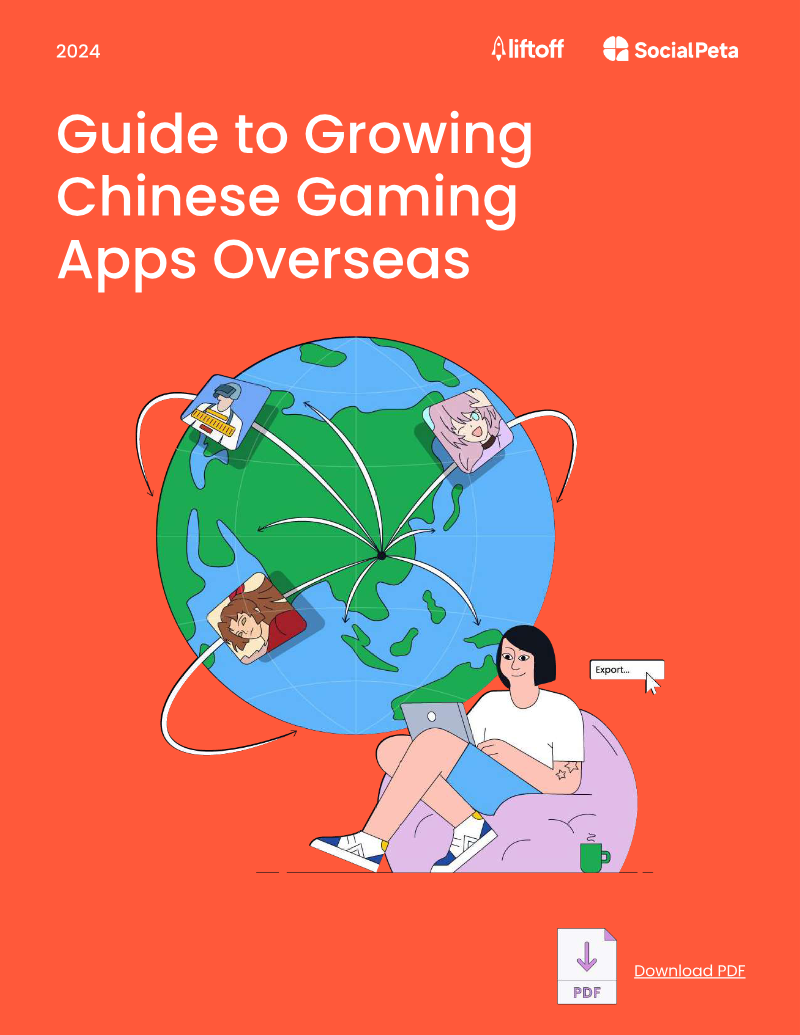
Guide to Growing Chinese Gaming Apps Overseas: 2024
Chinese gaming applications continue to exert a dominant influence on the global stage, particularly within the strategy and role-playing game segments in mature markets such as the United States, Japan, and South Korea. While these regions offer substantial revenue potential, they are characterized by intense competition and elevated costs per install. To navigate these challenges, successful publishers are shifting toward hyper-localized strategies that tailor art styles to regional aesthetic preferences—favoring manga-inspired visuals in Japan and realistic or cartoon aesthetics in Western markets—while utilizing local influencers to establish brand credibility.
Technological innovation serves as a primary driver for operational efficiency and user acquisition. The integration of generative AI has become essential for the rapid localization of ad creative, voice-overs, and marketing copy, ensuring both speed and brand compliance. High-performing titles currently leverage high-volume, innovative campaigns that incorporate minigames and AI-enhanced visuals to capture player attention. Beyond acquisition, long-term retention is increasingly supported by the implementation of social hangout spaces, home-building systems, and character trial models that balance accessibility with monetization.
Monetization strategies have evolved to prioritize engagement through sophisticated, time-limited mechanics. Publishers are frequently employing box gachas, pull-milestone rewards, and gamified event structures such as diceboards and bingo to incentivize spending. Furthermore, the consistent deployment of diverse live events remains a critical requirement for maintaining player interest and competitive viability. By combining these aggressive monetization tactics with a commitment to continuous content updates, Chinese developers are effectively sustaining growth and deepening their footprint across the global gaming landscape throughout 2024.
- Chinese publishers are maintaining global dominance in strategy and RPG segments by shifting to hyper-localized art styles, specifically manga-inspired visuals for Japan and realistic or cartoon aesthetics for Western markets.
- Generative AI is now a core operational requirement for rapid, compliant localization of ad creative, voice-overs, and marketing copy to manage high costs per install in mature markets like the U.S., Japan, and South Korea.
- High-performing user acquisition campaigns are increasingly utilizing minigames and AI-enhanced visuals to capture player attention in highly competitive environments.
- Long-term player retention is being driven by the integration of social hangout spaces, home-building systems, and character trial models that balance game accessibility with monetization.
- Monetization strategies have shifted toward sophisticated, time-limited mechanics such as box gachas, pull-milestone rewards, and gamified event structures like diceboards and bingo.
+5
LiftoffJan 2024
Report25 pages
Global Mobile Gaming Industry Outlook 2024
The global mobile gaming market experienced a period of stabilization in 2023, with total in-app purchase (IAP) revenue reaching $76.7 billion. While this figure represents a 2% year-on-year decline, it remains 22% higher than pre-pandemic levels recorded in 2019. The industry outlook is positive, with revenue projected to rebound to $78 billion in 2024 and surpass $100 billion by 2028, reflecting an anticipated average annual growth rate of approximately 6.8%.
Market performance in 2023 was characterized by a shift in consumer preference away from mid-core and hardcore genres toward casual and hybrid-casual titles. Casual gaming revenue grew by 8% to $28.6 billion, now accounting for 38% of the global market. Within this segment, puzzle and board games performed exceptionally well, with both genres reaching $10 billion in revenue. Notable titles such as Royal Match and MONOPOLY GO! were primary drivers of this growth, with the latter emerging as a significant revenue contributor in the board game category. Conversely, traditional powerhouses like RPG and strategy games saw revenue declines of 10% as the pandemic-driven stay-at-home demand subsided.
Geographically, the United States remains the largest mobile gaming market, generating $22.2 billion in 2023. While the U.S. market remained stable, other key regions experienced varied results; the Chinese iOS market held steady, whereas Japan and South Korea saw revenue contractions of 13% and 7%, respectively. Despite broader genre declines, high-quality new releases—particularly in the RPG sector—continued to secure top positions in growth rankings. The analysis relies on estimated IAP data from the Apple App Store and Google Play, excluding advertising revenue and third-party Android marketplace income.
- The global mobile gaming market generated $76.7 billion in IAP revenue in 2023, a 2% year-on-year decline, but is projected to rebound to $78 billion in 2024 and exceed $100 billion by 2028.
- Consumer preferences shifted toward casual and hybrid-casual titles, with casual gaming revenue growing 8% to $28.6 billion, now representing 38% of the total market.
- Puzzle and board games were primary growth drivers, each reaching $10 billion in revenue, bolstered by the success of titles like Royal Match and MONOPOLY GO!.
- Traditional mid-core and hardcore genres, specifically RPG and strategy games, experienced a 10% revenue decline as pandemic-era demand subsided.
- The United States remains the largest mobile gaming market with $22.2 billion in 2023 revenue, while Japan and South Korea saw significant contractions of 13% and 7%, respectively.
+2
Sensor TowerJan 2024

Report46 pages
Q4 2024 Digital Market Index
In Q4 2024 global in‑app purchase revenue reached a record $39.4 billion, up 13.5% year‑over‑year, with non‑game apps now nearly matching game revenue at $19.2 billion versus $20.2 billion. iOS dominates the market, generating roughly 70% of IAP revenue ($30 billion) and outpacing Google Play’s growth (15.4% versus 9.7%). Overall app downloads remained flat at about 34 billion, while non‑game downloads increased and game downloads stabilized after a pandemic peak.
Strategy titles emerged as the most lucrative segment, generating over $4.8 billion in IAP revenue—a 80% quarter‑over‑quarter lift that offset an 11% year‑over‑year decline in RPGs. Strategy games also accounted for six of the top ten download growth drivers, with a 26% year‑over‑quarter increase. In contrast, RPG revenue fell 29% globally, though regional pivots in Korea—where strategy and puzzle games grew 55% and 14%, respectively—helped mitigate the loss. Puzzle titles also contributed to overall download growth.
TikTok (including Douyin) led non‑game app monetization, delivering $6 billion in IAP revenue for the year—more than double any other app or game. Advertising spending in the United States reached $34 billion in Q4, with social media platforms capturing 77% of the spend; TikTok experienced the fastest year‑over‑year growth at 22%. Amazon drove U.S. digital ad spend growth, supporting campaigns for Audible, Prime Video and Amazon Music, while other major advertisers such as Verizon, Liberty Mutual, Coca‑Cola, Microsoft, Epic Games, Target and Walmart increased spend—particularly on gaming and social platforms. Retail‑media impressions hit a record 80 billion, up 4% year‑over‑year, with Walmart and Target dominating the top ten categories and Best Buy‑Samsung and Chewy‑Nestlé emerging as the most viewed co‑branded pairs.
Collectively, these findings illustrate a strategic shift toward strategy titles, the continued dominance of TikTok in app monetization, and an outsized role for social media advertising and retail‑media partnerships during the holiday peak. The data cover global markets with a focus on U.S., Korean, and broader digital advertising trends for the fourth quarter of 2024.
- Global in-app purchase (IAP) revenue hit a record $39.4 billion in Q4 2024, a 13.5% year-over-year increase, with non-game apps ($19.2 billion) nearly reaching parity with gaming ($20.2 billion).
- iOS remains the primary revenue driver, generating $30 billion (70% of total IAP revenue) and outpacing Google Play’s growth at 15.4% versus 9.7%.
- Strategy games became the most lucrative gaming segment with $4.8 billion in Q4 IAP revenue, marking an 80% quarter-over-quarter increase that helped offset an 11% year-over-year decline in RPG revenue.
- TikTok (including Douyin) is the dominant non-game monetization force, generating $6 billion in annual IAP revenue, more than double that of any other single app or game.
- U.S. advertising spend reached $34 billion in Q4, with social media platforms capturing 77% of the total and TikTok recording the fastest year-over-year growth at 22%.
+1
Sensor TowerJan 2024

Report29 pages
Liftoff Report: Mobile Ad Creative Index 2024
The report presents a comprehensive analysis of mobile ad creative performance across four key app verticals—gaming, e‑commerce, finance, and entertainment—for the period January 1 2023 to January 1 2024. Using 602 billion impressions, 49.4 billion clicks, and 144 million installs, the study benchmarks cost‑per‑install (CPI), install‑to‑action (ITA) rates, and day‑7 return on ad spend (ROAS) by ad format (banner, native, interstitial, playable, video). Gaming ads that include video or playable elements achieve over 20‑fold higher install likelihood than banner ads, while native remains the most cost‑effective format at $1.80 CPI on average. In e‑commerce, native and banner ads drive the highest ITA rates (>30 %) and lowest CPAs ($2.57–$3.23), whereas video ads incur higher costs, especially on iOS. Finance apps see the lowest overall CPI ($1.84–$5.93) but exhibit a pronounced platform split, with iOS costs exceeding $5 for most formats; native and video ads outperform others in ITI conversion (up to 16×). Entertainment apps benefit from banner and native formats, with CPI ranging $2.79–$6.00, while video and interstitial ads are markedly more expensive on iOS.
Methodologically, the report aggregates data from Liftoff’s Creative Studio and GameRefinery teams, supplemented by a survey of over 500 app marketers. It highlights emerging creative trends: generative AI for rapid asset creation, optimized user‑generated content (UGC) with interactive elements, minigames and leaderboards for gaming acquisition, and longer immersive ad formats (45‑second videos and triple‑page ads) that drive higher engagement. The findings underscore the importance of platform‑specific optimization, format selection based on vertical and performance goals, and leveraging AI tools to scale creative production while maintaining authenticity.
- Gaming ads utilizing video or playable formats are over 20 times more likely to drive installs compared to banner ads.
- Native ads represent the most cost-effective acquisition channel, averaging a $1.80 CPI across the analyzed verticals.
- E-commerce apps achieve the highest install-to-action (ITA) rates exceeding 30% through native and banner formats, which also maintain the lowest acquisition costs between $2.57 and $3.23.
- Finance apps exhibit a significant platform cost disparity, with iOS acquisition costs exceeding $5 per install for most ad formats, though native and video ads improve conversion rates by up to 16 times.
- Entertainment apps face CPI ranges of $2.79 to $6.00, with video and interstitial formats proving significantly more expensive on iOS than other channels.
+2
LiftoffJan 2024

Report21 pages
Marketing Insights into Global Mobile Games & Minigames in 2024
The analysis outlines global mobile game advertising trends for 2024, drawing on a database of over 1.6 billion ad creatives from more than 70 countries and 80 media channels, including Facebook, TikTok, YouTube, Unity, and WeChat. Monthly active mobile game advertisers peaked at 70 k in June, with a total of 63.5 k average for the year and a steady decline in new advertisers to below 7 % after August. Conversely, the proportion of advertisers releasing new creatives rose from 52.7 % in early 2024 to an expected 55 % in the second half, with new creatives comprising roughly 65 % of total ads.
Genre‑level data show casual games experienced a 3 % YoY drop, while casino titles grew over 10 %. RPGs and puzzle games remained stable. The top twenty global mobile titles by ad spend include “Pesta Ludo,” “Monopoly GO!,” and “Block Blast! Hungry.” In the minigame segment, WeChat’s market reached RMB 60 billion in 2023, with over 400 k developers and a user base averaging one hour of play per day; the most successful minigames are predominantly RPG/SLG hybrids.
Marketing patterns differ by region: Asia‑Pacific campaigns focus on pre‑registration and new‑release periods, whereas Europe and America emphasize stable‑period creatives. The most anticipated minigames for H2 2024, such as “Capybara Go!” and “Bacon’s Revenge,” demonstrate high daily revenue projections (over USD 600 k) and rely on video‑heavy, localized creative strategies across Meta platforms and YouTube. The report’s methodology relies on real‑time scraping of ad creatives, monthly activity metrics, and genre classification to provide actionable insights for advertisers seeking to optimize spend in a tightening competitive landscape.
- The mobile game advertising market is shifting toward higher creative turnover, with the proportion of advertisers releasing new creatives rising to 55% in the second half of 2024 and new creatives accounting for 65% of total ad volume.
- WeChat minigames have become a significant market force, reaching RMB 60 billion in 2023 with a user base averaging one hour of daily engagement, led primarily by RPG/SLG hybrid titles.
- Casino games saw over 10% year-over-year growth in advertising activity, while casual games experienced a 3% decline, and RPG and puzzle genres maintained stable market positions.
- Monthly active mobile game advertisers peaked at 70,000 in June 2024, but the influx of new advertisers slowed significantly, dropping below 7% after August.
- Regional marketing strategies diverge, with Asia-Pacific campaigns prioritizing pre-registration and launch windows, while European and American markets focus on sustaining ad spend during stable periods.
+1
SocialPetaJan 2024

Report25 pages
South East Asian Mobile Game Market Insights 2024
Mobile game downloads across Southeast Asia grew by 3.4 % in the first half of 2024, reaching 4.2 billion installs, with Google Play accounting for 91 % of the volume. In‑app purchase revenue rose by 3.4 % to $1.16 billion, a slight decline of 3 % from the previous half‑year; Google Play contributed 57 % of total revenue. From January to August, mid‑core genres such as simulation, arcade, puzzle and lifestyle led download growth (11 %–14 %), while sports titles experienced a 39 % revenue surge, representing 9 % of total IAP income. Strategy and RPG games dominated downloads (47 %) but saw modest revenue declines of 3 %–9 %.
Indonesia remains the largest market, with a 10 % download increase and 41 % of regional downloads; Thailand follows as the highest‑earning country, adding $400 million in revenue. The top ten download leaders are dominated by Garena Free Fire, Mobile Legends: Bang Bang and Roblox, with Garena Free Fire maintaining a 54 % growth rate. In revenue terms, Mobile Legends: Bang Bang leads with $1.16 billion, followed by eFootball™ 2024 and Garena Free Fire; Roblox and Coin Master also show strong growth, with Roblox’s revenue rising 90 %.
The case study of Honor of Kings illustrates rapid penetration after its Southeast Asian launch in June 2024, achieving a 175 % month‑over‑month spike in Indonesia and capturing the top download spot in July. By August, Honor of Kings generated $1.7 billion in IAP revenue for the period and accounted for 51 % of its global downloads from Indonesia alone. The report relies on Sensor Tower’s estimated download and IAP data from the App Store and Google Play, excluding pre‑installs, duplicate downloads, ad revenue, third‑party sales, and direct developer payments.
- Southeast Asia's mobile game market saw 4.2 billion installs in H1 2024, a 3.4% increase, while in-app purchase (IAP) revenue reached $1.16 billion, a 3.4% year-over-year rise but a 3% decline from the previous half-year.
- Indonesia is the region's largest market by volume, accounting for 41% of total downloads with 10% growth, while Thailand leads in profitability, contributing $400 million in IAP revenue.
- Google Play remains the dominant platform in the region, capturing 91% of total download volume and 57% of total IAP revenue.
- While strategy and RPG titles command 47% of downloads, they experienced revenue declines of 3%–9%, whereas sports titles saw a significant 39% revenue surge, now representing 9% of total IAP income.
- Honor of Kings demonstrated rapid market penetration following its June 2024 launch, capturing the top download spot in July and generating 51% of its global downloads from Indonesia by August.
+1
Sensor TowerJan 2024
Report24 pages
Mobile Gaming Benchmarks for Q1 2024
The benchmark study presents a comprehensive snapshot of mobile gaming performance during Q1 2024, focusing on key engagement metrics—retention, session length, and session count—across North America, Europe, the Middle East, and Asia. Data derive from over 10 000 games tracked by GameAnalytics, with each title typically released in at least three regions, yielding a combined monthly active user base of approximately 1.67 billion.
Retention figures reveal that the global median day‑1 retention stands at 22.91 %, day‑7 at 4.20 %, and day‑28 at 0.85 %. Classic games (board, card, casino, trivia, word) dominate retention performance, especially in the Middle East where they lead all regions. Casual and mid‑core titles lag behind, with puzzle games maintaining stable but lower retention across all markets.
Session length analysis shows a global median of 4.45 minutes, with casino and card games achieving the longest sessions in North America (≈20 min) and Europe (card games exceeding 25 min). In the Middle East, casino titles surpass 15 minutes, while Asia’s top casino games reach nearly 23 minutes. Session count averages range from 3–5 daily sessions per game, with puzzle and word games in the Middle East achieving the highest counts (≈10 sessions/day).
Methodologically, metrics are reported in quantiles—top 25 %, median, and bottom 25 %—to illustrate performance across the spectrum of developers. The report underscores that high retention, longer session lengths, and frequent session counts correlate with stronger player engagement, offering actionable insights for studios aiming to benchmark against industry leaders.
- Global median retention rates for Q1 2024 are 22.91% for day-1, 4.20% for day-7, and 0.85% for day-28.
- Classic genre titles, including board, card, casino, trivia, and word games, consistently outperform casual and mid-core titles in retention metrics across all tracked regions.
- The global median session length is 4.45 minutes, though casino and card games significantly exceed this, reaching up to 25 minutes in European markets.
- Daily session frequency typically ranges from 3 to 5 sessions, with puzzle and word games in the Middle East achieving a peak performance of approximately 10 sessions per day.
- The Middle East region shows a distinct preference for classic games, which lead retention performance in that market compared to other global regions.
+1
GameAnalyticsJan 2024
Report44 pages
Digital Market Index: Q1 2024
Global consumer spending on mobile applications reached a record $45 billion in the first quarter of 2024, reflecting a 9.5% year‑over‑year increase that was largely driven by the iOS ecosystem, which grew 11.5% versus a 5.3% rise on Google Play. Despite this surge in spend, total app downloads fell 3.5%, marking the third consecutive quarterly decline since Q1 2021; nevertheless, iOS maintained its highest quarterly download volume since 2020. Entertainment and productivity categories led the spend growth, each expanding over 30% YoY, while gaming spending rebounded on iOS but remained flat on Google Play.
Hyper‑casual games continued to dominate the download landscape, with racing and action titles generating the largest volumes. Conversely, casual sub‑genres such as arcade and simulation experienced double‑digit declines. TikTok remained the top spender globally, generating more than $1.2 billion in revenue and outpacing YouTube by a wide margin, while emerging short‑form drama apps—ReelShort, DramaBox, and ShortMax—entered the top ten for both revenue and download growth. In mobile gaming, “Monopoly GO” set a new quarterly spend record of $770 million, surpassing the previous $765 million benchmark and standing alone as a title to exceed $600 million in a single quarter.
Retail‑media advertising in the United States was led by Walmart and Target, which together delivered over 18 billion impressions in Q1 2024. Specialized retailers such as Chewy and Home Depot captured significant niche shares, with personal care emerging as the top category overall—driven by Ulta and Sephora. Walmart dominated food, beverages, and consumer packaged goods, while Target excelled in shopping, household supplies, and baby & toddler segments. Co‑branded partnerships—including Chewy × Purina, Walmart × Unilever, and Target × Apple—generated hundreds of millions of impressions, underscoring the strategic value of retailer‑brand collaborations in expanding digital ad reach.
- Global mobile app spending reached a record $45 billion in Q1 2024, a 9.5% year-over-year increase driven primarily by an 11.5% growth in the iOS ecosystem.
- Total app downloads declined by 3.5%, marking the third consecutive quarterly drop, even as iOS achieved its highest download volume since 2020.
- Monopoly GO set a new mobile gaming record with $770 million in quarterly spend, becoming the only title to surpass $600 million in a single quarter.
- Entertainment and productivity apps led category growth with over 30% year-over-year increases, while TikTok maintained its position as the top-earning app with $1.2 billion in revenue.
- Short-form drama apps including ReelShort, DramaBox, and ShortMax emerged as top performers in both revenue and download growth during Q1 2024.
+1
Sensor TowerJan 2024
Report25 pages
Sensor Tower Global Mobile Gaming Industry Outlook 2024
Global mobile gaming experienced a minor 2% year-on-year decline in in-app purchase revenue in 2023, totaling $76.7 billion. Despite this slight contraction, the market remains 22% larger than pre-pandemic levels in 2019. Projections indicate a recovery to $78 billion in 2024, with a long-term growth trajectory expected to surpass $100 billion by 2028 at an average annual growth rate of 6.8%. These findings are based on Sensor Tower App Performance Insights, covering the App Store and Google Play across major global markets including the United States, China, Japan, and South Korea.
The industry is currently defined by a shift in consumer spending from mid-core and hardcore titles toward casual and hybrid-casual models. Casual game revenue grew 8% to $28.6 billion in 2023, now accounting for 38% of the global market. Hybrid-casual games showed the most aggressive growth, increasing 30% to exceed $2.1 billion. In contrast, traditional high-revenue genres like RPGs and Strategy games both saw 10% revenue declines as the pandemic-era stay-at-home boost faded. Despite these drops, RPGs and Strategy remain the largest individual segments, generating $20 billion and $14.8 billion respectively.
Geographically, the United States remains the largest market at $22.2 billion, followed by the Chinese iOS market at $15.1 billion. While the Japanese and South Korean markets saw declines of 13% and 7% respectively, specific titles defied broader trends. MONOPOLY GO! and Royal Match emerged as major drivers in the casual sector, with the former generating $1.2 billion and the latter surpassing Candy Crush Saga in monthly revenue. In the mid-core space, new entrants like Honkai: Star Rail and Whiteout Survival achieved significant growth, particularly in APAC markets, by utilizing innovative themes and integrated gameplay mechanics.
- Global mobile gaming revenue reached $76.7 billion in 2023, a 2% year-on-year decline, but is projected to recover to $78 billion in 2024 and exceed $100 billion by 2028.
- Consumer spending is shifting toward casual and hybrid-casual models, with casual revenue growing 8% to $28.6 billion and hybrid-casual revenue surging 30% to over $2.1 billion.
- Traditional high-revenue segments, specifically RPGs and Strategy games, experienced a 10% decline in 2023, though they remain the largest categories at $20 billion and $14.8 billion respectively.
- The United States remains the top global market with $22.2 billion in revenue, followed by the Chinese iOS market at $15.1 billion.
- Casual titles like MONOPOLY GO!, which generated $1.2 billion, and Royal Match, which surpassed Candy Crush Saga in monthly revenue, are currently driving market growth.
+2
Sensor TowerJan 2024
Report48 pages
Mobile Growth and Monetization Report 2024
The 2024 mobile gaming landscape is defined by a strategic transition from volume-based user acquisition toward high-value retention and diversified monetization. While only 1.83% of users convert to in-app purchases, nearly 29% of those individuals become repeat buyers, with the vast majority of transactions occurring within the first 30 days of installation. To capitalize on this window, developers are increasingly mapping specific products to game stages, utilizing starter bundles for early engagement and limited-time events to sustain mid-to-late-game revenue. This shift reflects a broader industry move away from traditional cost-per-install models in favor of return-on-ad-spend and event-based optimizations.
Monetization strategies are becoming more sophisticated through the integration of rewarded video and offerwalls. Rewarded video engagement is particularly high in Word, RPG, and Casual genres, especially when placements are context-sensitive, such as offering additional moves or resources during critical gameplay moments. However, offerwalls represent a superior revenue driver for non-paying users, generating a monthly ad revenue of $4.04 per converter compared to just $0.15 for rewarded video. Users acquired through offerwalls, specifically via Multi-Reward CPE campaigns with multiple engagement steps, demonstrate significantly higher long-term value and retention.
Advertisers are further diversifying acquisition through Daily Reward CPE to engage casual users with low-friction tasks, which see near-total conversion rates for early milestones like tutorials. On the publishing side, maximizing performance requires prominent UI placements and the strategic use of monthly currency sales, which can increase conversions by up to 46%. These findings, derived from Unity Cloud, Unity Ads, Tapjoy, and ironSource data, cover global markets categorized by purchasing power and English proficiency, providing a comprehensive view of the current mobile ecosystem across Tier 1, Tier 2, and emerging regions.
- Offerwalls significantly outperform rewarded video for non-paying users, generating $4.04 in monthly ad revenue per converter compared to $0.15 for rewarded video.
- Only 1.83% of mobile users convert to in-app purchases, but 29% of those converters become repeat buyers, with most transactions occurring within the first 30 days of installation.
- Strategic use of monthly currency sales can increase in-app purchase conversion rates by up to 46%.
- Multi-Reward CPE campaigns on offerwalls drive higher long-term value and retention compared to traditional acquisition methods.
- Developers are shifting from volume-based user acquisition toward return-on-ad-spend models, utilizing starter bundles for early engagement and limited-time events for late-game revenue.
+2
UnityJan 2024

Report46 pages
The State of Gaming 2024: An Analysis of the Current Mobile Gaming Market Trends
The global mobile gaming market underwent a significant correction in 2023, characterized by a 10% decline in worldwide downloads and a 2% drop in total revenue. This downturn was primarily fueled by escalating user acquisition costs and a post-pandemic stabilization of consumer habits. While the broader market contracted, a distinct shift toward casualization occurred, evidenced by an 8% increase in Casual game revenue and a 30% surge in the Hybridcasual segment. Conversely, Mid-core titles faced a 9% revenue decline, signaling a transition in player preferences toward more accessible experiences.
Geographic performance diverged sharply as publishers pivoted toward emerging markets to mitigate rising costs in established territories. While the Asian market saw a 6% revenue contraction, the Middle East, Europe, and Latin America experienced revenue growth of 8%, 7%, and 4% respectively, despite falling download numbers. This regional resilience was often driven by high-profile intellectual properties, such as the success of Monopoly GO! in Europe and the expansion of Netflix’s gaming portfolio, which saw a 194% increase in downloads through the integration of major franchises like Grand Theft Auto.
Strategic adaptations in 2023 focused on maximizing player lifetime value through Live Ops events and transmedia collaborations. Mobile gaming now commands 67% of global digital advertising spend, with marketing strategies increasingly segmented by platform; YouTube and TikTok serve as primary hubs for core gamers, while Facebook and Pinterest remain vital for reaching casual female audiences. To combat the challenges of the current landscape, the industry has embraced low-cost user-generated content and external subscription models, leveraging recognizable IP to bridge the gap between gaming and broader entertainment media.
- The global mobile gaming market contracted in 2023, with a 10% decline in downloads and a 2% drop in total revenue due to rising user acquisition costs and post-pandemic habit stabilization.
- Player preferences shifted toward accessibility, resulting in an 8% revenue increase for Casual games and a 30% surge in the Hybridcasual segment, while Mid-core titles saw a 9% revenue decline.
- Publishers are pivoting to emerging markets to offset costs, with the Middle East, Europe, and Latin America seeing revenue growth of 8%, 7%, and 4% respectively.
- High-profile intellectual property is a primary growth driver, evidenced by the success of Monopoly GO! in Europe and a 194% surge in Netflix gaming downloads following the integration of franchises like Grand Theft Auto.
- Mobile gaming now accounts for 67% of global digital advertising spend, with marketing strategies increasingly segmented by platform, such as using YouTube and TikTok for core gamers and Facebook and Pinterest for casual female audiences.
+1
Sensor TowerJan 2024

Report15 pages
Interactive Entertainment 2025: Global Market Sizing & Forecast
The interactive entertainment market is projected to reach $250.2 billion in consumer spending by 2025, representing a 4.6% year-over-year growth. This recovery follows a period of transition characterized by a significant cyclical downturn in console hardware, which is expected to decline by 31% in 2024 as the industry prepares for next-generation devices. The analysis covers global consumer spending across software publishing, hardware, emerging technology, and live-streaming segments for the period spanning 2023 through 2025.
Software publishing remains the primary market driver, with mobile gaming leading as the largest category, forecasted to reach $115.7 billion in 2025. While PC gaming shows the strongest growth rate at 8.1% for 2025, console software spending is also expected to rise in anticipation of new hardware cycles. In contrast, the esports and live-streaming sectors face ongoing profitability challenges; esports revenue is projected to decline by 8.3% in 2025, while streaming platforms struggle with high operational costs despite modest growth in user engagement.
Emerging technologies, including virtual reality and blockchain gaming, are identified as latent disruptors fueled by venture capital and platform investments. Virtual reality is expected to grow by 11% in 2025, supported by new hardware like the Apple Vision Pro. Additionally, the market is seeing a strategic shift as major entertainment firms like Sony and Disney evolve into all-round media conglomerates, leveraging established intellectual property across games, film, and virtual storefronts in platforms like Roblox to reach new audiences. Data for these findings is derived from company financials and a proprietary partner network tracking over 200 consumer brands.
- The global interactive entertainment market is projected to reach $250.2 billion in consumer spending by 2025, marking a 4.6% year-over-year growth.
- Mobile gaming remains the industry's largest segment, with forecasted consumer spending of $115.7 billion in 2025.
- Console hardware is experiencing a significant cyclical downturn, with spending expected to decline by 31% in 2024 ahead of next-generation device launches.
- PC gaming is the fastest-growing software segment, projected to achieve an 8.1% growth rate in 2025.
- Esports revenue is facing a downturn, with a projected decline of 8.3% in 2025 due to ongoing profitability challenges.
+3
AldoraJan 2024
Report47 pages
The Xsolla Report: State of Play (Autumn 2024 Edition)
Mobile gaming is now the dominant segment of the global video‑games market, generating $98.7 billion in 2024, of which roughly two‑thirds ($65 billion) originates from Asian economies. The rapid expansion of smartphones, high‑speed connectivity, and localized content have driven this growth, positioning mobile titles as the primary source of interactive entertainment worldwide.
A pivotal shift is the emergence of direct‑to‑consumer (D2C) web shops as essential revenue channels for mobile developers. Awareness of these storefronts is extremely high, with 81 % of players recognizing them and 77 % having completed at least one purchase. Although only a small “whale” cohort—between two and six percent of the player base—accounts for 95 % of in‑app spending, this segment also delivers superior retention and lifetime value, underscoring its strategic importance for monetisation strategies.
Empirical case studies illustrate the financial upside of integrating D2C web shops. Titles such as Tilting Point’s Warhammer: Chaos and Conquest and Star Trek Timelines achieved revenue lifts of up to 50 % after adding web‑shop functionality, leveraging exclusive content, personalised offers and frictionless payment methods to stimulate repeat purchases. These findings suggest that developers who adopt low‑friction, web‑based commerce can capture a larger share of the whale segment while also expanding overall player spend.
Overall, the data indicate that the mobile gaming ecosystem is maturing into a highly concentrated market where a minority of high‑spending users drive the majority of revenue. Strategic investment in D2C web‑shop infrastructure and targeted offers for whales presents a clear pathway for developers to enhance monetisation, improve player retention, and sustain growth in an increasingly competitive global landscape.
- Mobile gaming is the dominant global segment, generating $98.7 billion in 2024, with $65 billion of that revenue originating from Asian markets.
- A small 'whale' cohort comprising 2% to 6% of the player base accounts for 95% of all in-app spending.
- Direct-to-consumer (D2C) web shops are highly effective, with 81% of players aware of them and 77% having completed at least one purchase.
- Integrating D2C web shops can drive revenue increases of up to 50%, as demonstrated by titles like Tilting Point’s 'Warhammer: Chaos and Conquest' and 'Star Trek Timelines'.
- High-spending 'whale' segments provide superior player retention and lifetime value, making them the primary focus for sustainable monetization strategies.
+1
XsollaJan 2024

Report55 pages
State of Play: Winter 2024
The analysis projects global gaming revenue to reach approximately $205.7 billion by 2026, up from $106.8 billion in 2023, reflecting an average annual growth rate of 3.9 percent. Mobile and cloud gaming are identified as the primary engines of this expansion, with the mobile sector alone expected to generate $111.4 billion in spend and to be bolstered by record app‑download volumes—76.8 billion downloads across iOS and Google Play in the first half of 2023. Consumer spending surged by as much as 60 percent in early 2023 before stabilising within a –10 percent to +20 percent range for the remainder of the year, underscoring the volatility of post‑pandemic demand.
In the United States, women now comprise roughly half of the gaming audience and represent a significant portion of spending power, yet only 26 percent of studios report inclusive hiring practices and 18 percent provide diversity training. This disparity highlights a persistent gap between audience demographics and industry representation, even as iOS‑based role‑playing games alone generated about $1.33 billion in revenue during Q3 2023.
Growth is further driven by financial realignments, the emergence of metaverse, AR/VR, and cloud‑based experiences, and evolving consumer habits that favour direct‑to‑consumer commerce. A mobile‑gaming platform that enables web‑store sales has become a major revenue source, positioning service providers as essential partners for developers seeking funding, marketing, launch, and monetisation across multiple regions. Concurrently, a cultural shift toward greater gender diversity in executive, design, and development roles is expanding the industry’s creative talent pool, reinforcing the sector’s long‑term resilience and innovation potential.
- Global gaming revenue is projected to reach $205.7 billion by 2026, growing at an average annual rate of 3.9 percent from its 2023 baseline of $106.8 billion.
- Mobile gaming serves as the primary industry engine, with the sector expected to generate $111.4 billion in spend following 76.8 billion app downloads across iOS and Google Play in the first half of 2023.
- Consumer spending experienced high volatility in 2023, surging by 60 percent early in the year before stabilizing within a range of –10 percent to +20 percent.
- A significant demographic gap persists as women comprise roughly half of the U.S. gaming audience, yet only 26 percent of studios report inclusive hiring practices and 18 percent provide diversity training.
- Direct-to-consumer commerce and web-store sales on mobile platforms have emerged as critical revenue sources, making service providers essential partners for developer funding, marketing, and monetization.
+2
XsollaJan 2024

Report30 pages
Insight into 2024 Marketing Trends for Japanese Mobile Games
The Japanese mobile gaming market is characterized by a conservative but highly specialized marketing landscape, where local companies maintain a dominant revenue position. Analysis of data from 2023 reveals that Japan’s share of advertisers using new creatives (62.23%) and the overall volume of new creatives (29.77%) sit significantly below global averages. Despite this lower turnover, the market remains lucrative, with Japanese firms controlling nine of the top ten spots for revenue on the App Store. Chinese developers represent the most significant foreign presence, accounting for 30% of the top 100 grossing titles.
Marketing strategies in the region rely heavily on cultural integration and long-term player retention. Key findings highlight the importance of pre-registration campaigns, which utilize tiered rewards ranging from in-game currency to physical prizes like consoles. Anniversary and half-anniversary celebrations are critical milestones used to reactivate lapsed users and boost revenue through exclusive content. Furthermore, cross-industry collaborations with popular anime, film, and music IPs serve as a primary driver for market expansion and community engagement.
Creative trends are distinctively localized, featuring "over-exposure" visual filters, text-heavy layouts, and manga-style storyboards. Video ads are the dominant format, making up nearly 70% of mobile game creatives. Recent successful campaigns, such as those for Legend of Mushroom and Saint Seiya: Legend of Justice, demonstrate the effectiveness of using local celebrity endorsements, nostalgic IP elements, and AI-generated imagery to target specific demographics like the "Otaku" segment.
The data, compiled by SocialPeta, draws from a global database of 1.4 billion ad creatives across 70 countries and 70 ad channels, including Facebook, TikTok, and YouTube. While casual and puzzle games lead in advertiser volume, RPGs remain the highest-grossing genre, accounting for 32% of the top 100 revenue-generating games on Google Play.
- Japanese firms dominate the domestic market, holding nine of the top ten revenue spots on the App Store, while Chinese developers account for 30% of the top 100 grossing titles.
- RPG titles are the most lucrative genre in Japan, representing 32% of the top 100 revenue-generating games on Google Play.
- Marketing in Japan is characterized by low creative turnover, with only 62.23% of advertisers using new creatives and a total new creative volume of 29.77%, both significantly below global averages.
- Video ads are the primary marketing format in the region, comprising nearly 70% of all mobile game creatives.
- Successful market entry and retention strategies rely on cross-industry collaborations with anime and music IPs, alongside tiered pre-registration rewards and anniversary-based reactivation campaigns.
+2
SocialPetaJan 2024
Report16 pages
The State of Games Media Buying United States Spotlight
The United States mobile gaming market maintained its position as a global leader in advertising activity during the first half of 2024. While the region ranks first globally in the total volume of app advertisers, it holds the second position for ad impressions, trailing only Southeast Asia. Despite this high ranking, the market shows signs of maturation and consolidation. The number of active advertisers grew by a marginal 0.25% year-over-year, while the proportion of new advertisers entering the space saw a significant decline of 29%. Similarly, while total ad purchases increased slightly by 0.46%, the volume of new ad creatives decreased by 12%, suggesting a shift toward established players and proven assets.
Shifts in genre performance and creative strategy define the current landscape. Puzzle games have overtaken Match games to claim the top spot in ad impression rankings, while the Sports and Shooting genres experienced the most rapid growth, rising six and four places respectively. Conversely, Hypercasual games saw a decline in impression share. Video ads remain the dominant creative format across all major genres, particularly in the Match category where they account for 87% of the ad mix. Playable ads remain a niche but specialized tool, utilized in 13% of Hypercasual campaigns compared to just 1% for Role-Playing Games.
Campaign longevity varies significantly by genre, reflecting different monetization and retention strategies. Sports games feature the most enduring campaigns, averaging 47 days, whereas Role-Playing Game campaigns typically run for only 23.6 days. To navigate this competitive environment, publishers are increasingly moving away from pure Hypercasual models toward Hybrid-casual structures, utilizing intelligent bidding and Target ROAS strategies to balance user acquisition costs with long-term profitability. This data, collected between the second half of 2023 and the first half of 2024, indicates that success in the U.S. market now requires a data-driven approach focused on retention and optimized media buying across both major platforms and programmatic SDK networks.
- The U.S. mobile gaming ad market is maturing, evidenced by a marginal 0.25% growth in active advertisers and a 29% decline in new market entrants during the first half of 2024.
- Publishers are prioritizing established assets over experimentation, as total ad purchases grew by only 0.46% while the volume of new ad creatives dropped by 12%.
- Genre dominance is shifting, with Puzzle games now leading in ad impressions, while Sports and Shooting genres saw the fastest growth, rising six and four places respectively.
- Video ads remain the primary creative format, accounting for 87% of the ad mix in the Match genre, while playable ads remain a niche strategy used in only 13% of Hypercasual campaigns.
- Campaign longevity is highly genre-dependent, ranging from an average of 47 days for Sports games to just 23.6 days for Role-Playing Games.
+2
MintegralJan 2024