
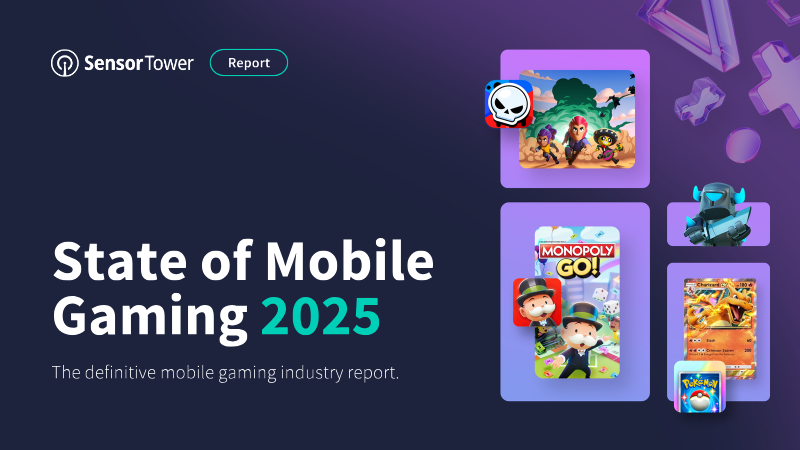
ReportSensor Tower
The State of Gaming 2024: An Analysis of the Current Mobile Gaming Market Trends
202446 pages~28 min full read
The global mobile gaming market underwent a significant correction in 2023, characterized by a 10% decline in worldwide downloads and a 2% drop in total revenue. This downturn was primarily fueled by escalating user acquisition costs and a post-pandemic stabilization of consumer habits. While the broader market contracted, a distinct shift toward casualization occurred, evidenced by an 8% increase in Casual game revenue and a 30% surge in the Hybridcasual segment. Conversely, Mid-core titles faced a 9% revenue decline, signaling a transition in player preferences toward more accessible experiences.
Geographic performance diverged sharply as publishers pivoted toward emerging markets to mitigate rising costs in established territories. While the Asian market saw a 6% revenue contraction, the Middle East, Europe, and Latin America experienced revenue growth of 8%, 7%, and 4% respectively, despite falling download numbers. This regional resilience was often driven by high-profile intellectual properties, such as the success of Monopoly GO! in Europe and the expansion of Netflix’s gaming portfolio, which saw a 194% increase in downloads through the integration of major franchises like Grand Theft Auto.
Strategic adaptations in 2023 focused on maximizing player lifetime value through Live Ops events and transmedia collaborations. Mobile gaming now commands 67% of global digital advertising spend, with marketing strategies increasingly segmented by platform; YouTube and TikTok serve as primary hubs for core gamers, while Facebook and Pinterest remain vital for reaching casual female audiences. To combat the challenges of the current landscape, the industry has embraced low-cost user-generated content and external subscription models, leveraging recognizable IP to bridge the gap between gaming and broader entertainment media.
Sensor Tower · 2026
Adjust · 2026
Sensor Tower · 2026
Sensor Tower · 2026
Sensor Tower · 2026
Sensor Tower · 2026
Sensor Tower · 2026

Sensor Tower · 2026

Sensor Tower · 2026

Sensor Tower · 2026

Sensor Tower · 2026

Sensor Tower · 2026

Almedia · 2026

AppLovin · 2026
Modern Times Group · 2026
AppMagic · 2026
InvestGame · 2026

Coda · 2026

Sensor Tower · 2026

Sensor Tower · 2026
InvestGame · 2025

G5 Entertainment AB · 2025
Xsolla · 2025
Sensor Tower · 2025