The Graveyard
Game
4 documents in the library are about The Graveyard, from writers such as DiGRA. Each has a summary and key insights with the page they come from.
Connections
Each row is a game or company named alongside The Graveyard, each column a document, oldest first. A mark means that document names it. Select a row to see those documents.
Documents about The Graveyard
Against Seamlessness and Hedonistic Loops: The Cases of Pause, Reflect, Resist, and Reform, from Interaction Design into Games
This paper challenges the dominant assumption in Interaction Design and game design that friction is a usability flaw to be minimised in pursuit of seamless, uninterrupted flow.
- The paper challenges the assumption in interaction and game design that friction is a usability flaw to be minimised, arguing instead that deliberate friction can be treated as a generative design resource.
- The authors contend that seamlessness can conceal structural inequalities and reproduce power asymmetries, while intentional friction can generate reflective, political, sensory, and transformative forms of play.
- Based on a qualitative analysis with purposeful sampling across commercial, artistic, speculative, and infrastructural cases, the authors derive four behavioural modalities: pause, reflect, resist, and reform.
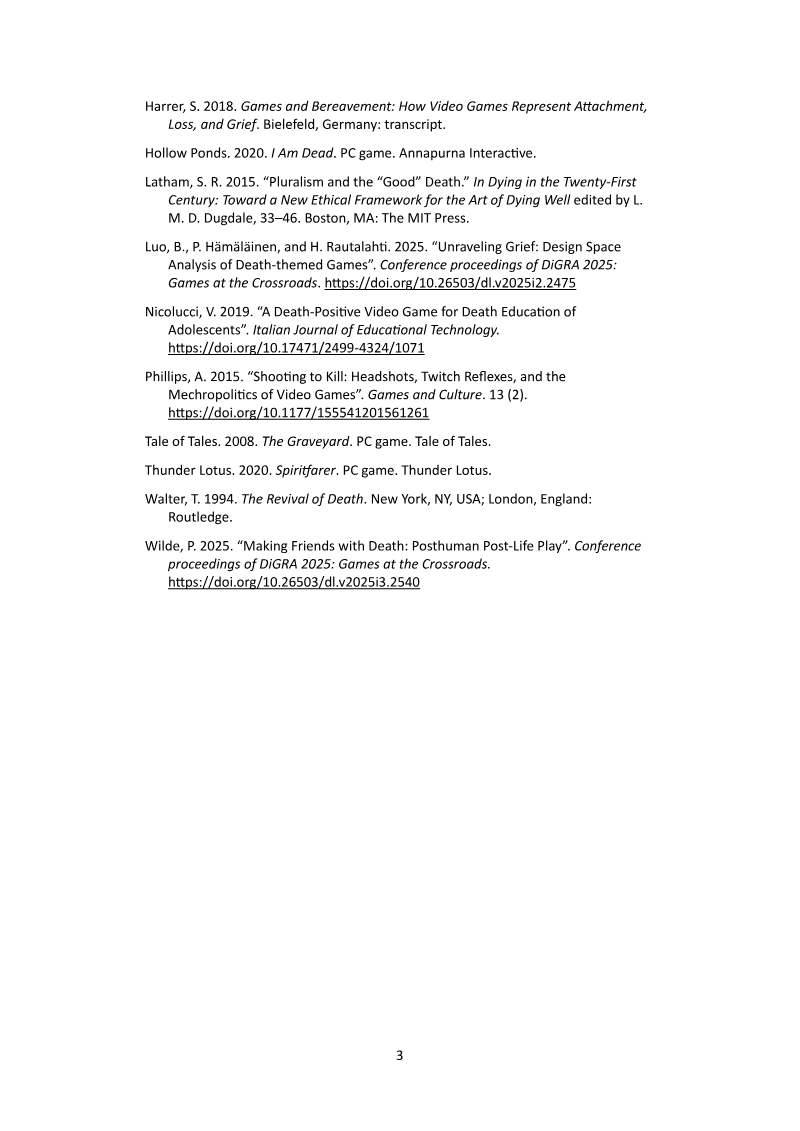
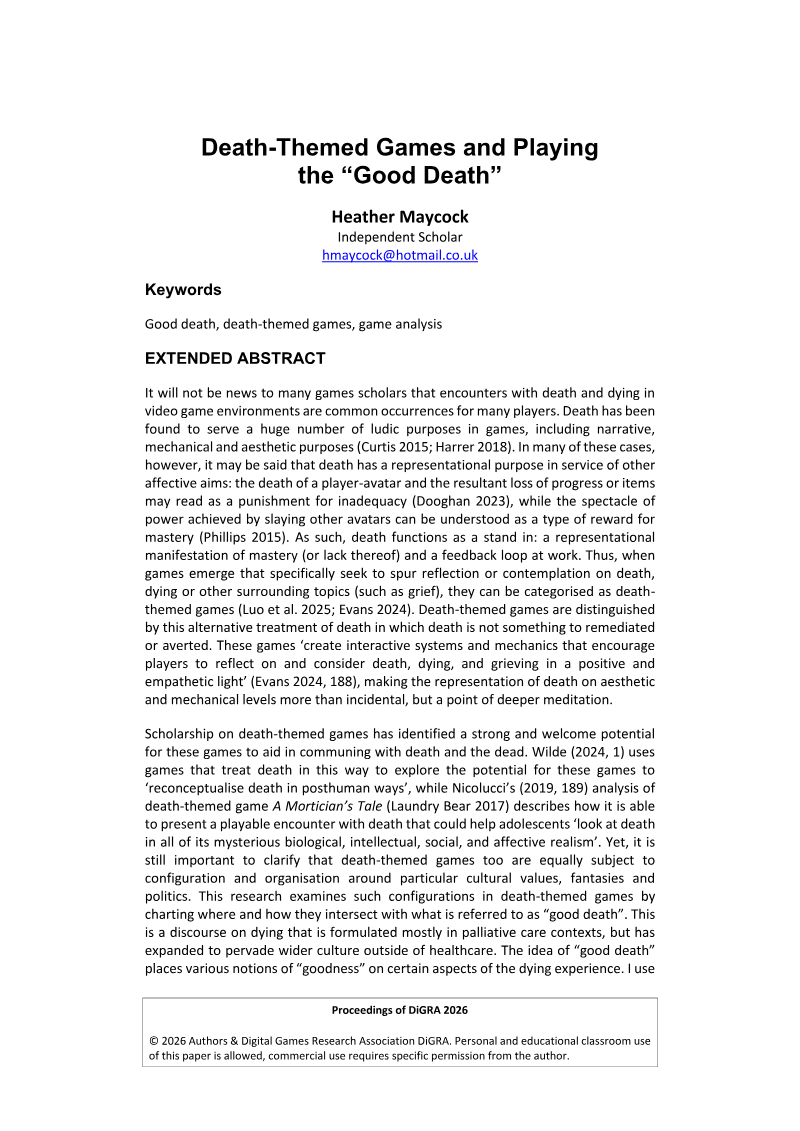
Death-Themed Games and Playing the "Good Death"
Heather Maycock's paper examines death-themed video games, a category of games that encourage players to reflect on death, dying, and grief rather than treating death merely as punishment or a mechanical feedback loop.
- Heather Maycock's paper examines death-themed video games, which encourage players to reflect on death, dying, and grief rather than treating death only as punishment or a mechanical feedback loop.
- The paper argues that death-themed games, though often presented as humane and empathetic, can encode particular cultural values, particularly the dominant twenty-first-century Anglosphere model of the "good death" originating in palliative care.
- That dominant model emphasises individualism and the dying person's control over timing, place, symptoms, and activities.
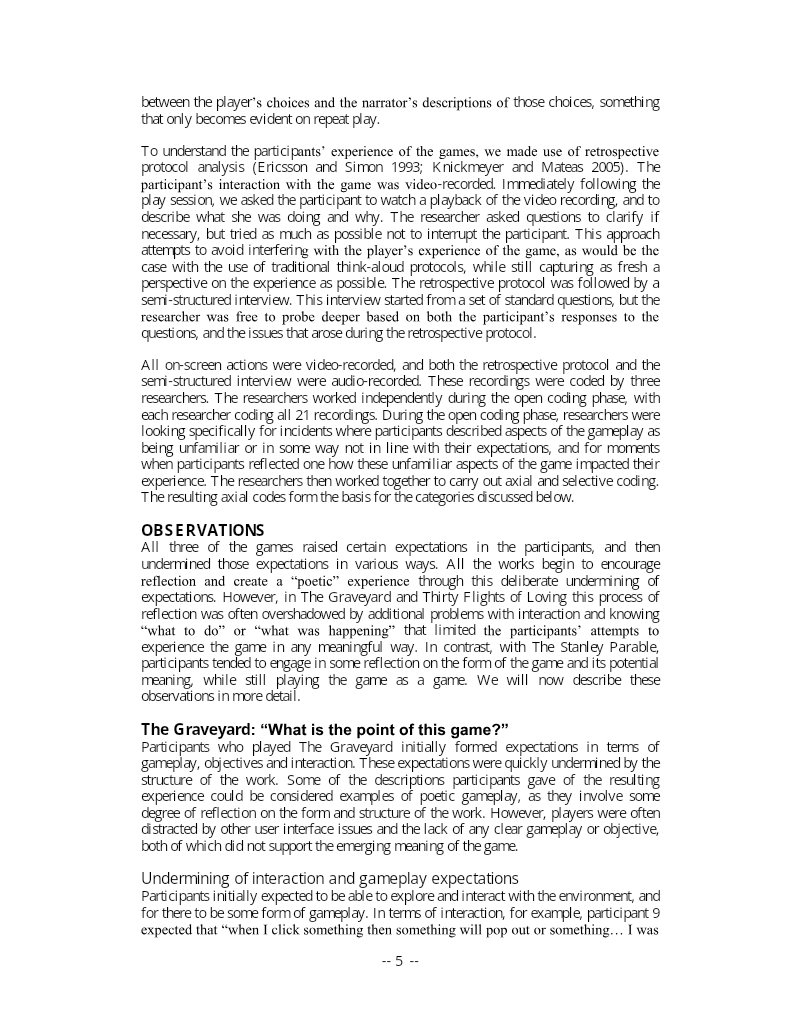
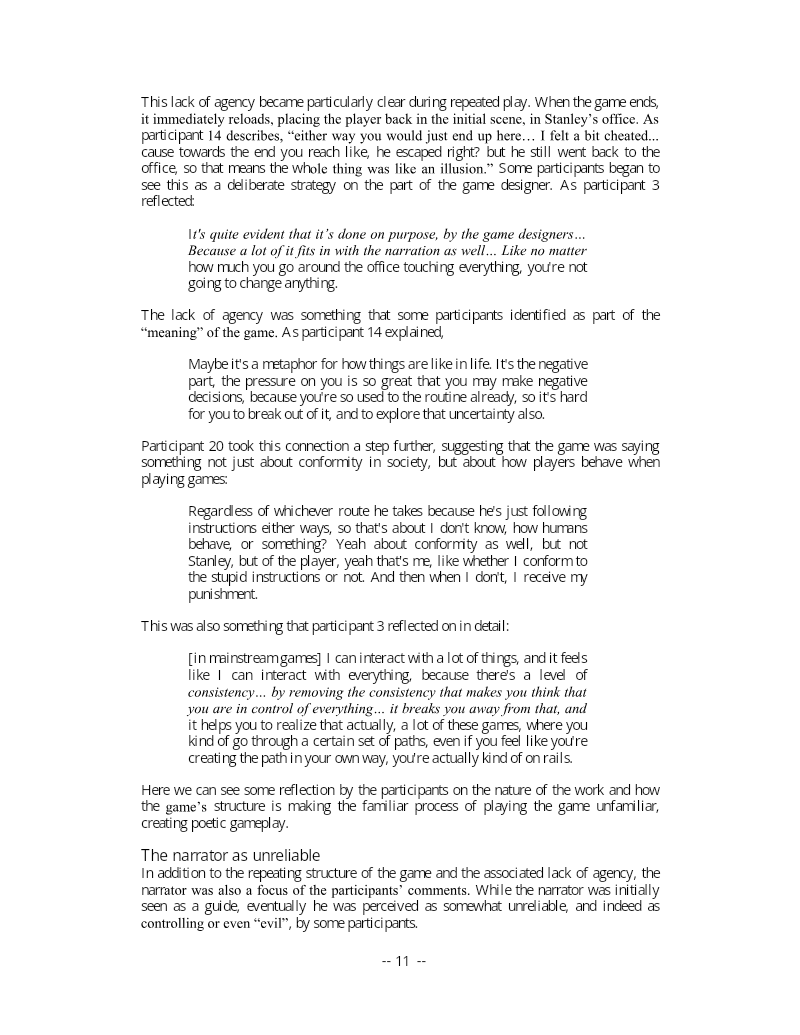
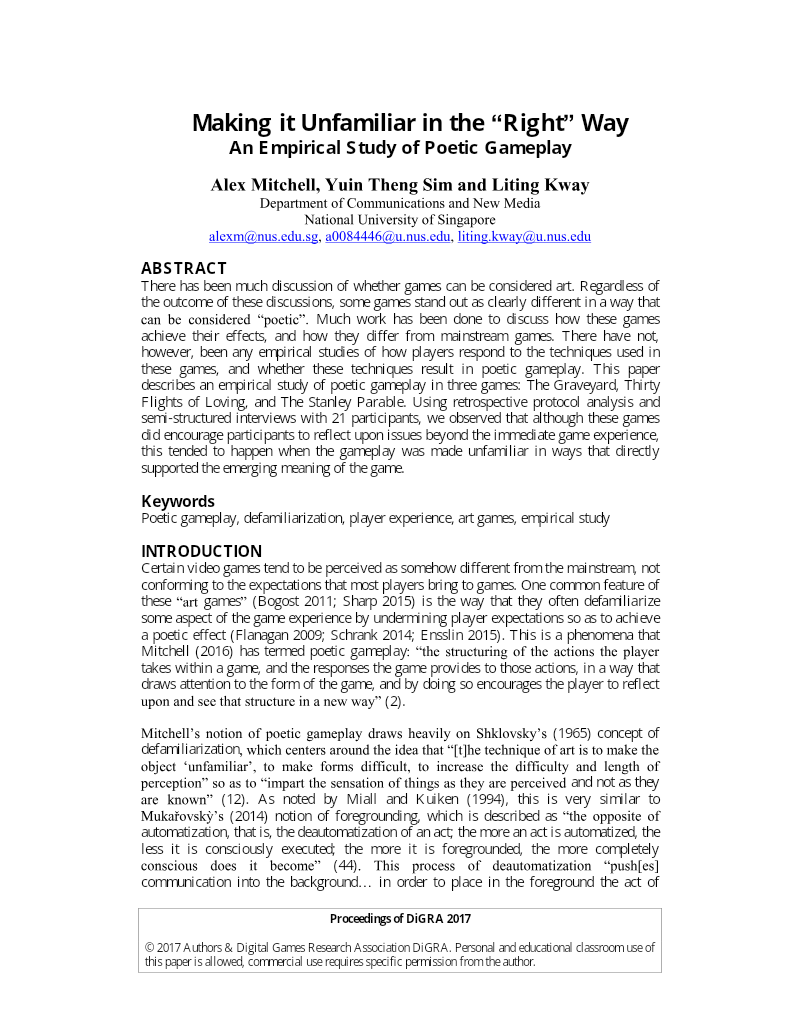
Making It Unfamiliar in the "Right" Way: An Empirical Study of Poetic Gameplay
This study investigates whether the defamiliarizing techniques theorized by Mitchell and Ensslin actually produce poetic effects in players, rather than remaining a matter of theoretical argument or close reading.
- Defamiliarization does not reliably produce reflection in players: in The Graveyard and Thirty Flights of Loving, contemplative engagement was often overshadowed by confusion over controls, objectives, and what was happening.
- The decisive factor is integration: difficulties must be meaningfully tied to a work's themes and free of extraneous obstacles that consume cognitive effort.
- The Stanley Parable was the exception, letting players reflect on its form and themes (limited agency, an unreliable narrator) while still experiencing it as a functioning game with clear goals.
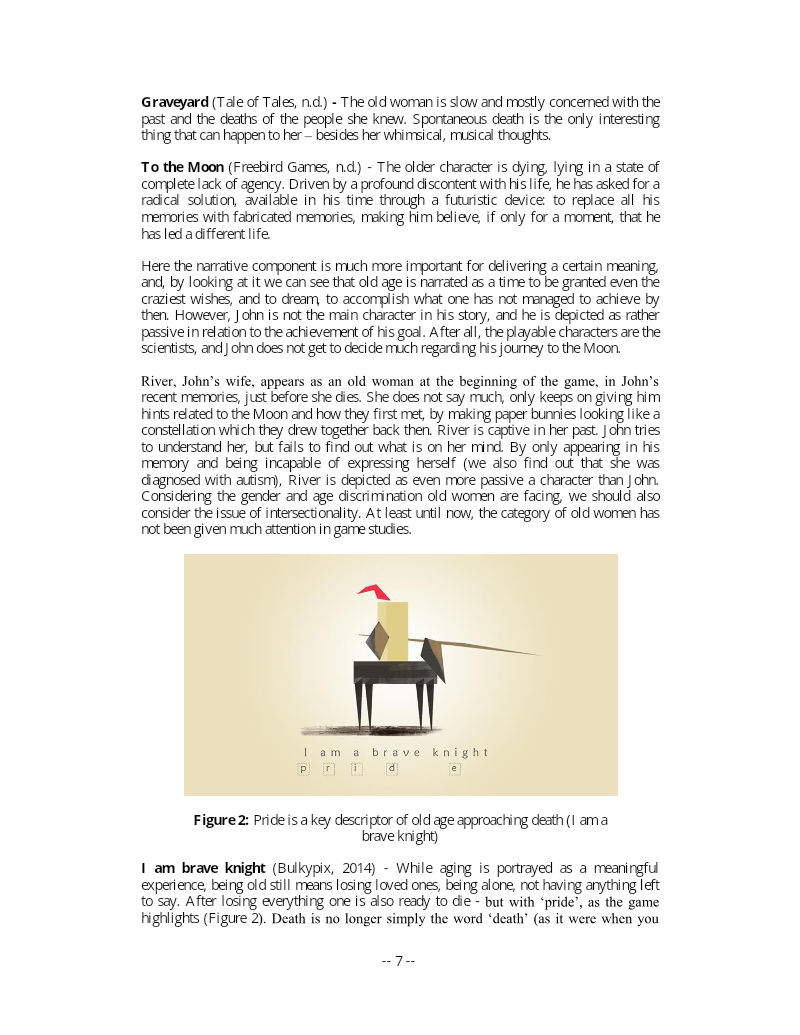
Time to Reminisce and Die: Representing Old Age in Art Games
"Time to Reminisce and Die: Representing Old Age in Art Games" argues that the medium's depictions of aging are narrow, and that older characters are rarely developed as complete, agentic figures.
- Depictions of older characters in art games are narrow: aging is most often framed through impairment, failure, cognitive decline, and death rather than as a full life stage.
- Elderly characters typically serve as rhetorical devices for meditating on mortality rather than as protagonists with their own goals, interiority, or capacity for growth.
- Aging is commonly modeled procedurally as degradation, expressed through slowness, diminished ability, or eventual failure.
Companies behind it
As the documents state it.