Tale of Tales
Company
2 documents in the library are about Tale of Tales, from writers such as DiGRA. Each has a summary and key insights with the page they come from.
Connections
Each row is a game or company named alongside Tale of Tales, each column a document, oldest first. A mark means that document names it. Select a row to see those documents.
Documents about Tale of Tales
Death-Themed Games and Playing the "Good Death"
Heather Maycock's paper examines death-themed video games, a category of games that encourage players to reflect on death, dying, and grief rather than treating death merely as punishment or a mechanical feedback loop.
- Heather Maycock's paper examines death-themed video games, which encourage players to reflect on death, dying, and grief rather than treating death only as punishment or a mechanical feedback loop.
- The paper argues that death-themed games, though often presented as humane and empathetic, can encode particular cultural values, particularly the dominant twenty-first-century Anglosphere model of the "good death" originating in palliative care.
- That dominant model emphasises individualism and the dying person's control over timing, place, symptoms, and activities.
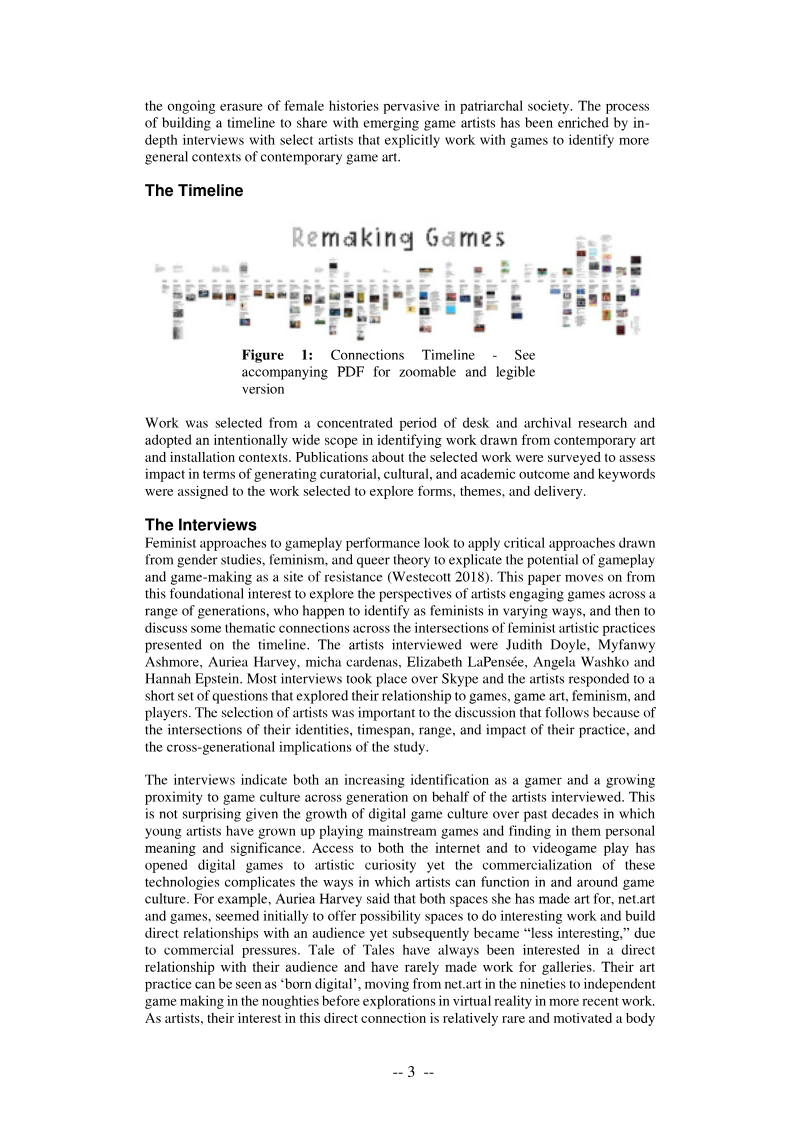
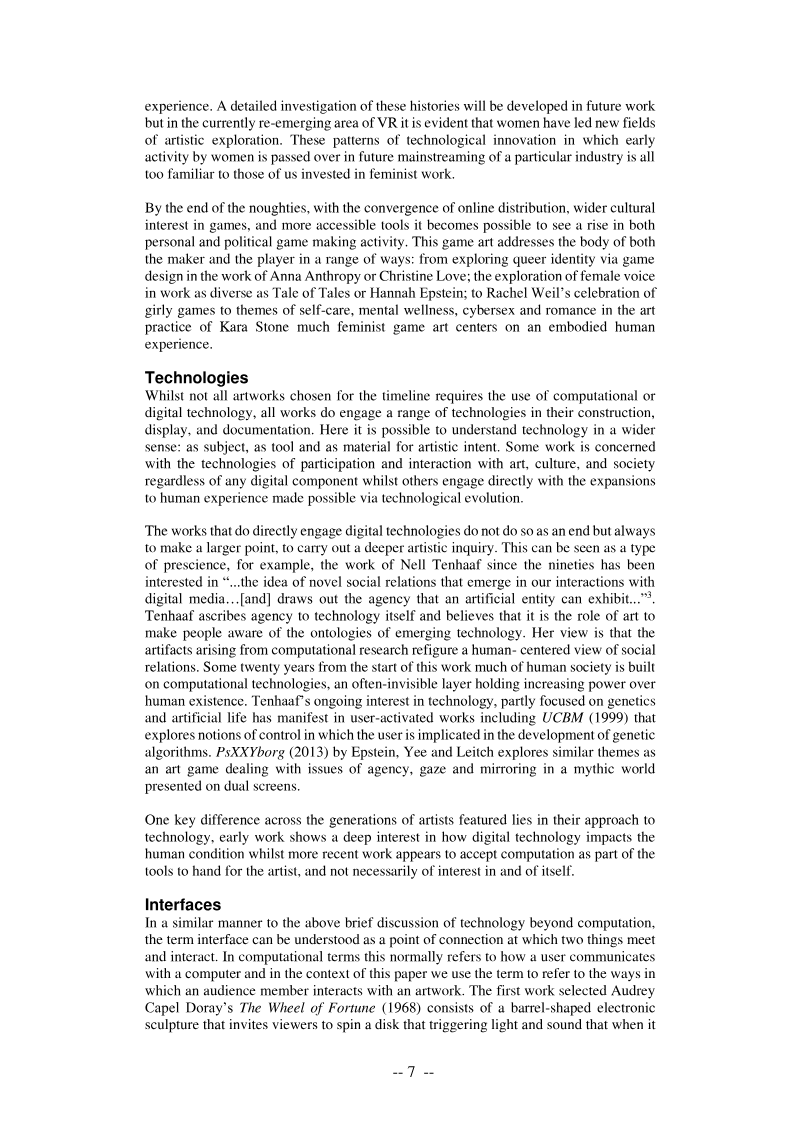
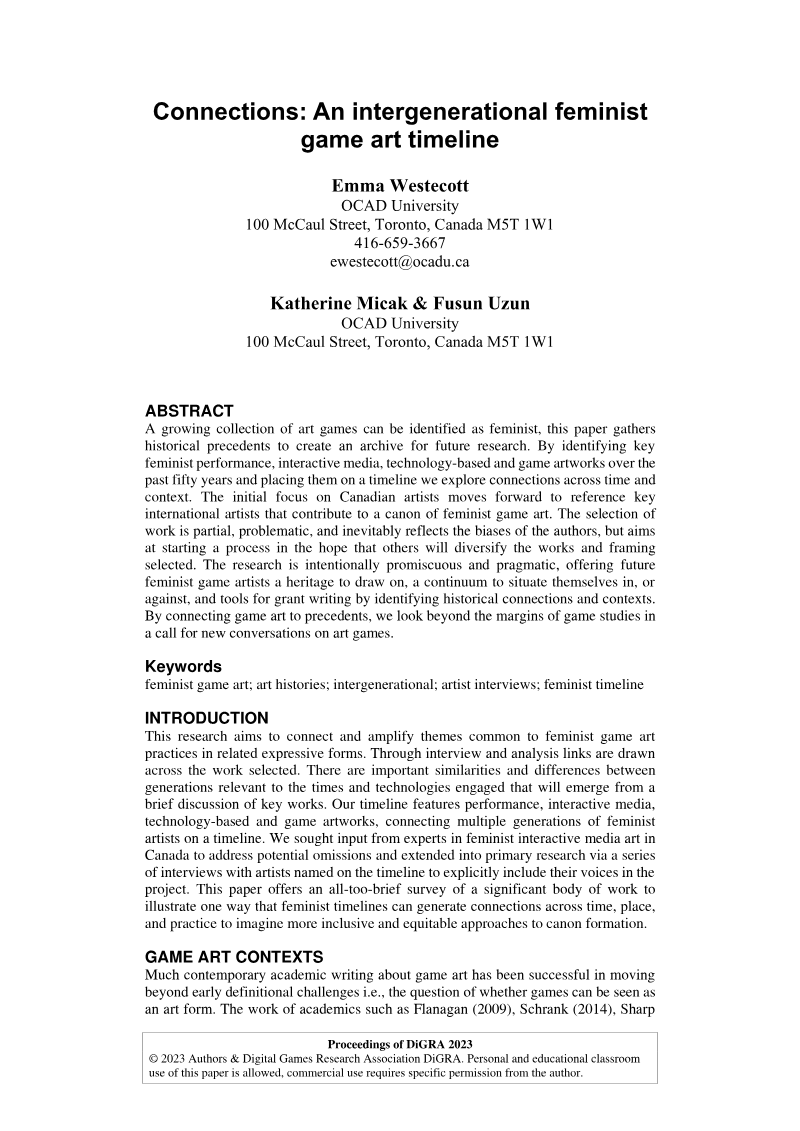
Connections: An Intergenerational Feminist Game Art Timeline
"Connections: An Intergenerational Feminist Game Art Timeline" presents a partial, deliberately biased archive of roughly fifty years of feminist game art, positioned as a starting point for collective canon formation rather than a definitive history.
- The report is a deliberately partial, biased archive of roughly fifty years of feminist game art, meant as a starting point for collective canon formation rather than a definitive history.
- Its central argument is that existing scholarly frameworks for game art are overly constraining, and that feminist questions about who defines the field, including the artists themselves, should drive future research.
- Interviews with seven artists, including Judith Doyle, Auriea Harvey, micha cardenas, and Angela Washko, reveal a widespread resistance to labels like "avant-garde" and an emphasis on direct, often non-commercial relationships with audiences.