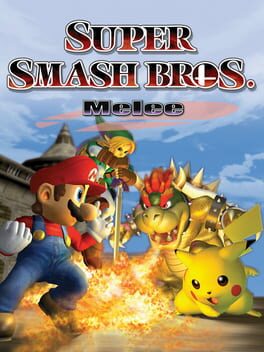
Super Smash Bros. Melee
GameBy HAL Laboratory · Released Nov 2001
Super Smash Bros. Melee is the second installment in the Super Smash Bros. series and the follow-up to the Nintendo 64 title. It includes all playable characters from the first game, and also adds characters from franchises such as Fire Emblem, of which no games had been released outside Japan at the time.
Connections
Each row is a game or company named alongside Super Smash Bros. Melee, each column a document, oldest first. A mark means that document names it. Select a row to see those documents.
About the game
- Released
- Nov 2001
- Developer
- HAL Laboratory
- Publishers
- Nintendo, Gradiente
- Genres
- Fighting, Platform
- Platforms
- Nintendo GameCube
Game data from IGDB.com
Documents about Super Smash Bros. Melee
Cloud9 Partners With Mueller Esports Medicine
North American esports organization Cloud9 has entered into a partnership with Mueller Esports Medicine to promote the latter’s health and wellness products.
- Cloud9 has entered a partnership with Mueller Esports Medicine to promote the company’s esports-focused health and wellness products.
- Super Smash Bros. Melee professional player Joseph “mang0” Marquez will serve as the central figure for the campaign, which focuses on recovery tools like the REVIVE pneumatic compression system and performance compression sleeves.
- The partnership aims to promote sustainable health habits for gamers to extend professional careers and improve performance.
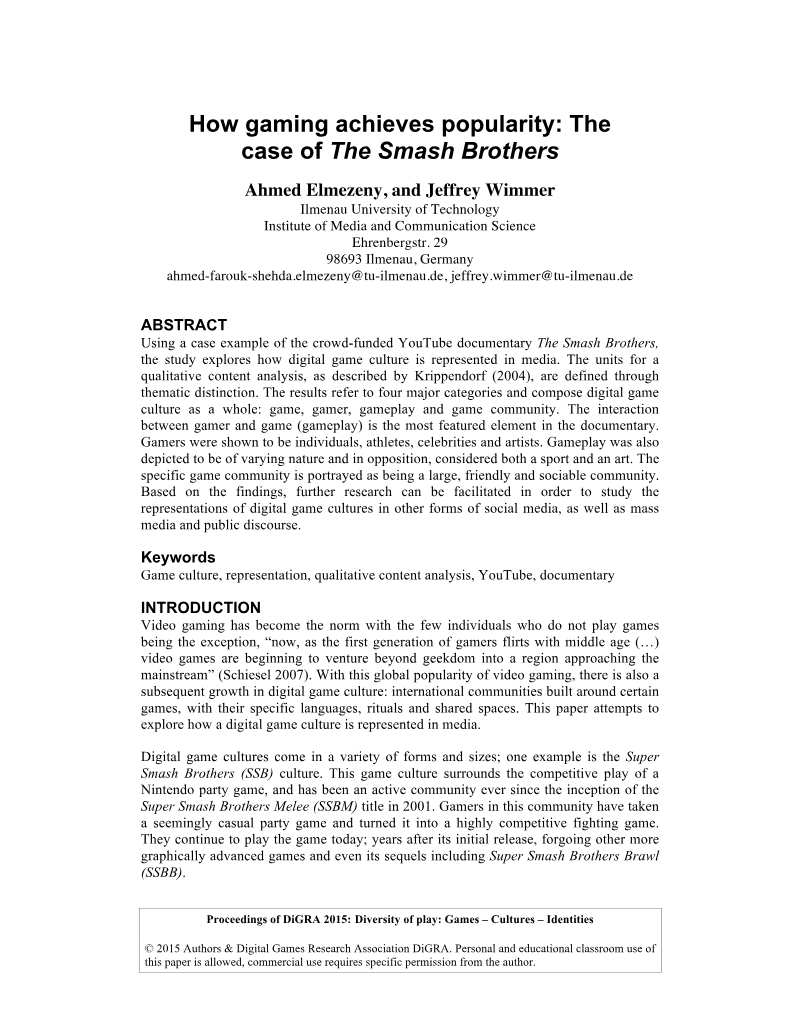
How Gaming Achieves Popularity: The Case of The Smash Brothers
A 2015 DiGRA study by Elmezeny and Wimmer examines how digital game culture is represented in mainstream and online media, using the crowd-funded YouTube documentary series The Smash Brothers as a case study.
- The study is a 2015 DiGRA paper by Elmezeny and Wimmer that uses the nine-episode, roughly 257-minute YouTube documentary series The Smash Brothers as a case study of how gaming is portrayed in media, focusing on the competitive Super Smash Bros. Melee (SSBM) community after its 2012 surge in visibility.
- A qualitative content analysis coded the documentary into four categories (gamer, game, gameplay, community), with gameplay (216 codes) and gamer (197 codes) dominating, and the portrayal of gamers was found to both challenge and reinforce stereotypes.
- The documentary underrepresents female gamers, who appear in only four instances, and the community it depicts is male-dominated and geographically split, especially between East and West Coast players.
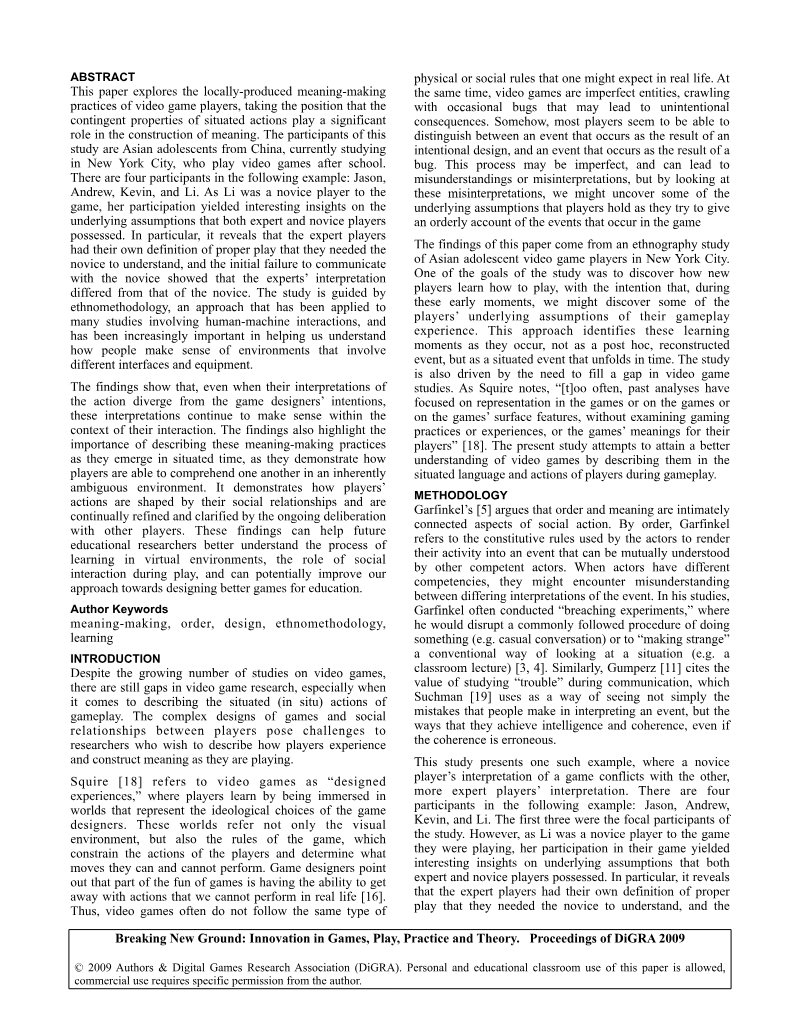
The Order of Play: Seeing, Teaching, and Learning Meaning in Video Games
Hung's "The Order of Play: Seeing, Teaching, and Learning Meaning in Video Games" examines how players collectively make sense of a game and pass that understanding to others.
Playing with the Rules: Social and Cultural Aspects of Game Rules in a Console Game Club
This study examines a Swedish console game club, focusing on how the rules of games are shaped by the social and cultural contexts in which they are played.
- The study argues that treating rules as the formal, defining core of games is problematic when games are considered apart from the social and cultural contexts in which they are actually played.
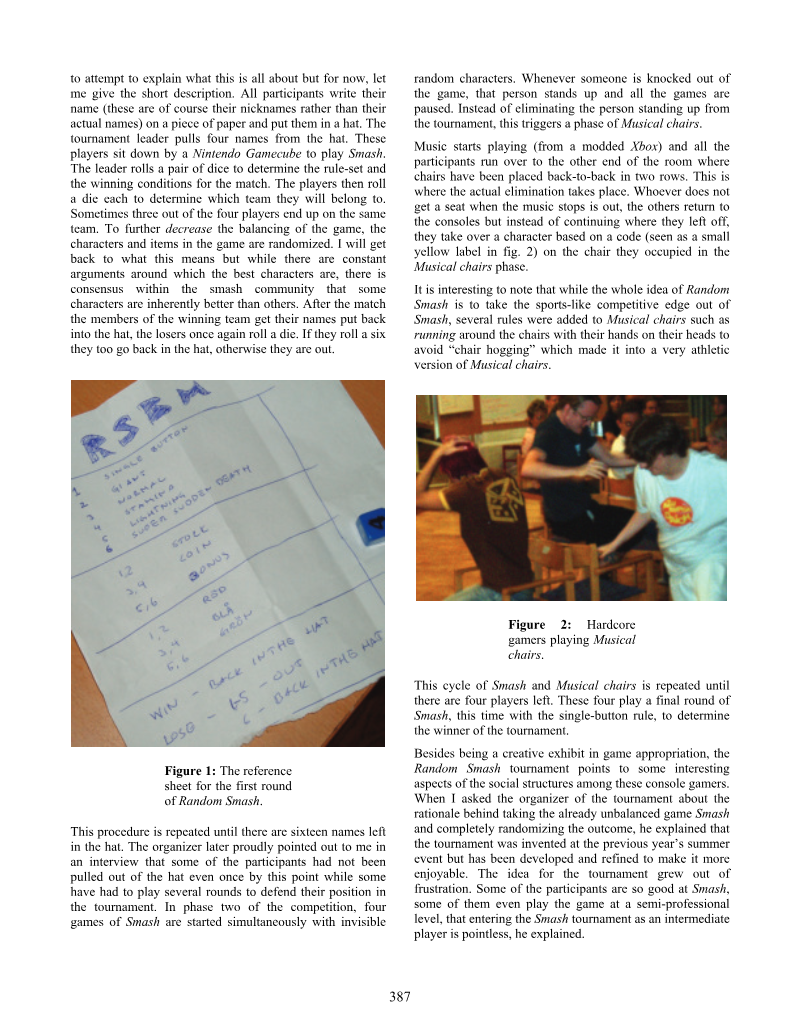
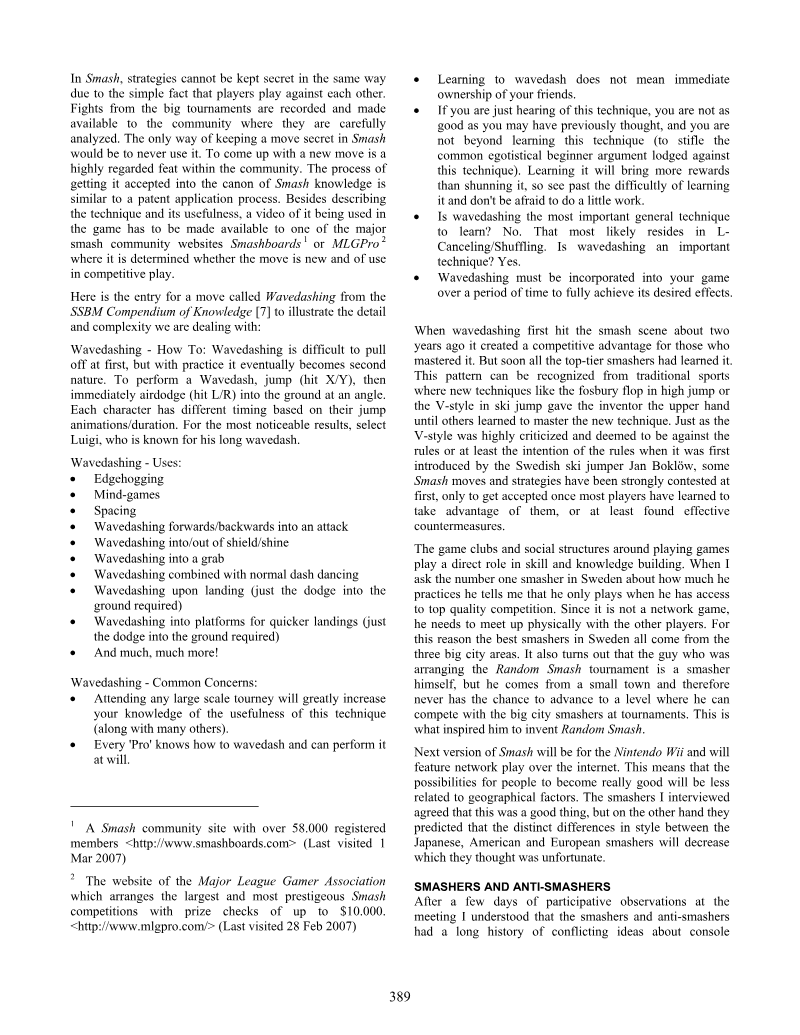
- Based on participant observation and interviews at a week-long summer meeting of roughly eighty mostly late-teen and early-twenties members of a Swedish console game club, plus pre-event web forum monitoring, the research centres on Super Smash Bros. Melee and its randomized variant, Random Smash.
- Random Smash, which randomizes characters, items, and win conditions, shows how a game's experienced form can shift dramatically while its core rules stay unchanged.