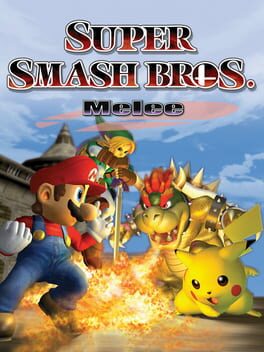
Super Smash Bros. Melee
GameBy HAL Laboratory · Released Nov 2001
Documents about Super Smash Bros. Melee
Whitepaper8 pages
The Order of Play: Seeing, Teaching, and Learning Meaning in Video Games
Hung's "The Order of Play: Seeing, Teaching, and Learning Meaning in Video Games" examines how players collectively make sense of a game and pass that understanding to others.
- A novice's misreading of Super Smash Bros. Melee's damage-percentage indicator as "more is good" was internally coherent and grounded in embodied experience, and experts corrected it by treating their shared interpretation as the accountable norm rather than by faulting her logic.
- Breakdowns in interpretation and the corrections that follow them expose the implicit rules of play and the social work through which meaning is collectively established among players.
- Situated learning within a community does not guarantee mechanical mastery: a novice receiving fragmented, often unanswered instructions from friends speaking a different dialect of play ultimately abandoned the game when her needs went unmet.
DiGRAJan 2009
Whitepaper7 pages
Playing with the Rules: Social and Cultural Aspects of Game Rules in a Console Game Club
This study examines a Swedish console game club, focusing on how the rules of games are shaped by the social and cultural contexts in which they are played.
- The study argues that treating rules as the formal, defining core of games is problematic when games are considered apart from the social and cultural contexts in which they are actually played.
- Based on participant observation and interviews at a week-long summer meeting of roughly eighty mostly late-teen and early-twenties members of a Swedish console game club, plus pre-event web forum monitoring, the research centres on Super Smash Bros. Melee and its randomized variant, Random Smash.
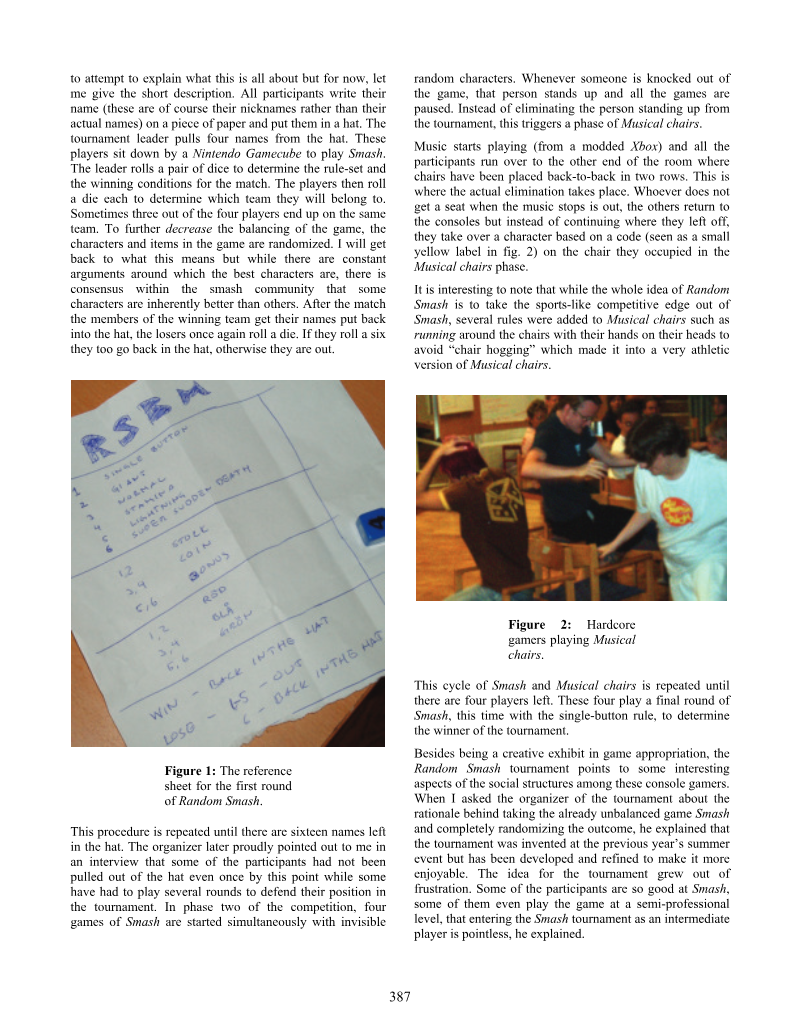
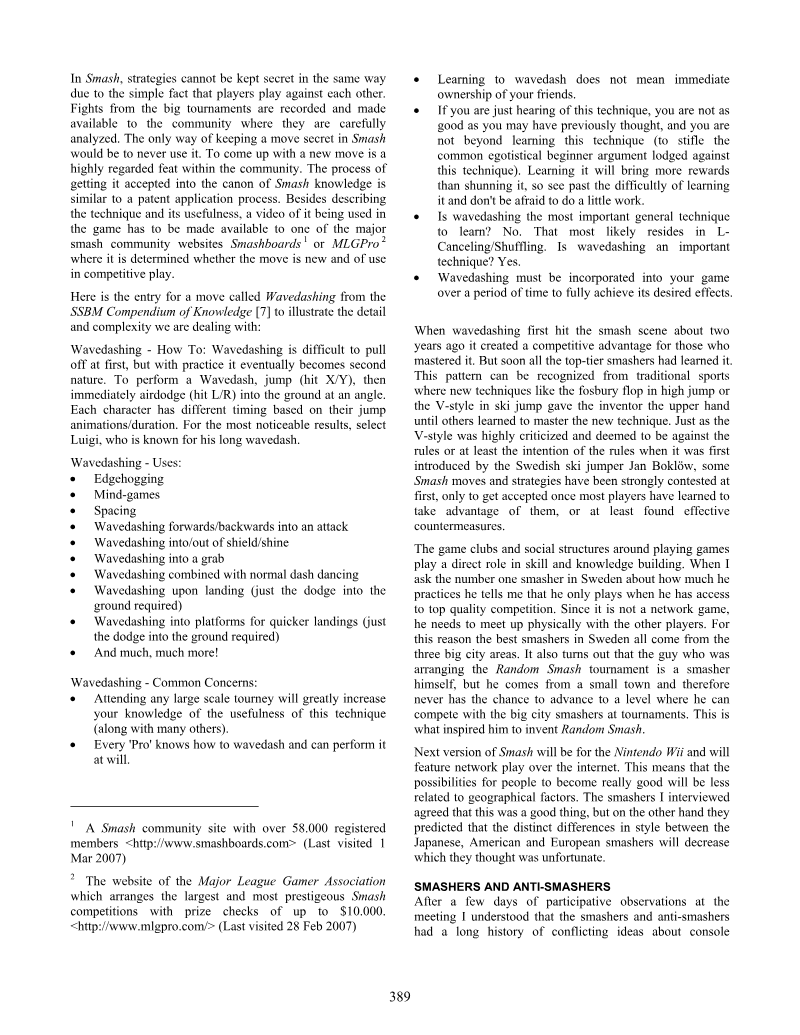
- Random Smash, which randomizes characters, items, and win conditions, shows how a game's experienced form can shift dramatically while its core rules stay unchanged.
DiGRAJan 2007