Resident Evil 5
13 documents in the library are about Resident Evil 5, from writers such as Capcom, the newest from 2014. Each has a summary and key insights with the page they come from.

Resident Evil 5 is the seventh video game in the Resident Evil series. It features similar gameplay to Resident Evil 4 utilizing the same over the shoulder view, but this time the environment plays a significant role. The player is now dependent on his partner more than in older games. When the partner's health bar drop down to 0, he will enter the dying stage where the health bar will flash red and gradually lower as he stays like this. Resident Evil 5 also features new types of enemies called Majini and mostly are of African descent.
- Released
- Mar 5, 2009
- Developer
- Capcom
- Genres
- Shooter, Adventure
- Platforms
- PlayStation 3, PC (Microsoft Windows), Xbox 360
- Links
- Wikipedia
Game data from IGDB.com
Documents about Resident Evil 5

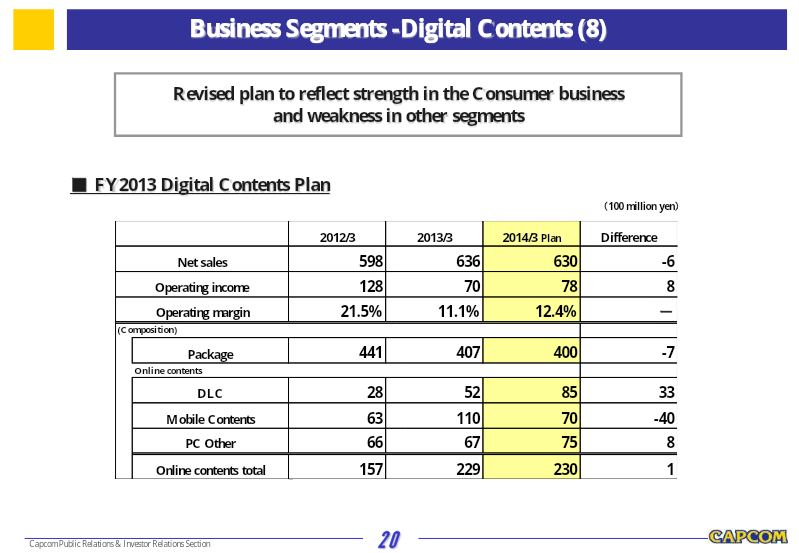

Capcom 3rd Quarter Financial Results: Fiscal Year Ending March 31, 2014
Capcom’s financial results for the third quarter of the fiscal year ending March 31, 2014, reflect a period of growth in net sales alongside a decline in operating income.
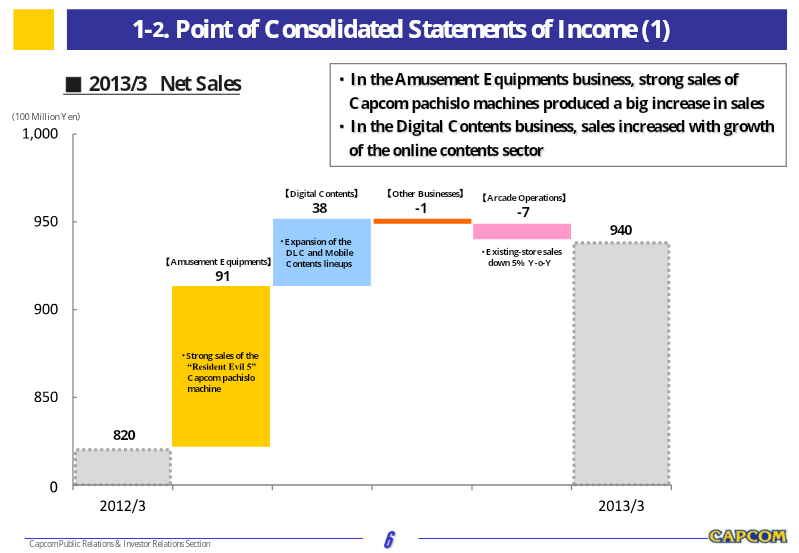
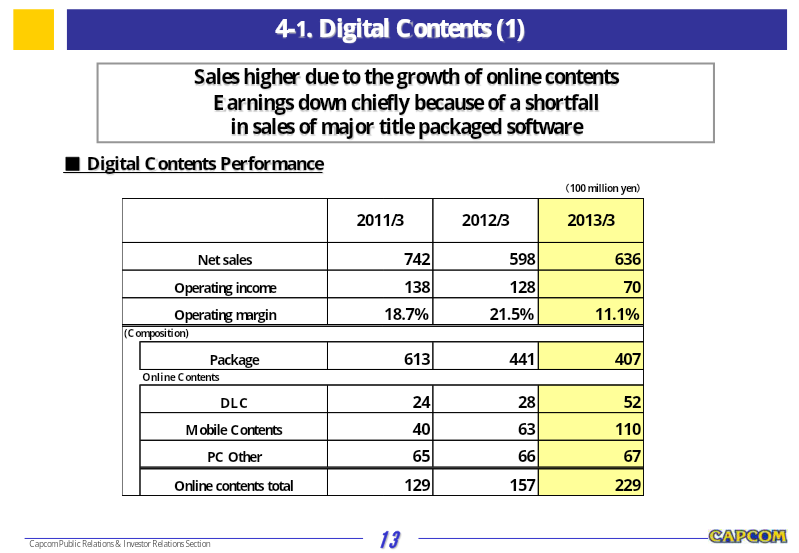

Capcom Financial Highlights: Fiscal Year Ended March 31, 2013
The fiscal year ending March 31, 2013, represented a period of transition for Capcom, characterized by a strategic shift toward digital expansion and business restructuring.
- Capcom reported net sales of 94,075 million yen for the fiscal year ending March 31, 2013, but net income fell to 2,973 million yen due to restructuring costs and underperforming packaged software.
- The company incurred 7,224 million yen in special losses related to organizational restructuring, which significantly impacted overall profitability.
- The Amusement Equipments segment acted as a primary growth driver, led by the success of the Resident Evil 5 pachislo machine, which sold approximately 48,000 units.
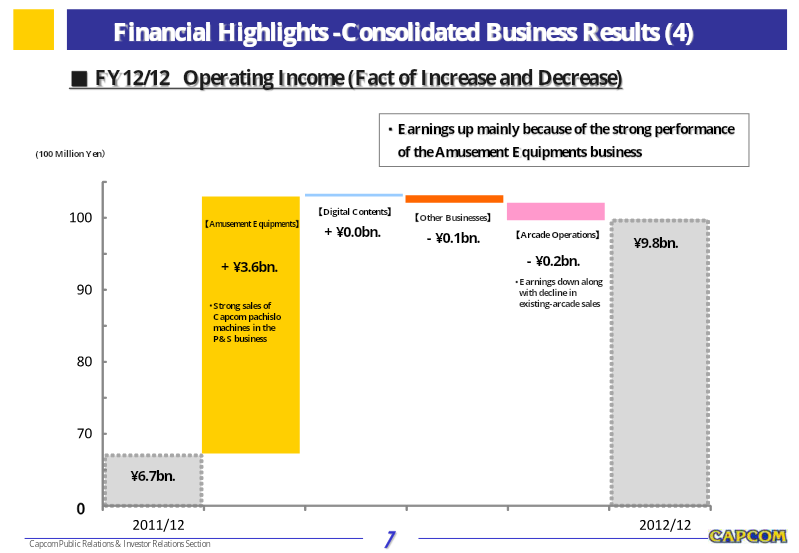
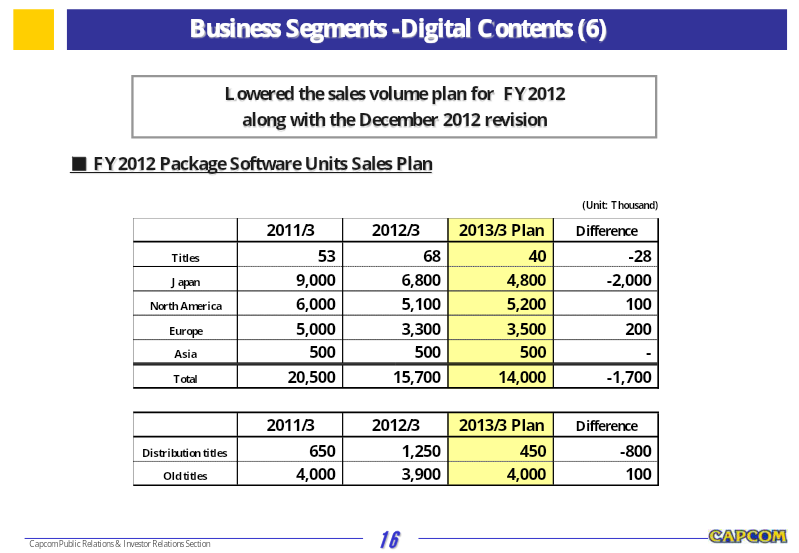

Capcom 3rd Quarter Financial Results: Fiscal Year Ending March 31, 2013
The third-quarter financial results for the fiscal year ending March 31, 2013, detail a period of volatility for Capcom, characterized by strong growth in the amusement equipment sector offset by underperforming packaged software sales.
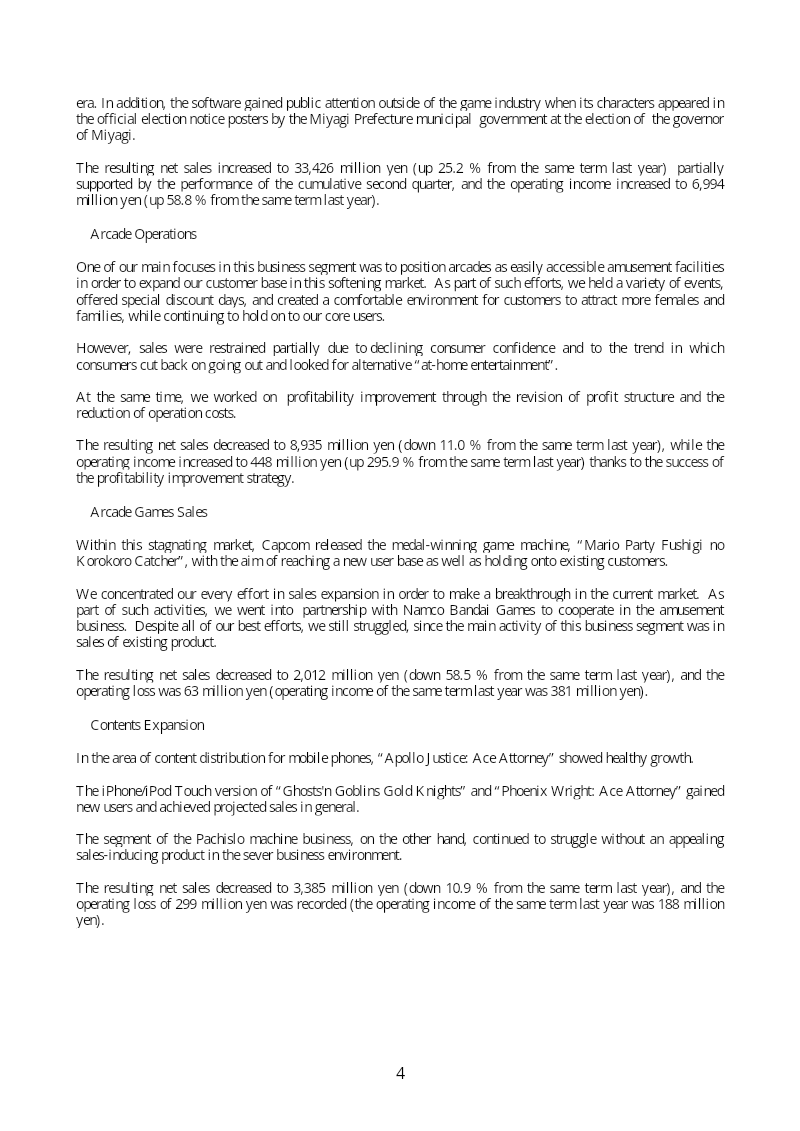
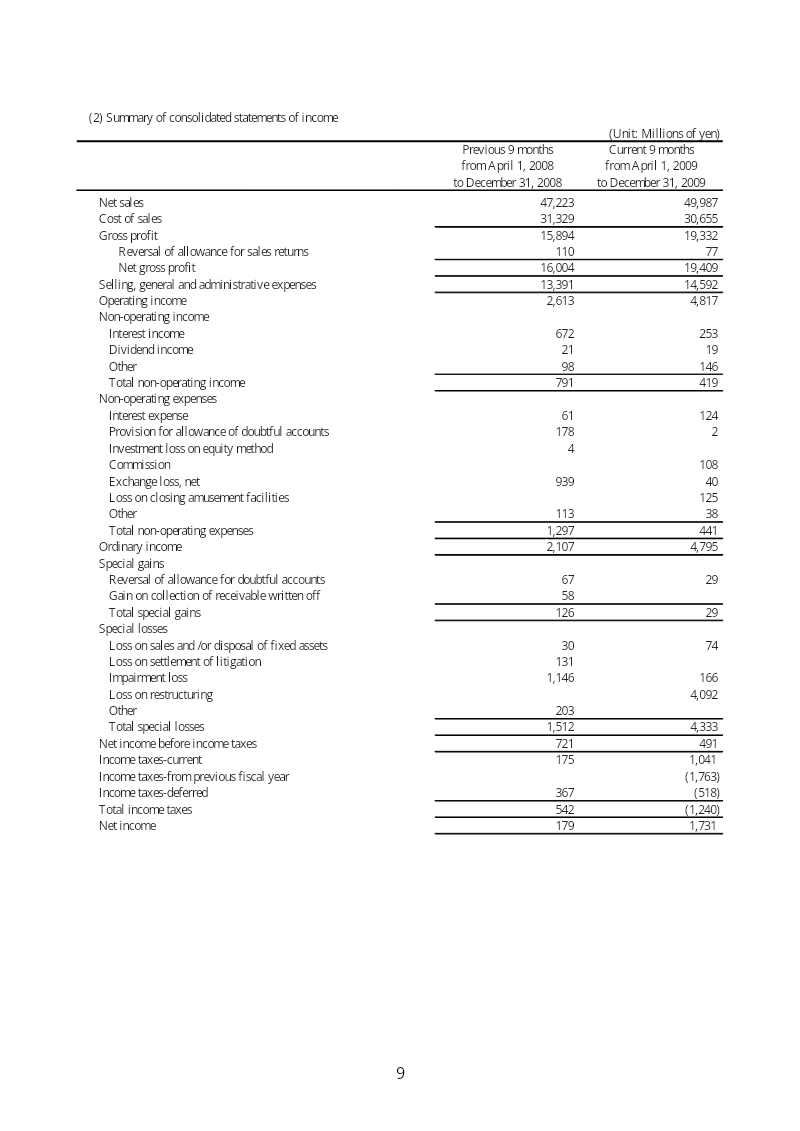
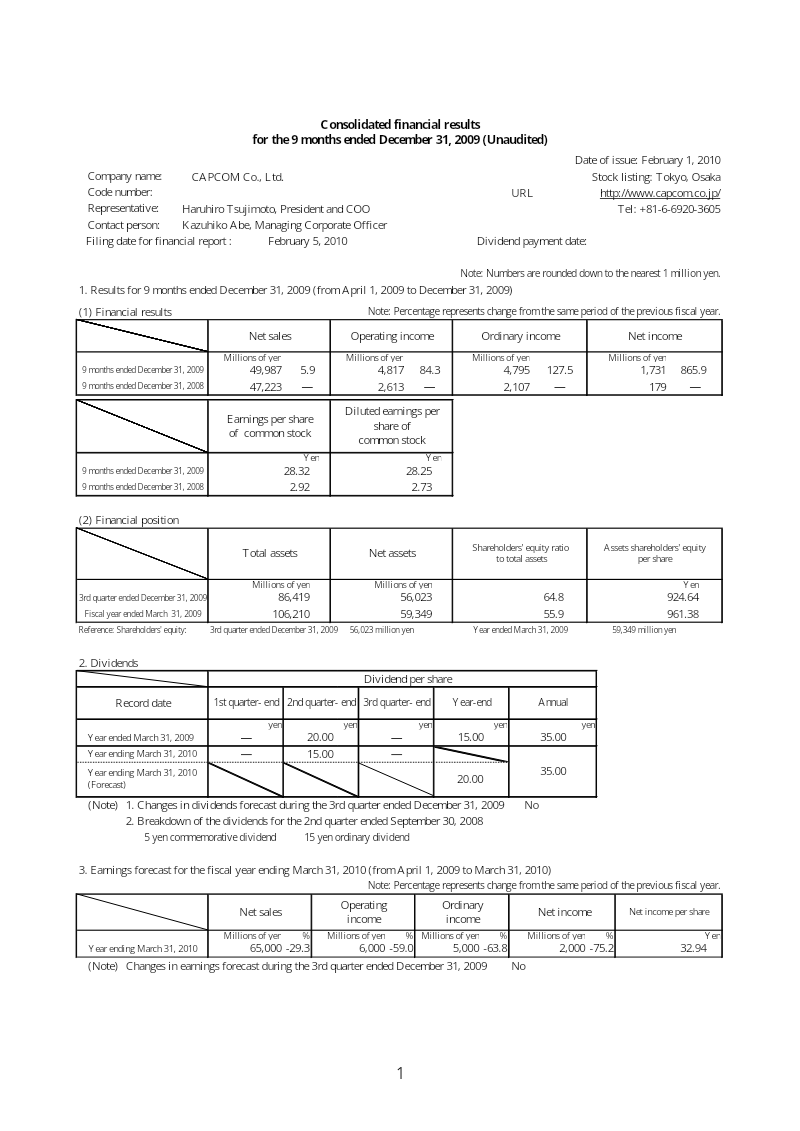
Capcom Consolidated Financial Results: 9 Months Ended December 31, 2009
Capcom’s consolidated financial results for the nine-month period ending December 31, 2009, reflect a period of moderate growth despite a challenging macroeconomic environment characterized by deflationary pressure and declining consumer confidence.
Capcom Consolidated Financial Results: 6 Months Ended September 30, 2009
Capcom’s consolidated financial results for the six-month period ending September 30, 2009, demonstrate significant growth in net sales and profitability compared to the same period in the previous year.
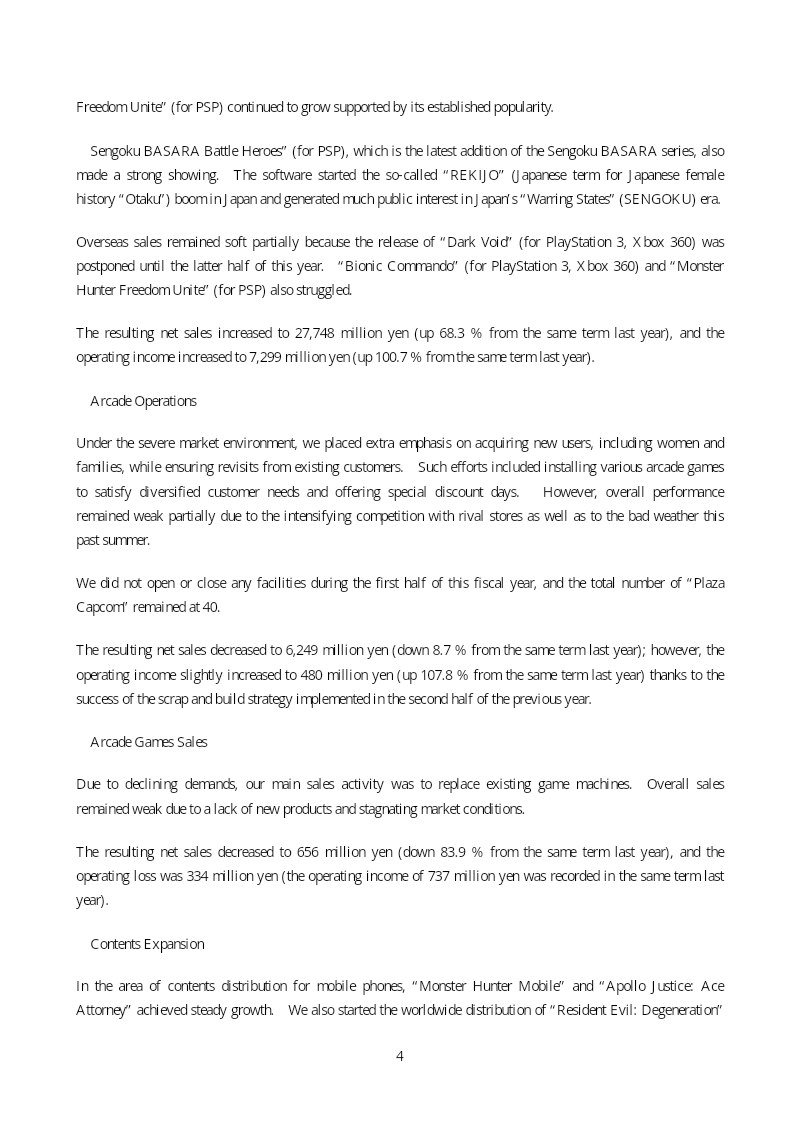
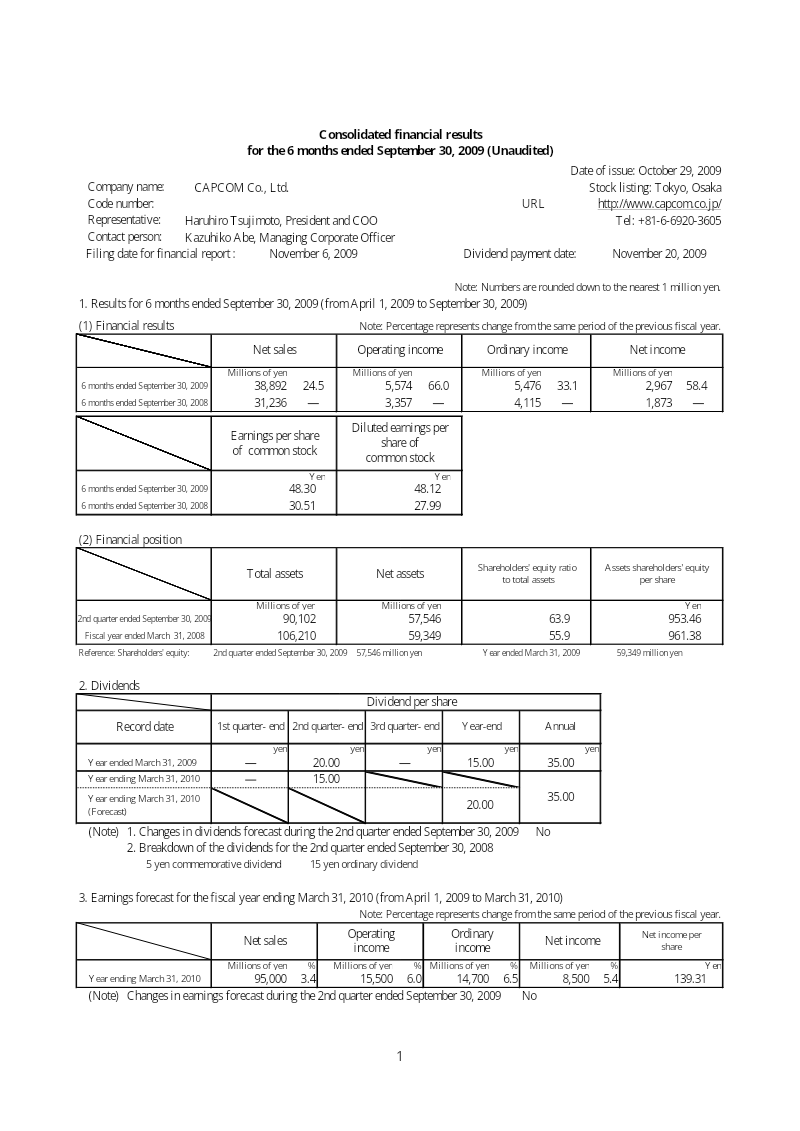
- Capcom achieved significant growth for the six months ending September 30, 2009, with net sales rising 24.5% to 38,892 million yen and net income increasing 58.4% to 2,967 million yen.
- The home video game segment drove overall performance with a 68.3% increase in net sales to 27,748 million yen, fueled primarily by the release of 'Monster Hunter Tri' for the Wii, which shipped over one million units.
- Operating income saw a substantial 66.0% increase to 5,574 million yen, despite weaker performance in the arcade and content expansion segments.
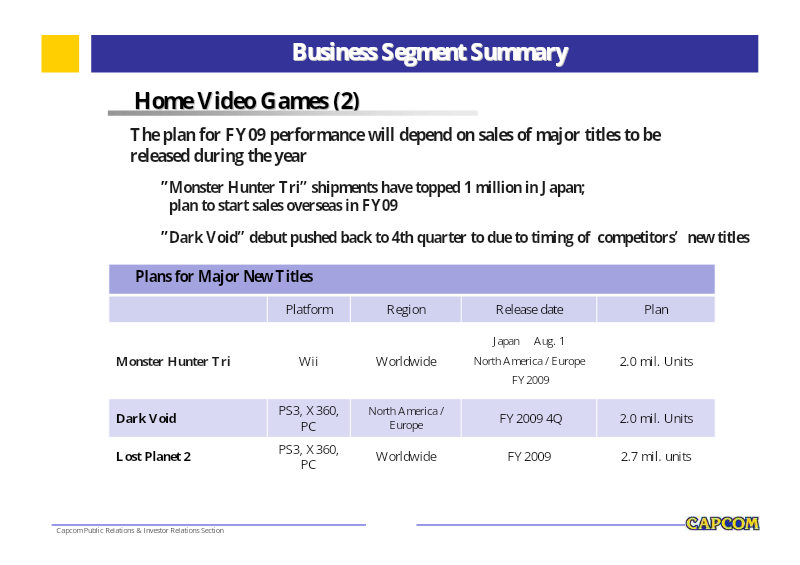

Capcom 1st Quarter Report: Fiscal Year Ending March 31, 2010
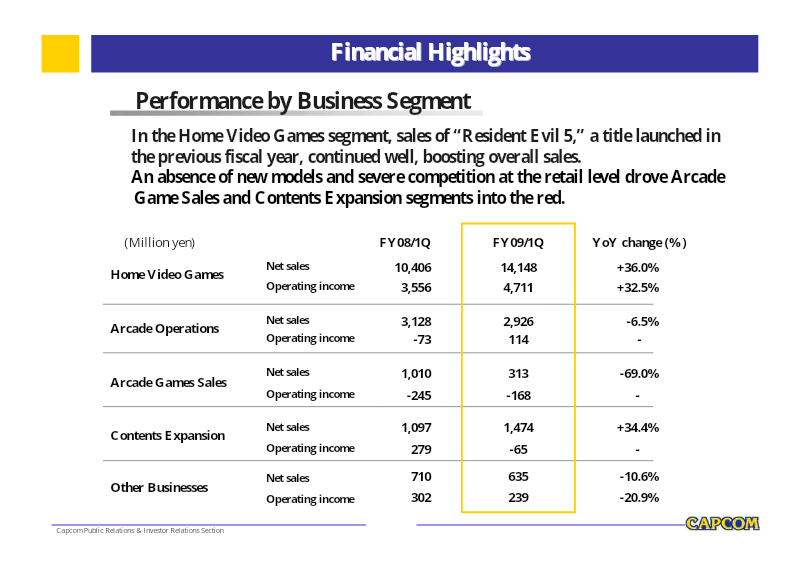
Capcom’s first-quarter financial results for the fiscal year ending March 31, 2010, demonstrate a period of robust growth driven primarily by the home video game segment.
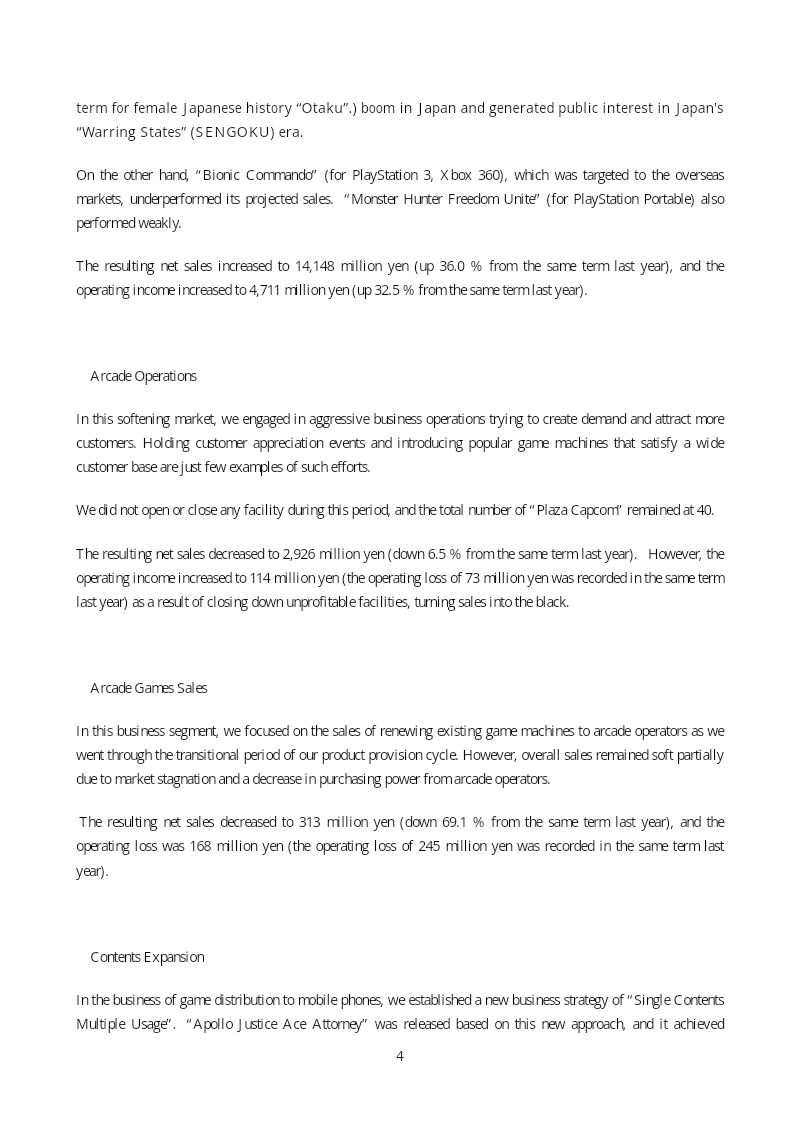
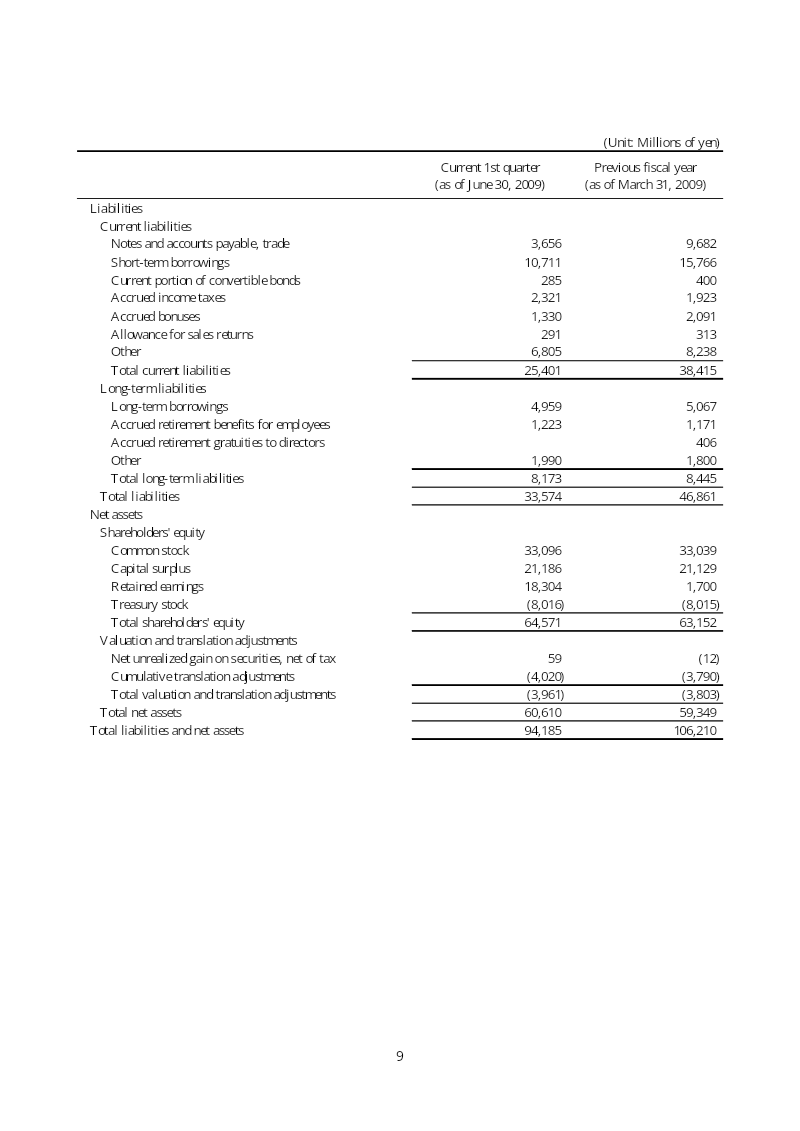
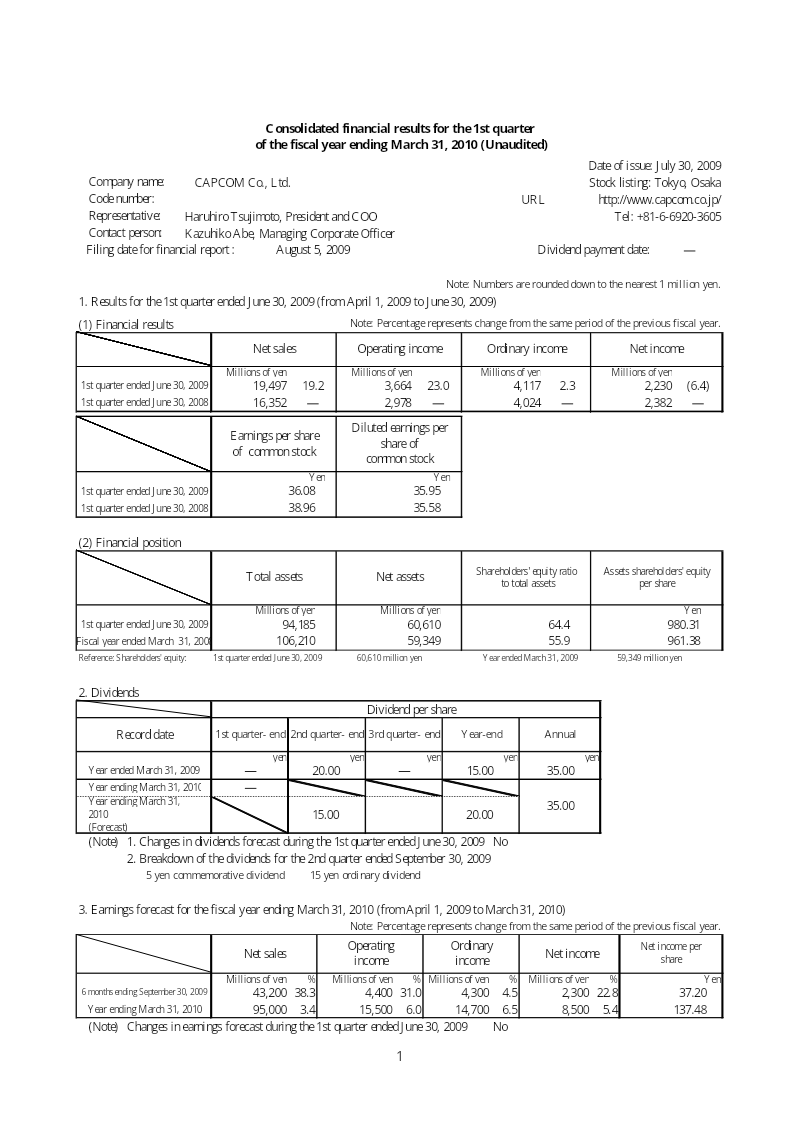
Capcom Consolidated Financial Results: 1st Quarter FY2010
Capcom’s consolidated financial results for the first quarter of the fiscal year ending March 31, 2010, reflect a period of growth driven by strong demand for home video games, particularly in overseas markets.
Capcom Consolidated Financial Results: Year Ended March 31, 2009
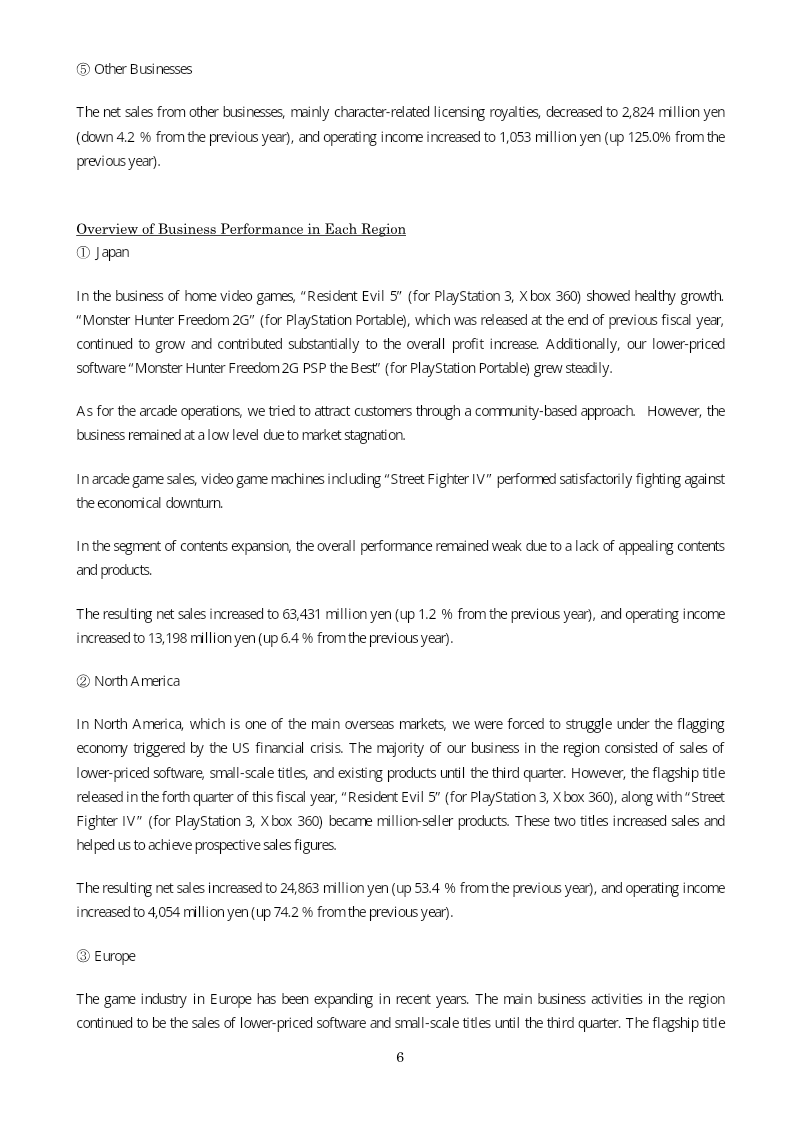
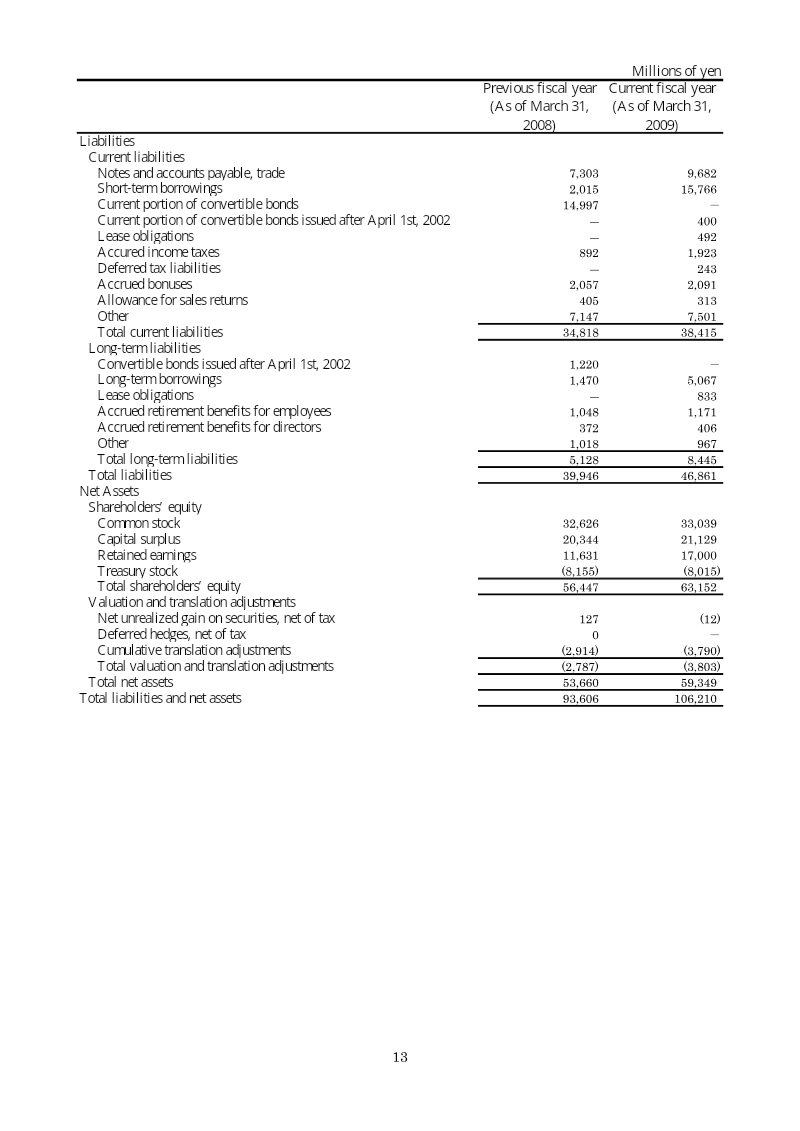
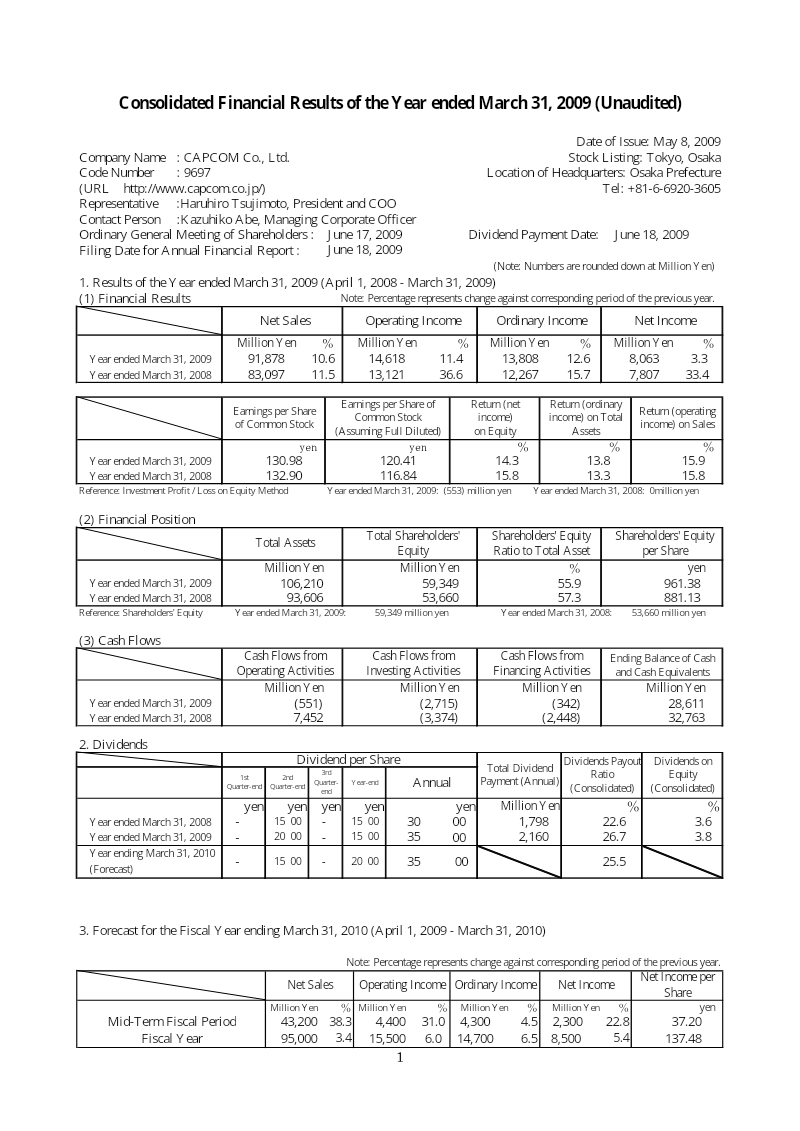
Capcom achieved robust financial growth during the fiscal year ending March 31, 2009, reporting consolidated net sales of 91,878 million yen and an operating income of 14,618 million yen.

Capcom Annual Report 2009
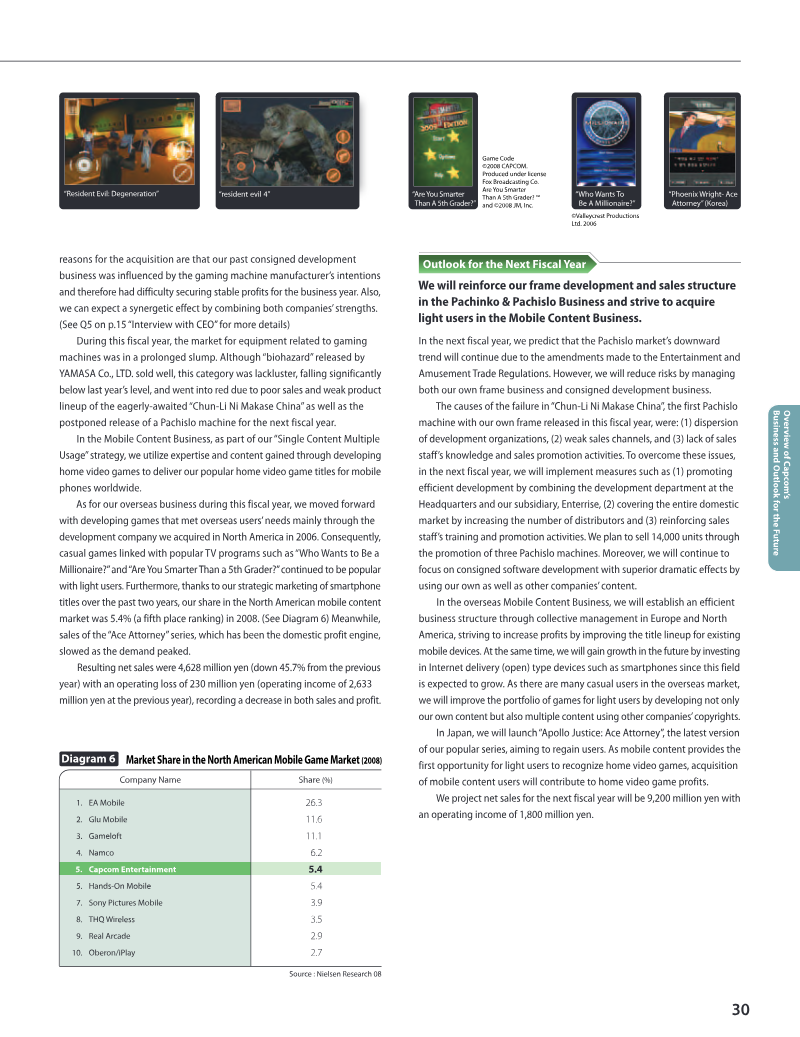
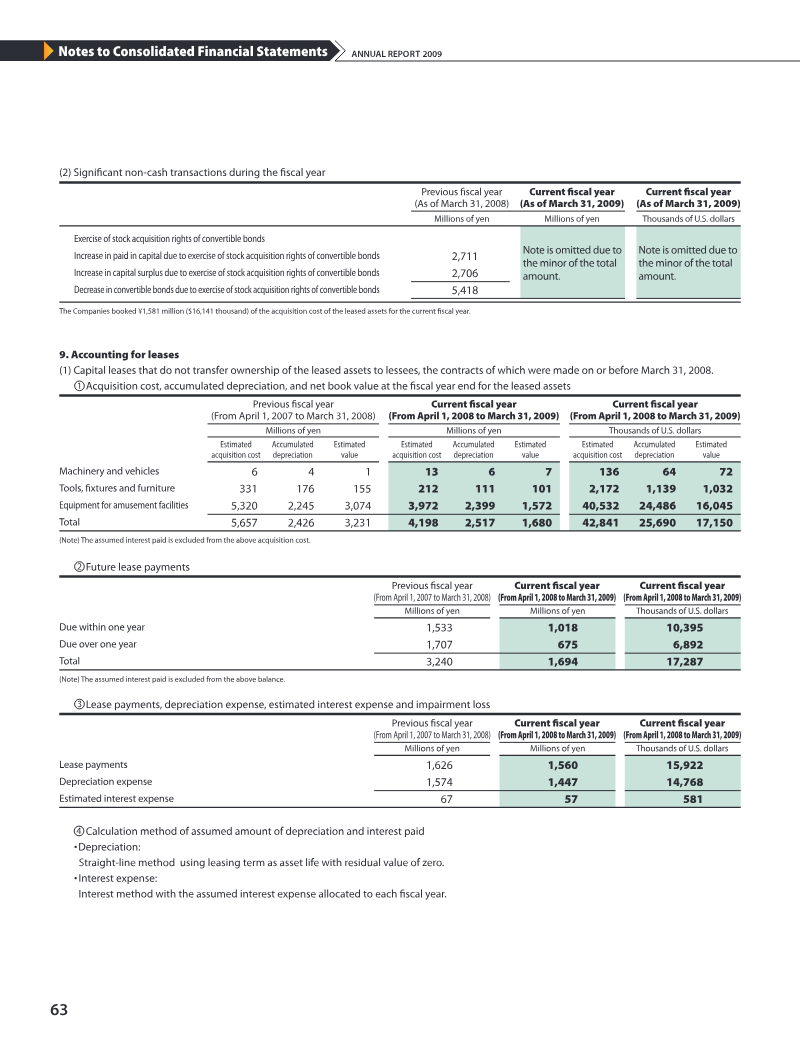
Capcom’s 2009 annual report details a period of robust financial growth and strategic transformation, characterized by a successful pivot toward global markets and multi-platform development.
- Capcom achieved its third consecutive year of growth with net sales reaching 91,878 million yen, driven by the international success of Resident Evil 5 and Street Fighter IV.
- North American and European markets now account for over 40% of total sales, validating the company's shift toward global expansion and direct-sales channels.
- The company utilizes a 'Single Content Multiple Usage' strategy to maximize intellectual property value across video games, mobile, movies, and merchandise.

Capcom 1st Quarter Report: Fiscal Year Ending March 31, 2009
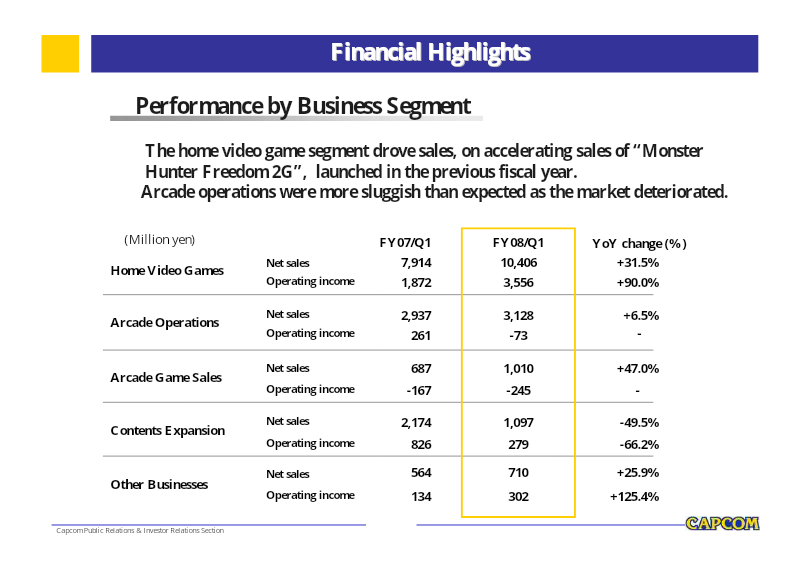
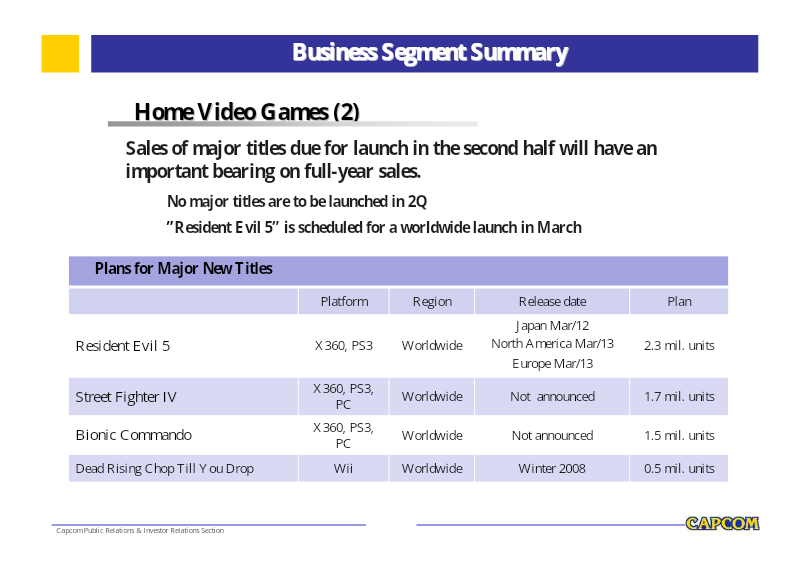
The Capcom first-quarter report for the fiscal year ending March 31, 2009, details a period of strong financial growth driven primarily by the home video game segment.

Capcom Results of Operations and Strategies: First Half of Fiscal Year Ending March 31, 2009
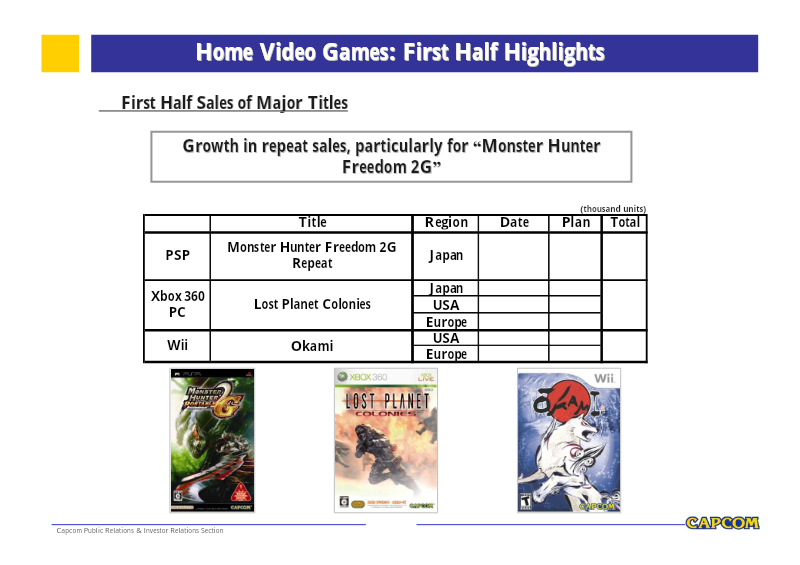
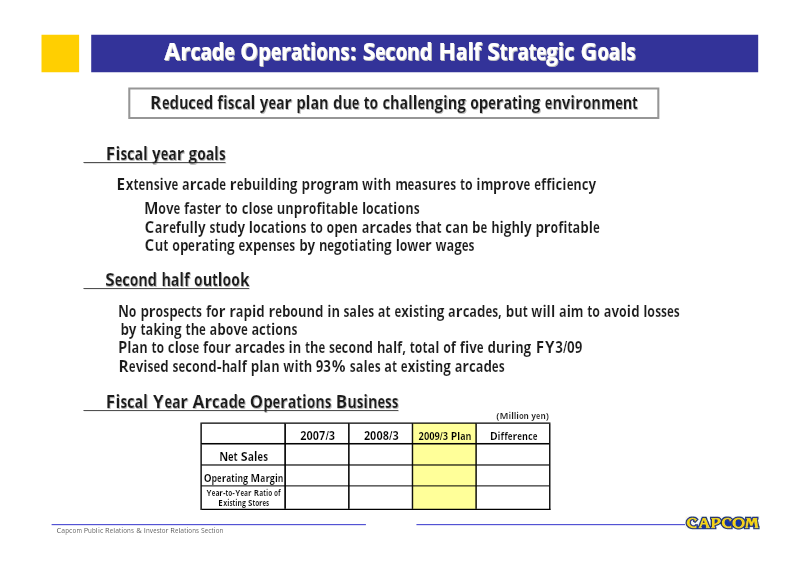
Capcom’s financial results for the first half of the fiscal year ending March 31, 2009, reflect a period of strategic transition characterized by strong profitability in the home video game segment, which offset significant underperformance in arcade operations and content expansion.

Capcom 3rd Quarter Financial Results: Fiscal Year Ending March 31, 2009
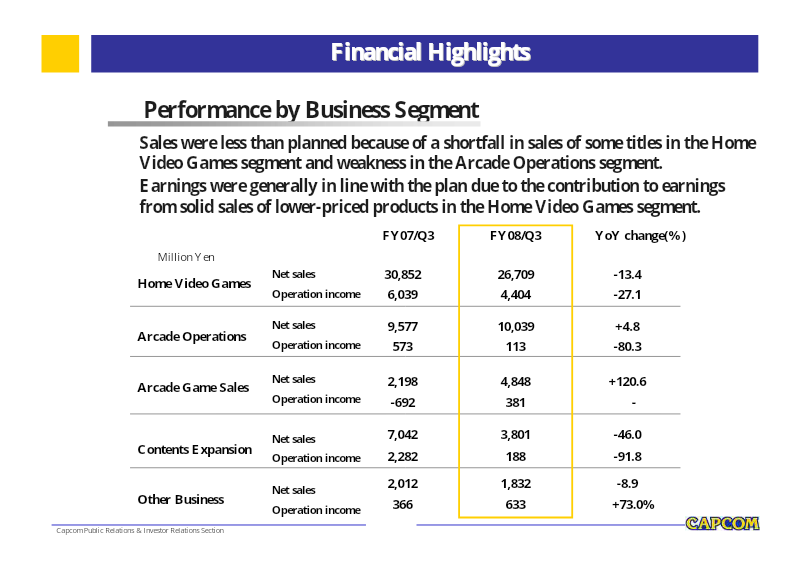
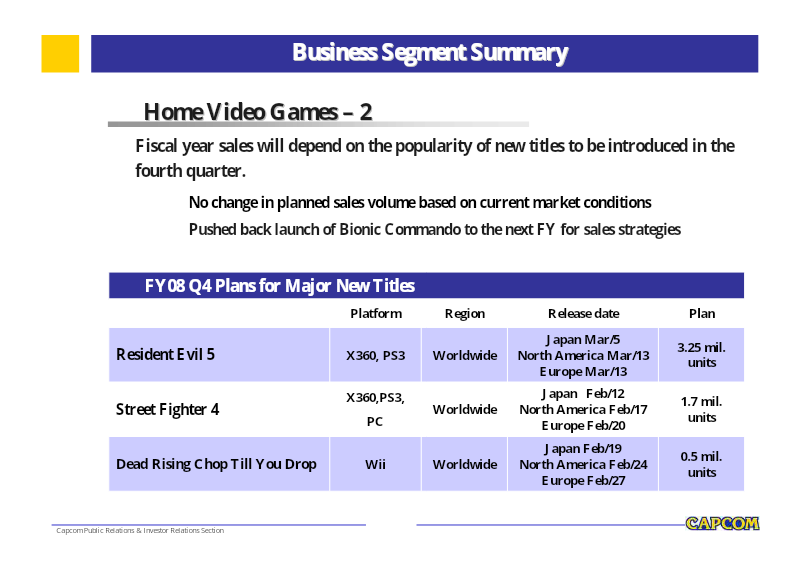
The Capcom third-quarter financial results for the fiscal year ending March 31, 2009, detail a period of weakened performance characterized by year-over-year declines in both sales and profitability.
- Capcom experienced a significant financial downturn in the first nine months of fiscal year 2009, with net sales falling 8.6% to 47,223 million yen and net income plummeting 95% to 179 million yen.
- The home video game division, Capcom's primary revenue driver, saw sales decline by 13.4% due to a lack of major flagship title releases during the period.
- Arcade operations struggled as existing location sales dropped to 88% of the previous year's levels, leading to the closure of eight facilities.