Night in the Woods
GameBy Infinite Fall
8 documents in the library are about Night in the Woods, from writers such as Game Developers Conference and Extra Credits. Each has a summary and key insights with the page they come from.
Connections
The documents about Night in the Woods on the inner ring, the other games and companies they name on the outer one. Select a cover to see it up close and open it in a new tab; drag to move, pinch or Ctrl + scroll to zoom.
On Steam
Steam estimates as of 9 Oct 2026. Revenue is premium revenue on Steam only: game sales, without DLC.
- Revenue to date
- $9.0M
- Units sold
- 610K
- Last 12 months
- $465K
- 33K units
- Price
- $19.99
- Positive reviews
- 94%
- of 21K reviews
- Peak players
- 1,246
- at the same time
- Followers
- 66K
- Average playtime
- 12 h
| Year | Share of the best year | Revenue | Units |
|---|---|---|---|
| 2019 | $933K | 62K | |
| 2020 | $837K | 58K | |
| 2021 | $656K | 50K | |
| 2022 | $624K | 43K | |
| 2023 | $586K | 41K | |
| 2024 | $563K | 41K | |
| 2025 | $507K | 35K | |
| 2026 so far | $345K | 24K |
On Steam since Feb 21, 2017 · Developer Infinite Fall · Publisher FinjiSteam store page
Documents about Night in the Woods
What Indie Game Publishers Really Think: 15 Years of Industry Insights from Finji's Rebekah Saltsman
Indie game publishing functions as a strategic partnership designed to mitigate the financial, operational, and interpersonal risks inherent in software development.
- Indie publishers typically manage titles with budgets of $2 million or less, focusing on small teams across all genres while providing essential business development, marketing, and operational support.
- Publishers act as mediators for team communication and project health, protecting their own reputation and financial investment by ensuring developers avoid burnout and adhere to platform-mandated schedules.
- When pitching to publishers, developers must demonstrate they can ship by providing realistic schedules, documented budgets with appropriate buffers, and clear team breakdowns to de-risk the project.
Building Narrative Games with Yarn Spinner
Yarn Spinner serves as a specialized, open-source scripting language engineered to streamline the development of branching narrative games.
- Yarn Spinner is an open-source, domain-specific scripting language designed to bridge the gap between simple tools like Twine and more complex, logic-heavy systems like Ink.
- The tool allows developers to write dialogue as a screenplay, integrating text, branching choices, and game-state commands within the same script files.
- Yarn projects link multiple individual yarn scripts together, which is a recommended best practice for managing narrative complexity in larger game projects.
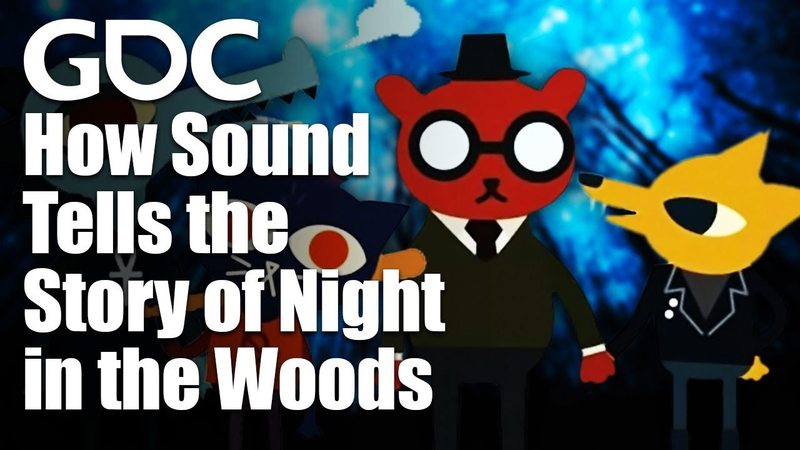
How Sound Tells the Story of Night in the Woods
The sound design for the 2017 narrative-driven game Night in the Woods serves as a primary vehicle for storytelling, atmosphere, and character development.
- To create a sense of 'living' environments, use randomized procedural sound triggers for repetitive actions and ambient elements like wind, birds, and townspeople, varying intervals between 1 and 300 seconds to avoid predictable patterns.
- Integrate sound effects directly into the musical score by aligning their BPM with the game's soundtrack, as demonstrated by syncing train pass-by sounds with the music in Night in the Woods.
- Use diegetic audio cues, such as the sound of a record player needle after music fades, to signal shifts in emotional tone and create uncomfortable or serious atmospheres.
The 2019 Tech Toolbox
Modern game development increasingly relies on the creative repurposing of enterprise technology and the implementation of specialized, tactile tooling to foster iterative design.
- Modern game development is shifting toward decoupling complex narrative logic from core code by integrating enterprise tools like Google’s Dialogflow and node-based frameworks such as Yarn Spinner.
- Developers are bypassing traditional, time-consuming compilation cycles by adopting hardware-integrated interfaces, such as MIDI controllers, to manipulate game variables and physics in real-time.
- Procedural techniques, specifically the use of Perlin noise for organic animation and parameterized storylets for narrative generation, are being used to reduce reliance on manual keyframing and labor-intensive asset creation.
Games You Might Not Have Tried - ep 16 - Spooky Scary Game Recommendations - Extra Credits
This collection of game recommendations serves as a curated guide for players seeking unique, atmospheric, and unsettling experiences during the Halloween season.
- Effective horror design often relies on subverting player expectations and leveraging the player's own imagination rather than relying solely on jump scares.
- Environmental storytelling and ambient audio are critical tools for building tension, as demonstrated by the tactical shooter F.E.A.R.
- Horror can be successfully integrated into diverse genres, ranging from the tactile puzzle mechanics of The Room to the samurai combat of Onimusha Warlords.
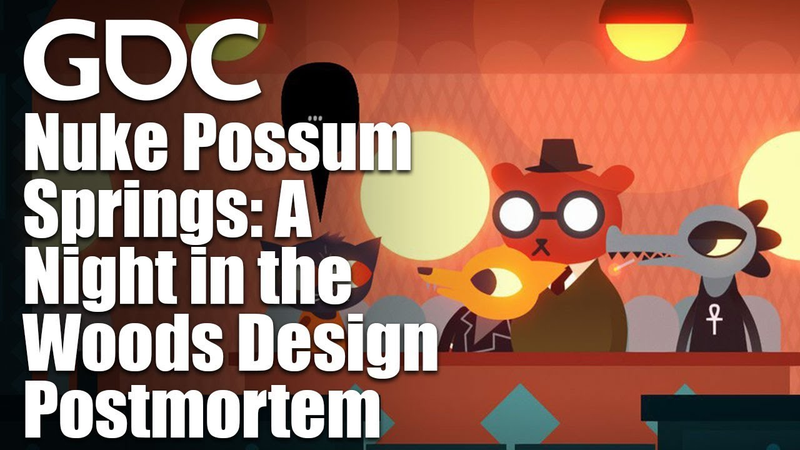
Nuke Possum Springs: A Night in the Woods Design Postmortem
Night in the Woods emerged from a 2013 collaboration between Scott Benson and Alec Holowka, intentionally diverging from the industry’s prevailing trend of minimalist, silent-protagonist games.
- Night in the Woods, launched in 2013 by Scott Benson and Alec Holowka, prioritized character-driven narrative and dialogue over the industry-standard minimalist, silent-protagonist model.
- The developers utilized platforming as a secondary tool for world exploration rather than a primary mechanical challenge, allowing the environment to feel authentic and independent of player influence.
- The project favored an improvisational development style, incorporating one-off gameplay moments like knife fighting to emphasize themes of mental health and economic instability.
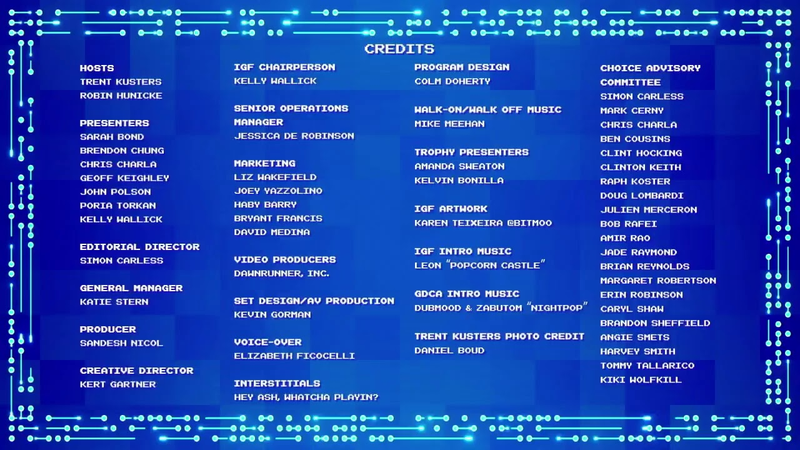
GDC Live Stream
The 20th Independent Games Festival and the 18th Game Developers Choice Awards serve as a comprehensive celebration of the global gaming industry’s evolution, emphasizing a shift toward diverse storytelling, technical innovation, and inclusive design.
- The 20th Independent Games Festival and 18th Game Developers Choice Awards recognized nearly 600 applicants, reflecting an independent sector that now matches major publishers in production standards.
- The Legend of Zelda: Breath of the Wild won Game of the Year, while Night in the Woods received the Seamus McNally Grand Prize, highlighting an industry trend toward deep, narrative-driven storytelling.
- Technical and artistic excellence was formally recognized in titles including Horizon Zero Dawn, Cuphead, and What Remains of Edith Finch, emphasizing the importance of sound, visual design, and mechanics.
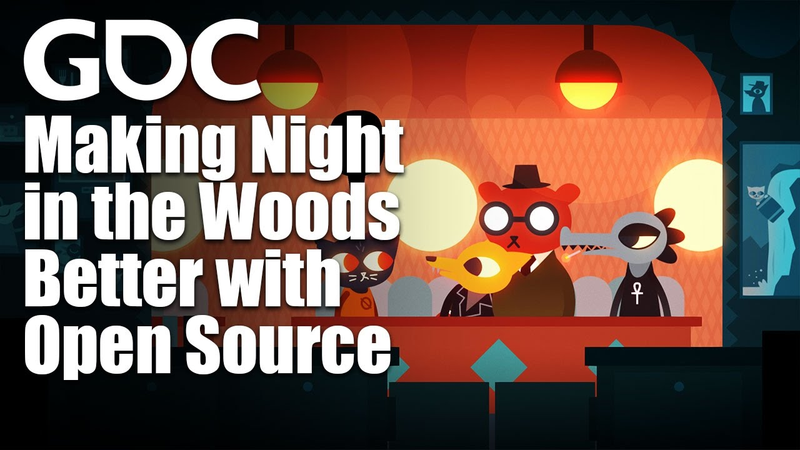
Making Night in the Woods Better with Open Source
The integration of open-source tools into game development serves as a powerful mechanism for managing complex narrative structures while simultaneously offloading technical maintenance to a broader community.
- Open-source narrative tools like Yarn Spinner allow studios to manage massive dialogue requirements, such as the 139,000 words and 130 characters featured in Night in the Woods.
- Releasing proprietary tools under permissive licenses like MIT or Apache 2 offloads technical maintenance and bug fixing to the broader developer community.
- Successful community management requires lowering barriers to entry by breaking development tasks into small, manageable issues and automating routine administrative workflows.
Companies behind it
As the documents state it.