
Mark of the Ninja
GameBy Klei Entertainment · Released Sep 7, 2012
Mark of the Ninja is a side-scrolling action stealth video game developed by Klei Entertainment and published by Microsoft Studios. It was announced on February 28, 2012 and later released for the Xbox 360 via Xbox Live Arcade on September 7, 2012. A Microsoft Windows version was released on October 16, 2012.
Connections
Each row is a game or company named alongside Mark of the Ninja, each column a document, oldest first. A mark means that document names it. Select a row to see those documents.
About the game
- Released
- Sep 7, 2012
- Developer
- Klei Entertainment
- Publisher
- Microsoft Studios
- Genres
- Platform, Adventure, Indie
- Platforms
- Linux, PC (Microsoft Windows), Mac, Xbox 360
- Links
- Wikipedia
Game data from IGDB.com
Documents about Mark of the Ninja
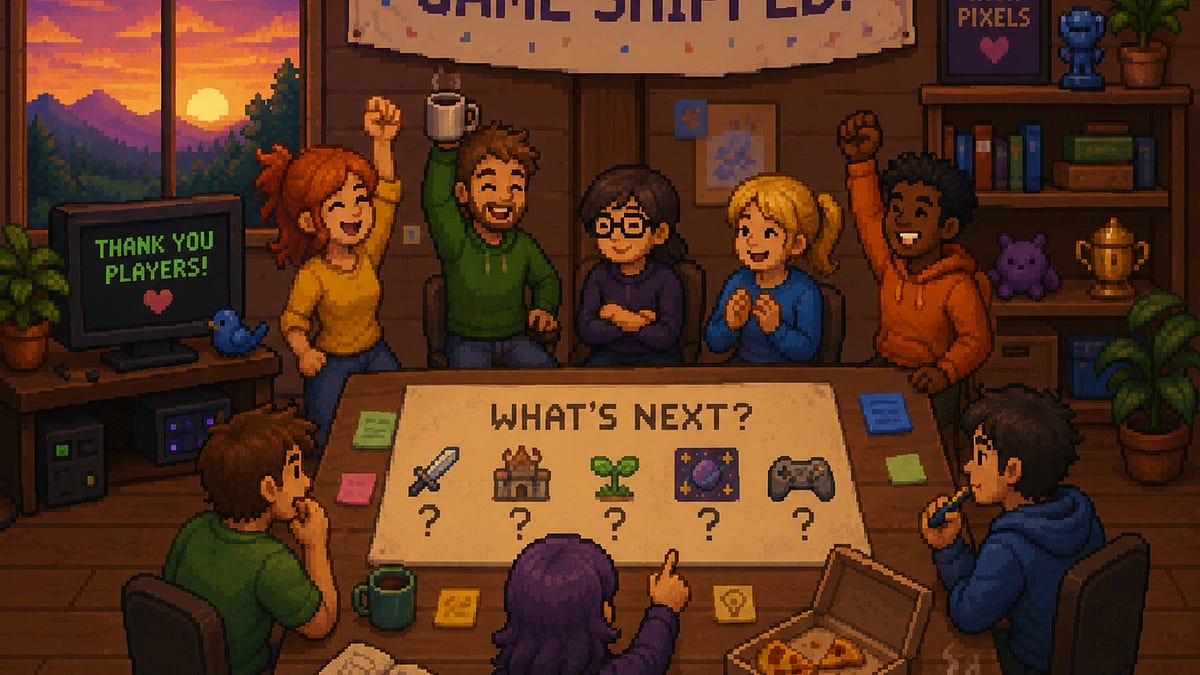
The Next Game Decision
Independent game studios frequently face existential risks by selecting new projects through reactive decision-making rather than structured strategic planning.
- Before deciding on a next project, studios must evaluate five practical constraints: existing contractual obligations, current revenue, transferable technical assets, team burnout levels, and creative direction.
- Review existing publishing contracts for restrictive clauses like rights of first negotiation or last refusal, which can limit future autonomy; if present, negotiate hard deadlines for publisher commitments to avoid being trapped.
- Data from Video Game Insights indicates that second games on Steam average $168,000 in revenue compared to $120,000 for debuts, a 40% increase, though only one in three studios successfully ships a second title.
How We Created Mark of the Ninja Without (Totally) Losing Our Minds
This analysis examines the development philosophy of Klei Entertainment, specifically regarding the creation of Mark of the Ninja.
- To avoid burnout and inefficient development, replace vague creative visions with testable hypotheses that allow the team to identify and discard bad assumptions early.
- Klei Entertainment shifted from complex AI systems to 'stupid,' highly manipulatable AI, which saved approximately four to five months of programming time while improving player clarity.
- The team abandoned batch production early in development, recognizing that producing large amounts of content based on unverified assumptions leads to wasted effort.
(Re)Mark(s) of the Ninja: Replaying the Remnants
Pierre-Marc Côté's essay examines Klei's Mark of the Ninja (2012) through a media-archaeological lens, arguing that the game constructs time as an anachronistic folding of the past onto the present.
- The essay reads Klei's Mark of the Ninja (2012) through media archaeology, arguing the game folds the past onto the present through its 2D interface, tattoo and scroll "marks," and haiku-like scrolls, which act as remnants evoking 3D stealth classics and 1980s ninja iconography.
- Its central thesis is that intertextual references, memento mori motifs, and ambiguous moral framing create productive tension between legitimate reflection on violence and the pleasures of play.
- The game's slow, unsatisfying killing of the hallucinated guide, and its framing of tradition versus modernity as a shared paradox of mediation rather than opposed worldviews, pushes players toward self-conscious reflection.
Like a Ninja - What Makes a Good Stealth Game - Extra Credits
Stealth games occupy a unique space in game design, often polarizing players because they require a fundamental shift in philosophy compared to traditional action titles.
- Stealth games should be designed as complex, traversal-based puzzle experiences rather than combat-focused power fantasies.
- Successful stealth mechanics require making the act of waiting and observation inherently engaging, shifting the player's focus from high-speed aggression to strategic patience.
- Effective level design must provide a versatile toolkit—including distractions, takedowns, and environmental traversal—to allow for multiple, player-driven solutions to a single challenge.

Games You Might Not Have Tried - ep 5 - Find New Games - Extra Credits
This overview highlights a curated selection of video games chosen for their novelty, innovative mechanics, and unique narrative approaches rather than traditional metrics of production quality.
- Prioritizing creative risk-taking and unconventional design often yields more memorable and intellectually stimulating experiences than traditional high-production-value titles.
- Thomas Was Alone demonstrates how simple mechanics can serve as effective narrative metaphors, while The Unfinished Swan highlights the value of aesthetic innovation.
- Titles like Mark of the Ninja and FTL prove that refined genre-specific mechanics—such as stealth systems and roguelike structures—can define a game's success regardless of budget.