1 free read left. Create a free account for unlimited reading + AI research.
Create free accountWhitepaper DiGRA
1 free read left. Create a free account for unlimited reading + AI research.
Create free accountWhitepaperDiGRA
Pierre-Marc Côté's essay examines Klei's Mark of the Ninja (2012) through a media-archaeological lens. It argues the game constructs time as an anachronistic folding of the past onto the present.
Pierre-Marc Côté's essay examines Klei's Mark of the Ninja (2012) through a media-archaeological lens, arguing that the game constructs time as an anachronistic folding of the past onto the present. Its 2D interface, tattoo and scroll "marks," and haiku-like scrolls function as archaeological remnants that evoke 3D stealth classics such as Tenchu, Metal Gear Solid, and Batman: Arkham Asylum, as well as 1980s ninja iconography in Shinobi, Ninja Gaiden, and The Revenge of Shinobi. The central thesis holds that the game's intertextual references, memento mori motifs, and ambiguous moral framing create productive tension between culturally legitimate reflection on violence and the pleasures of play.
The essay's most distinctive observation concerns the game's handling of violence. The slow, unsatisfying killing of the hallucinated guide, along with the framing of conflict between tradition and modernity as a shared paradox of mediation rather than a clash of opposed worldviews, pushes players toward self-conscious reflection. Drawing on Agamben, Galloway, and David Bohm's concept of suspension, the author argues that this combination opens a space for critical reflexivity, in which players can momentarily set aside habitual aggression and attend to the interface itself. A personal play sequence in the Dojo level serves as the illustrative case for this claim.
The analysis extends to the game's melancholic sense of time, which draws on Passage and on a mnemonic toolbox inherited from earlier stealth titles. The author characterizes the game as an "archeological event" that contributes to a "defragging" of videogame aesthetics through player memory, invoking Foucault, McKenzie Wark, and Monfort and Bogost's Racing the Beam. The essay also addresses the broader responsibilities of independent developers, who shape the cognitive practices and value systems their players absorb. It concludes that Mark of the Ninja suits critical play well, while cautioning that stealth games remain prone to hypocritical justifications of murder and theft.
 Metal GearGame · Konami · 1987 · 39 documents
 Metal Gear SolidGame · Konami Computer Entertainment Japan · 1998 · 34 documents
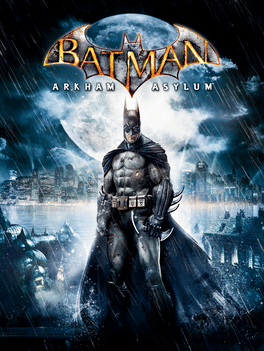 Batman: Arkham AsylumGame · Rocksteady Studios · 2009 · 8 documents
 Mark of the NinjaGame · Klei Entertainment · 2012 · 5 documents
Each row is a game or company this document names, each column a document, oldest first. A mark means that document names it. Select a row to see those documents.
DiGRA · 2019