Horizon Zero Dawn
Documents about Horizon Zero Dawn
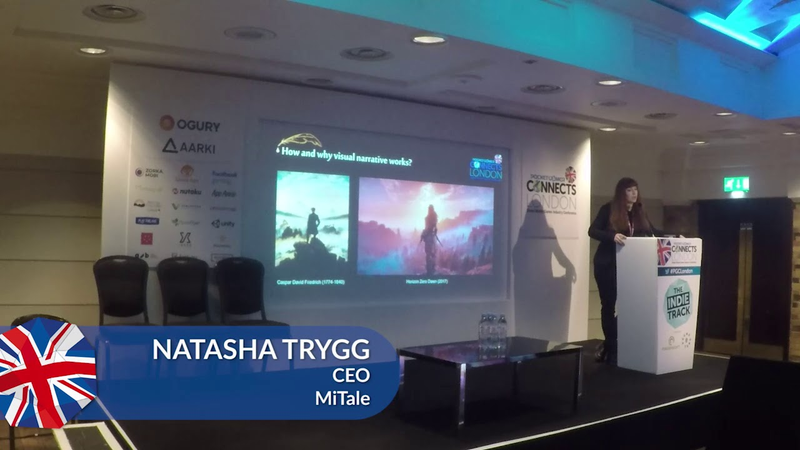
The vitality of visual storytelling in games
Visual storytelling serves as a foundational element in game design, functioning as a bridge between player fantasy and gameplay mechanics.
- Visual storytelling functions as a core design requirement that bridges player fantasy with gameplay mechanics, reducing reliance on text-heavy exposition.
- Developers use classical art principles like color theory, composition, and semiotics to intuitively guide player behavior and establish world consistency.
- Concept art serves as a critical, cost-effective tool for aligning development teams, solving technical constraints, and securing publisher interest early in the production cycle.
Player Traversal Mechanics in the Vast World of Horizon Zero Dawn
The development of traversal mechanics in Horizon Zero Dawn centers on achieving a balance between fluid, responsive player control and the technical demands of navigating a vast, procedurally generated open world.
- Horizon Zero Dawn prioritizes player agency by utilizing a start-stop movement system that minimizes animation latency, bypassing traditional navigation meshes to ensure high responsiveness.
- The engine employs a physics-based framework with collision probes to calculate stable ground planes, allowing the character to remain grounded on uneven terrain without sacrificing speed.
- Procedural leg adjustments via inverse kinematics and animation warping are used to refine context-aware vaulting animations and prevent visual artifacts across diverse environments.
Zen and the Art of Game Audio Maintenance
The art of game audio maintenance centers on managing the complex relationship between creative ambition, technological constraints, and the high-pressure environment of game development.
- Audio designers should adopt a cyclical workflow based on project states—pre-wave, wave, and post-wave—to manage the technical and psychological pressures of game development.
- During the pre-wave phase, designers must map the entire signal chain and implement standardized test signals like pink noise to ensure consistent hardware calibration.
- Proactive signal verification allows for the rapid identification of hardware failures, such as blown tweeters, which are often obscured by the complexity of a full game mix.
Repopulating the Earth: Character Production on Horizon Zero Dawn
The development of Horizon Zero Dawn necessitated a strategic approach to character production that balanced the inherent uncertainty of a new intellectual property with the technical demands of a massive open-world environment.
- To manage the uncertainty of a new IP, Guerrilla Games prioritized creating versatile, reusable character archetypes early in development rather than waiting for finalized narrative details.
- By building technically robust assets that functioned as 'like-for-like' replacements for proxy models, the team avoided performance bottlenecks and allowed content to be integrated late in the production cycle.
- The character team maintained a small core of only four full-time artists and two contractors, relying on outsourcing for 87% of the total character production volume to achieve the game's massive scope.
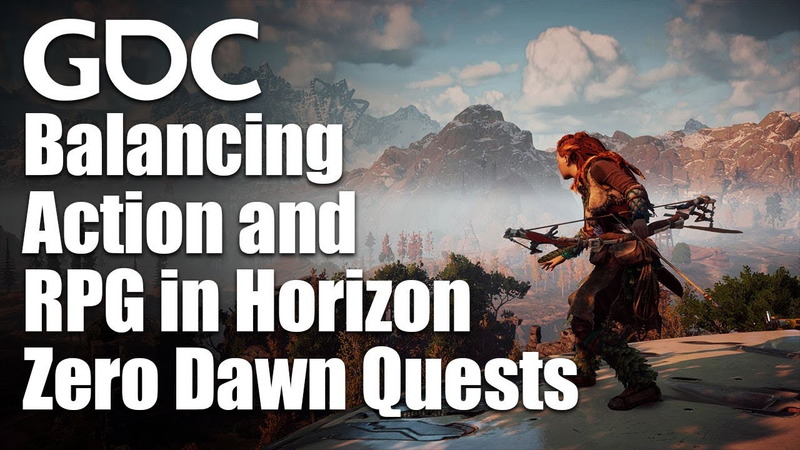
Level Design Workshop: Balancing Action and RPG in Horizon Zero Dawn Quests
The development of Horizon Zero Dawn required a strategic reconciliation between the expansive freedom of open-world role-playing games and the precise, linear requirements of cinematic action titles.
- Horizon Zero Dawn adopted a funnel-based world structure that expands as the narrative progresses to resolve the conflict between open-world freedom and the pacing requirements of cinematic storytelling.
- Designers integrated linear shooter principles—specifically clear sightlines, verticality, and deliberate enemy placement—to transform static RPG environments into dynamic action spaces.
- The development team utilized a dual-focus strategy that balanced macro-level quest pacing with micro-level combat readability to reconcile disparate RPG and action design philosophies.
GDC Live Stream
The 20th Independent Games Festival and the 18th Game Developers Choice Awards serve as a comprehensive celebration of the global gaming industry’s evolution, emphasizing a shift toward diverse storytelling, technical innovation, and inclusive design.
- The 20th Independent Games Festival and 18th Game Developers Choice Awards recognized nearly 600 applicants, reflecting an independent sector that now matches major publishers in production standards.
- The Legend of Zelda: Breath of the Wild won Game of the Year, while Night in the Woods received the Seamus McNally Grand Prize, highlighting an industry trend toward deep, narrative-driven storytelling.
- Technical and artistic excellence was formally recognized in titles including Horizon Zero Dawn, Cuphead, and What Remains of Edith Finch, emphasizing the importance of sound, visual design, and mechanics.
It's not a place, it's a script - Making worlds that mean something
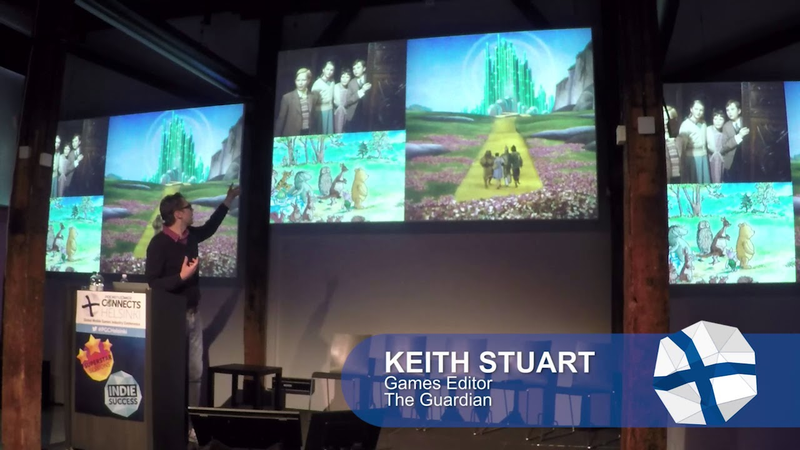
Game industry journalist and author Keith Stuart argues that successful game world-building relies on treating environments as narrative scripts rather than mere backdrops.
- Game environments should be treated as narrative scripts rather than static backdrops, functioning as active characters that reflect the core emotions of the story.
- Developers can deepen player engagement by applying the 'pathetic fallacy,' which involves imbuing landscapes with human emotion to mirror the narrative tone.
- Successful world-building often draws from non-gaming disciplines, such as 18th-century landscape gardening, 1960s urban planning, and the structured exploration paths used in IKEA retail psychology.