
Hearts of Iron
GameBy Paradox Development Studio · Released Dec 29, 2002
Documents about Hearts of Iron
Whitepaper3 pages
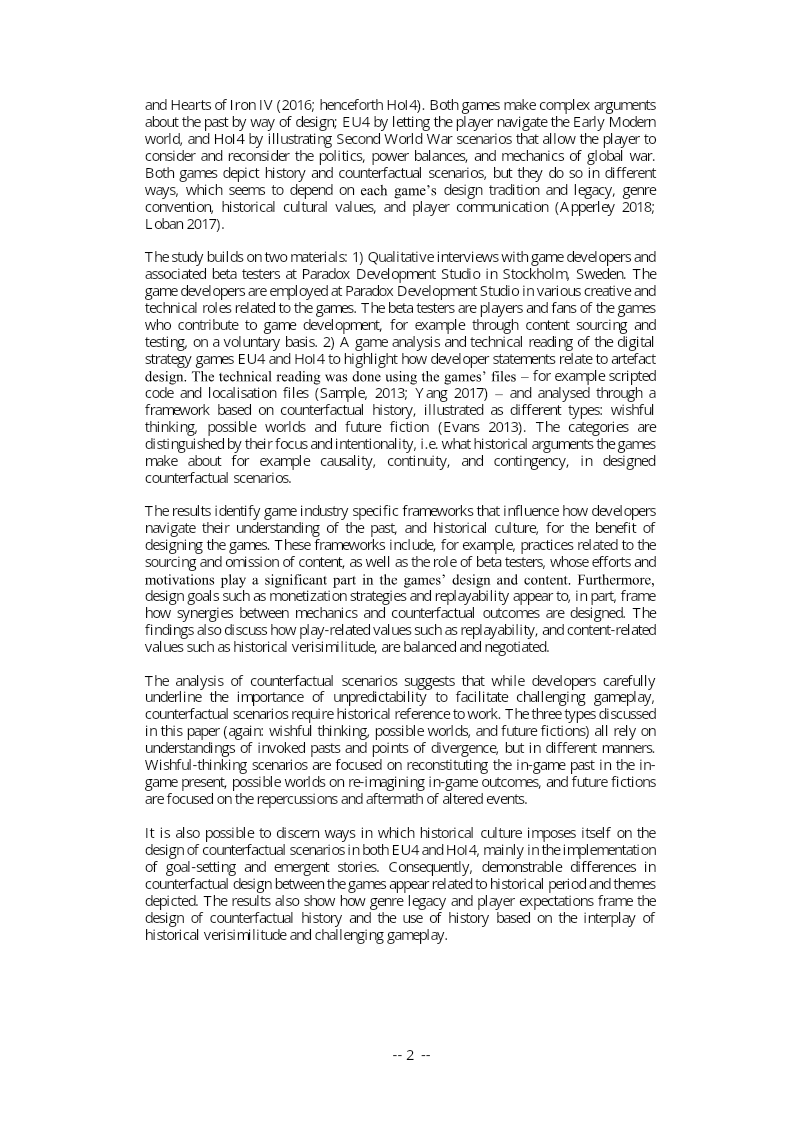
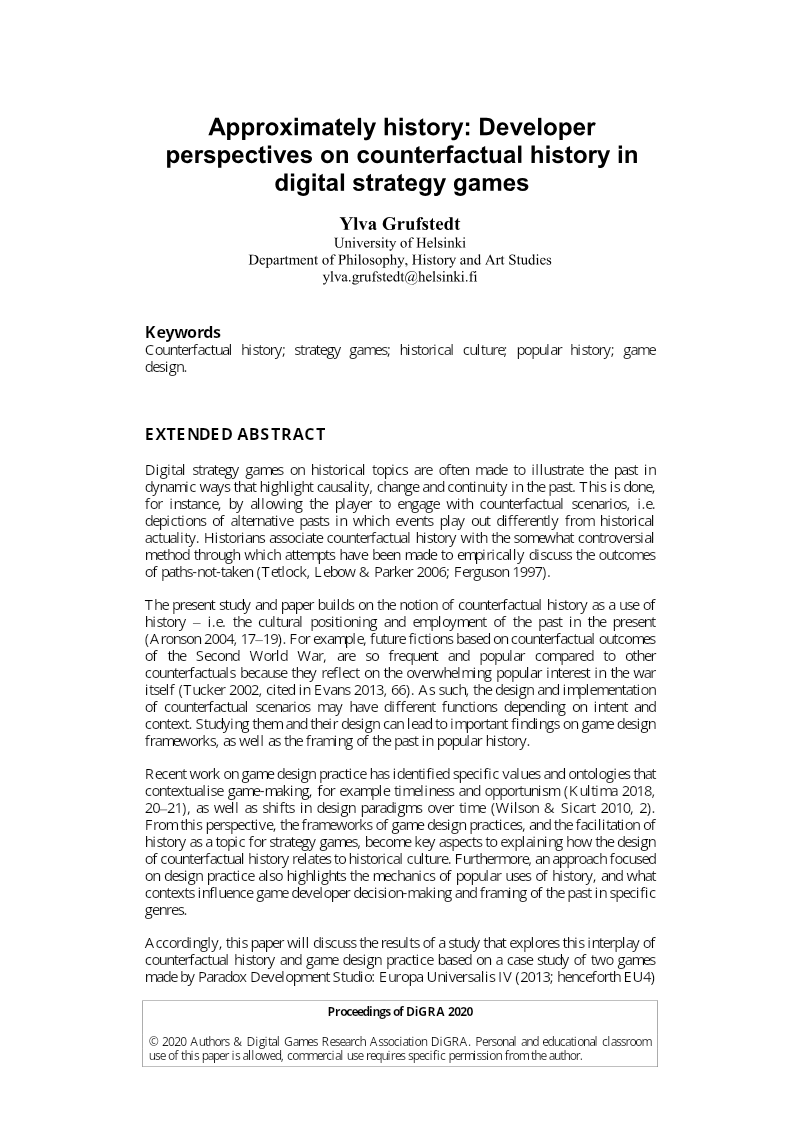
Approximately History: Developer Perspectives on Counterfactual History in Digital Strategy Games
This study examines how developers at Paradox Development Studio approach counterfactual history in two strategy games, Europa Universalis IV (2013) and Hearts of Iron IV (2016), which allow players to explore alternative outcomes to historical events.
- The study argues that counterfactual scenarios in digital strategy games are shaped by game design practice, genre conventions, and commercial considerations, not just historical interest, and that these factors together determine how games use the past in the present.
- Counterfactual scenarios are analysed through three categories: wishful thinking (reconstructing the in-game past within the in-game present), possible worlds (reimagining in-game outcomes), and future fiction (exploring consequences of altered events), distinguished by their focus and their arguments about causality, continuity, and contingency.
- The research combines qualitative interviews with Paradox Development Studio developers and volunteer beta testers in Stockholm with a technical analysis of the games' scripted code and localisation files, focusing on Europa Universalis IV (2013) and Hearts of Iron IV (2016).
DiGRAJan 2020
Whitepaper18 pages
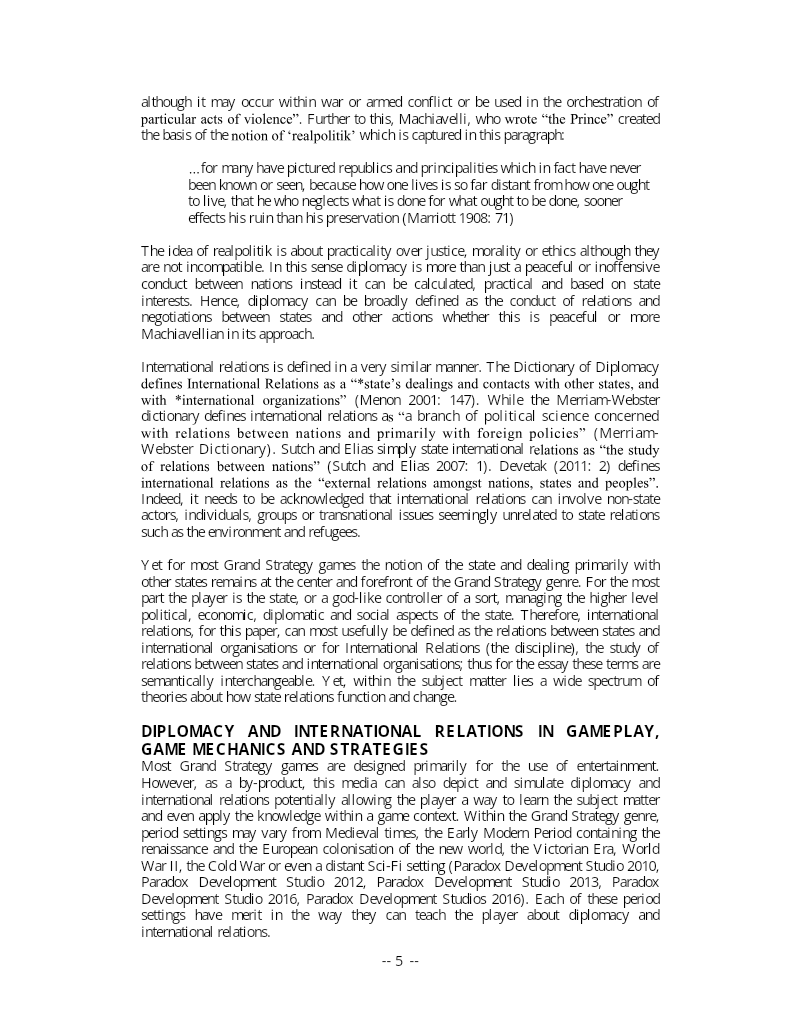
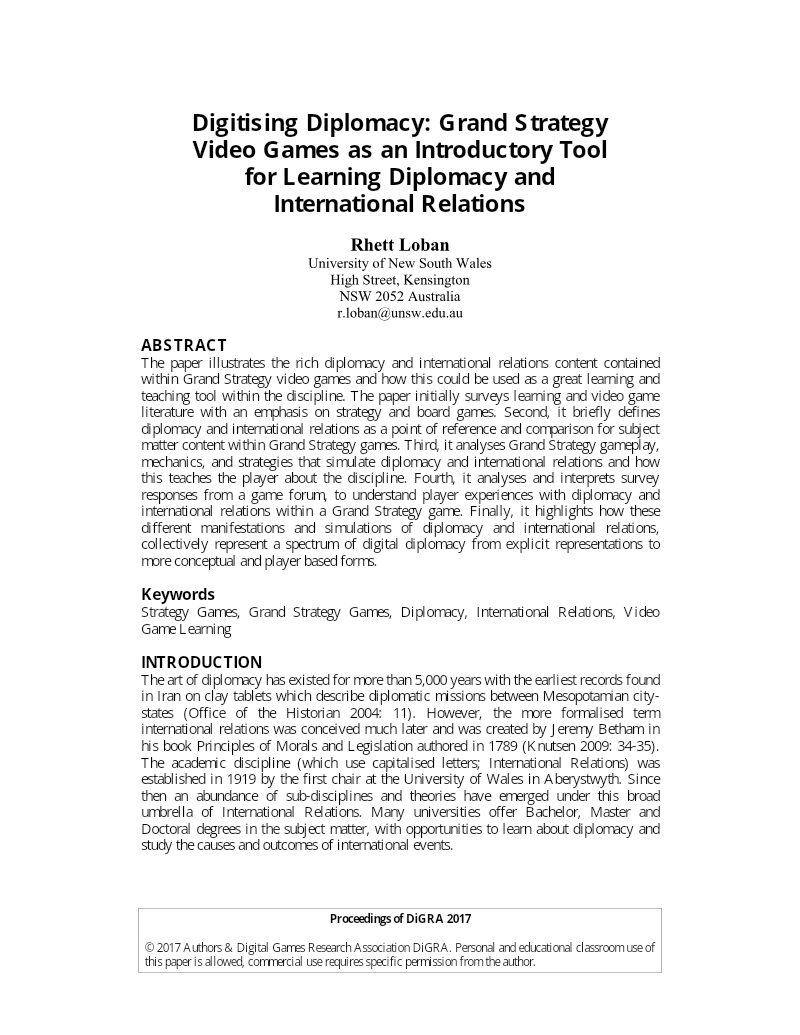
Digitising Diplomacy: Grand Strategy Video Games as an Introductory Tool for Learning Diplomacy and International Relations
Rhett Loban's paper argues that grand strategy video games, particularly titles such as Europa Universalis IV, Stellaris, and Hearts of Iron IV, can serve as accessible introductory tools for teaching diplomacy and International Relations (IR).
- Only about 27 percent of IR educators report using digital games in teaching, compared with 56 percent who use non-digital resources, revealing a notable gap in higher education.
- Rhett Loban argues that grand strategy games such as Europa Universalis IV, Stellaris, and Hearts of Iron IV can serve as accessible introductory tools for teaching diplomacy and International Relations.
- These games model IR concepts both explicitly, through diplomatic action interfaces, opinion modifiers, and war declarations, and in more complex ways, through balance-of-power coalitions, alliance systems, and democratic peace dynamics reflected in AI behaviour.
DiGRAJan 2017
Companies behind it

As the documents state it.