Half-Life 2
7 documents in the library are about Half-Life 2, from writers such as Game Developers Conference, Thomas Brush and Deconstructor of Fun, the newest from 2026. Each has a summary and key insights with the page they come from.

1998. HALF-LIFE sends a shock through the game industry with its combination of pounding action and continuous, immersive storytelling. NOW. By taking the suspense, challenge and visceral charge of the original, and adding startling new realism and responsiveness, Half-Life 2 opens the door to a world where the player's presence affects everything around them, from the physical environment to the behaviors even the emotions of both friends and enemies.
- Released
- Nov 16, 2004
- Developer
- Valve
- Publishers
- NVIDIA Lightspeed Studios, Electronic Arts, Sierra Entertainment
- Genres
- Shooter
- Platforms
- Xbox, PlayStation 3, Linux, Android, PC (Microsoft Windows), Mac, Xbox 360
- Links
- Official site, Wikipedia
Game data from IGDB.com
Documents about Half-Life 2

Why Most Game Engines Die, and How AI Builds "Living Worlds"
The game industry is currently undergoing a fundamental transition from utilizing artificial intelligence as a productivity tool for asset generation toward integrating it as a core engine component for real-time, immersive gameplay.
- The game industry is shifting from using AI as a productivity tool for asset generation to integrating it as a core engine component for real-time, dynamic gameplay.
- Developers are prioritizing on-device AI processing over cloud-based models to mitigate latency, privacy risks, costs, and model drift while ensuring deterministic gameplay.
- The goal is to create 'living worlds' with non-player characters that possess memory and engage in unscripted interactions, moving away from static, pre-scripted narrative loops.
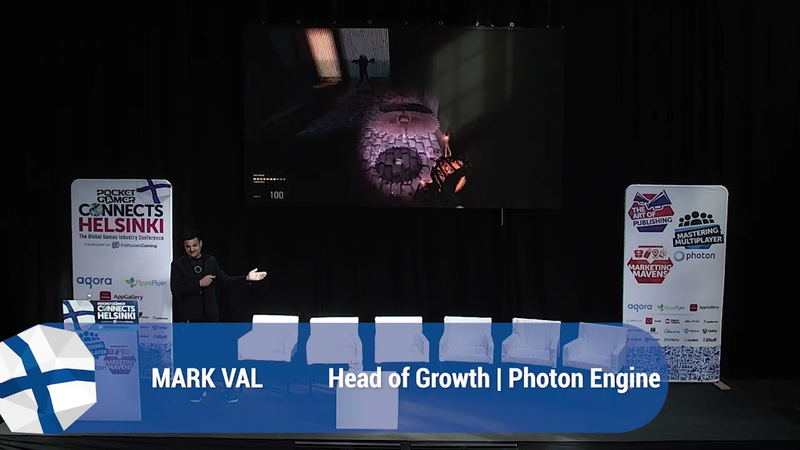
Physic Multiplayer Reaching the Top of the Charts
Physics-based gameplay serves as a powerful tool for game developers to drive player engagement and retention by leveraging intuitive, brain-based predictive systems.
- Physics-based mechanics drive high engagement by leveraging the human brain's natural ability to predict physical interactions, which reduces the need for complex onboarding.
- Deterministic networking engines like Quantum are essential for overcoming the technical challenges of synchronizing physics across distributed mobile clients.
- Stumble Guys achieved top-chart status in over 30 countries by utilizing a deterministic engine to create a low-friction, intuitive multiplayer experience that requires no traditional tutorials.
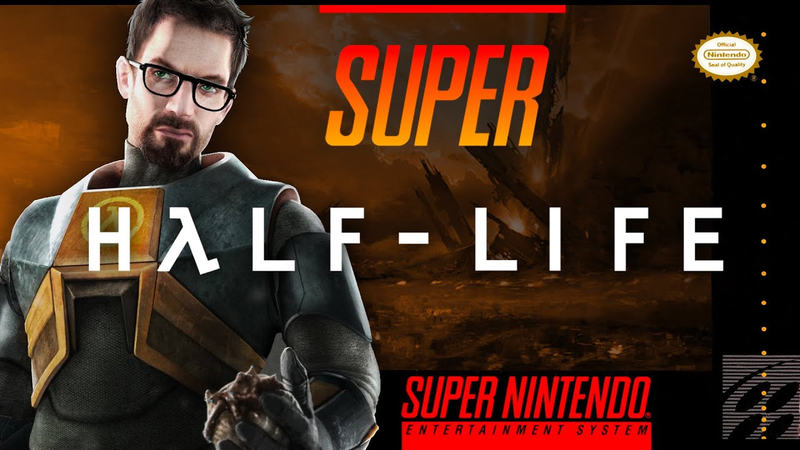
I made HALF-LIFE... but it's 2D
This analysis outlines an efficient workflow for creating 2D game environments and character assets, using a reimagining of the Half-Life 2 setting, City 17, as a practical case study.
- Maintain visual cohesion in 2D environments by applying consistent lighting rules, specifically using 45-degree highlights and lowlights across all assets.
- Establish atmosphere and contrast by prioritizing foreground elements, which are essential for grounding the player's perspective and setting the mood in darker game environments.
- Increase asset creation efficiency by using custom brushes, stamps, and foundational shapes from resources like the Noun Project to build complex cityscapes.
Leak: Half-Life 2 Remaster and God of War Mentioned on GeForce NOW Database
The provided text covers two distinct industry developments: a 2021 data leak from the GeForce NOW database and a 2023 expert analysis regarding the classification of cloud gaming in antitrust regulation.
- A 2021 leak from the GeForce NOW database exposed a list of unannounced or potential titles, including a Half-Life 2 remaster, God of War, Gears 6, XCOM 3, and various PlayStation exclusives.
- The leaked database entries, which also included titles like Helldivers 2 and Injustice 3, were described by industry observers as potentially including canceled projects or general internal tracking data rather than confirmed upcoming releases.
- Joost Rietveld, an associate professor at the UCL School of Management, formally argued to the UK’s Competition and Markets Authority (CMA) that cloud gaming should not be classified as a distinct market in antitrust investigations.

Playing YOUR Indie Games (Bug's N Boo Hags RETRO ARCADE GAME!)
The game Bugs N Boo Hags is an indie title currently seeking funding through a Kickstarter campaign.
- Bugs N Boo Hags is an 8-bit arcade-style indie game currently seeking development funding via a Kickstarter campaign.
- The game’s core mechanics are rooted in Gullah Geechee folklore, requiring players to defend homes from supernatural 'boo hags' using traditional items like salt, brooms, and haint blue paint.
- The title is designed as a high-stakes, punishing experience that mimics the difficulty and aesthetic of classic Nintendo-era console games.
This is a Talk About Tutorials, Press A to Skip
The primary objective of this analysis is to define effective tutorial design in video games, arguing that the most successful instructional phases are those that are seamlessly integrated into the gameplay experience.
- Effective tutorial design prioritizes seamless integration into gameplay, replacing intrusive elements like pop-up windows and walls of text with organic, experience-based learning.
- Developers should leverage universal game literacy, such as color-coding for danger and established control schemes, to guide players intuitively without explicit instruction.
- Games like Half-Life 2 and the Super Mario series serve as benchmarks for success by introducing mechanics within safe, experimental environments that encourage organic discovery.
Using Level Design Tools Expressively
Level design in narrative-driven, first-person games relies heavily on the expressive use of fundamental scripting tools to create immersive, human-like interactions.
- Level designers can create immersive, human-like character behavior by repurposing standard scripting tools like triggers, delays, and counters rather than building complex, over-engineered systems.
- Simulating naturalistic character behavior is achieved by using delays to mimic human cognitive pauses, effectively bridging the gap between rigid machine logic and organic interaction.
- Implementing hysteresis—triggering events based on thresholds rather than binary switches—prevents mechanical dithering and technical bugs during erratic player movement or AI spawning.