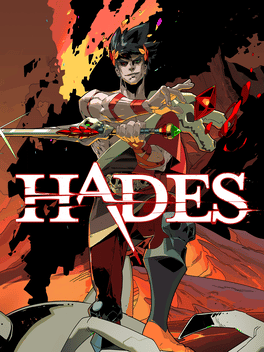
Hades
GameBy Supergiant Games · Released Sep 17, 2020
Documents about Hades
Article
Nintendo Switch: The State of Player Discovery
The Nintendo Switch ecosystem is characterized by a broadening of player libraries and a continued dominance of first-party software.
- Nintendo Switch users significantly expanded their libraries in 2022, with the median number of owned games rising to 35 titles, up from 20 in 2021.
- First-party Nintendo titles dominate the ecosystem, with ownership rates for major releases like Pokemon Legends: Arceus and Metroid Dread reaching between 39% and 50% among the core demographic.
- Physical media remains a strong force on the Switch, accounting for nearly 47% of user libraries due to collector interest and the perceived value of premium-priced software.
GameDiscoverCoJul 2021

Article
Quibi's Collapse: An Exercise in Humility
The collapse of Quibi serves as a primary case study for the failure of top-down, high-capital media ventures that prioritize corporate interests over user-centric innovation.
- Quibi failed to achieve product-market fit despite $1.8 billion in funding because its rigid, closed-door development model ignored user preference for organic and interactive media.
- The success of titles like Among Us and Hades demonstrates that industry value is shifting toward accessibility and human engagement over the sheer scale of capital investment.
- Tencent’s merger of Huya and DouYu consolidated the Chinese esports and marketing sector, creating a dominant entity with 334 million monthly active users and a 67.5% voting share.
SuperJoostOct 2020

Article
The Hidden Levers of Game Discovery: Supply and Demand
The primary thesis of this analysis is that video game discoverability is increasingly dictated by a fundamental mismatch between supply and demand.
- The number of games on Steam grew from 5,000 in 2015 to over 60,000 by 2022, creating a supply-side saturation that outpaces the 62% growth in daily active users since 2019.
- The market has shifted to a 'no-reset' environment where evergreen hits and Games as a Service (GaaS) titles capture long-term player attention, making it increasingly difficult for new releases to gain traction.
- While Unity reported a 93% increase in game creation between 2020 and 2021, the market has transitioned to a 'hit-driven' curve where the majority of indie titles struggle to recoup costs compared to previous years.
GameDiscoverCoApr 2020