E.T. the Extra-Terrestrial
Game
3 documents in the library are about E.T. the Extra-Terrestrial, from writers such as DiGRA and Journal of Games Criticism. Each has a summary and key insights with the page they come from.
Connections
Each row is a game or company named alongside E.T. the Extra-Terrestrial, each column a document, oldest first. A mark means that document names it. Select a row to see those documents.
Documents about E.T. the Extra-Terrestrial



Investigating Development Crunch in Games and its Impact on Creative Expression
Development crunch functions as a systemic failure within the global video game industry, characterized by excessive overtime and compressed production schedules that prioritize commercial deadlines over creative integrity.
- Development crunch is a systemic management failure rather than a necessary tool for quality, often resulting in compromised product integrity and long-term market instability.
- Forced overtime and compressed schedules stifle innovation by compelling teams to prioritize basic functionality and bug remediation over creative experimentation and artistic polish.
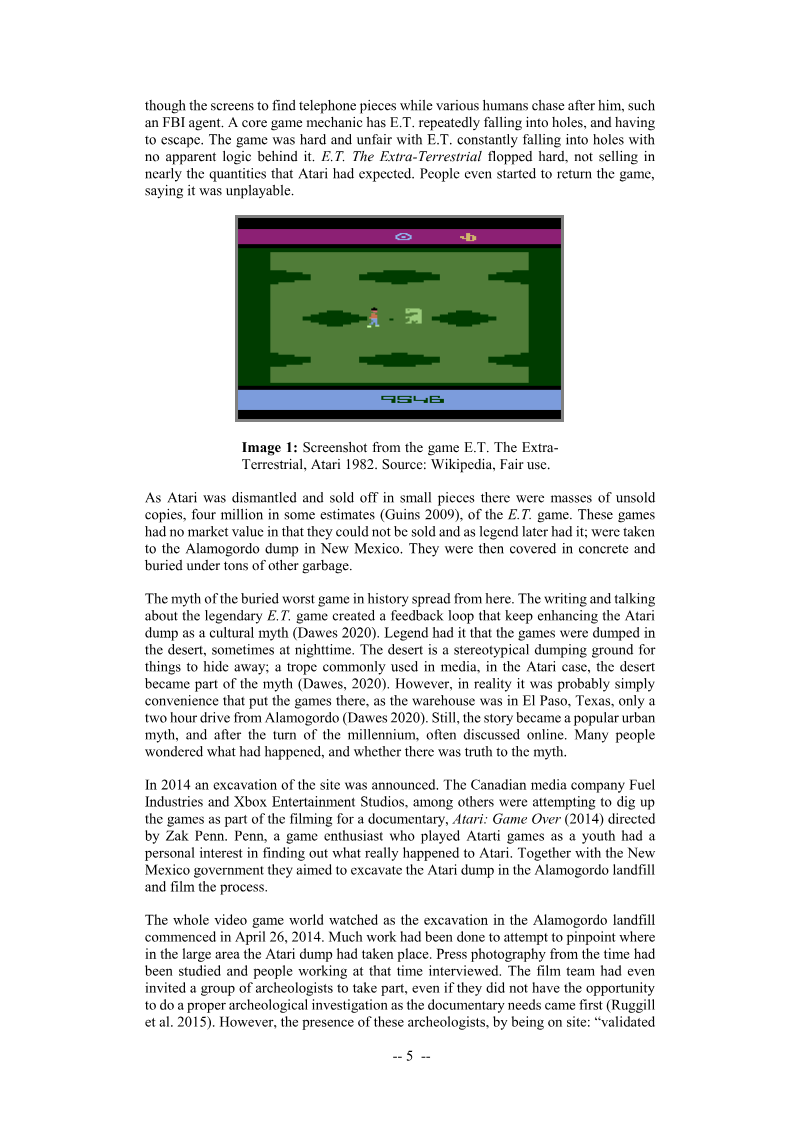
- High-profile titles such as Cyberpunk 2077, The Quiet Man, and E.T. the Extra-Terrestrial serve as evidence that rushed production cycles frequently lead to diminished quality and commercial underperformance.
From Trash to Treasure: Exploring How Video Games Are Moving from Popular Culture to Cultural Heritage
The document examines the evolving status of video games, arguing they are transitioning from popular culture phenomena to recognized cultural heritage.
- The 2014 excavation of an Alamogordo, New Mexico landfill recovered roughly 1,300 Atari E.T. cartridges, turning a long-standing cultural myth into tangible artifacts.
- Heritage value is socially constructed rather than inherent in objects; the spectacle and emotional investment surrounding the dig gave the recovered games new meaning.
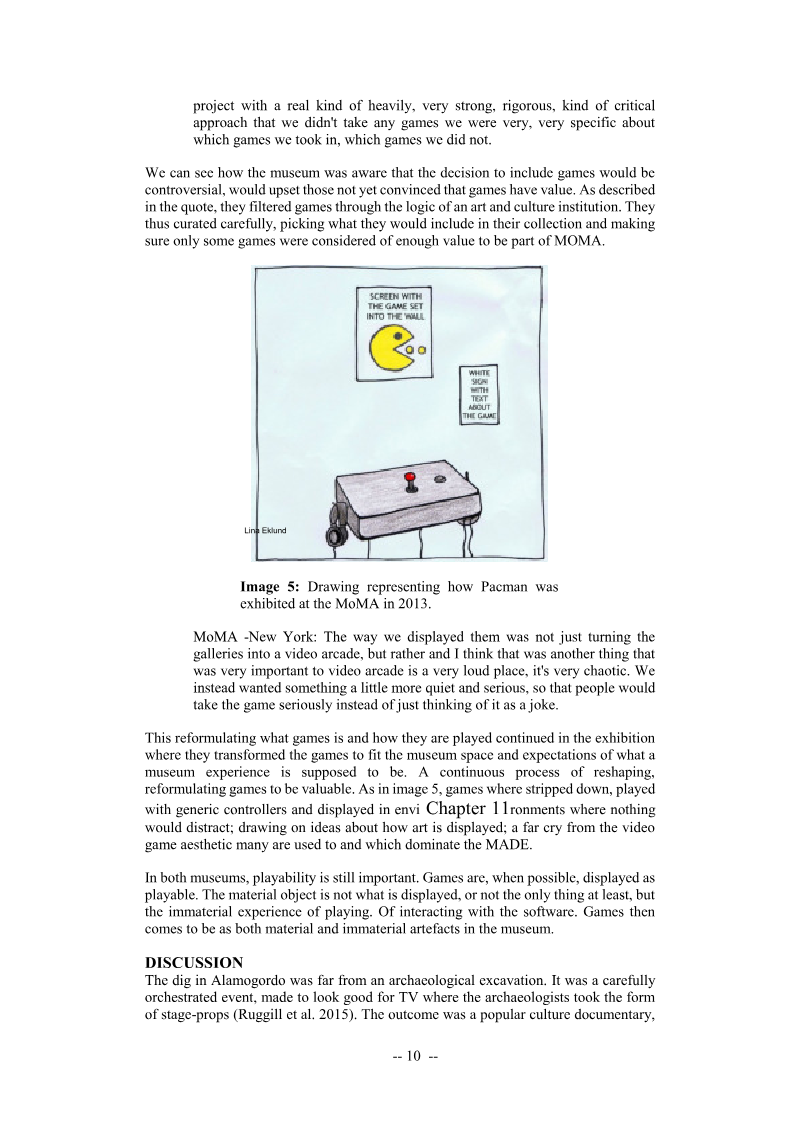
- MoMA pursues a selective, art-focused collecting strategy, while The MADE, a volunteer-run Oakland institution, aims to preserve nearly everything from an enthusiast-driven, bottom-up perspective.
Burying E.T. the Extra-Terrestrial: Undoing Game Archaeology
Paolo Ruffino's conference paper uses the April 2014 excavation of Atari's buried E.T. the Extra-Terrestrial cartridges in Alamogordo, New Mexico, as a case study in how video game history is written.
- The 2014 excavation in Alamogordo, New Mexico, was an attempt by Microsoft and Fuel Industries to verify a long-circulating urban legend that Atari buried unsold copies of the 1982 E.T. game in the desert.
- The author argues the excavation functioned less as genuine historical inquiry and more as confirmation of a narrative already accepted, with the existing Atari story serving as the endpoint of the search.
- Drawing on Foucault's archaeology and genealogy, the paper critiques media archaeologists Raiford Guins, Erkki Huhtamo, and Jussi Parikka for treating game history as the history of an industry's successful and failed products, reinforcing present-day categories.