Diner Dash
Game
Documents about Diner Dash
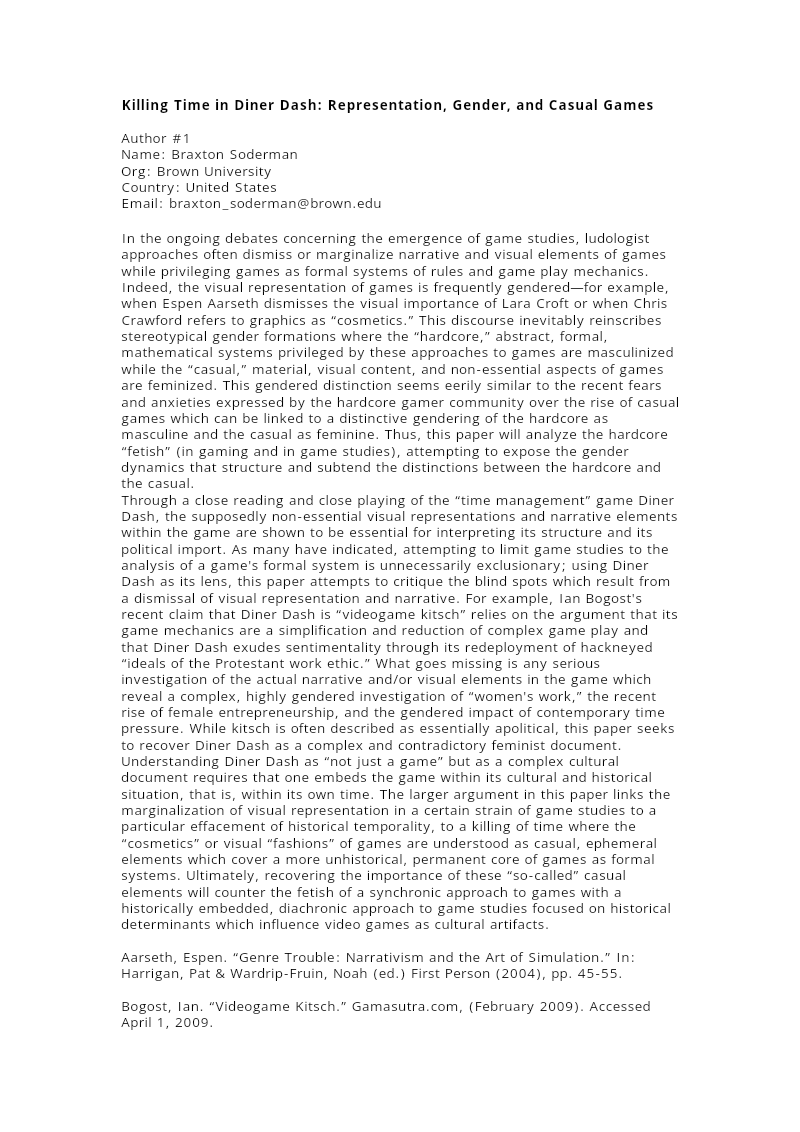
Killing Time in Diner Dash: Representation, Gender, and Casual Games
This paper contends that visual representation and narrative in casual games are not superficial decoration but essential to understanding their structure and political meaning.
- The paper argues that visual representation and narrative in casual games are essential to their structure and political meaning, not 'cosmetic' decoration as formalist game studies often assume.
- The author contends that dismissing graphics and story as cosmetic reproduces a gendered hierarchy that codes abstract, rule-based 'hardcore' play as masculine and visual, narrative, and 'casual' elements as feminine.
- The paper's central case is the time management game Diner Dash, analyzed through close reading and close playing of its depiction of women's labor, female entrepreneurship, and time pressure.
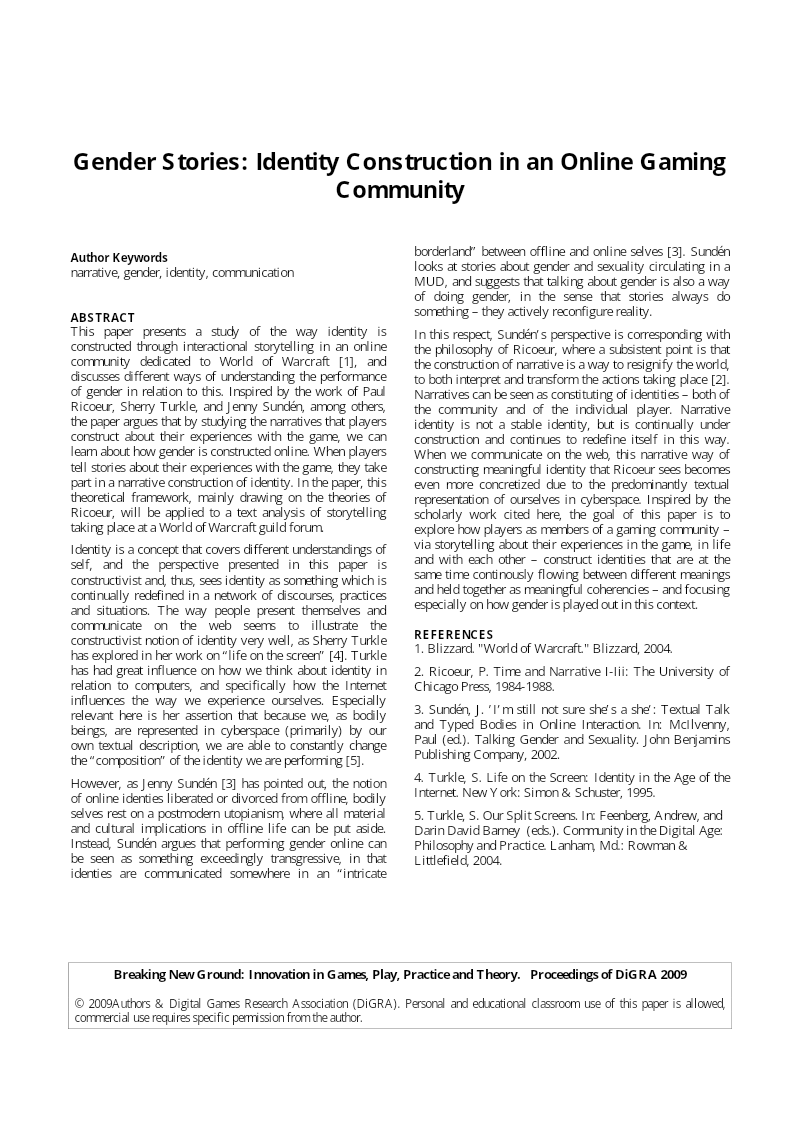
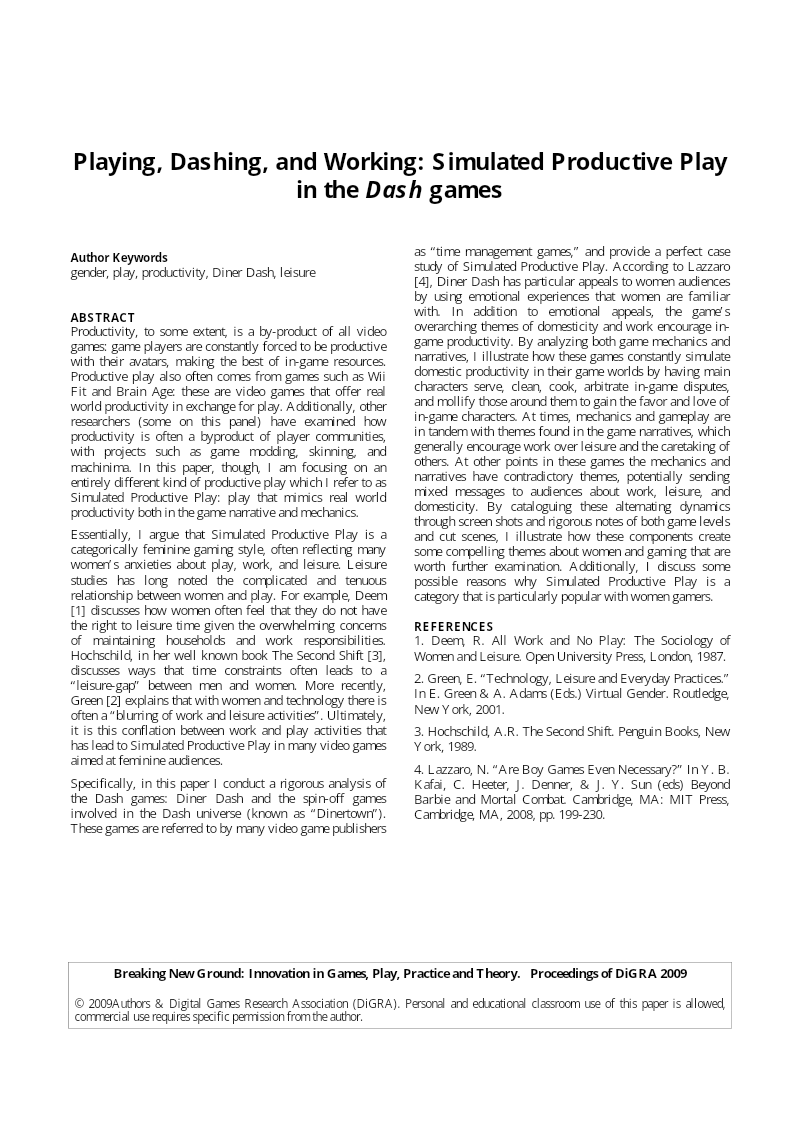
Playing, Dashing, and Working: Simulated Productive Play in the Diner Dash Games
The document under consideration is a collection of four papers from the DiGRA 2009 conference proceedings, all exploring how gender, productivity, and leisure intersect in digital play.
- Simulated Productive Play, as introduced in the first paper, describes games such as Diner Dash and its spin-offs that stage domestic labor like serving, cleaning, and cooking, often reflecting women's anxieties about leisure time.
- The first paper frames these dynamics using sociological concepts of the "leisure gap" and the "second shift," linking game design to the unequal distribution of leisure and household work.
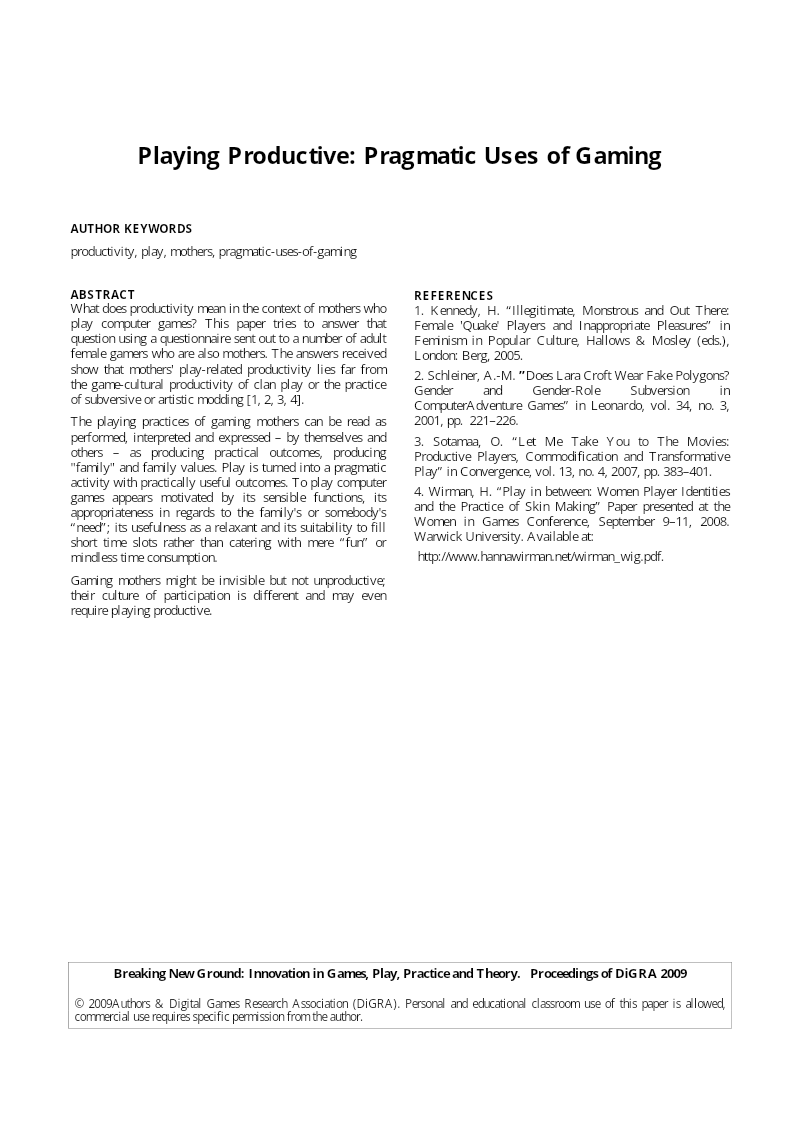
- A survey of female gamers who are also mothers finds their play is pragmatic, oriented toward family needs, relaxation, and short time slots rather than mere entertainment.
A Certain Level of Abstraction
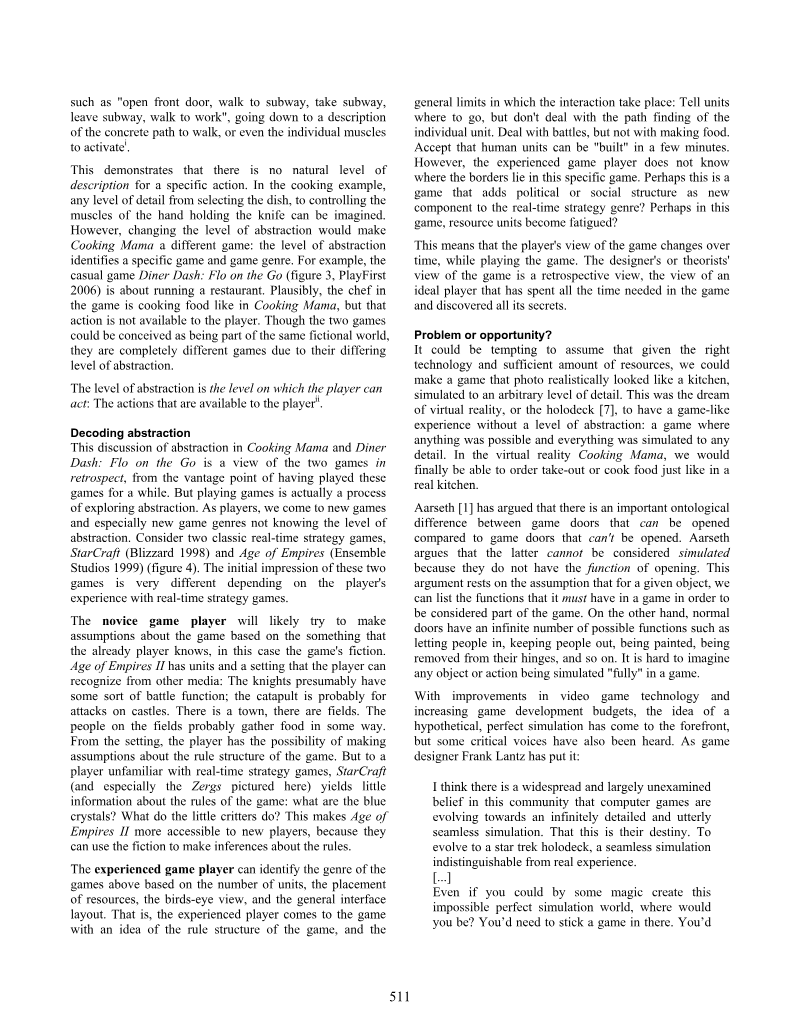
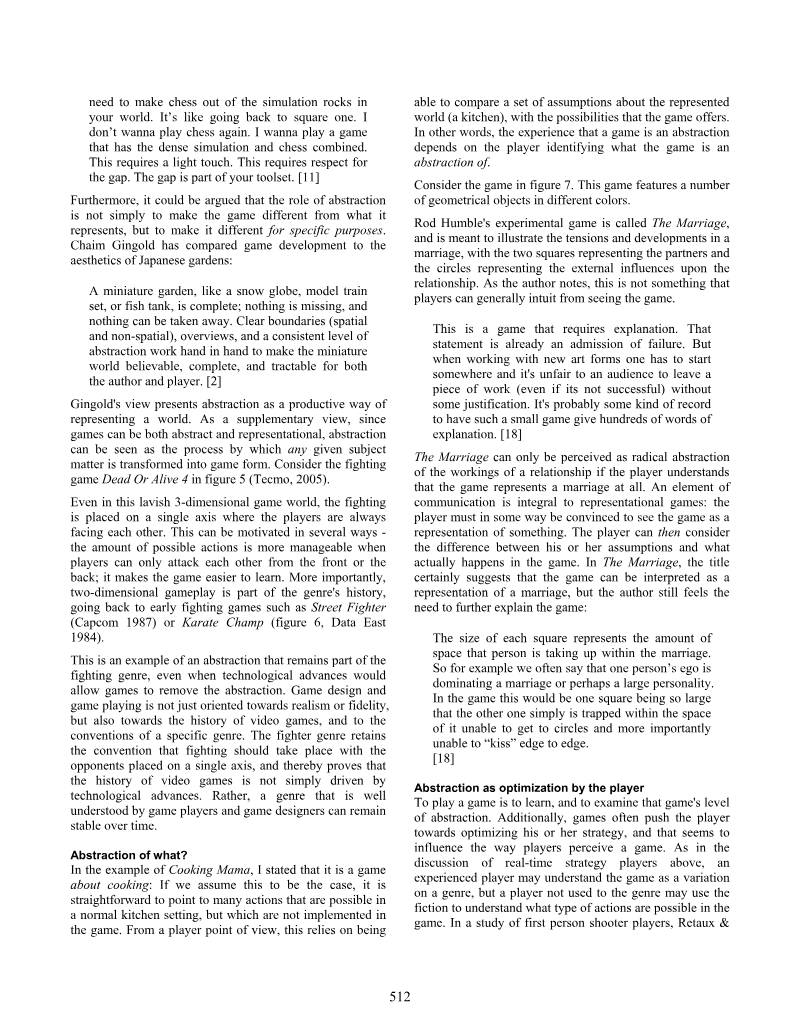
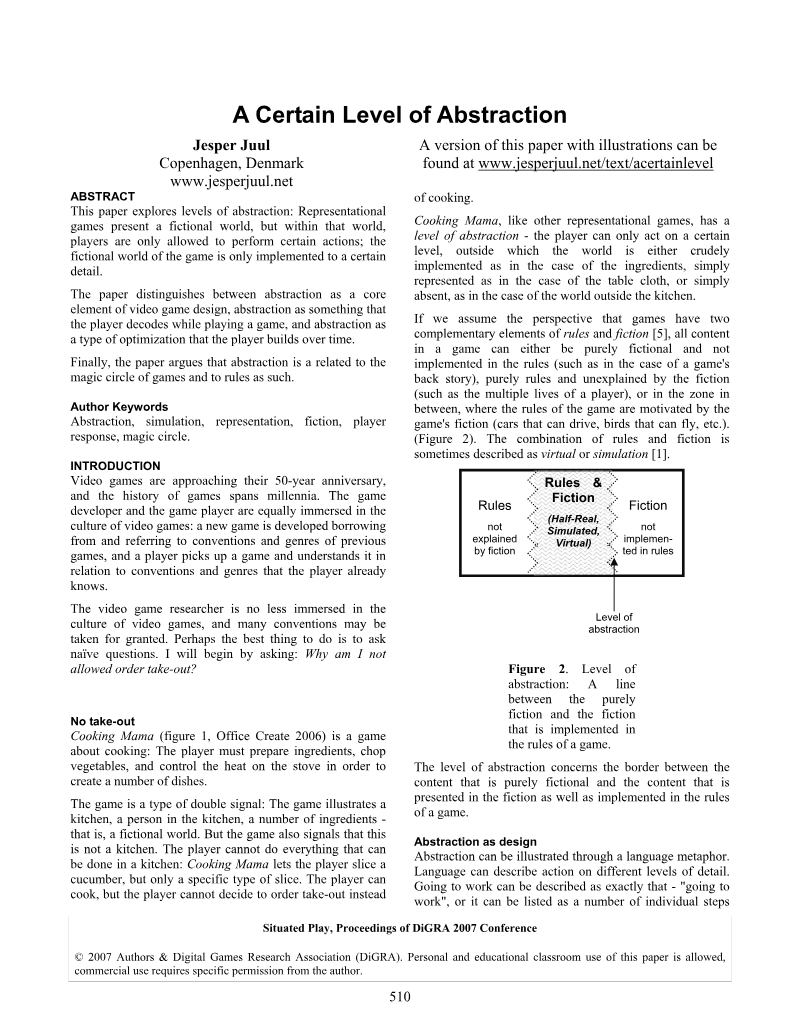
Jesper Juul's paper "A Certain Level of Abstraction" examines how abstraction operates in video games, arguing that it is a central element of game design, a process players decode during play, and an optimization strategy developed over time.
- Abstraction is a central design element in games: there is no natural level of detail for any action, and the chosen level defines a game and its genre, as shown by Cooking Mama omitting actions like ordering take-out and contrasting with Diner Dash: Flo on the Go.
- Juul's framework places game content on a spectrum from purely fictional to purely rule-based, with the most interesting design territory where rules are motivated by the fiction.
- Experienced players recognize genres through learned conventions, while novices rely on the fiction to infer rules, illustrated with real-time strategy titles such as StarCraft and Age of Empires II.
Introducing Applied Ludology: Hands-on Methods for Game Studies
Järvinen's "Introducing Applied Ludology" argues that game studies remains fragmented, with theories tending to focus either on formal game structure or on players in isolation.
- Järvinen's applied ludology is a hands-on methodology that combines formal systems theory with psychological and player-centered perspectives to bridge the fragmentation between structural and player-focused game studies.
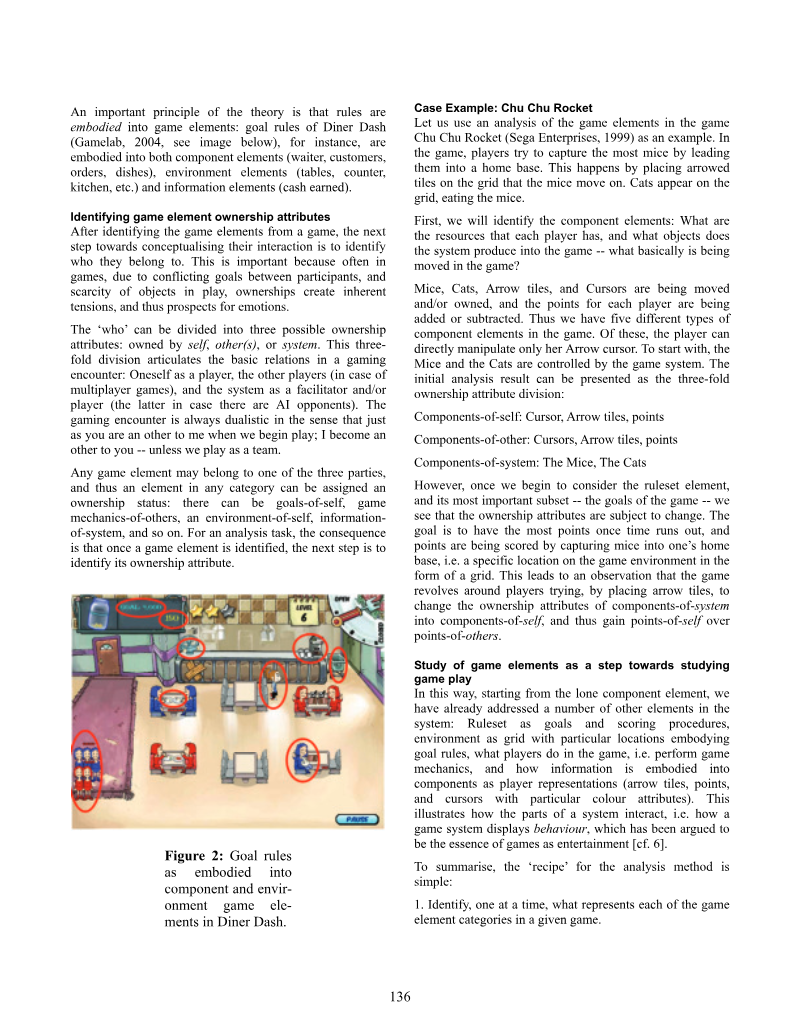
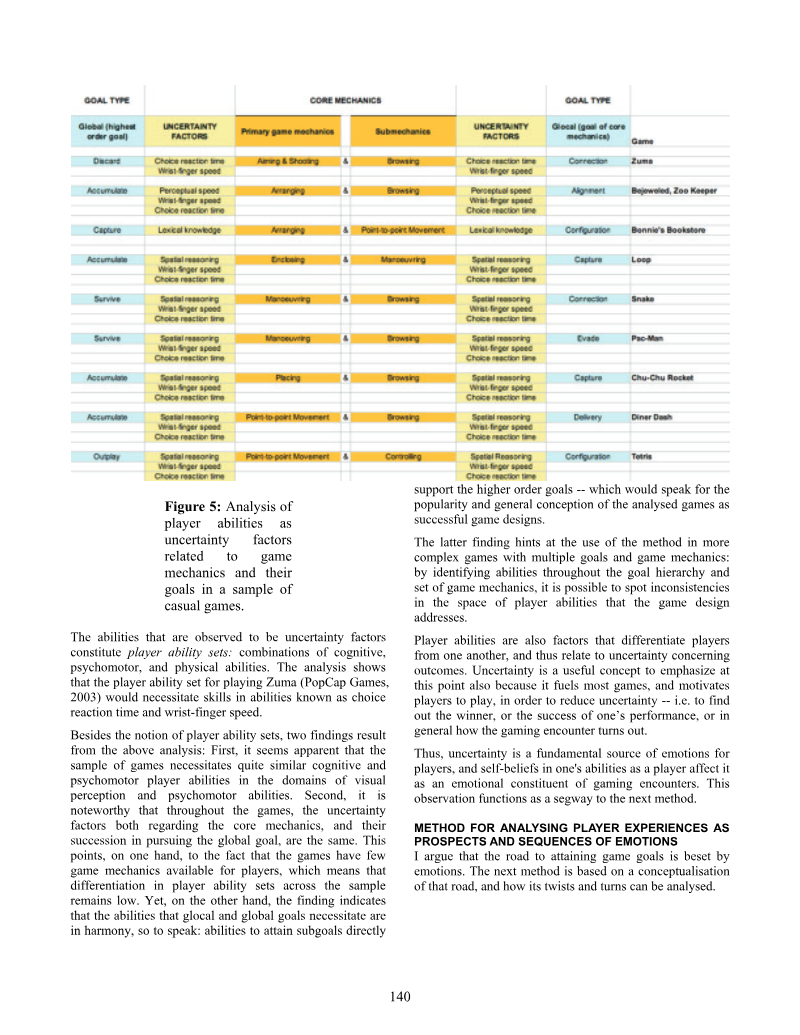
- The approach is operationalized through a toolbox of seven Rapid Analysis Methods covering game elements across nine categories, mechanics and goal hierarchies, and player ability sets and emotional eliciting conditions.
- Analysis of casual games Zuma, Tetris, and Diner Dash finds they rely on a small, recurring set of mechanics (arranging, placing, browsing, point-to-point movement) that typically aggregate into a global goal of accumulating points.