Call of Cthulhu
Game
3 documents in the library are about Call of Cthulhu, from writers such as DiGRA, Extra Credits and gamevironments. Each has a summary and key insights with the page they come from.
Connections
Each row is a game or company named alongside Call of Cthulhu, each column a document, oldest first. A mark means that document names it. Select a row to see those documents.
Documents about Call of Cthulhu
"Writing Back" to Which Empire?: Constructing Chinese Identities in Tabletop Roleplaying Games in Singapore
This paper examines how Chinese identities among tabletop roleplaying game (TTRPG) players in Singapore are constructed in relation not only to the West but also to the rising power of China.
- The paper argues that Singaporean Chinese TTRPG players occupy a doubled geopolitical position, often describing their identity as neither Western nor mainland Chinese enough, and asks which empire their "writing back" through play is addressed to.
- Its central claim is that players experience identity as dynamic and processual through homebrewing, and the author concludes the addressee may be as much the rising power of China as the former colonial West.
- Call of Cthulhu sessions are described as enabling postcolonial irony, with players revisiting imperial history as historical flâneurs.
Nation(alism), Identity and Video Gaming
The document is a special issue of an academic journal titled Nation(alism), Identity and Video Gaming, edited by Lisa Kienzl and Kathrin Trattner and published in 2019.
- The report is a 2019 special issue of an academic journal, edited by Lisa Kienzl and Kathrin Trattner, examining how video games construct and contest national identity, cultural heritage, and ideology across multiple national and cultural contexts.
- Its central case study is Sarah Zaidan, Richard Pilbeam, and Elin Carstensdottir's analysis of From Software's 2015 action role-playing game Bloodborne, which uses Western Gothic iconography in a fictional Victorian-style city to explore Japanese concerns such as ultranationalism, xenophobia, and historical revisionism.
- The authors argue that Bloodborne deliberately sets the Gothic and the Weird, two opposing horror traditions, in tension rather than fusing them, drawing on the work of H. P. Lovecraft and China Mieville for the Weird.
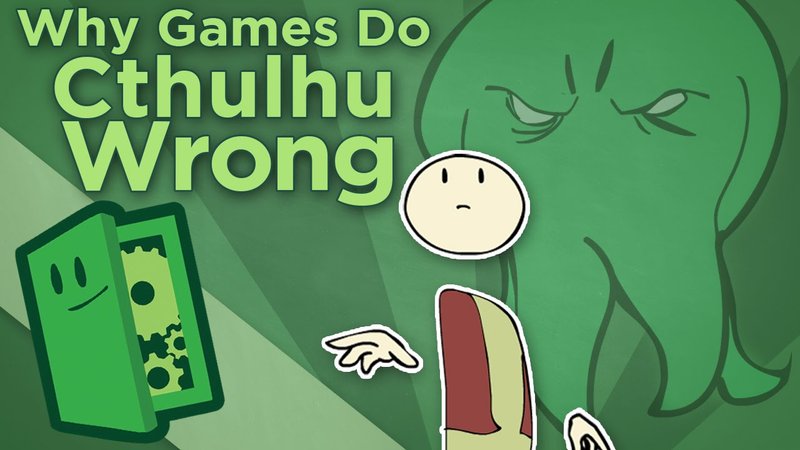
Why Games Do Cthulhu Wrong - The Problem with Horror Games - Extra Credits
The core conflict in adapting H.P. Lovecraft’s Cthulhu Mythos to video games lies in the fundamental incompatibility between the medium’s traditional empowerment fantasy and the existential horror of the source material.
- The fundamental conflict in Lovecraftian game design is the clash between the medium’s traditional empowerment fantasy and the source material's core theme of human insignificance.
- Treating cosmic entities like Cthulhu as defeatable bosses with health bars destroys the existential horror by making the threat mundane and manageable.
- Effective horror in this genre requires subverting player agency by ensuring that actions are ultimately inconsequential and survival is never guaranteed.