1 free read left. Create a free account for unlimited reading + AI research.
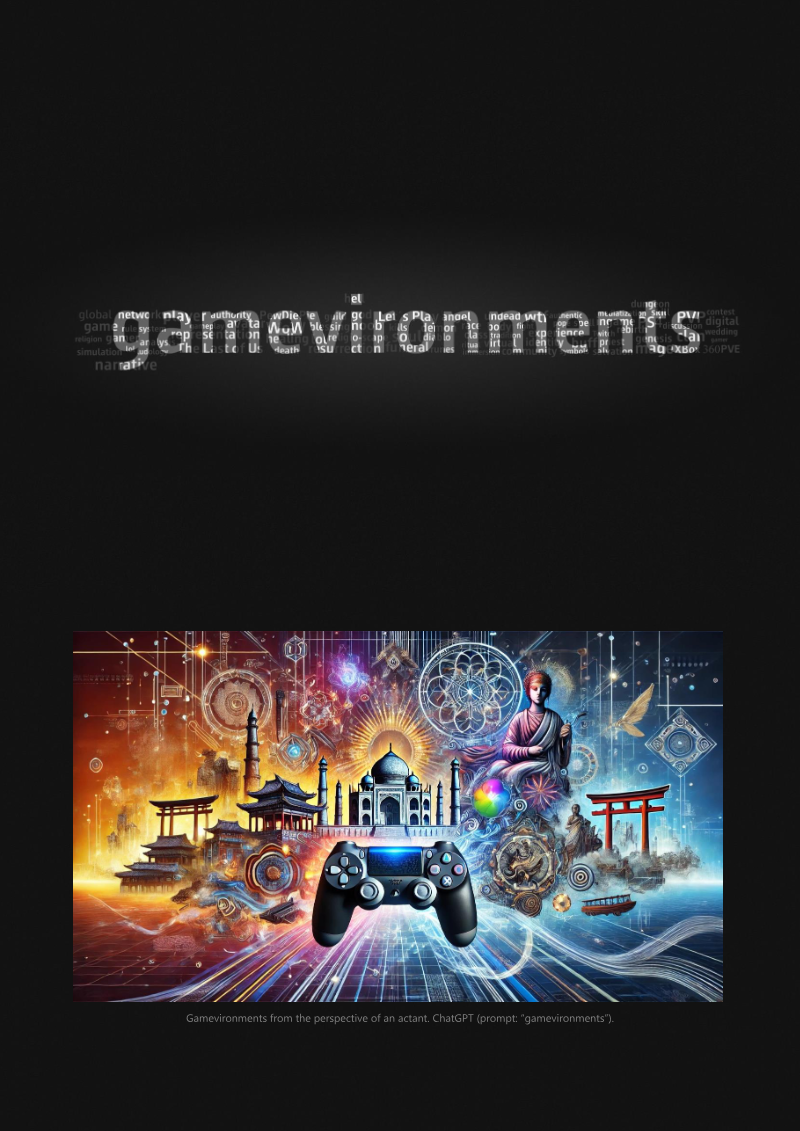
Create free accountArticle gamevironments
1 free read left. Create a free account for unlimited reading + AI research.
Create free accountArticlegamevironments
The issue, edited by Lisa Kienzl and Kathrin Trattner, examines how games construct and contest national identity, cultural heritage and ideology.
The document is a special issue of an academic journal titled Nation(alism), Identity and Video Gaming, edited by Lisa Kienzl and Kathrin Trattner and published in 2019. It comprises an introduction, research articles, a roundtable, cultural project reports, interviews with developers, and game reviews. Its scope spans multiple national and cultural contexts across video gaming, with contributions examining topics such as border games, American culture, Indonesian horror, and Togolese game development. The issue treats games as sites where national identity, cultural heritage, and ideology are constructed and contested.
A central example is the research report by Sarah Zaidan, Richard Pilbeam, and Elin Carstensdottir on From Software's 2015 action role-playing game Bloodborne. The authors argue that the game, though set in a fictional Victorian-style city, draws on Western Gothic iconography while using it to explore Japanese concerns such as ultranationalism, xenophobia, and historical revisionism. Their methodology combines close textual and visual analysis of the game with sociological literary criticism and a review of literature on Japanese history and Western Gothic and Weird fiction, particularly the work of H. P. Lovecraft and China Mieville.
The report's key finding is that Bloodborne deliberately juxtaposes the Gothic and the Weird, two opposing horror traditions, and positions them in tension rather than fusion. The authors show how mechanics such as the Insight system, which inverts the Sanity mechanic of the Call of Cthulhu tabletop game, and the opposed Beasthood mechanic reinforce this conflict. They conclude that the game's narrative of maternal grief and the return of repressed traumatic pasts offers a critique of modernity's contradictory attempts to transcend its history.
Each row is a game or company this document names, each column a document, oldest first. A mark means that document names it. Select a row to see those documents.
gamevironments · 2026
gamevironments · 2026
gamevironments · 2026
gamevironments · 2026
gamevironments · 2026

gamevironments · 2025

gamevironments · 2025

gamevironments · 2025

gamevironments · 2025

gamevironments · 2025

gamevironments · 2025
gamevironments · 2025
DiGRA · 2026