
Armored Core
GameBy FromSoftware · Released Jul 10, 1997
Documents about Armored Core
Report37 pages
Japan Market Report 2025
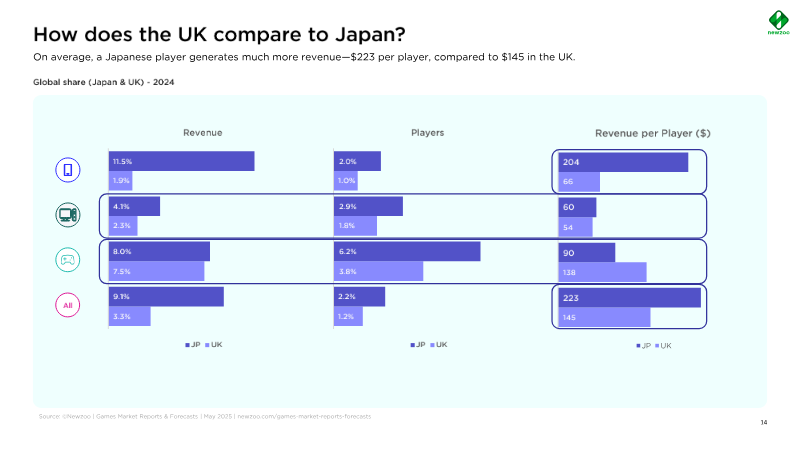
Newzoo's Japan market report, prepared for UKIE's Virtual Trade Mission: Japan, helps game businesses of all sizes understand and navigate one of the world's most distinctive and competitive markets.
- Japan generates 9.1% of global games revenue from only 2.2% of the global player base, with an average revenue per user of $223 compared to $145 in the UK.
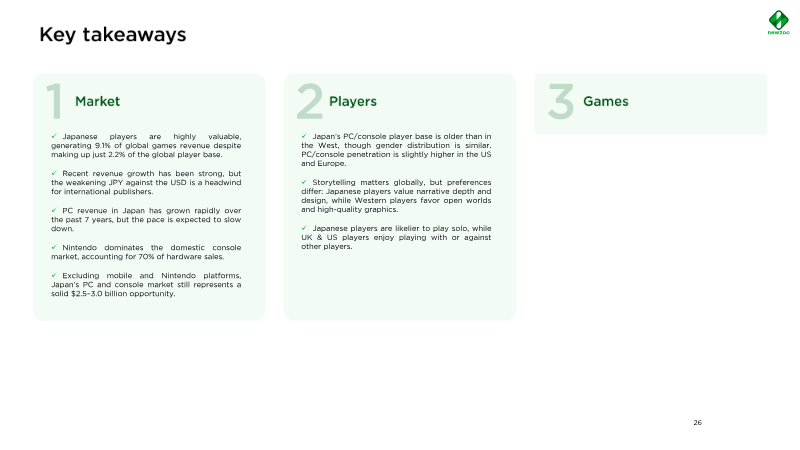
- International stakeholders have a $2.5 to $3.0 billion market opportunity when excluding mobile and Nintendo platforms, which currently command 70% of console hardware dominance.
- Japanese gamers prioritize narrative depth, character design, and solo play, contrasting with Western preferences for open worlds, high-end graphics, and competitive multiplayer.
UKIE – UK Interactive EntertainmentJan 2025



Report19 pages
The Games We Watched: Lurkit’s Top 500 Global Stream Report
The global gaming industry experienced a period of significant contrast in 2023, characterized by record-breaking streaming engagement despite internal industry volatility such as widespread layoffs.
- The top 500 games generated nearly 15 billion hours of viewership on Twitch in 2023, despite broader industry volatility.
- Market engagement is highly concentrated, with just 11 titles accounting for 50% of the total viewership among the top 500 games.
- Grand Theft Auto V was the most-watched title of 2023, accumulating 1.3 billion hours of viewership.
LurkitJan 2023
Whitepaper225 pages
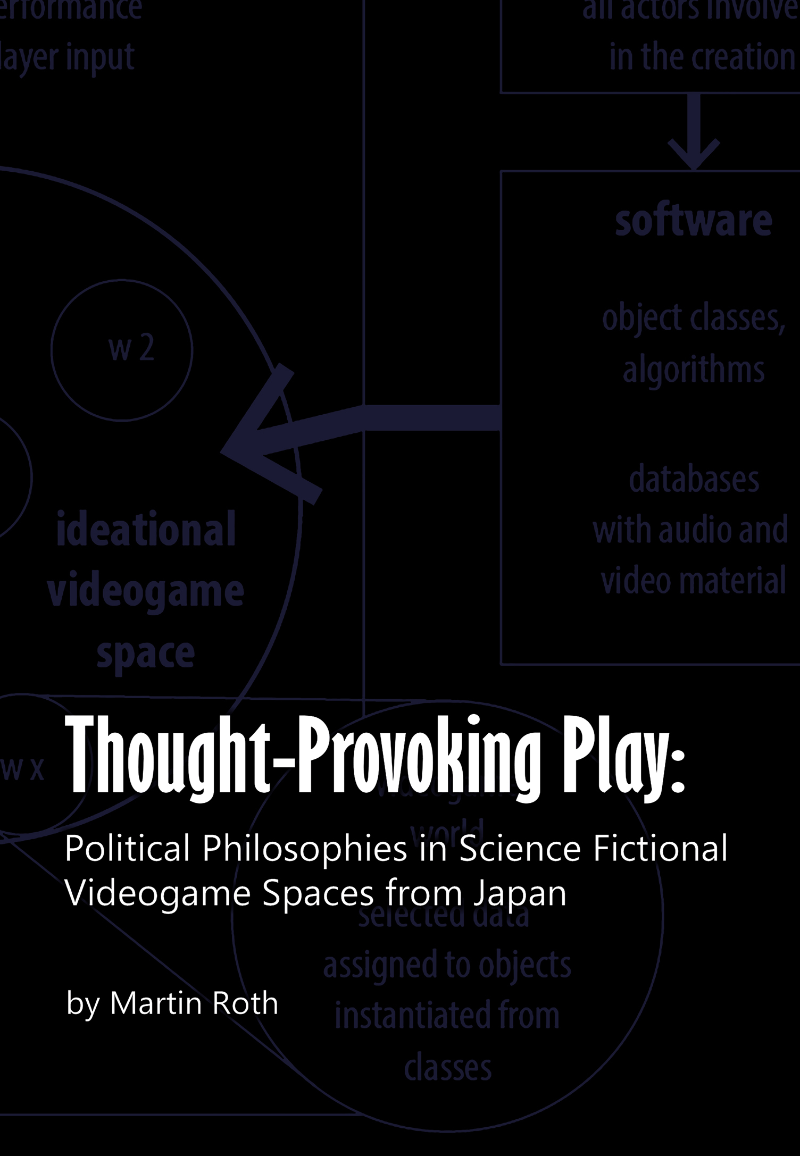
Thought-Provoking Play: Political Philosophies in Science Fictional Videogame Spaces from Japan
Martin Roth's study examines whether Japanese science-fictional videogames can serve as spaces for political philosophy, specifically by stimulating the political imagination that Roth argues is threatened by neoliberal capitalism's narrowing of perceived alternatives.
- Roth argues that videogames function as an 'ideational' or 'enacted' space co-produced by designers, the computer, and players, where rule systems, narrative, representation, and randomness generate conflicts that resist full simulation; he frames this as a hypothesis tested through close analysis rather than a demonstrated finding.
- The study is motivated by the claim that neoliberal capitalism narrows perceived alternatives and threatens the political imagination, and it proposes Japanese science-fictional games as spaces that can stimulate that imagination.
- Science-fiction titles accounted for only seven of 204 million-selling Japanese games, yet held a steady 10 to 15 percent of annual top-100 sales between 2000 and 2011, with the market dominated by Gundam franchises.
ETC PressJan 2018