VideoDeconstructor of Fun
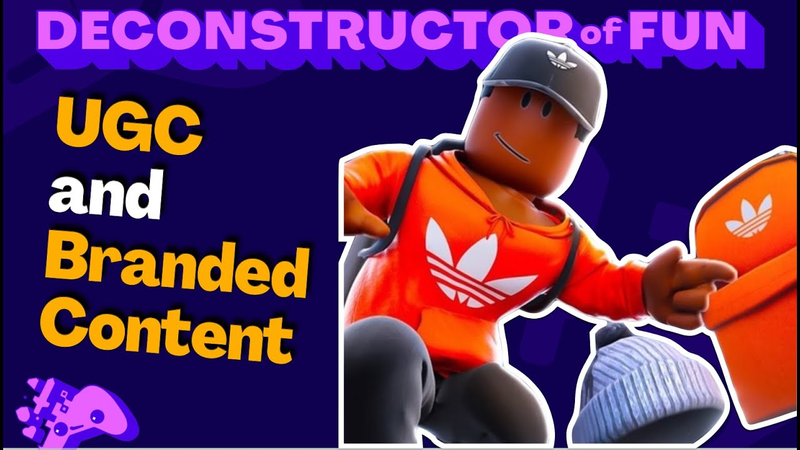
From Experiment to Essential: How UGC Gaming Became a Marketing Powerhouse
14 Apr 202555 min video
[Music] Attention app and game developers. Are you ready to unlock the secrets behind the world's top performing apps and games? With Sensor Tower, you get the ultimate competitive edge. Whether it's breaking into new markets, fine-tuning your UA strategies, or boosting monetization. Dive into data like never before. Track global trends across app stores. Analyze marketleading ADAP purchase and inapp ad strategies and benchmark your performance with realtime insight. The best part, Sensor Tower doesn't just deliver data. It helps you turn it into action with intuitive tools and expert analysis. It's everything you need to make smarter, faster decisions. Thousands of app and game studios from indie creators to global giants trust Sensor Tower to help them win. So why not you? Start your free trial today at
sensortowwer.com. That is sensortow.com. Game devs, here at Heroic Labs, we know that great gameplay is what players love. But integrating metagame features like challenges, progression, and rewards is crucial for retention and monetization. But coding them is a tedious and timeconuming process. That's why top studios have turned to Hero from Heroic Clouds. Hero provides a complete suite of battle tested metagame features that are quick to implement, letting you spend more time on the core gameplay experience. Ready to ship fully featured engaging games? Check out her today at heroiclabs.com. Hello everyone and welcome back to Deconstructor of Funds deep dive series. I'm your host Jen Dano. So today we're diving into the explosion of brand partnerships in the UGC gaming space. So to help with this
discussion, there is a new report from Geek, which is spelled G EIQ. They did a state of brands in gaming and virtual worlds report. Uh, a lot of great insights in there. So, to help me out, I phoned a friend, well actually two friends to get us up to speed and highlight some learnings that can apply outside of just this UGC space to various kinds of activations and collaborations and also to mobile. So, uh, hang in there mobile friends, this is also for you. So, just to do a little setup, um, some things I found super interesting for the report that I want to dive into with the guys. First is just the sheer scale of brands partnering in the space is impressive. Over half of all brands that entered virtual worlds did so in 2024, and that was 880, which was up 38% from 2023. It's a lot of activations. Second, brands aren't just testing the waters anymore. They're coming back for more.
Repeat activations were up 50%. So, what I found found impressive about that stat is that they're not just dipping the toe. They're not doing the, "Oh, look how sexy it is to be on these UGC platforms." They're actually seeing some results that are leading them to come back. Third, the brand campaigns are now integrating these UGC activations as a new marketing channel. So, this isn't just a one-off that you throw over here. While it's not quite a performance channel yet, they are seeing impressive engagement KPIs like time spent and they're also using some tactics like code redemptions that can be helpful in gauging that downfunnel result. All of this is important as we are always out to answer that question. What is the business impact? As you guys know, Phil and Chris are always in my head about those kinds of things. So today joining me to help me break all of this down are two amazing experts. So I'm going to let them introduce themselves. Thanks Jen.
Hi everyone. My name is Charles Hamro. I'm the CEO and co-founder of a company called Geek. That's spelled G EU. It's a sunny day here in London, so I'm trying not to move my head too much. I'm rarely sunny in London, but it is sunny now. What is Geek? Geek is a data and insights platform for brands looking to activate inside gaming predominantly UGC gaming platforms. So we very often get called in to do education upskilling. We then help on strategy and planning and then after execution we tend to do the measurement and reporting as well. So really the same reason a brand would use Nelson for traditional broadcast they they use geek for these virtual world activations. What we don't do is we don't do the execution piece, the production piece, and we work with lots of different partners, one of which is actually here on this call, Matt from Super League. So maybe I'll hand off to Matt to talk about what Super League does. Perfect
segue. That is perfect. Thank you, Charles, Jen. Really glad to be here. Thanks for having us. And you will all hear during this that the IQ portion of Geek IQ's name is really a result of Charles's brain. And so pay attention to what he says. And I also have to say that I'm here in Los Angeles where it's raining and so we've had a nice way that Wow. Yeah. a nice role reversal here for our cities. But we do actually have a great partnership ongoing with Geek on a number of programs. Super League really focuses on helping to make brands playable. And we do that through playable advertising, playable content, and playable experiences. That activity runs across mobile games and the world's largest UGC gaming platforms, Roblox, Fortnite creative, and Minecraft. All of which offer different opportunities and, you know, have different capabilities. And I actually forgot to say that my
name is Matt Edelman and I am the president and chief commercial officer of Super League. Charles, thank you. I was in a webinar that you did a couple of weeks ago when you were released a new report state of brands in virtual worlds I think is the name of it. Did I get it right? And it was really helpful to understand just from a numbers and a data perspective like how many brands are participating in these platforms. And so thanks for just offering free content like that. you know, I found it really valuable and that's kind of one of the reasons why I wanted to have you on the podcast is to help maybe share some of those insights with the audience here. Before we dig in, I always like to start with a little bit of kind of like definitions of what we're talking about. We've we've thrown out a little bit of words already, but first, Charles, could you talk a little bit about what do we mean by UGC? I know we talked about Roblox, we talked about UEFN. What else are you thinking about and what do you look at when you do your data analysis?
Well, listen, I mean that word UGC is incredibly important because it is the massive change that's happened in the industry over the last 5 years and a big reason why I started Geek. UGC is stands for userenerated content and actually everyone who's listening should be very familiar with what UGC is because we use UGC platforms every day beyond the gaming ones that we're talking about today. Facebook, YouTube, Instagram. These are all platforms where the users are creating the content. So, it just so happens in Instagram, the content that's being created, it's not being created by the company meta. It's being created by the users, but that content is restricted to sort of 2D content. So, that would be video, text, image. The fascinating thing now and when we're talking about the space we're talking about today which is gaming PC content is essentially the difference is is that it's 3D content. So you're no longer restricted by image, video and text.
It's actually all three-dimensional and definitions that we have at Geek anyway, which seems to be used by lots of people luckily is we call them virtual worlds and they are platforms that host that UGC content. So Roblox would be a virtual world, Fortnite would be a virtual world, Septo, Sandbox, Minecraft, Rec Room. There's about 10 to 15 ones that are worth looking at and considering. And then within those worlds, you will have brands that do activations. And activations can range anywhere from an integration into an already existing experience. It could be building your own virtual experience. It could be dropping in an item in Zapetto. It could be doing a video booth. So very very broad, but really the comparisons to between traditional social media and these gaming UGC platforms are are what help people understand what it is we're
looking at and why it's different to traditional video games. No, that's perfect. I think the main takeaway is especially for this audience is we we really only think about two. I actually call it the UGC3 which is Roblox, Minecraft, and Fortnite are the three that we typically think about. But what was interesting is you brought up a couple of others and some of them are even on mobile ironically. Matt, when you think about kind of brand activations and the platforms, any definitions you want to throw out or context before we kind of get into some of the specifics? It might be helpful to reference some common language and then also there's a framework I usually find helpful. So the common language really is that as Charles mentioned a brand can build its own space in these platforms or at least in many of them. The two of the big three being where this activity occurs most frequently and that is they can build an island in Fortnite Creative
or they can build a game or experience inside Roblox and that is typically referred to as a branded or custom build or custom experience or branded game. The next sort of layer of activity is usually referred to as a custom integration. And that occurs when a brand works directly with a native creator on the platform and comes up with a fun and authentic way for that brand or its products and usually some form of messaging to be integrated into the game play directly. So, a custom level, a custom area that players naturally have to experience in order to progress through the game play. There is another layer down which is really kind of a turnkey integration and there are a handful of companies. Super League happens to to be one of them. And we do have the most scalable solution to achieve this, but it essentially is enabling a company like Super League to
build a unique mini game or mini experience and have a developer just drag and drop that into their existing popular game. So, the creator really doesn't have to do any work on the creative or the build. And so, that can often be more scalable. And then with Roblox more than others, another definition is just very traditional, which is advertising. And Roblox is rolling out an ads platform and has been really working hard on that over the past 18 months, ultimately aiming for it to be fully programmatic and competitive with advertising on other platforms. The last thing I'll just mention is really a framework. And when we talk to brands, we suggest they look at YouTube as a framework because the opportunities are categorized relatively similarly. So on YouTube, a brand can have their own channel. That's not likely to be the place they're going to drive the most
engagement unless they promote that channel with paid media. The next layer down, they're working with an existing influencer who is doing a custom video. I use the example of Nike could ask an influencer to go up to Nike factory and do a video about how sneakers are made. And that video goes on the influencers's channel as one of their uploads for the week. And it stays on for a period of time and generates a lot of organic traffic. The next way that you sort of have as a highle working with influencers is a shout out where an influencer will do something just before their video. They'll mention it. It will be relatively brief, but brands will do that with multiple influencers over the course of a campaign. And again, it's sort of like that miniame example in Roblox, and it can scale easily. And then absolutely, brands look at advertising on YouTube. And so the framework tends to help in terms of just providing an entry strategy roadmap for
brands when they look at UGC platforms. And Roblox is the only one that offers all four so far. Got it. Yeah. No, I like your framework. It's it's a good analogy for people to remember that the idea is you can create a bespoke world. You can do something inside of an existing experience. There is a turnkey solution for a brand to activate. And then there's everyone loves is the different kinds of ad integrations that can be either programmatic where somebody serves it in or it could be kind of custom. I should also mention what a brand is in case people are wondering. This could be anything from McDonald's to Nike like you mentioned to BMW. So, it could be any of the different categories that are kind of outside the world of games that want to partner in. It could even be a celebrity in some cases. Is that true? I mean, Charles, I know you have a a long history with Elton John. You and you're you're friends, right? Yeah, we we know
each other. My stepmother actually is his stylist, which is a fun fact. Oh my god, I had no idea. I was really joking. And that's true. No, no, no. That's actually that's how that happened. I didn't know that. Does that explain why you're always so welldressed? I mean, that's pretty impressive. But no, that's very kind of you to say. No, it doesn't because I don't take any of her advice. I probably should. In the same way a celebrity will use social media channels to communicate their vision or maybe they're promoting products, they are treating these UGC gaming platforms in the same way Matt very eloquently put you know the comparisons with YouTube. They are destinations for communication. The real interesting point is how are they different to the traditional destinations of communication? What can you do more in these UDC gaming platforms that you couldn't do in traditional social media? And by the way, what can't you do in these gaming
platforms that you can do in traditional social media? Because all of these brands have very different objectives. And depending on what your objective is really depends on whether actually UGC gaming is going to be the right opportunity for you or not, it's important to add the or not into that. you know, a a couple of years ago, I'd say, you know, coming out of, you know, the COVID years when, you know, the flood of activity, you know, moved from the real world to the digital world and gaming businesses all saw their business plans accelerate, you know, to where they thought they'd be 5 years later. Brands rushed into these virtual spaces. And a lot of them, you know, had at the time the objective of getting a headline and they really wanted those headlines to you know help drive interest and awareness of their brand as an innovator and you know being creative in front of an important audience. I think that
objective really no longer applies and as a result there are some brands who have not yet decided they can achieve other objectives inside UGC gaming platforms. So you know they haven't necessarily come back whereas there are objectives that matter to a number of companies who continue to look at these platforms as providing you know important value. Yeah, it's interesting that I don't know if you remember those days, but it was kind of the innovation teams who were in charge there and their objectives are very press and PR related. They're actually going in there and getting press as you said reach their objective. But the people that hold the purse strings inside these brands to activate in these environments are no longer the innovation teams, it's the marketing teams, which means that their KPIs and their objectives are very different. Not really pressing PR. Yeah. You know, we've got budgets in
traditional media, we've got got budgets in digital. You tell me why my budget is better spent in UGC gaming. And that's the interesting bit. Agree. I I love hearing that because I feel as though that's what we have transitioned to, right? Everyone was experimenting and that was lovely and great. I feel like we're in the next phase, which is all right, you marketers, you got your chance to do your like whatever, go have fun. Now you need to like put up some numbers. So actually Matt maybe are there some success cases you want to point to that folks can you know understand how this is kind of working out in the space like what have you seen you know one of the companies both Geek and Super League work with and in fact we have collaborated on behalf of is L'Oreal and we've done a few things together one of them was with Maybelline and in that example Maybelline believed in the opportunity and the strategy to work with native
creators and to have a presence inside of an existing popular experience in this case on Roblox. And the results were remarkable. We were able to deliver about 30 million visits over a short period of time. 30 million visits to their presence in the game and the players spent an average of about nine minutes interacting with the brand in that space that we conceptualized and designed with the creator. And so in that example, Maybelline was trying to raise awareness of a product line and it was effectively therefore part of a marketing campaign and was aligned with what they were doing in other channels. And you know we believe that on a dollar for-doll basis the exposure the awareness they achieved the time spent was much higher than just about any other channel. Now, it didn't lead to attribution around sales levels or sales
activity because that's not something that's yet possible inside UGC platforms. That attribution funnel doesn't exist. But every marketing campaign has a top offunnel goal around awareness and that was achieved in this example. Charles might have additional thoughts on that one. Yeah. No, I think that's a a great example. I would almost take another step back and go if the question is around ROI, what do you define as return? Again, it sounds very markety, but going back to the objective, some brands, they only care about top of funnel. At which point then the media buying immersive advertising on roadblocks is going to give that a tick or doing immersive advertising elsewhere in gaming is going to give that a tick. of which then it's a very simple just look at the CPM and compare that to traditional social media and just the only area you're going to
get stuck by is there are some users in these UGC gaming platforms which you cannot reach on these other platforms because they're not spending time inside traditional social media. So that's the one thing to look at for awareness which a lot of brands have awareness objectives. Then you've got this middle of the funnel which Matt talk spoke about a lot which I believe outperforms traditional media verticals which is the sort of consideration engagement stage and Matt mentioned time spent which is the obvious one that turns out you know branded content on traditional social media when you're scrolling through a phone is roughly 1 to 4 seconds per user inside Roblox the average time is about 11 minutes per user. So if you're looking at the middle of the funnel, it turns out these UGC gaming platforms with the right strategy and the right activation outperforms traditional social media or even traditional media
for that like to like. The one that everyone cares about a lot is direct response, which is the bottom of the funnel. And that is the equivalent in Instagram would be Instagram shops, where you're buying a physical product directly on Instagram. By the way, didn't work very well on Instagram. Working quite well in Tik Tok with Tik Tok shops, but only for a particular product category. We're at the beginning stages of that. And one of GE's customers is Walmart where we we've done some integration tests to understand direct commerce with with Roblox. And then Shopify has recently integrated with Roblox on that. But again, I think we're at the very very beginning stages of that. A good example I would give of another form of return, you know, Paris Hilton with the Hilton Honors program, they went into Roadblocks and they wanted to get CRM signups for emails and
you can put a dollar cost on cost per email sign up and I believe they got 27,000 signups. I'll have to check what the time frame is of that, but it was 27,000 email signups from their Roblox experience. And then there's all sorts of other examples, you know, uh, Super Drug drove 15,000 people to their real world store through some in-game mechanics that they created. But again, we can talk about top of funnel, we can talk about bottom of funnel, but the reality of everything that I see inside these gaming environments that out competes and beats traditional social media, it's that middle of the funnel engagement consideration stage. Yeah, I would love to understand hopefully someone is going to do some research that shows that engagement, the more time spent with these brands and these experiences does actually lead to an increase in trust.
Of course, I get frustrated by this. Yes. And I'll tell you why. Because there's a billboard outside, right? when you're going when you're walking past a billboard and for some reason brands believe that when you look at the billboard you are likely to purchase a product or it's going to increase your purchase intent. Now you're looking at that billboard for maybe 1 to 4 seconds or when you're looking at a piece of media on Instagram you're looking at that 1 to 4 seconds. The reason why brands do that is they believe attention ultimately leads to purchase. Mhm. So then you've got to ask yourself question is where can I garner the most attention? We live in an attention economy. You're absolutely right. Someone needs to do a study on does attention lead to sales. Yes. But that study should have been done years ago. I know when brands were advertising in traditional media and social media. And I'm sure a study like that exists. It's because this UGC gaming space is new. But Matt, you go ahead and tell me what
you think on that one. everything that you just said. It's a thoughtful and astute perspective. We see all of the same activity. I would just say a couple of things. We have a platform that is called Unlockables. And Unlockables allows us to reward players inside Roblox and Fortnite and even Discord. And we're adding other tools to this to leave those platforms, go to a web experience, and be rewarded for the actions and behavior and quests they completed inside these environments. It is starting to demonstrate, and we had two really fun examples recently. It's starting to demonstrate some real potential. So we we ran a program with BB Rexa for Warner Music and she wanted to drive signups of her premium text group and during the course of the program we drove 60% of the signups to her text group in that window of time and it was a Roblox integration and we actually had to have Roblox players
leave the platform and go outside of the platform and then join the text group. And so it's not easy. The messaging restrictions inside Roblox to drive that action are a bit challenging is a good word. Another recent example, the pioneer of demonstrating the power of time spent inside these platforms into what can happen off of them. The pioneer is Chipotle. I'm happy to say that it was something we we built. It was too many years ago to really lean on as a modern example, but Chipotle drove 130,000 people to grab a code for a free burrito that they could only access if they were completing an action building their own burrito inside the Chipotle experience on Roblox. And we followed that up just a few weeks ago with a program where Chipotle launched a national ad campaign inside their experience on roadblocks. First time a
brand has ever done that. So continuing to be a pioneer. And we only offered 50,000 codes instead of 130, but they were gone in 1 hour and at our peak a thousand were being redeemed every minute. And so there's no question back to the observation that you made Charles that engagement matters materially but it is not sustainable or frankly scalable to measure the ROI of that engagement by requiring advertisers to always give away free stuff. the ROI has to be more commenurate with the ROI that is achieved on other platforms. And in fact, we're doing a lot in mobile right now. We we've sort of diversified and expanded into helping brands become playable through playable ads in mobile games. and the ROI and the attribution
funnels and the measurement and targetability is all natural to the ecosystem that lives both within mobile games and in the interstitial ad inventory that you see when you play mobile games. It's a part of our business that's growing faster now than some of the activity inside UGC environments specifically because that ROI and that attribution doesn't exist yet in the immersive platforms. And Matt, I find that so interesting that because I always find when I'm playing mobile games, all those sort of gotcha free games that often it's this ecosystem where you're getting an ad for another game. I've always been quite shocked that I've never had a product advertised to me and it's always another game. Are you trying to sort of disrupt that model and go in and be like, well, actually, you don't have to be advertised another game while you're playing a game. you could be advertised something that you're interested in. It's a really great question and you
know look I think anybody at least in the US who's played mobile games free to play mobile games over the past year is tired of Monopoly Go. But um yeah we are absolutely seeing the potential there but it starts from an important premise. So just backing up half a step, one of the challenges that has existed over many years around helping to inspire brands and advertisers to think about gaming channels as an important customer acquisition opportunity. Is that the gaming industry and the people selling against the inventory in the gaming industry have constantly talked about reaching gamers. And that's just not the way an advertiser thinks. It's not the way an advertiser thinks any more than when they advertise in video platforms that they think about reaching video viewers. That's not how they think, right? They want to reach audiences. They want to reach millennial moms. They
want to reach males 18 to 34. They want to reach 20some weekend warriors. And those audiences are in gaming channels. 3.3 billion people play games. 61% of people living in the US play games. Two out of three people under the age of 40 play games. The audiences that brands are seeking are playing games. So if you start there and you look at the audience targeting opportunities in mobile where you have access to the data that you don't yet have inside UGC environments, it is actually becoming easier to explain to a brand why that inventory that you described, those interstitial ads that often have a reward component to them, it's important for the audience that they reach. And so brands are looking at it as an increasingly
attractive opportunity to get in front of and acquire customers. And the best part about it is you can make that advertisement playable. Let me just also go in and say, you know, I look a lot at gaming audiences. When you have Gen Alpha and Gen Z, they are playing games more than any other age group. And it actually is becoming the leading entertainment activity that they engage in. And so a lot of why people are really interested in Roblox is that's how you get Gen Z and Gen Alpha. That's where they are. Some of them are under 13. We we all know that that happens. And that is a way for them to, you know, reach some of that audience. So I actually wanted to, you know, since we're talking a little bit about advertising and, you know, what's fascinating about this conversation is that this is starting to hit mobile, which is interesting. there's a a group called the IAB which are I guess we can say the ad overlords and as they come together and start to think about you
know what are ad units how do we do standardization for this and they also in all of their upfronts talk about like hey here's where you know brand marketers media agencies you should be spending your dollars how are you thinking about you know working with them or engaging with them to help kind of boost what it is that you're seeing success in I don't So Matt, do you want to take that one first? Yeah, sure. So look, IAB a few years ago started the playfronts to sort of be the next extension of new fronts, which was an extension of the upfronts. And the reason they have gone to each of these new areas of opportunity to showcase, you know, advertising evolutions is because the audiences keep moving, right? So they went to new fronts from upfronts because digital became too important to include in the upfronts and they went to play fronts out of new fronts because gaming became too important and significant for the
reasons you just mentioned Jen to only include in digital. And so the playfronts are they happen every year at the beginning of April, April 1st this year. And the IAB has a playables category. You know, if you go to their website or you look up, you know, IAB playables, there is an ad format that they talk about. It is not a standard format the way that videos and billboards operate. But the good news is there are now standards in terms of delivering playables. And so you can have an ad tag attached to a playable ad unit that is no different than an ad tag that is attached to a video unit. And and so from that standpoint, there have been standards that have emerged that are really compelling and make it quite easy for brands to consider this new interactive format. And I'd say that that's probably, you know, the other important consideration. You know, ad formats have been the same for 50 plus years. You know, video, audio, text, and
images. You could say that experiential has emerged and it is an important category, but experiential activations are really only there for the purposes of driving video and image and text and audio being shared on social media anyway. And so when you think about the audience that plays, well, wouldn't you want to put an ad in front of the audience that plays that is a playable ad? Wouldn't you want to tap into that lean-in mindset, that passion, that focus, that playfulness, that joy, that sense of adventure that occurs when you're playing a game and by creating a playable experience inside Roblox or Fortnite creative, by creating a miniame that can be distributed across Roblox experiences or Fortnite islands, by creating interactive characters that can live inside Minecraft or Roblox or Fortnite by creating a playable ad where
you are actually playing with the ad's creative inside of an endless runner or a platformer or an obby. That's how to connect to this audience that happens to [Music] play web stores. You've seen what good looks like, but have you seen great? App charge is the direct to consumer platform backed by the likes of Supercell and built by monization pros from Moonactive, Platika, Huge Games, and others, people who know the difference. App charge powers over half a billion dollars in transaction a year for top studios, optimizing every detail. deeply personalized web store offers custommade design, industry-leading monetization features, in-game payments SDK, and more. 70% of top grossing games already have a web store, but the one scaling fastest, they're doing it with Appcharge. Learn more at
appcharge.com. This podcast is brought to you by Appsflyer. In today's digital world, understanding your app's journey from discovery to download is more than just insightful. It's essential. Enter Appsier, the leader in mobile attribution and marketing analytics that allows you to measure the full potential of your marketing efforts, making every ad dollar work smarter. With Apps Flyier, that's your new reality. Dive deep into datadriven insights that reveal exactly where your users come from and how they'll interact with your app. App Slier, where your app's potential meets performance. In mobile gaming, which is one of my jams, playable ads, and I'm sure you've seen the save the king or the play some solitire or whatever it is, are some of the top performing units. They're engaging. It's everything kind of what you're saying about what you guys do in in UGC spaces is very true for playable ads. So, the idea of kind of bringing brands into that seems
kind of interesting. And I think actually a lot of players would welcome not seeing another Royal Match or Monopoly Go or, you know, latest game ad. They would probably really love to see something from BMW or another brand show up in that. Well, I'll I'll mention one thing about the ad format, but then I'll throw to Charles for something that I know he's paying really close attention to. But you're correct, Jen, about the appeal of the ads. We ran a campaign, for example, for a couple of Mattel brands and we created playable ads and were able to match the type of gameplay in the ad to the type of game that the player is is already playing. So, if it's a if it's an endless runner, when they see that interstitial ad, it's an endless runner ad that's playable with the brand's creative. But the point is about the data. So for those two Mattel brands, we saw an 80% lift in
completion rate of the ad over a standard video ad in the same inventory. And we saw a 5,000% lift on click-through rate. H and and a lot of that's because you don't get to the click-through end card unless you complete. Yeah. And so by having such a high completion rate, you have so many more opportunities to get that attribution. And so the ad formats work really well. But what I was thinking, you know, that Charles would would be able to comment on is the reality that players can easily be delighted by a brand who chooses to be part of the play. And I would imagine that, you know, that comes up quite often, Charles, in the conversations you're having with your customers. Yeah. No, absolutely does. I mean, I just find it so interesting what you were talking about there about the gameplay and I think we need to view this in two different things because one is advertising and basically creating traditional formatting and making that
more immersive and and more engaging and I'd be interested to know Matt if it sounds like the distribution cost is it any different in terms of okay you've got a choice whether you distribute a video or you distribute a playable ad is there any difference in cost to the platforms you're distributing on because it sounds like there's a big difference in terms of engagement. Yeah. Not not necessarily. I mean I think you know there are always opportunities to think about pricing if you are you know selling those ads but in terms of the cost of delivery there is no difference whatsoever. It's the same. So you might as well go with the one that g drives you better engagement which is really interesting. And then you have the second part of this which is what I would call branded content. And how do you make the advertising more like branded content where it is essentially enriching the user experience? Because when you go into these Roblox experiences which are less like advertising and are a bit more like branded content, they essentially have
to create uh gameplay of value to a user because the user is choosing to go into the experience and then choosing to return to that experience if they are having a good experience. So that's why you can get some fantastic examples of Roblox experiences that really just go on their own incredibly well like Alo Yoga which is a place for a brand for an individual to meditate inside Roblox. They built that because it didn't really exist and it happens to be built by Alo Yoga which is a brand that is synonyominous with meditation. M so I'm fascinated by what you were saying there Matt because I feel like you're kind of blurring the lines between flat advertising and branded content in a way and just driving more and more value because typically advertising is getting in the way of the user from what they want to do and you're putting it in front of something they want to do but you're kind of merging the two there. But you you just nailed it in the sense
that you touched on you're giving the user something that they want to do. So if we all just think about our own behavior rather than interrupting them essentially. Yeah. Think think about your own behavior. When was the last time you sat through a video commercial that you weren't forced to watch? I mean even the Super Bowl that has amazing commercials. It depends which ad. Some of them I don't want to watch. Yeah. Yeah. And if you ask anybody under the age of 30, there is no ad that they want to watch. Yeah. I mean, you know, occasionally they'll see something that's just so highly entertaining and humorous and perhaps riveting on a social platform that yes, they will watch that ad, but for the most part, it is interrupting their experience. And when they're watching videos that they're interested in that are contentbased on Tik Tok or YouTube, the likelihood is they are messaging somebody, they are talking to a friend,
they are looking around and sort of catching, you know, three out of of four or four out of five seconds of that video. And so their attention is just in a different zone. And that's the difference between advertising and branded content in my view. That's right. Right. So imagine Right. Imagine if you could go to a brand and this is what you know we're now doing this and it's resonating quite you know powerfully including with media agencies. We're going to them and saying, "We can run playables, playable content and playable ads across immersive platforms and mobile." And as long as we're reaching your audience, again, back to audience, as long as we're reaching your target audience and we're meeting your KPIs that are often, as you pointed out earlier, Charles, a combination of awareness, engagement, and ROI attribution. So, you give us those KPIs. will create these playables based on your existing creative. We're not going to go build an entire new world for you
because that's not necessary for you to achieve your goals. Well, let us run the playables where they belong. We'll achieve some KPIs in Roblox. We'll achieve some KPIs in Minecraft, some KPIs in Fortnite, and some KPIs in mobile. And all you need to do is check the box that you want playables because you know that that's the ad format that's going to create the kind of relationship, engagement, attention, focus, and excitement that will inspire action around your brand. That's really interesting. I think you've taken a concept that has been very successful in mobile game UA, which is the idea of playables. By the way, a little bit of rewarded, right? So even the Chipotle example of using a code is, you know, hey, thank you for engaging in this content. and I'm going to give you something. A lot of the younger audiences are actually okay with that exchange of value. Okay. They don't hate ads if they get something out of it. And so I think what you're talking about really hits on kind of two things that
have been successful in other places you're bringing into, you know, the UGC space. And so I wanted to actually ask both of you and and maybe Charles this is it seems like you're indicating that the idea of hey I'm a brand I want to go make a world in one of the UGC3 or the UGC platforms is that no longer the best practice I mean obviously it's understanding the goals and things like that but that's not it anymore right? Yeah. Yeah. I mean, a classic marketeer response. It depends on what you're trying to accomplish cuz I'm not saying that. Listen, I think for the innovation moment for press and PR, building your own world was a classic thing to do because you could control the entire experience and the look and feel of it was complete up to the brand and they want to make sure that what they're building looks great for the press and PR. Now there's many advantages to building your own world in terms of you are in control of what you can do and
and how you can incentivize and what you can bring in to people but it's like saying there's many advantages of creating a YouTube channel or an Instagram profile. The disadvantage is you have to acquire the users either through gameplay through advert whereas what we're seeing a huge growth in Geek Data in terms of the number of brands that are doing this form of activation we're seeing huge growth in integrations why because in integration the users already there they already exist and you can pop your brand in there and do it on a campaign basis remember I said the word campaign basis that is Classic moving from press and PR innovation team to marketing teams which guess what marketing teams are campaign based. So they want to do these short-term activations and have it as an extension of the rest of their marketing strategy which they are doing elsewhere. So I don't think owned worlds be it a brand building its own world inside Roblox Fortnite setto is wrong. I just
think it really depends on what your objective is. And it also depends on the platform you're going into. Sometimes own worlds inside Roblox might perform very differently to own worlds inside Fortnite, which might perform very differently to own worlds inside. So, sorry to confuse your audience there, but it it's nuanced. You can't just take an Instagram strategy to Tik Tok. They're all different. It's not just about worlds anymore. There's more. There are more deeper integrations. you know, Matt to the very beginning of the podcast, the, you know, these kinds of in a sense bespoke or, you know, you sign up for like a package deal and it like happens in multiple places. And the other thing that you said that I think folks need to realize is that this is now a channel in your campaign strategy if you're a marketer. So marketers might not ever think of the UGC platforms as a channel in their strategy. I mean, I often joke, I worked at Mattel, I work
in the toy industry, I still work with many of my friends in the toy industry. I'm like, the next IP that launches for you guys and toys is going to come from a UGC platform. And by the way, it's also a chance for you to market to that audience in different ways like we're talking about here. And so, I think those are takeaways that are a little bit evolved from how people think about this space. So you never think of it in isolation. It is part of your wider strategy. Go on, Matt. You were going to say something. No, no, you're absolutely right. I love that you both pointed that out. The other angle that just occurred to me based on this is in addition to considering the objectives, it it is useful to consider the advertising category, the vertical. And one thing we have seen because the vertical and the objectives are a perfect match is the proliferation of entertainment IP and entertainment releases, films, streaming releases showing up with their own
spaces inside Roblox and Fortnite and they have been very successful. You know, we we launched the Fortnite island for Gladiator 2 in partnership with Paramount and it was the second most successful branded island in UISN ever. And it that, you know, it generated 30 minute play times, which is amazing. And that's it it's similar to some of the activations that have occurred in Roblox for movies like Wicked, as an example. And and I I say that because it speaks to the fact that as Charles mentioned, campaigns can be successful. And it might be that if you have a specific vision for how you want this audience to connect with your brand, that that vision is much easier to bring to life if you build your own space. You just have to be prepared and reserve money to
promote it because these are not platforms where if you build it, they will come. Just like we talked about with a YouTube channel. If a brand decides to introduce their commercial on YouTube, sure they put it on their channel, but they also buy a ton of advertising and put that commercial either in the advertising or they use that advertising to drive people back to the video that is on their channel. It's the same inside these immersive spaces. But again, Nike as an example of a brand might not decide to create a commercial by working with an influencer because they know what they want that commercial to look like and feel like and say and be all from their own creative vision. And so the framework still can apply if you go back to my references to YouTube earlier. And it just it really can be exciting and beneficial if you think of it that way. Got it. So as we wrap up, we have a few minutes left. I wanted to
Charles give you a chance. You know, we we we had a lot of stuff on our script and this was a great conversation. Is there anything that we missed that you want to touch on for the audience? Oh, you know, I we've recently released our state of actual experiences report. So, I would shamelessly plug that and say go on to geek.com and download it because one of the very unique things we do is we track every single branded act across the entire industry for UGC gaming. And there was a sort of a ceiling of people who aren't in the industry that what we all do is very tied to that word metaverse and there was a metaverse pipe and it sort of died off. That's true, but the data suggests that there are more brands than ever entering these environments now. 2024 was the largest year of all time in terms of the number of branded activations that have happened. Over half of all brands that have ever gone into these platforms did say last year. So that is the one thing
I do, Jan, is just shamelessly plug listeners to download our latest report which we come out with twice a year. Well, let me do two things for you as well. You just came back from South by Southwest, so I think I think your keynote is going up on your own. And my keynote is going to be live as well on the website. I don't know when it's going to be live. I think it's going to be live next week. So, by the time you're listening to this, it's probably up there, too. So, have a listen have a listen to the keynote, which is titled rather boldly, Social Media Marketing is Dead, Long Live Gaming. There's a bit. It's not totally dead. It's dead as we know it. Come on. That's That's the That's a great clickbait. Yeah. Clickbait title. That's the way I got to speak at South by Southwest. I said something a bit crazy. No, I love it. I prove it. So, have a listen. I can't wait for that. And I think one other fact I wanted to ask you about, like I said, I went to your webinar, so I'm going to show you that I paid attention.
The amount of repeat brands, the brands that have that have continued is a really good indicator that they are seeing something magical happen with the work that they're doing. Well, that's the antidote. That's correct. I mean, that's the antidote to is this a fad or not. Yeah. And it's a classic thing to know whether something's a fad because they go in once and they never come back. And we're seeing massive repeats of brands coming back year on year on year, which is very positive. Matt, wrap us up here. What else would you like to add before we're out? I think this was a great discussion. I got a chance to, you know, share, you know, on my personal perspective and and, you know, Super League's role in the space. And I would just say that the notion of a brand being playable is what we see as, you know, the future of a component of every brand's marketing program. And I would just paint it, you know, from a high level. Imagine if a brand, and this is
something that we, you know, we are offering now. Imagine if a brand could have on its website or inside of its app, a home that offered its community all of the ways that the community could unlock opportunities to play with that brand. And on that home, you would see that there are quests inside Roblox that could be completed. You could see that there were Fortnite islands where that brand had a presence that if you went to and you and you completed certain actions, you would maybe get some rewards. It would show you that if you engaged with certain communities on Discord, you would get benefits. It might even show you that if you watched certain Tik Tok videos, there were keywords that you could then come back to this home and plug in. And so effectively the notion that passive advertising is going to be the predominant way of connecting with people going forward for the next
several decades is an outdated notion. Brands have to create that interactivity and do so really as a philosophy. The idea of your brand being playable is how you are going to excite the two out of three people under the age of 40 who play games. And by the way, it will soon be four out of five and the age will be 50. And so brands have to get on it. Makes sense. I love it. Call to action. Get on it. Brands be playable. Thank you both. This was really insightful and interesting. I think people can obviously follow up with Super League or with Geek G E IQ and see you guys soon. Good luck with everything. I'll check back with you. All right, guys. Thank you so much, Jen. Thanks. You did it. You made it to the end of the episode. As a fan of the show, it would help us out if you'd subscribe and leave us a review on the podcast service of your choice. Those stars and likes, while in
small action on your part, mean a lot to us and help to grow the show. More importantly, are you a member of the Deconstructor of Fun Slack group? If you have 5 years or more of games industry experience, go to deconstructorof fun.com/slack and apply to join. Join the games industry best professional community filled with peers always willing to lend a hand or subscribe to our newsletter to get all the latest insights from the deconstructor of fun content creators. Thanks for listening.
Auto-generated captions from YouTube — names and numbers may be misheard.
User-generated content (UGC) platforms have transitioned from experimental marketing frontiers into essential, high-performance channels for brand engagement. In 2024, the industry witnessed a significant surge in corporate participation, with over 880 brands establishing a presence in virtual worlds—a 38% increase over the previous year. This shift is characterized by a move away from one-off PR stunts toward recurring, strategic campaigns, evidenced by a 50% rise in repeat brand activations. These efforts now span a sophisticated framework of bespoke branded experiences, custom integrations, and programmatic advertising, mirroring the strategic diversity of established digital media ecosystems.
The primary value proposition of these platforms lies in their ability to capture deep user attention. While traditional social media feeds often struggle with fleeting engagement lasting only seconds, UGC gaming environments command average session times of 11 minutes. This immersive quality makes gaming a critical touchpoint for reaching Gen Z and Gen Alpha, who increasingly prioritize interactive entertainment over passive consumption. By shifting focus from standalone branded worlds to standardized, playable ad formats, marketers are achieving superior completion and click-through rates, effectively aligning brand messaging with user behavior rather than disrupting it.
Despite the current lack of direct-response attribution comparable to traditional social media, the industry is actively bridging the gap between immersive in-game activity and measurable off-platform outcomes. Modern strategies now prioritize driving tangible results, such as CRM signups and real-world retail traffic, by treating UGC platforms as core components of a broader marketing mix. Success in this space requires active promotion and a nuanced understanding of platform-specific environments, confirming that playable brand experiences have evolved into a sustainable, long-term pillar of modern digital marketing.

Deconstructor of Fun · 2026

Deconstructor of Fun · 2026

Deconstructor of Fun · 2026

Deconstructor of Fun · 2026

Deconstructor of Fun · 2026

Deconstructor of Fun · 2026

Deconstructor of Fun · 2026

Deconstructor of Fun · 2026

Deconstructor of Fun · 2026

Deconstructor of Fun · 2026

Deconstructor of Fun · 2026

Deconstructor of Fun · 2026
Deconstructor of Fun · 2025
Deconstructor of Fun · 2025
Deconstructor of Fun · 2025
Deconstructor of Fun · 2025
Deconstructor of Fun · 2024

Deconstructor of Fun · 2026

SocialPeta · 2026

Deconstructor of Fun · 2026

Anzu · 2026

Deconstructor of Fun · 2026

Deconstructor of Fun · 2026

Deconstructor of Fun · 2026
Comments