1 free read left. Create a free account for unlimited reading + AI research.
Create free accountReport Poki
Poki
1 free read left. Create a free account for unlimited reading + AI research.
Create free accountReportPoki
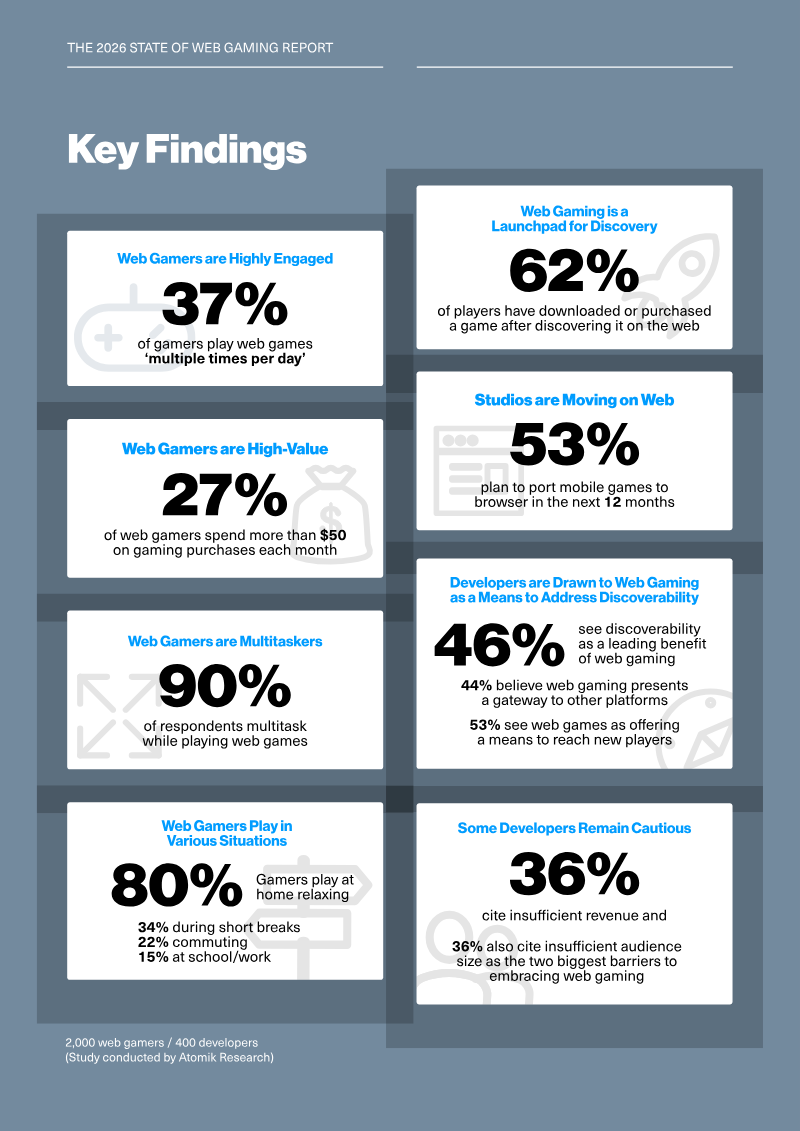
The study demonstrates that web gaming has evolved from a niche, low-quality outlet into a central discovery and revenue engine for the industry. It now sits at the forefront of the purchase funnel.
The study demonstrates that web gaming has evolved from a niche, low-quality outlet into a central discovery and revenue engine for the industry. Across 2,000 gamers and 400 developers surveyed in 2026, data reveal that 62% of players discover new titles via the web and 53% spend more than $50 monthly on games, underscoring a highly engaged, high-spending audience. Ninety percent of players find games online, yet only 53% of studios plan to port mobile titles to browsers within a year, highlighting a perception gap between consumer enthusiasm and developer adoption.
Web games thrive in an attention-saturated media environment because they are short, low-friction, and can be updated instantly to capture cultural moments. More than half of players listen to music or watch shows while gaming, and 38% use social media simultaneously, positioning web games as a complementary entertainment layer. Developers cite discoverability (46%) and gateway potential to other platforms (44%) as key strengths, while rapid iteration and zero-install access drive engagement and revenue. Monetisation maturity remains a barrier, yet the medium’s ability to reach players at the top of the purchase funnel is clear.
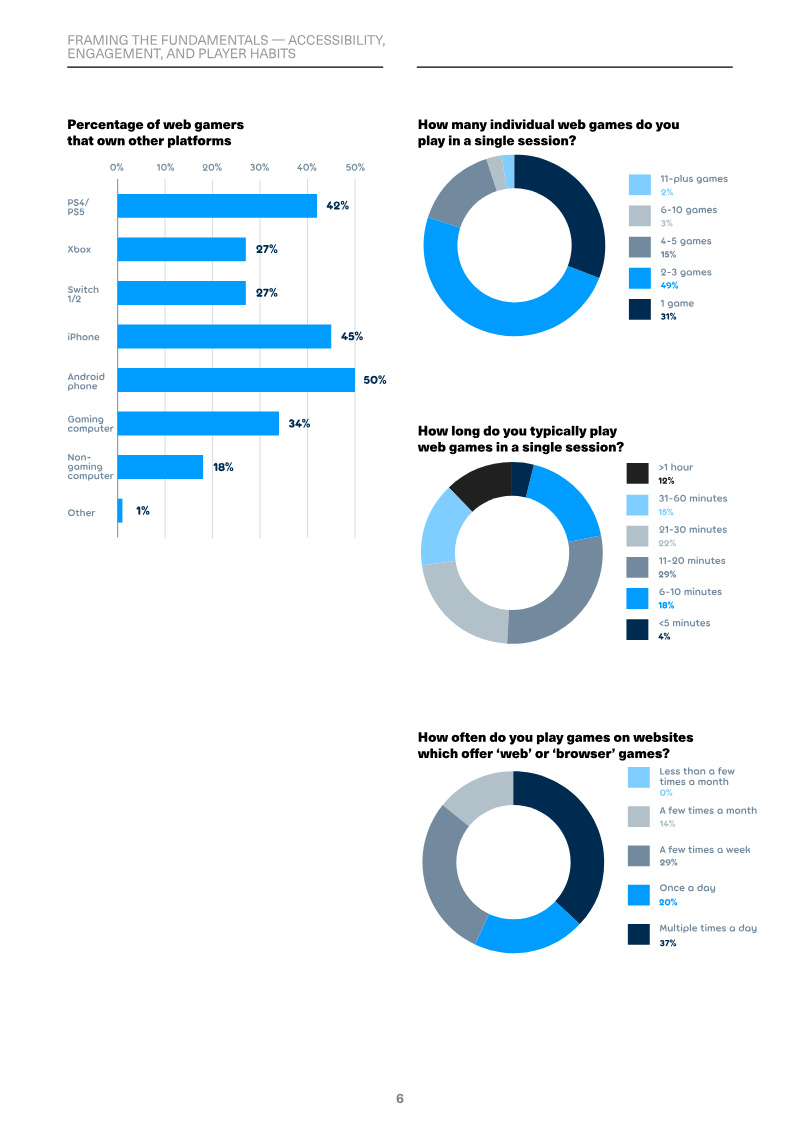
The data also show that web gaming no longer represents a low-quality channel; 92% of players rate HTML5 titles as high quality, and 37% play multiple times a day. Web platforms drive discovery for 62% of players, and high-spending consumers are increasingly found online. Consequently, developers who omit web distribution risk missing a growing, engaged, and monetisable audience that now sits at the forefront of the purchase funnel.

Game Developers Conference · 2023
PocketGamer.biz · 2017

Extra Credits · 2012

PocketGamer.biz · 2026

Extra Credits · 2026

Thomas Brush · 2026
PCF Group · 2026

PocketGamer.biz · 2026

Naavik · 2026
Jason Schreier · 2026


Bryter · 2026

The Game Business · 2026