1 free read left. Create a free account for unlimited reading + AI research.
Create free accountWhitepaper DiGRA
1 free read left. Create a free account for unlimited reading + AI research.
Create free accountWhitepaperDiGRA
The paper moves from designer-built systems to players as active designers who create fun through gameplay.
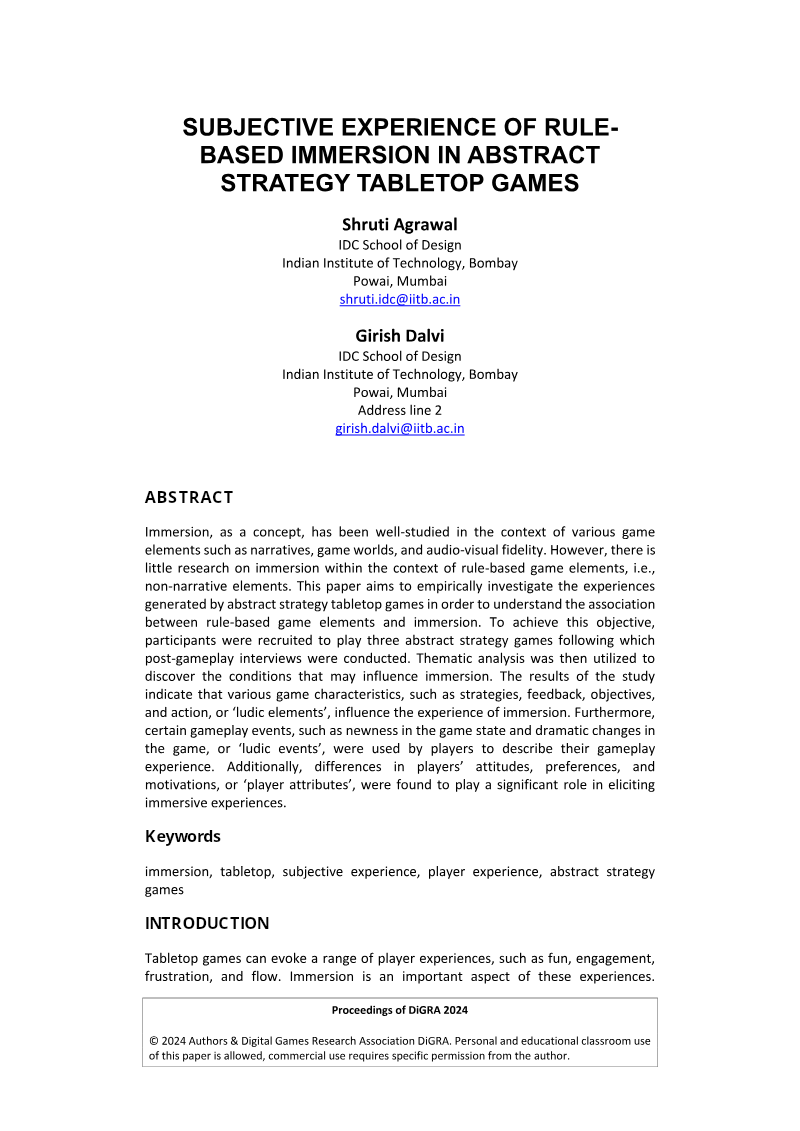
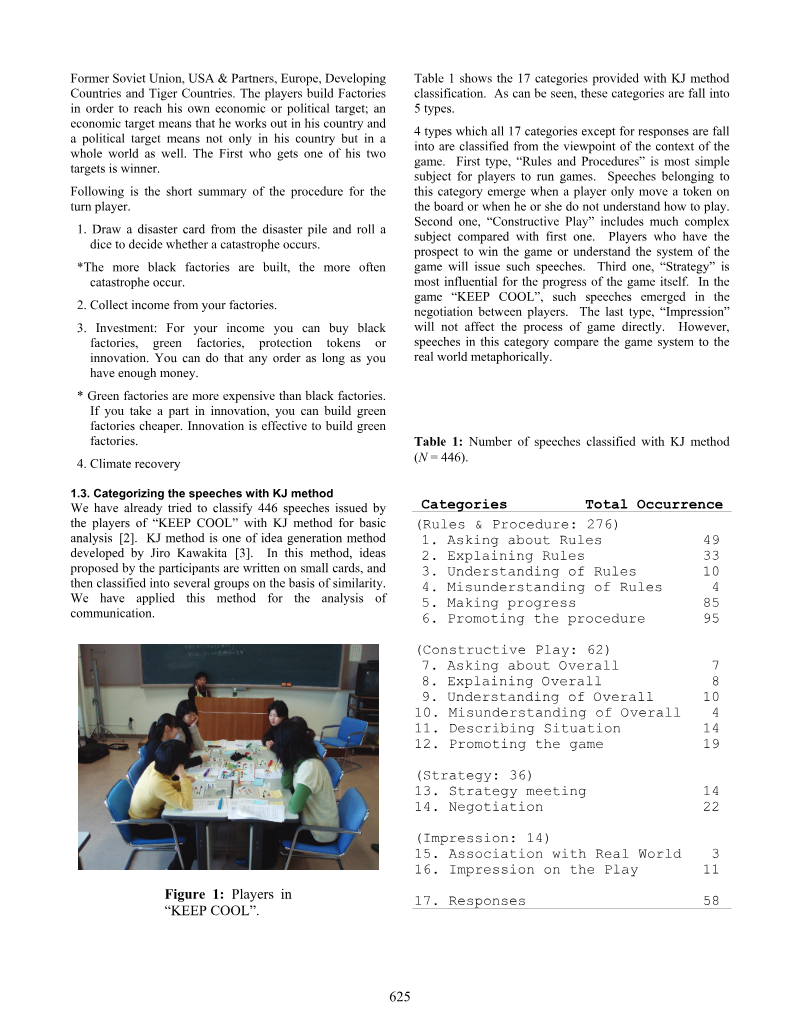
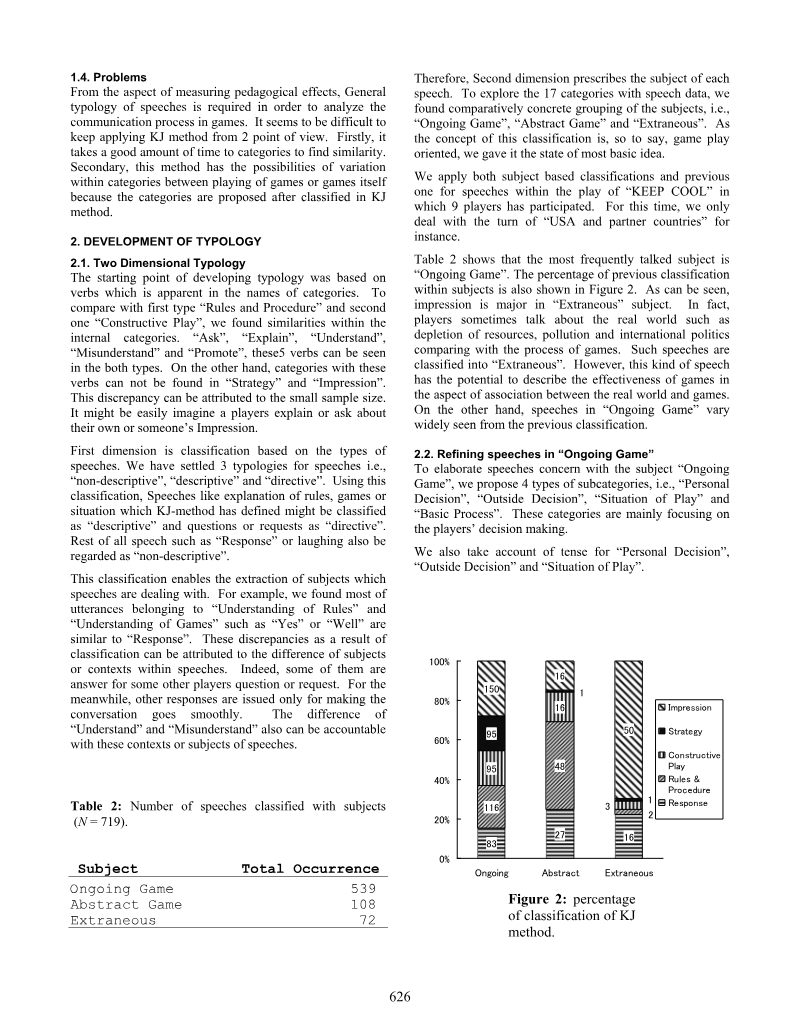
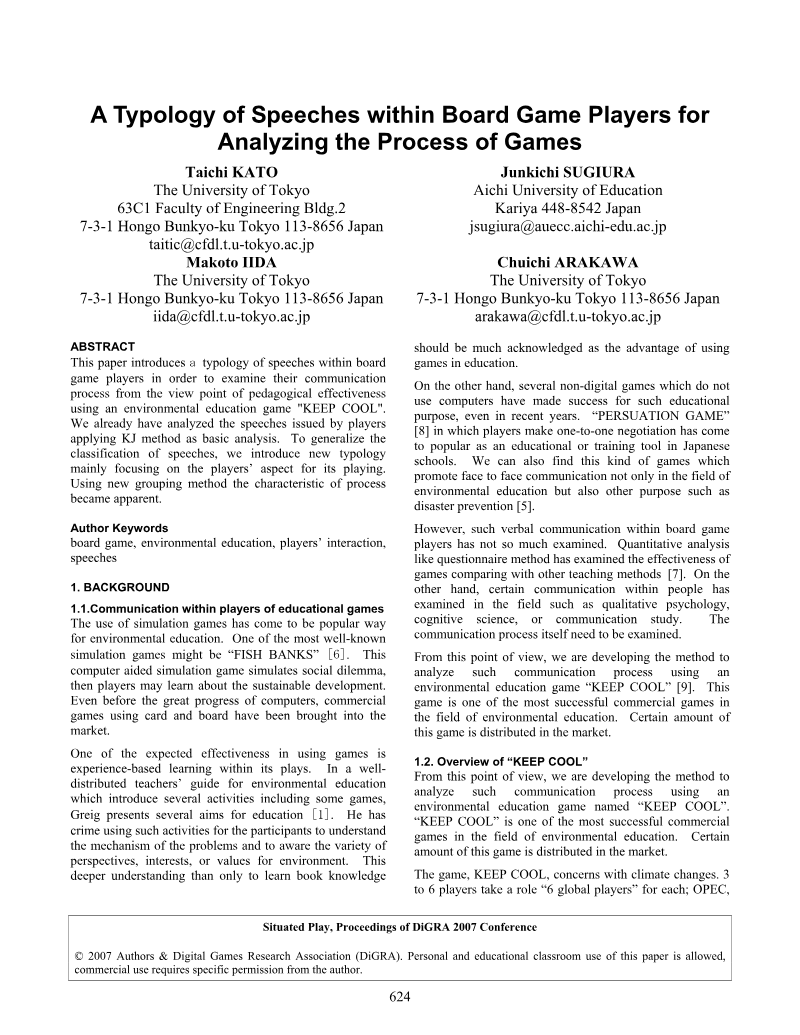
This paper reframes the question of board game fun from how designers build enjoyable systems to how players themselves use gameplay to generate fun, treating players as active designers and gameplay as an intentional ludic form. Its central contribution is the Intent Obfuscation Theory in Board Games, which proposes that players create gameplay through cycles of hypothesis formation, game-plan formulation, and the materialisation of intent in game states. The authors draw on the "Player as Designer" model, in which players construct ludic situations through rule-following, and they define ludic events as phenomenological, player-centric changes in game state, such as moments of realisation or reframing, that constitute both the process and structure of play.
The empirical basis is qualitative and deliberately narrow. Using an event-contingent experience sampling method, the authors examined six abstract strategy games, including Pylos and Patchwork, with two participants each, and analysed the resulting events through a layered ontology spanning translation, hypothesis, gameplan, state, action, and intent. Abstract games were chosen as the primary case because their gameplay arises from interaction with rules rather than narrative, making player intent easier to isolate.
A key claim is that game states are polysemic: because a given board configuration can be read in multiple ways, players must gradually decode one another's intent. Fun is argued to peak at a "zone of critical intent interaction," where the strategies of different players intersect. Examples drawn from Azul, Battleship, and Santorini are used to illustrate this dynamic beyond the primary sample.
The authors position these ideas as epistemological and ontological contributions to game design and player experience research. However, the claims rest on a limited number of games, participants, and qualitative examples, so their generalisability to other board game genres and broader player populations remains to be established.

DiGRA · 2026

DiGRA · 2026



DiGRA · 2026



DiGRA · 2026



DiGRA · 2026



DiGRA · 2026



DiGRA · 2026



DiGRA · 2026

DiGRA · 2026



DiGRA · 2026



DiGRA · 2026

DiGRA · 2026
DiGRA · 2022