Key insights
7 slides
The scope
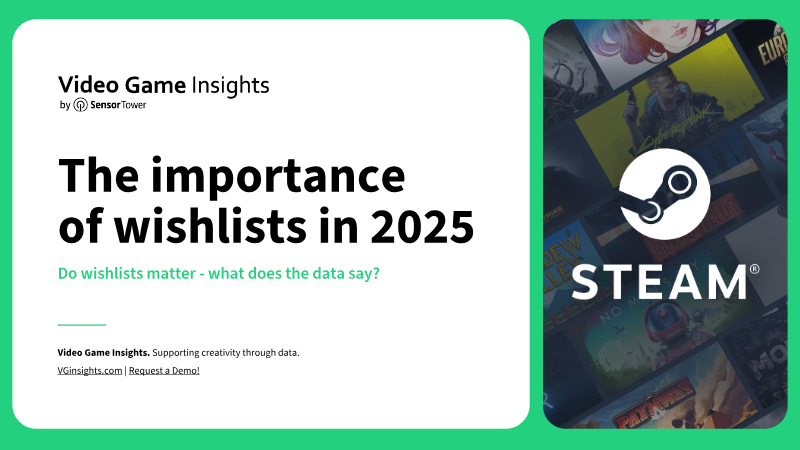
Steam playtime data reveals genre engagement patterns.
The study analyzes anonymized, randomly sampled lifetime playtime data from public player profiles. It examines the top 250 most-played games within specific Steam tags.
Key number
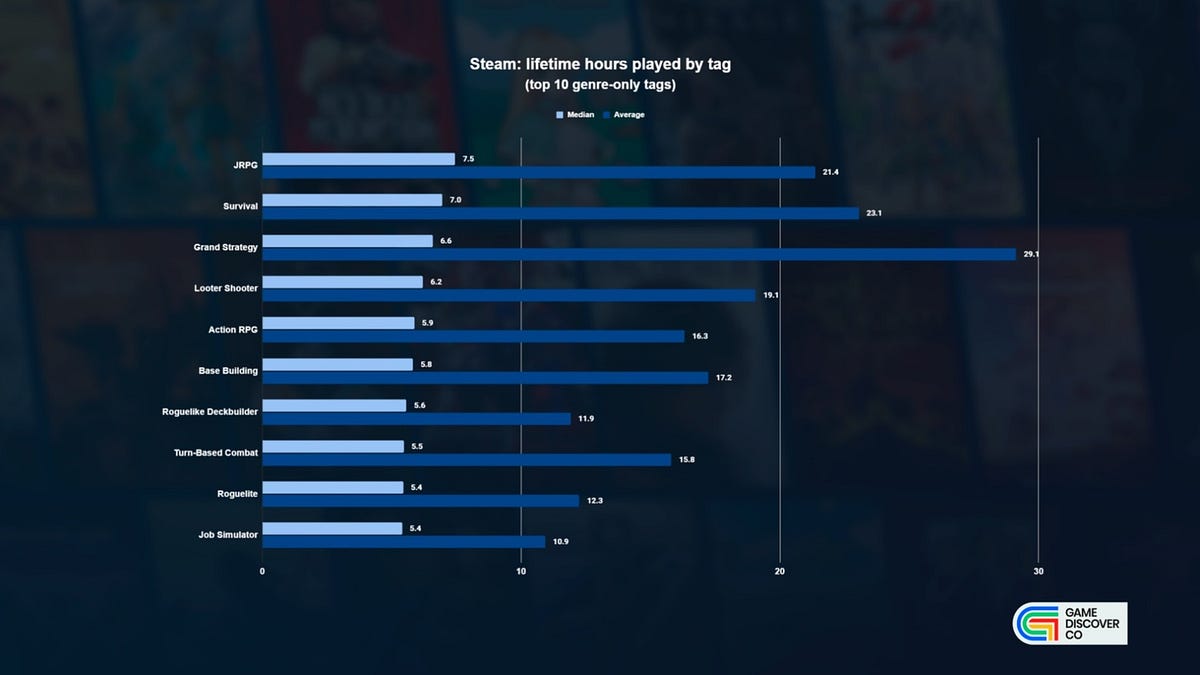
JRPGs achieve a median playtime of 7.5 hours.
Japanese Role-Playing Games lead in engagement on Steam. They boast a median playtime of 7.5 hours and an average of 21.4 hours.
High engagement
Four genres maintain median playtimes exceeding 5.4 hours.
Survival, Grand Strategy, Looter Shooters, and Action RPGs represent high-engagement categories. Each maintains a median playtime exceeding 5.4 hours.
Low engagement
Twin-Stick Shooters show median playtimes as low as 2.2 hours.
Genres with lower barriers to entry often exhibit lower replayability. Twin-Stick Shooters demonstrate median playtimes as low as 2.2 hours.
The correlation
Development complexity correlates with player investment.
More resource-intensive genres like Grand Strategy frequently appear at the top of engagement rankings. The data suggests a correlation between development complexity and playtime.
The takeaway
Playtime trends are insights, not prescriptive design rules.
Median playtime is not the sole indicator of a game's success or value. Developers should view these trends as insights into market preferences.
The method
Top 250 games per tag define the analysis scope.
The analysis utilizes anonymized lifetime playtime data from the top 250 most-played games on Steam. It filters by the eight most prominent genre tags per title.
1 / 7
Ask AI about this report