Transcript
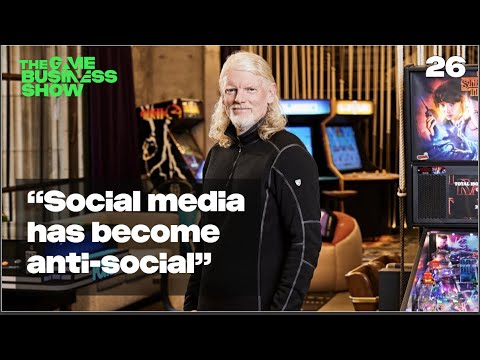
Oh, you want to post a video on Instagram. You can't post a video on Tik Tok. They'd look at you like you have, you know, plants growing out of your head or something strange cuz that doesn't make any sense. Cuz it's cannibalizing the gameplay. I think emphatically not. I think there's I I I don't think it does at all. In fact, I think what it ends up doing if you have an affinity for a title, then usually if you're watching streamers and spending time with that community, that also will drive you to play that title more. Hello and welcome to the Game Business Show with me, Christopher Dring. We have been in Los Angeles recording episodes of the show in front of a live audience and it was fun. Despite all the chaos and protest in Los Angeles, over 150 people made it to our first event and we're delighted. Um every session was recorded and now we're releasing them for the entire game business audience to enjoy. Uh this session is with the CEO of Twitch, Dan Clancy, where we discuss the rise of Tik Tok, monetization on Twitch, whether it competes with video games, Grand Theft Auto's popularity,
content moderation, and a whole lot more. So, enjoy. We have a standard fire card here. Yes, that is a very big fire. There we go. There we go. Uh last year, Dan, this is a bit up Sounds like a big harsh question to ask you it I thought I was really You said that Twitch is is not profitable. Is is How are you doing on that journey to profitability? I found it funny that that was the first question Yeah, let's just get right down to making money. at the Did I start with that? Who put that one in? No, um so first of all, I don't talk about um where we are specifically in that. I mentioned it a few years ago um mostly because we were um uh restructuring some of the ways we thought about our overall structure for streamer compensation and we're trying to evolve cuz I think um uh if you go back in time, we made certain decisions that probably weren't the right
way to think about our business in terms of the long-term sustainability of the business. Um, so I feel very good where we're at now in terms of our structure for streamer compensation in particular. You know, we now have a public and well-defined, um, uh, program for, um, streamers to get increased rev share where we have, um, the plus program where you can get 70/30 or 60/40 based upon your subscriptions. Um, I think being upfront about that, so everybody knows what to shoot for has been good and we're very intentional in building that program. Um, where we were focused on those creators that, um, uh, decided to lean into Twitch and live streaming as a core part of the way they fund their lives. And so we tried to find the right thresholds to do that. Um, we now have a structured way where you can get 55% ad revenue share. Um, we have pulled back from this idea of, um, uh, uh,
paying top streamers more than what they make on Twitch in this kind of competitive tit-for-tat where, um, uh, we were creating what I'll call our kind of non-sustainable, um, contracts. So we've made a number of changes and we feel very good that we're now in a very good place in terms of the structure. Oh, we also Prime, which is, um, a very important part of Twitch. We got that into a structure that's sustainable. So the way I describe it is we feel we're in a very strong place and I like how our, you know, the business structure works. I'm going to probably ask about all of those things over the course of this, um, this conversation. Um, but one of the things, the thing, the thing that I find I'm I'm an older person. I see all the all the younger generations, they're all on TikTok. have you beat there, though. I'm not sure you know. Well, we're starting to see all the people on TikTok and and Google and the short-form video and and that seems to be the trend. And obviously Twitch is is not about it's not really that. I know it does a little bit. How do you see Twitch's role in the in in that sort of world? Yeah, I think it's this interesting
evolution and the statement I sometimes make is that unfortunately social media now is kind of anti-social. You're sitting there by yourself swiping and I think it's particularly relevant when you think about games. The foundation of games actually is the social connection that it creates between the players which is a foundational need that we have as people and I know for many people who don't game don't really appreciate how much gaming is really about social interaction and our need for community. Twitch is very much about meeting that need for community. We've built it so that people pull up a chair and stay for a while and through those shared experiences eventually form bonds. So it is certainly the case that our media world is you know shifting towards this you know swipe swipe swipe swipe but ultimately I actually don't think that meets what is our basic human need which is connect with other human beings. So I feel our focus on what I
often call community-centric live streaming which is building that sense of belonging and connection through a shared passion whether that's a streamer or a game. I think I feel good about that position even as the world is moving a little more into short you know you know rewards. I think the basic human need is still there and I think Twitch is what meets that human need. It's a great answer. Can I go back to something you said in the previous answer because we're seeing a growing focus on multi-streaming and and the end of platform exclusivity with creators whether you know creators are just on Twitch or just on YouTube or just on whatever. How does that not make your job harder in some way? Um I think if you go back in time in a world where Twitch had it wasn't just multi-streaming. We also had exclusivity where if you're a partner, you could only stream on Twitch, okay? And I think that provided
some degree of sort of safety, but I also think it hindered in sort of leaning into it expanding live streaming. Um what I've repeatedly said is if there's a challenge in this space, I think that we are under-serving the market in terms of the people that I think would find live streaming compelling. Um more people entering in this space I think helps drive the growth of the um uh of the I don't want to say market cuz I don't think it's really a market. It's really a form of expression. Um and I think that's exposing more viewers to this form of creative expression and then also attracting more creators. So, to some degree does it make my job harder? I don't know. Um uh I do think it forces Twitch to focus on maintaining this position as the best place for live streaming. Yeah. Um and it doesn't use an artificial means to um maintain that. And I do think that artificial means in any other um uh industry people would think of it as strange if it was oh you want to post a
video on Instagram, you can't post a video on TikTok. They'd look at you like you have you know, plants growing out of your head or something strange cuz that doesn't make any sense. So, I actually think it was one of these things that just came about for lots of reasons early on and but it it really doesn't make the right sense for the creator or for the community. Tied to that I guess is you're opening up monetization. We talked about this. Um you're opening up to more people. You're adding new elements to it. Is there more you're looking to do in terms of financial incentives to or do you in order for you to attract and retain these creators cuz as I say, you're not binding them in anymore. I well, I think a big part as we think about it is as we say attract and retain. The biggest thing about retaining them is making sure they can continue to pursue this with the time that they have and hopefully then make it a career, right? Which is many people dream of doing that and so part of that is finding new ways to drive value for the creators. A big part of Twitch's monetization is
around patronage. So subscriptions is a form of patronage, gift subscriptions is a form of further form of patronage. I think there's a whole other dimension which is um small amounts of pay that just makes the stream fun. Okay, and that's one thing that we've been we just announced and are launching combos, which is an ability for more people to just give small amounts of money and to create these kind of micro moments in a stream and in particular focusing on mobile because I think a huge part two is to focus on mobile consumption patterns, make it easy to kind of express yourself, give small amounts of money and then have the community come together. And so I'm pretty bullish on that. We launched something called power-ups last year, which I think there's still some work there in custom power-ups. Again, with this idea of get more people spending money and make it fun and have it impact the stream. You seem to be putting a lot of effort into innovating in that sort of that sort of world. It's um
almost every TwitchCon or every announcement seems to have something new you've been developing or evolving in that space. It's um it's been interesting to see. I don't really have a question there. Well, I think but well actually kind of brings your two questions together because you know, at some level as we moved away from this idea, oh you're a partner, you can only be on Twitch, it forces us to continue to think of how can we keep innovating in the platform and I think a huge part of growing live streaming to reach more audience is we need to keep innovating cuz again, I'll go back to I think the fundamental problem is I think we all have this yearning or need for community Um, just gamers, by the way. Shockingly, everybody has that yearning and need. Um, and I I think currently live streaming doesn't reach as many people as it could in terms of providing them some of that magic. Hm. Let's talk about Twitch's relationship with with video games and the video games industry. We're in this attention economy, right? Right, and we're all competing for time. Um, and that is the world you live in. That's the world a
lot of the a lot of the people in this room live in as well. Do you see video games as a partner? I know you do, but do you see them more as a partner or as sort of competitors? Yeah, they're I mean, they're they're obviously a partner. That's an easy question. Um, but I'll talk about it like this. Um, I'll call it what I'll call the in-between time. That in fact, usually when you're playing a video game, you're pretty focused. You start the game, you're in the middle of the action, you're, you know, all this stuff is happening. If you get pinged, you know, by a friend that wants to chat for a little while or, you know, your partner your mom or says, "Come down for dinner. We're ready for the" You're like, you're committed. Okay? Um, and I think Twitch filled this gap where you could maintain that connection. And I I think in the not the last final, the one before that, you know, they were talking about the stories and the expressiveness and all that. Of course, gaming is about, you know, stories, right? And emotion and connection. Um, but you you can't do it all the time because at times you need some in-between time. So, I think it is a very symbiotic um, uh,
situation where um, when you're not gaming, you can still be engaging with a community that have an affinity for that game. It keeps that game top of mind even as you're doing other stuff. And part of the magic of Twitch I've always said is you can start it at any time. You can stop it at any time. There isn't a narrative arc, so if you get distracted for a short period of time, that's okay. You can get distracted and you can come back. If you're in the middle of the game, you can't get distracted and come back. Okay? And so, I think they kind of fit kind of perfectly together. Well, I mean, look at some of these numbers. GTA V 1.4 billion hours of gameplay watched on Twitch in the last in the last year. 1.19 billion hours for League of Legends, 804 million for Valorant, 539 million hours for Fortnite. I mean, the list goes on. Now, now, how much Do you believe that's additional engagement in those properties as opposed to people are watching instead of playing? It's not cannibalistic.
Uh I mean, he is he used the term cannibalistic. Is it cannibalizing the gameplay? I think emphatically not. I think there's I I I I don't think it does it all. In fact, I think um uh what it ends up doing if you have an affinity for a title, then usually if you're watching streamers and spending time with that community, that also will drive you to play that title more. Um you know, you talk about the attention economy. Um of course, there's, you know, in the competition, there's competition with all sorts of things, right? Um And so, the more the the kind of characters and the narrative in a game stays top of your attention, whether that's cuz you're playing the game or you're engaging on Twitch with the community as they play the game, then that maintains that positive um you know, positive association um uh with that game. Mhm. That 1.4 billion hours GTA V statistic, you must have been a bit disappointed that GTA VI got delayed. I I So, I think I I everybody was. Um although GTA is
this interesting of the different things on Twitch, it's funny as you go down that list, okay? Um GTA is the one that doesn't quite fit exactly like all the other ones that you listed. Um of course, a big part of GTA is GTA roleplay. Mhm. Okay? Um with something like League of Legends, if you don't play League of Legends, it's It's to watch League of Legends for hours if you don't play League of Legends cuz that's part of the magic. With GTA 5, what you see with roleplay is it's really has become improvisational performance art. Right? It's I was a theater major undergrad and in some ways I I've I've often said there's a theater school that should just teach a course in GTA roleplay where the theater students are acting out characters. And we were talking about you were talking about stories before. And and and you were talking about AI with stories. Well, interesting part of what happens is you have this emergent stories because the streamers are
playing characters in this virtual world and then drama ensues and stories develop. And now it's not AI, it's real people behind those stories. And so I find GTA 5 and and roleplaying in general, but it's particularly been focused on GTA 5 um very interesting. Um was excited about GTA 6 because everyone's excited. The interesting thing was it was going to be a little strange because whenever it does come out, it's coming out on the console and roleplay will not be part of the initial launch. And so it'll be this part GTA 5 will still interestingly be popular on Twitch even as everyone's playing GTA 6 for a while. So I've I will find the whole GTA space very interesting as 6 comes out and then as it adds PC play and um roleplay. Now, I'm in I love a statistic. I'm going to that'll be interesting to follow. Let's get that statistic. Yeah, I'm I'm a I'm a He's on the edge of his seat. If one thing I had to learn uh for this interview is the uh the
world of VTubers. Can you talk us through what you're seeing there and how that that could mean for game companies? Yeah, so VTubing is this and you know, for those who you know, haven't experienced it uh you know, streamers a lot of times they they it's they're creators, they're expressive, okay? But not everybody wants to be themselves on stream and put themselves out there for various reasons, okay? And the the kind of Vtubing has allowed so many more people to um uh express themselves creatively. And a Vtuber is really it's just a virtual version of somebody, but now you're playing a character. This interestingly relates to GTA roleplay. Right? In GTA roleplay, you're playing a character, okay? In Vtubing, you're playing a character. Often times it may be a caricature of yourself. One thing that I found interesting is I think sometimes when I talk to Vtubers um and I meet them and get to know them
better, it's like their Vtuber character is this version of themselves that they can't fully live out in their life cuz of the expectations that the world have on us, right? Because we all conform and especially as we're getting older, we're worried about what does everyone think of us, okay? And now you can just kind of be your authentic true self because you're not out there publicly. Um and so this has become very popular and of course Vtubers do whatever anyone else does, okay? And so there's almost like this synergy and this merging of the worlds cuz it is a virtual animated character, okay? Um and I think over time it'll be interesting. One thing that I'll find interesting is when um what I'll call uh uh I don't normally use this I'll call normative streamers. I don't know what a non-Vtuber streamer you you describe, okay? But I'll use normative streamers. Um uh as they start creating Vtuber characters
of themselves that sometimes so you know some streamers like CodeMiko is like this, right? She streams as herself sometimes, sometimes she's a Vtuber character, and there really is a synergy. And I think um uh, be interesting as more and more is as the technology makes it much easier to create a Vtubing character, especially a 3D model, cuz the technology is still a little imposing. More and more I think streamers will adopt this idea of a Vtuber as an alternative version of themselves. It seems I think there's a Vchuber in the new Death Stranding game. I think there's I don't I don't think it's I don't think it's one of yours. It might be a from a different platform. That Okay. So, I mean, that's that's I don't know I don't have an opinion or a point on that other than that's interesting. the thing with Vtubers is, um, uh, the Vtuber character is IP. Right? Um, uh, I know it from talking to various Vtubers they've also been talking about anime shows that might be
based upon their Vtuber character. Okay? And when you take this concept of IP, of which games are you know, the foundation of games, and now the IP becomes the individual, right? Where the Vtuber character now can go into a game. It can go into a TV show. It can interact with other Vtube characters. And I think one of the interesting thing, this is one reason why I think some streamers will create Vtube versions of themselves, is some streamers, they are in effect IP. Kai Cenat is IP. He's a personality. He's a caricature that he creates. Um, not unlike Kevin Hart is in some ways IP, but in a traditional movie, um, uh, role. Um, an actor, interestingly, Meryl Streep is a wonderful actress. But her as a person is not IP, cuz she's always playing someone different. Whereas you think of, you know, streamers, they are IP, where their character can then exist in different
mediums. So, um, I think it's very interesting. I think more and more you'll see this merging of these things. Shift chat tack from Vtubers. We've been seeing some other some other I won't name them, but some other social channels have cut back on moderation in some ways or be a little bit less strict or on banning people or taking down content that some might find it offensive. It's a very sensitive subject and it's it's very politicized conversation at the moment. Um and it's difficult to know what the right approach is. I mean, I have this we all have those debates. Um what is Twitch's position with all of this? Yeah, um we haven't really changed much or I I can almost go so to say much at all. Now, one reason is um we didn't sort of correct in the past in terms of what our policies were. Cuz you really saw this movement in society in terms of what what was allowed and what not. Um Twitch cares a lot about how you say things.
That in fact certain things are very clear inappropriate, you know, spewing hate and harassment at individual groups or individuals is not allowed. We maintained fairly consistent in how you you say things. Um expressing your views as long as it's not expressing hate and harassment is you expressing your views. Right? Now, one of the things one of the things that's allowed us to do this is we don't we don't have we aren't a platform where people spread virally. One of the biggest challenge with some of the moderation principles deals with somebody says something and it virally spreads through other platforms where somebody shares it and somebody shares it and someone shares it and now what they're saying is being um uh broadened. With Twitch, the people there are the people that are there listening. And uh so we still have very clear our kind of community guidelines cuz we do care deeply about people not spewing hate, harassment, and other things um and attacking protected classes or other groups or individuals. Uh but we
haven't had to really change much as other um uh winds have changed for other social media platforms. Okay. Um what do you see as the other key trends in live streaming that the video game industry should be should be aware of? Um so I'm just going to go and think about this. I think um one of the interesting things that I've seen and I don't have detailed numbers on this, but I do think it's relevant for the this. I see a lot more rise of a variety streamers. If you go back in time, you had a streamer in the top streamers, they were often associated with one game. Okay, Ninja when Fortnite took off or um Nick Mercs with Apex and like and that was their game and they played that game all the time. As you think of our top streamers now, as you think of Kai, Kai games over 50% of the time, but he plays he played Elden Ring for a thing. He played other games. Um Case though is always moving around playing um uh uh different games. If you look at FaZe Clan, they play a lot of different games
and and kind of the list goes on, right? And so in some ways I think that is um uh good for the video game industry because as you have these who are really entertainers um uh exploring different games and playing different games, that kind of moves with the flow, especially as you have so much interesting content coming out because now you don't have such a tight association um with just one game that one creator spends all their time with. And it also creates, you know, one of the challenges that happens a lot to streamers was if they played one video game all the time and then they wanted to do something different. They would see their viewership drop because um some of the affinity was just with the game and the more they kind of play a a variety of games, the more they can maintain that community. And I actually think that's better for them. A lot of times people talk about um uh streamer burnout and I think one of the problems was you're burned out
playing this one game cuz you keep playing it and you want to explore other games, but you feel like you can't because your viewership will go down. So, I think right now you see a lot more diversity of gameplay, which will be good cuz it allows as games grow, it allows that reinforcement that occurs on Twitch as more people play the game. Pony up to a little bit of a discoverability challenges as well. On the flip side to that, are there areas of Twitch or live streaming in general that don't work as well in 2025 as perhaps they used to? Um Well, I'll take this more generally cuz I think um I think what we're seeing and it's interesting you were talking about um mobile with the Aptoide, right? And one of the thoughts as I was saying that I wonder if you looked at um the responses in their community when they first came out of the under 25 players versus the over 25 players. Um I do think and in your earlier panel we're talking about, you know, people growing up with a phone. And I do think
um the expectations are evolving in this space as you think of people that had a phone in their hands when they were 13 and how central that device is to their life. Um with Twitch, I think we um uh the kind of core Twitch user is a PC gamer. They have a big monitor in their bedroom. They spend a lot of time in that space. Okay, that's of course good for all the PC game companies because that builds that habit. Um uh we see more and more users engaging on a mobile device. And on the desktop, if they get distracted for a little while, the stream is still going. If you're on your phone and you get distracted and go off and do something else, well now we have to get you back, right? To get you. So, I think that created forces us to think more um about the mobile experience and um because desktop is, you know, we sort of grew up in this symbiosis between PC gaming, Twitch, it sort of all fit together, right? And I think now that just causes
us to continue to think about how we maintain those touch points and build um the community. I think that is a true as gaming companies think. And I mentioned the age, you know, we made a change to our mobile app um that was a little more, you know, I'll just call modern with many apps. And various members of the community were unhappy with it initially. And I had this one rough um a model and I was standing in a group of 30 streamers and I said, "Well, my generally rough model is if you're under 25, you like the new mobile app and if you're over 25, don't." And there was a 24-year-old woman who said, "Well, I'm 24 and I really like the new mobile app." And then there was a a man who says, "Well, I'm 33 and I don't like the mobile app." Um and of course that's not really what it is, but it's it is important I think for all of us to realize it you know, the world has changed with the advent of the mobile phone, especially with people that grew up from when they were 13 with a mobile phone in their hand.
And so I haven't spoken with or anything like that now about how the fact that you really go into those communities, aren't you? And and literally surround yourself with these streamers to to hear what they do. I think that's quite a a terrifying thing to undertake, but I guess it's important in terms of trying to work out the way forward. But I'll I'll actually ask one more question that wasn't about that. Um it's a Yeah, it's a general question to finish on. But what do you see as the growth opportunities for video game companies and developers on on Twitch today? Yeah, I you know, it's interesting earlier you talked about um innovation, right? And I think um there's a lot of creativity in the video game space, but I think what all of them are trying to do is innovate as they start creating new game dynamics and new expressions. And I think um similarly, you want to innovate in how you bring your games to market. And um you know, Twitch has always been a key partner to the game industry and thing about how they bring their games to market. Um, and um, I think it is this dual
innovation. You have to innovate in the game play and then innovate in sort of you build a great game, how am I going to bring this to market and what can I do um, to get Twitch streamers maintaining that momentum and growing that momentum. And you see certain games doing exceptionally well. Marvel Rivals is a great example where as it was taking off lots of streamers were playing it. Of course Valorant um, did a wonderful job with that. And so it's something that we're constantly also thinking about what how can we work with game publishers to help them as they bring their IP to market to help get it in the hands of our creators and get more people playing it. Brilliant. Now, our time is up. Thank you. Perfect. And give him a warm hand, everyone. Thank you. That's it for today's episode of the Game Business Show. Stay tuned for more live versions of our interviews in the days to come. Until then, thank you for tuning in.
Auto-generated captions from YouTube — names and numbers may be misheard.












Comments