1 free read left. Create a free account for unlimited reading + AI research.
Create free accountWhitepaper ETC Press
1 free read left. Create a free account for unlimited reading + AI research.
Create free accountWhitepaperETC Press
Distilling the key insights…
This collection of analyses examines the intersection of game mechanics, narrative depth, and sociocultural representation within the contemporary video game industry. The primary thesis posits that video games function as sophisticated systems where gameplay mechanics, linguistic structures, and symbolic design choices actively shape player identity, social hierarchy, and cultural perception. By moving beyond passive observation, players engage in a collaborative or competitive process that mirrors real-world power dynamics and psychological development.
The research highlights critical findings across several prominent titles. In narrative-driven games like The Unfinished Swan and the Portal series, mechanics such as environmental navigation and object interaction serve as metaphors for self-discovery, mortality, and the sublimation of the death drive. Conversely, in cooperative titles like LittleBigPlanet and Trine, the study demonstrates that design choices regarding camera control and role interdependence dictate the success of mixed-skill groups, often determining whether a social experience remains inclusive or becomes exclusionary. Furthermore, the analysis of World of Warcraft reveals that specialized linguistic codes—or a "language of power"—are essential for navigating social prestige, though these codes can inadvertently create barriers to entry.
The scope of this inquiry spans from the early 2010s to the present, covering a diverse range of industry segments including indie titles, massively multiplayer online games, and large-scale action franchises. A significant portion of the analysis addresses the sociopolitical implications of game design, specifically critiquing how Far Cry 2 reinforces colonialist "Africanist" tropes through its depiction of disease and environment. Similarly, the examination of Warframe illustrates a tension between posthuman narrative potential and the persistent imposition of traditional gender binaries in character aesthetics. Ultimately, these findings suggest that while digital environments offer unprecedented opportunities for agency and fluidity, they remain deeply tethered to the historical and cultural structures of the physical world.
 World of WarcraftGame · Blizzard Entertainment · 2004 · 314 documents
 Far CryGame · Crytek Frankfurt · 2004 · 131 documents
 WarframeGame · Digital Extremes · 2013 · 38 documents
 LittleBigPlanetGame · Media Molecule · 2008 · 7 documents
 Far Cry 2Game · Ubisoft Montreal · 2008 · 6 documents
 TrineGame · Frozenbyte · 2009 · 6 documents
Each row is a game or company this document names, each column a document, oldest first. A mark means that document names it. Select a row to see those documents.
ETC Press · 2022



DiGRA · 2026



DiGRA · 2026
International Journal of Role-Playing · 2026
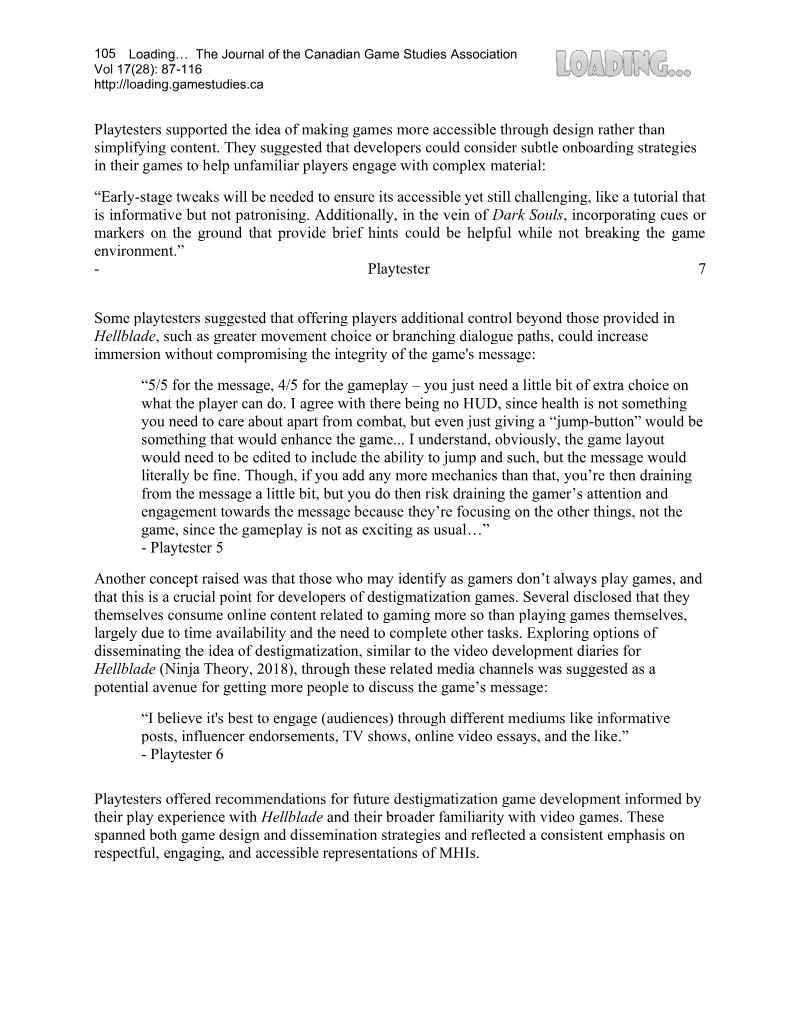
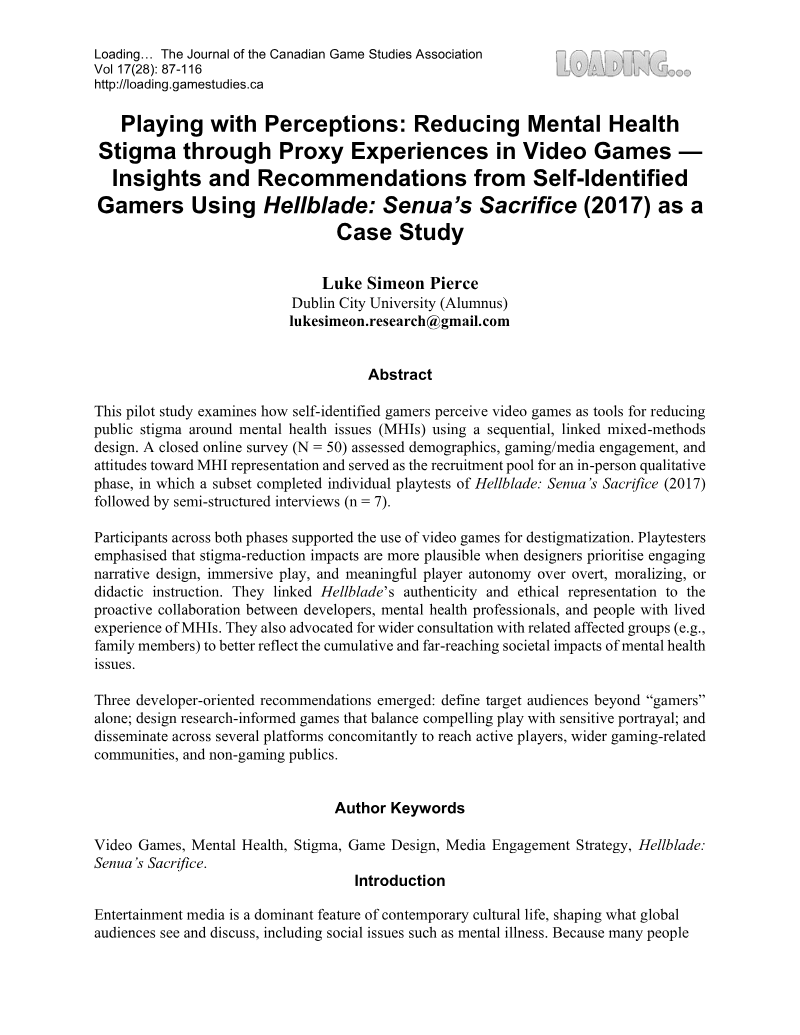
Loading... The Journal of the Canadian Game Studies Association · 2026
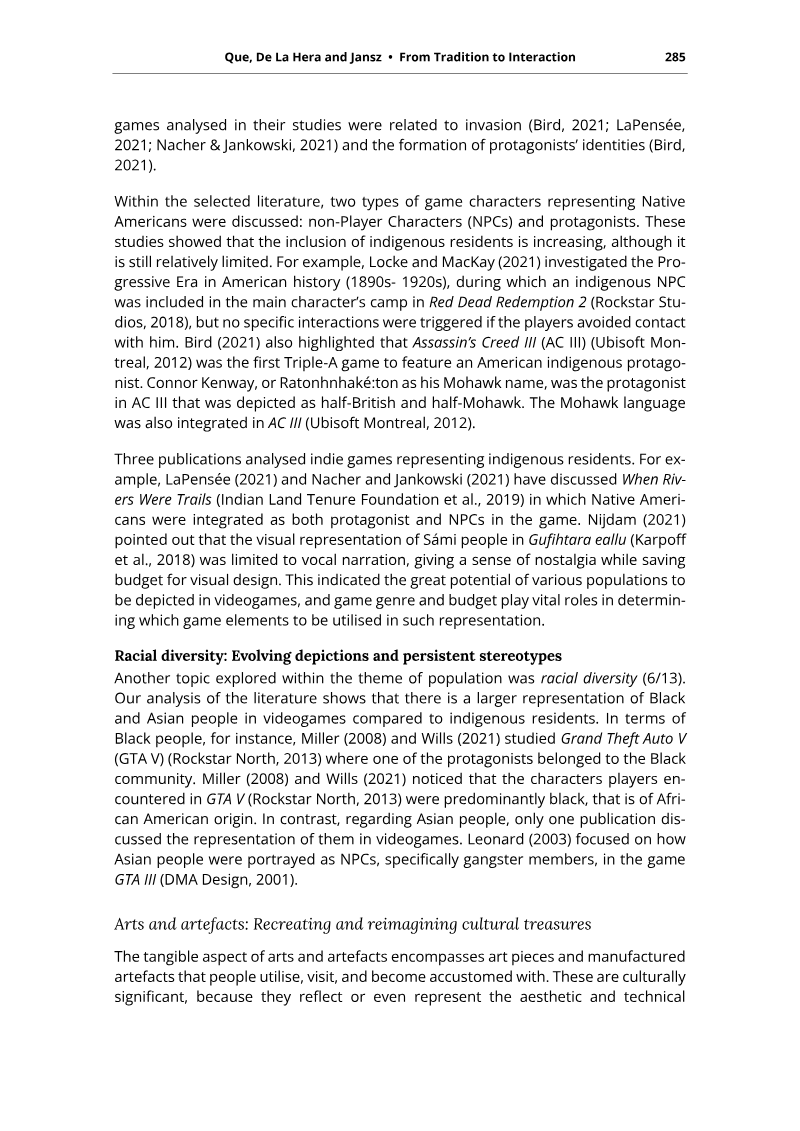
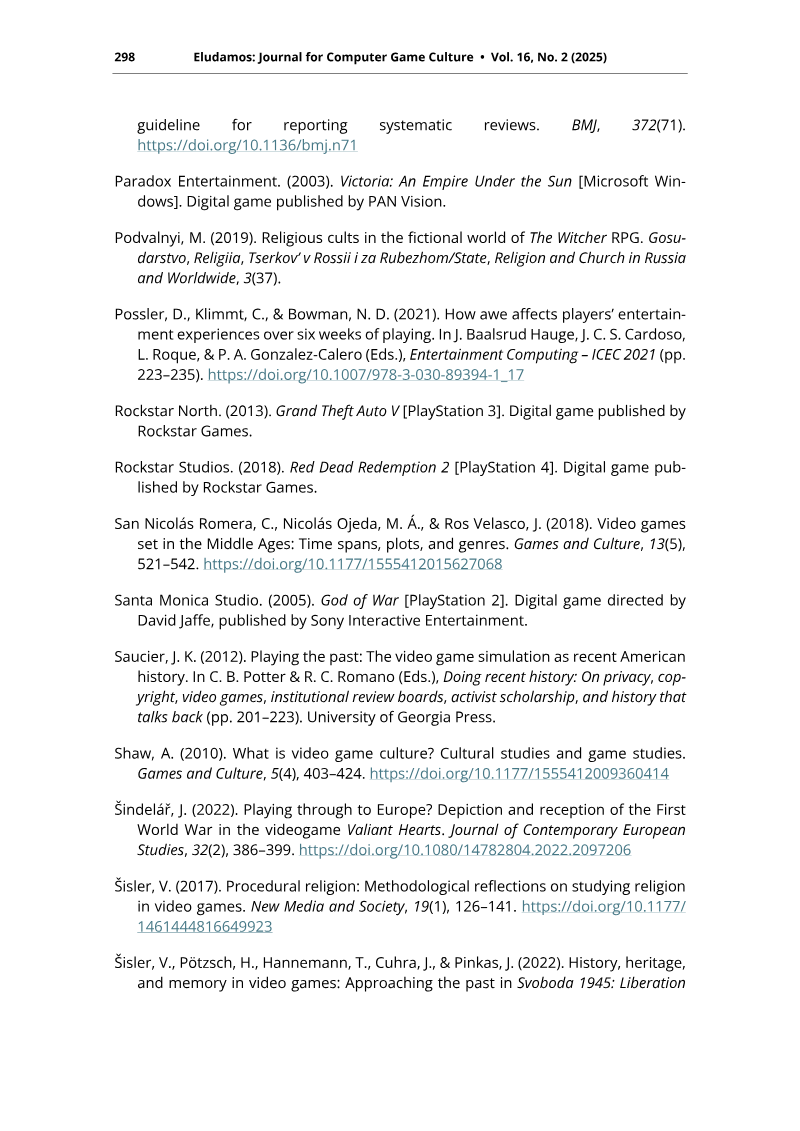
Eludamos: Journal for Computer Game Culture · 2025
Ludic Language Pedagogy · 2025
DiGRA · 2025
DiGRA · 2025
University of Galway · 2025



DiGRA · 2025
gamevironments · 2024
DiGRA · 2024