Far Cry 2
3 documents in the library are about Far Cry 2, from writers such as Game Maker's Toolkit and Game Developers Conference, the newest from 2025. Each has a summary and key insights with the page they come from.

Far Cry 2 is an open-world first-person shooter set in an unnamed African country. Players take the role of a mercenary who roams a large environment of desert, savannah, and jungle, completing missions for rival factions and allied characters known as Buddies. Missions can be approached through direct assault or stealth, and the game emphasizes systemic, reactive elements such as spreading fire, degrading scavenged weapons, and enemies that respond to the player's tactics. Survival mechanics feature heavily, including recurring bouts of malaria that must be treated with medicine and companions who can be lost permanently if not helped in time. A competitive multiplayer mode and a level editor are also included.
- Released
- Oct 21, 2008
- Developer
- Ubisoft Montreal
- Publisher
- Ubisoft Entertainment
- Genres
- Shooter, Adventure
- Platforms
- PlayStation 3, PC (Microsoft Windows), Xbox 360
- Links
- Wikipedia
Game data from IGDB.com
Documents about Far Cry 2
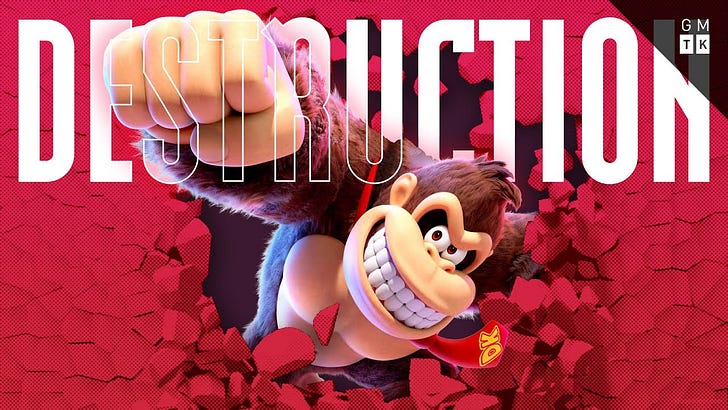
How Games Do Destruction
Dynamic destruction in video games is a complex technical challenge that requires developers to balance realistic physics with performance constraints.
- Modern game design is shifting from pre-canned animations to real-time, procedural destruction to enhance player agency, allowing for emergent gameplay like creating new paths or altering tactical lines of sight.
- Developers balance performance constraints by using asset swapping, as seen in Control and Battlefield: Bad Company 2, or real-time mesh slicing, utilized in Astro Bot and Rainbow Six: Siege.
- High-fidelity, free-form destruction is achieved through voxel-based systems, such as those in Teardown, which treat environments as clusters of independently removable blocks.
GMTK Reading List: November 2023
The November 2023 industry overview serves as a curated digest of critical discourse surrounding game design, historical preservation, and the current labor climate within the interactive entertainment sector.
- The video game industry is facing an existential crisis characterized by widespread layoffs and unsustainable operational models despite high levels of creative output in 2023.
- There is a growing industry-wide push for the adoption of universal accessibility guidelines to overcome current barriers to inclusive game design.
- Historical preservation efforts in gaming are shifting focus toward documenting the 'who' and 'why' behind classic titles rather than solely archiving the final products.
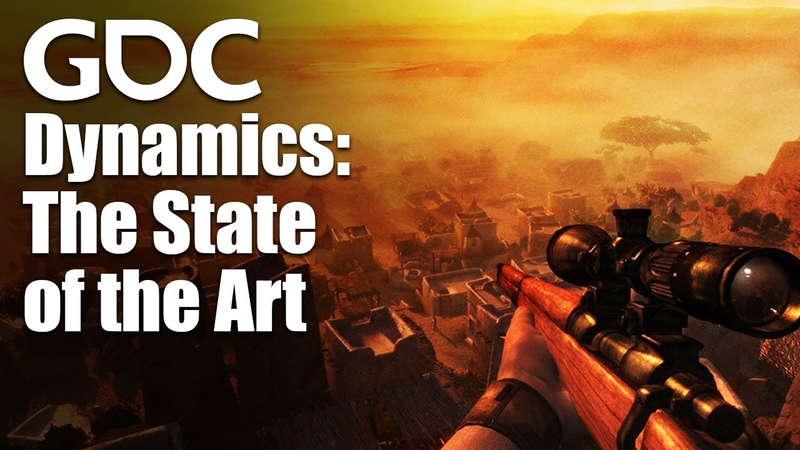
Dynamics: The State of the Art
The game industry currently lacks a unified framework for understanding how games generate meaning, a deficiency that hinders the medium’s maturation.
- Meaning in games is not inherent in static rules but emerges from the juxtaposition of player actions and systemic responses, similar to the Kuleshov Effect in cinema.
- The industry must shift focus from borrowing narrative techniques from other media to prioritizing foundational dynamics—the runtime behaviors generated by mechanics.
- Designers must balance authorial control with open systems, as seen in titles like Splinter Cell and Far Cry 2, to foster player-driven dynamics.