VideoThe Game Business
“We’ve never had a better moment to adapt your game to film or TV”
15 Apr 202525 min video
Transcript
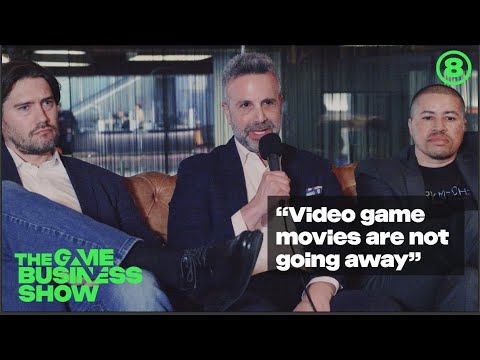
If the game's rights holder, the developer, publisher, both is not involved or is minimally involved, it will be to the detriment of the adaptation. Sadly, it is a heat-seeking business where you have, you know, producers chasing game rights now who have never touched a game controller in their life. We don't want those people trying to adapt games. [Music] Hello and welcome to the game business show with me Christopher Ding. We are at Screenplay part of London Game Festival to talk about the expanding world of video games going into TV and movies. And to talk about this I have three absolute experts here to talk about it. We have Simon Pullman who is the lawyer, entertainment lawyer. Um we have uh uh Mike Goldberg and Dmitri Johnson from Story Kitchen who are all about bring your IP and bringing them into the world of TV and film. Hello everybody. Welcome to the show. Thank you for having us. Thank you. We're talking just after the Minecraft movie has been such a phenomenal success. Have your phones
been ringing off the hook? Absolutely. As expected. You know, every time we have one of these adaptations, there seems to be this surprise, this shock that people actually showed up for it. And it's kind of what we've been saying from day one, which is, you know, treat the fans with respect. treat the games as if it's art. Like, you know, have a level of respect throughout the process and you will see the results that we've seen in other mediums. You know, if you're adapting a comic book, a novel, like the issue was never games. The issue was who was adapting the games, how they were being adapted. So, you see this kind of reactive, you know, approach from Hollywood. every time you get a Mario, every time you get now Minecraft. And you know, we're lucky enough, fortunate enough that we're one of the first calls, but we also make it clear, we're not, you know, heat seekers. We're not going to try to take
a game out because Minecraft had a big weekend. We're still going to bring the same level of quality that, you know, we always strive to do. In short, uh, yes, it's been extreme, but not to be unexpected. Uh, Hollywood is a very reactive industry and has always been. always continue to be. But look, from everyone we spoke to that worked on the movie, the filmmaker Jared Hess is fantastic. The writers, and there's many writers who worked on the script, some credited, many not. We have projects with some, we've had meetings with a lot of them. And the experience that they told us throughout the last few years was incredible. And most importantly, we heard that the game developer, the game dev, was wildly involved throughout the process from start to finish. So, I don't know how much that's been reported, but to us, that's integral to knowing that the odds are really strong. It's going to be an awesome adaptation. And even with a mixed set of reactions to the initial game trailers, wouldn't you know it, like the movie exceeded expectations. And there was a great article a few days ago about the
multitude of records that had been broken after opening weekend. I think there was like 22 or 25 broken records reported on deadline. I cannot wait to see by the time the movie leaves theaters the amount of records broken. I was just going to add I'm not surprised at all by the the level of success. I am surprised by how it happened because some of the scenes in the theaters it's extraordinary. I mean it's been called what Rocky Horror for for for middle schoolers. You know that sort of level of of of laughing of of you reciting the lines and the memes. Um incredible stuff. But it's it feels that feels like the important bit. If you get the culture of the game right, if you get the the essence of the game right, didn't review very well because I suspect as a standalone story to anyone coming into it, it's probably not the best film. But if you can get that sort of culture of the the game right, it seems to be able to override a lot of that. Absolutely. And and also goes to the the fundamental question from the reviewing standpoint of the POV of the journalists like where are the critics coming from? Where are they gamers? They
have kids, they have young kids, they have old kids. Just did they see and understand Minecraft as an intellectual property and as a game franchise and as a UGC like did they understand or not understand so that they could have a better holistic approach when they were putting out the reviews because it does seem like there's quite a gap between how the audiences have responded and continue to respond and how the critics responded like that that did not connect which was very interesting. Well, I I would just piggyback that this reminds me a lot of having a conversation with a film studio 20 years ago. You're talking to executives who came up in an era where they didn't play games. So, like if you brought up a video game as source material for a film, the first question would be how many copies did it sell? And it's like, wait, what? You don't want to know about the the character, the world, like why we're excited by it. Like because it's sold a lot doesn't mean it's good. And I wonder how much of that is carrying over on that side where the people who are giving these
reviews don't don't care about games, don't play games. So it's like, you know, you compare that to the audience score and it's, you know, it's it's night and day, especially on that one. So let's talk about actually the process of getting these things off the ground, getting these made. What's the biggest obstacle for game studios when it comes to getting these things made? Well, I'm going to actually tee up that answer for these two. uh this gentleman as our attorney and this gentleman as my former agent for seven years and 20 years in rep before that. Uh in short, it's I think getting the the IP deal done itself. I I would say doing the right steel the IP deal that Demetri is referring is not easy. It's actually never been more difficult, which is possibly a good thing because you do not want we don't want the game developer, the publisher, whoever holds the rights to make a raw deal to be one of those horror stories where they get Hollywood smash and grab. So that is barrier to entry one. Barrier to entry two is the connection of the dots. the Hollywood uh
or audiovisisual or you know what the games call at TV and film linear is really centralized in Los Angeles and then other metropolitan cities throughout the world but it's Hollywood first games is an international global business having the two parties meet the appropriate parties like the the best game to with the best game to the most appropriate producer or filmmaker or writer or showrunner is still challenging and the third is Hollywood's still a tricky business from an adaptation perspective you can do a lengthy butc successful rights deal you can correctly put the pieces together like the best screenwriter with the best IP go the best medium but because it's both an art and it's a business sometimes like the business gets ahead of the art and so it's trying to remove friction as much as you can at Hollywood just like the games industry likes to derisk the investments into games. Yeah. Look, I've been doing this for a while and there are myriad cultural differences between those two two businesses and I think unless you've directly engaged in it, you might
underestimate them. I know that I did going in. From from a deal perspective, I think it comes down philosophically to a bit of a disconnect, which is to say the the default position of a Hollywood studio is always going to be we'll take everything except what you expressly reserve, right? So, we're going to name the things that you're going to keep in the entire tapestry of the IP. Whereas a video game company, and look, this is has in common with a lot of Asian companies and anime and manga companies as well, they're thinking from the perspective of well, we're licensing to you the rights to do to do a movie, you know, all these other rights, location- based entertainment, merchandising, soundtrack, all you know, and all these things. And so, that's one of the complexities. We are getting there. the worlds are aligning. Um there's a a legal part to that. But also there's frankly, you know, these guys here to my to my left because a lot of it comes down to trust. Trust between the two worlds and that happens on an interpersonal level. You mentioned
something about Minecraft a minute ago, which was the fact the the the the developer was involved in the making of it as well. And The Last of Us obviously has Neil Dutman involved. Fallout had uh Todd Howard involved. The Mario movie was co-inanced, co-produced by Nintendo itself. How important is that do you think in terms of delivering the right product? But also and how receptive is the Hollywood industries, the TV and film industries to that process. I would say and I I will we will say it is missionritical. If the games rights holder, the developer, publisher, both is not involved or is minimally involved, it will be to the detriment of the adaptation. One, the adaptation probably won't happen. Two, it's it's worse than playing your hand in Las Vegas at the at the crabs table. Like, you need to have them involved. They need to be involved. You would be erasing the creative engine that has built these characters, these worlds, these tones, these fans. AB, you're you they need to be involved. Like it is for us at Story Kitchen, for Simon as an
attorney and a partner at Prior Cashman. Like, it is mission critical that they're involved. And for the second part of the question, um, as far Oh, actually, I will let Demetri answer the second part of the question. Well, I don't know. I my answer is supposed to be for the second part but I I agree with Mike that um you know it is it is absolutely critical but there's also an understanding that has to happen in you know upfront um manage expectations we've seen when game companies have too much control and that can also end up as bad as the original Mario movie. So it's really, you know, finding that balance of, you know, giving your partner on the IP side a voice. And when we say partner, like we contractually, legally want to make them a partner on our project. So it's not just lip service, but we also have to make clear that we have to make the best film and TV, you know, possible. And that involves, you know, treating the other side like a real partner. So if we do our job right on an uh IP to IP basis that means
marrying the right you know writers directors the right studios so that it is a village truly working together on the same page moving in the same direction to do the best for the project and as far as Hollywood's reception to it I would say when you started this 15 16 years ago it was probably 7525 not super receptive to being respectful which is why we had a lot of bad 25 is too hot. A lot of horror stories from that smash and grab behavior from Hollywood. Now I would say it is 8020 8515 that Hollywood studios and we use that as a description for television networks, television studios, movie studios, independent financiers and streamers. I'd say it's like 8515 that they understand and for the ones that don't, it's really to their detriment and we specifically do go out of our way to not work with them. is a risk we will not take for ourselves and more importantly a risk we will not take for the devs. And I'll just put a final point on that like one of the exercises that we typically do even before we're
even close to having uh an agreement in place between the studio and the rights holder is we will do the upfront, you know, get in there, roll the sleeves up and spend days, weeks, sometimes months to really put into paper a representation of we believe our IP is this. We believe that you know if we're let's say doing a series you know we should touch on this and we have sign off so the studio is not going to be surprised they know like these are the expectations from the partner um on the other side you know if we want to let's say make this character who's a female in the game now a man legally that's a conversation like you're never going to show up to a premiere and be shocked by the adaptation. Are there um are there any games that don't work? Uh absolutely. Well, I was trying to think how best to phrase it, but there are games that don't work or that don't work right now. And either it's because the
game is still early days of what it will be as it expands via DLC's or sequels to the game or Hollywood's not in the right place to adapt it. It's let's say it's animated film and it's it's adultf facing. It's R-rated and this isn't really the best moment for R-rated animated film in the Hollywood marketplace. So, it's it's it's also acknowledging both industries concurrently. What would you say are the biggest risks for studios and publishers? You've talked about one of them, which was about the the legal, you know, you end up giving all your rights away, but what are the biggest risks when it comes to game studios and game publishers working uh with TV and film? Please correct me if you gentlemen disagree. I would say the number one risk is losing your rights or freezing your rights or having whole like basically uh your rights uh to the property to the copyright to the trademark and in certain scopes of rights but anything that could take away your rights whether it's long-term or it's in perpetuity that is awful and behind that because you lose your rights
you lose your IP you basically you've lost the ability to grow your game franchise behind that would be brand damage and adaptation that comes out and is received awfully both the gamers and the the aation would be right behind the loss of rights. Interesting because you know the fear after the original Mario movie specifically by Nintendo and others was the fear of brand damage. um without naming specific projects or names, we now have data that shows even what are maybe perceived as bad adaptations still have a healthy healthy bump on the game cell side. So the interpretation of of brand damage I think needs to uh have a discussion around that. Can you have a not great film or series that you had hoped was better but see you know a 70% uptick and still feel like it
was worth that experience and I suppose I would just add the last would be you know there's a little bit of opportunity cost but also distraction because ultimately if you don't have a great game and you your team gets you know distracted and pulled away from focusing on the most important thing in this entire thing which is the community around the game that's really um a significant sort of creative and business risk. And on the rights piece, you know, you have to recognize that ultimately there's another party probably financing you, unless you're Nintendo and you're co-inancing the actual production. So, you're going to have to give them some rights, but really the really difficult situation is when you know perhaps something's one one production has been made and you can't get those rights back. That's the that's the challenge on the right side. We've worked with so many studios and publishers. Is there any like a common thread where they're surprised by something when they start going into this world? how slowly it can it can move, you know, and and what I've seen from people outside of film and television in general is on the deal making side of things, they want to cut
through. And so sometimes they'll they'll, you know, they'll they'll try to move things more quickly, but you just a certain process, and Mike, you can probably speak to this as an agent, it takes the time it'll it'll take. I mean, you guys can speak to the creative much better than I. Uh, absolutely. And and not that it's fast and swift to make a game because we all know games could take years. uh even for the largest teams in the world uh to to ship a game. But Hollywood definitely has a unique cadence to it where there's moments of speed and then there's absolutely moments of stillness or perceived stillness. Also, there is until the game adaptation sells. So even putting a game adaptation creative package together, everyone's working speculatively to get there. You sell the game as a movie. Then the only person who is uh there's a right deal done but then a writer is starting to write and he she or they is paid to write. Everyone else is waiting and hoping for the solid script to come in to jump in and give notes. But
basically it's a very individualized creative process initially until you get into pre-production uh on the linear side. And once you get to pre-production, that's where it goes from one or two or six people working on the adaptation to 50 or 250 or 500 people on the game side going from your game documents to to your vertical slice. You have kind of have a creative ramp up and you could see what's happening moving forward. So linear does have like a a a more unique direction until you are green lit towards production. Yeah. Yeah. You agree? want to ask one final question because I appreciate we're short on time, but what advice would you give to game companies looking into moving into film and TV? Yeah, I mean I would say um obviously for things we love, we want it all, but we understand that that's just not possible. Not enough hours in the day and we may not be right for everything. Um what we do beg uh them of uh and we offer it's not us. That's a-ok. Okay.
Let us be your free consultant on at the very least who the people are you can trust in this business. Sadly, it is a heat-seeking business where you have, you know, producers chasing game rights now who have never touched a game controller in their life. We don't want those people trying to adapt games. Uh we know it's a very small village. We just saw one on stage, Carter Swan, like who we know like play games, love games, like have a passion for them. Um, not saying that the entire village needs to, you know, have that, you know, we've had some of the best writers in our project who don't play games. You know, they bring a different side of it, but, you know, kind of the people shephering the project, you want to have that respect. Yeah. I would also say, you know, have a person or a firm like Simon and his who can, going back to Mike's point, your rights. you know, uh there's nothing more important than you keeping your
rights from this thing that you've, you know, sometimes spent years and sometimes your own money on. Like, we obviously value the film and TV side of it, but that's like our tiny piece and this incredible thing that you've been building. It's important that you that we help you protect the main, you know, the main core thing. Yeah. I I would just add on that. Uh, and that was great. Um, congratulations. It's an amazing moment to do it. We've never had a better moment to potentially adapt your game into TV or film. So, if you are intrigued or excited or steadfast like that is a direction you want to go, you 100% should kick the tires and should uh be incredibly inquisitive to explore how that would look. As Demetri said a moment ago, having representation, having guidance to protect you is paramount. you cannot and do not want to get into a situation get into a legal situation where you're putting your your game, your team, your baby at risk. Uh beyond that, uh being
ready to and be curious. You want to be asking questions. You want to be doing your own research. Um and you want to prep. You want to make sure you have the time to a lot to it, especially for those initial conversations and explorations. You have materials to share. You know where your press kit are or you build your own press kit. You have your character bibles ready to go. have materials ready to go. Especially if you haven't yet shipped the game or if you've shipped the game but you are an indie dev and you don't have a team and it's just you like really building out the different type of materials around the game because in addition to being able to play the game for Hollywood to communicate what can we look at what can we read what can we digest so I would say doing your research doing your homework and fully preparing. Um I guess I would say don't feel don't feel pressured. I don't think this is going away. I don't think that this is a a a fad. I think that this is where all of the emotionally resonant um IP is coming from. And we've just watched the the screenplay, you know,
conference and what's clear is that um in various territories, including in Europe, there's a there's a commitment to this. So, I think there are going to be more and more opportunities um you know, I agree with representation. Ask questions and and and just use your trust your gut. That's my feeling. Trust your gut. It sounds to me like trust is really important. I guess from what I guess those horror stories of somebody coming in, you're doing a deal with someone that may not have been have your best interest in heart and and doing something uh that's potentially damaging to that studio would ultimately reflect badly on this whole movement. Um and I guess on on the whole sector, which is why that's so important to you as well as it is important to the studios themselves. Spot on. Trust is imperative. trusting everyone you're working with and trying to understand and and earn that trust as this movement couldn't be more exciting. But we recognized that a handful of bad things can occur. And it's not dissimilar to and it's not that bad things have occurred, but we've seen the rise of
comic book adaptations and then the mild decline since. And obviously adapting graphic novels and comics is different from adapting video games. But in general, like this is a big business decision as well as a creative decision. And from an artist driven industry to another artist driven industry, the business sectors operate differently. So having people around you you trust or starting to meet new people and going crawl, walk, run to build trust will net the best potential results. I just want to say, you know, we're all professionally motivated here, but I have another motivation which is as a personally and as and as a consumer and as an audience member, you I can't believe that we live in an era of movies of Mario, Sonic, the you know, The Last of Us series, Fallout series. I just want to see them continue and be good. Like it it gives me I'm going to be there for The Last of Us, lights off, sitting in my room, full focus, which I rarely do now with a with a television series. So, that's what I want really. I
mean, and uh I I'll just say like uh I could not yet see the Minecraft movie because I promised my nine-year-old twins that I would wait until I was back in California to take them together. Twothirds of my kids wardrobe is Minecraft. Like for the Goldberg family, Minecraft is paramount. And that type of fandom that we get to play the games together on their iPads, on my iPad, they get to wear it to school and now we get to go see the movie together. Like that's extraordinary. So, I want to go back to what you said about trust because when I if I do a a talk on a stage or if I'm just talking to someone, that is probably the the single thing that I am proudest of. Um because end of the day, the money, that doesn't matter. It's about the humans and the people who you work with. And the fact that, you know, a relationship that started on a, I don't know, less than 48 hour trip to to Japan, uh, meeting Tobu Nakahara at Sega has now become a
friendship and a friendship that has led to, uh, a fortunate opportunity to do multiple adaptations with Sega. And to Simon's point, you know, as a like 12-year-old kid, I had a dream of making a Street Silver Rage movie. Like my mom asked me a couple of weeks ago, and I had never thought about it. Like, what when did you decide you wanted to take games into film and TV? It was the first time anyone had asked me that, and I thought about it, and I had an answer. It was Streets of Rage. Streets of Rage 2 specifically. That soundtrack, like the the story, I'm like, this is going to be a movie and I'm going to make it. And the fact that a friendship that started so many years ago has led to a place where we, you know, are developing a Streets of Rage movie at Lion like like that was all off of trust and friendship. And we have multiple, you know, publisher developer relationships like that where we're not just doing a one-off. You know, Hazite, we're fortunate to be working with them on
several of their, you know, games right now. And again, it's trust. It's friendship. It's it's that belief that we're at the very least because it's hard to get film and TV made, but at the very least, they know we're going to do everything we can to try. There's no guarantee it's going to happen, but we will definitely lose sleep to try to make that happen and do it with the highest integrity. Before you reveal what films you're working on with Hazite, I will uh I'll end the interview there. Thank you so much uh uh Dimmitri, Mike, and Simon for your time. Thank you. Thanks, Chris.
Auto-generated captions from YouTube — names and numbers may be misheard.























Comments